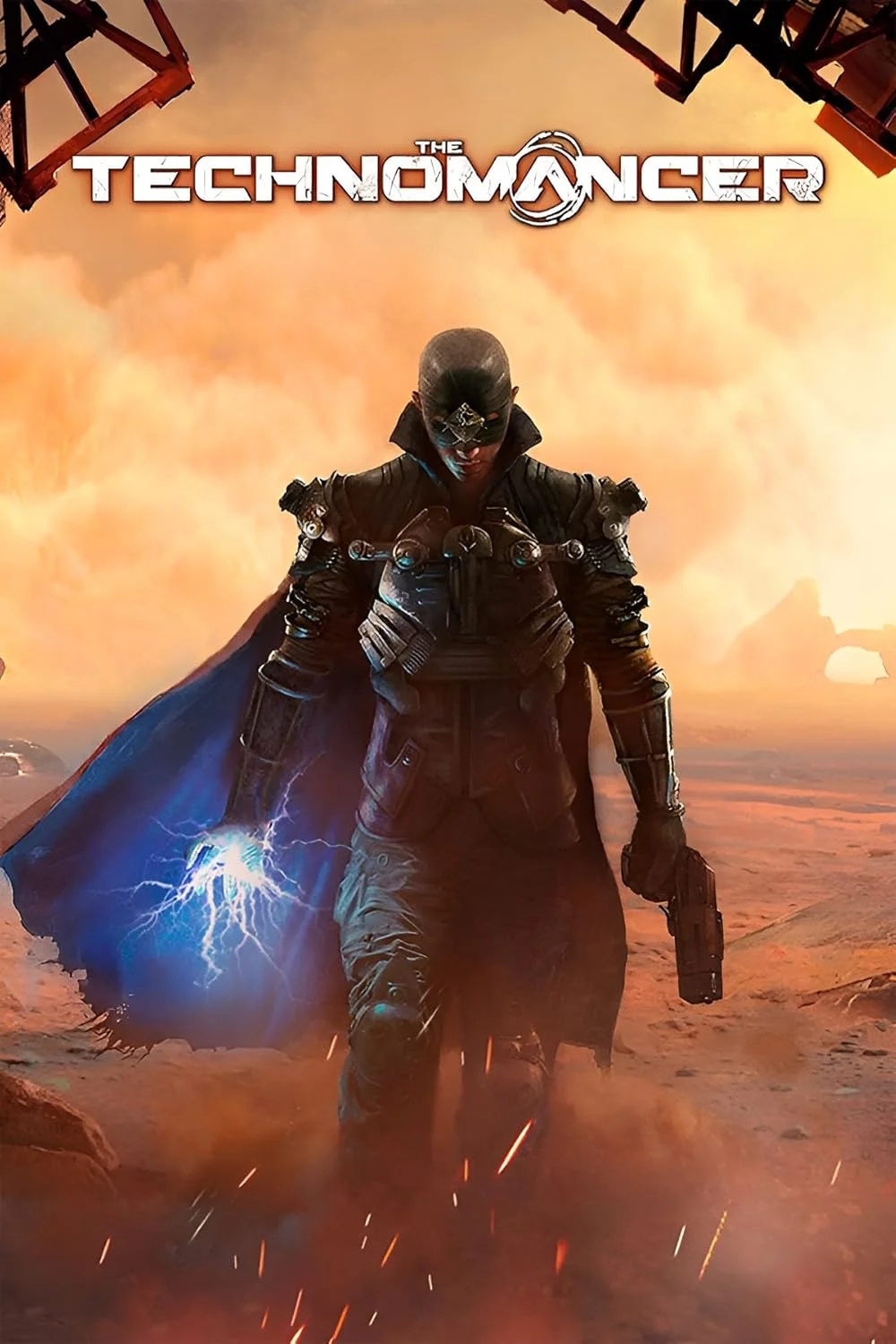
The Technomancer
This combination provides smooth gameplay with an average of 60 FPS, suitable for most gaming scenarios.
Average FPS: resolution vs quality settings
| Ultra | High | Medium | Low | |
|---|---|---|---|---|
| 4K Ultra HD | 22 | 29 | 33 | 44 |
| 1440p QHD | 41 | 52 | 61 | 79 |
| 1080p Full HD | 62 | 80 | 93 | 121 |
Cell color: green is 120+ FPS, teal is 60+, amber is 30+, red is below 30.
The Technomancer with AMD Ryzen 7 5700G + Intel Arc B570, In-Depth Analysis
# The Technomancer with AMD Ryzen 7 5700G + Intel Arc B570
This combination delivers a playable but demanding experience in The Technomancer, with the Intel Arc B570 acting as the primary bottleneck at higher resolutions while the AMD Ryzen 7 5700G provides sufficient headroom at 1080p. The combo ranks 2256th out of 2825 tested configurations, placing it in the lower-mid tier for this title, meaning users should expect to compromise on settings to achieve smooth frame rates.
Resolution Scaling
The frame rate drop from 1080p to 4K is steep and clearly exposes the graphics card as the limiting component. At High settings, the average FPS falls from 80 at 1920x1080 to 52 at 2560x1440—a 35% reduction—and then plummets to 29 at 3840x2160, which is a 64% decline from the 1080p baseline. This scaling pattern indicates that the Intel Arc B570 simply cannot maintain performance as pixel count increases, and the GPU's 10 GB GDDR6 memory with a 160-bit bus and 380.0 GB/s bandwidth struggles to keep pace with 4K workloads.
The gap between Low and Ultra settings widens dramatically at higher resolutions. At 1080p, the spread from Low (121 FPS) to Ultra (62 FPS) is 59 FPS, but at 4K, the spread shrinks to just 22 FPS (44 FPS on Low versus 22 FPS on Ultra). This compression effect suggests that at 4K, the GPU is so heavily constrained that even dropping to Low settings cannot unlock meaningful headroom—the 44 FPS at 4K Low is still below the 52 FPS achieved at 1440p High, showing that resolution, not settings, is the dominant factor.
For 1440p users, the situation is more nuanced. Medium settings deliver 61 FPS average with a minimum of 52 FPS, which is playable, while High drops to 52 FPS and Ultra falls to 41 FPS. The minimum frame rate data, available only for Medium settings, shows a 52 FPS floor at 1440p and a 79 FPS floor at 1080p, indicating that Medium settings provide the most stable experience without dropping below acceptable thresholds.
The 4K results are uniformly poor across all settings, with the highest average being 44 FPS on Low and the lowest at 22 FPS on Ultra. Even the best-case 4K scenario falls short of a consistent 60 FPS target, and the 28 FPS minimum recorded at 4K Medium confirms that this resolution is impractical for this combo in The Technomancer. The data strongly suggests that 1080p is the intended resolution for this pairing, with 1440p viable only at Medium settings for those willing to accept occasional dips.
CPU Role
The AMD Ryzen 7 5700G brings substantial processing power to this pairing, with 8 cores and 16 threads running at a base clock of 3.80 GHz and a boost clock of 4.60 GHz. This Zen 3 architecture chip, built on TSMC's 7 nm process, posts strong synthetic scores: a Cinebench R23 multicore result of 12830.5 and a single-core score of 1494, along with a Geekbench multicore score of 9950 and single-core score of 1894. The 3DMark results show scaling from 899 in single-thread to 6629 in 16-thread tests, demonstrating solid multi-threading capability.
In The Technomancer, a 2016 Action RPG, the CPU's role appears secondary to the GPU's limitations. The fact that frame rates scale so predictably with resolution—from 121 FPS at 1080p Low down to 44 FPS at 4K Low—indicates that the game is not CPU-bound at lower resolutions, since the 5700G can feed frames faster than the Arc B570 can render them. Had the CPU been the limiting factor, we would expect to see a plateau in frame rates regardless of resolution, but the consistent drops across all settings prove otherwise.
The 5700G's 16 MB of L3 cache and dual-channel DDR4 memory support with 51.2 GB/s bandwidth provide adequate bandwidth for this workload. Its Passmark multithread score of 24419 and floating point math score of 51296 suggest ample compute headroom for game logic and physics, which is typical for a title from this era. The processor's 79th percentile ranking among all CPUs, with an average benchmark score of 27051, places it close to the Intel Core i9-9900K (27097, delta -0.2%) and slightly above the AMD Ryzen AI 7 445 (26936, delta +0.4%), confirming it is a capable mid-range processor.
Notably, the CPU's integrated Radeon Vega 8 graphics are irrelevant here since the system uses a discrete Intel Arc B570, but the 5700G's 65 W TDP and unlocked multiplier make it a flexible platform choice. The benchmark results indicate that in The Technomancer, the 5700G will not bottleneck the Arc B570 at 1080p, as the 121 FPS Low result exceeds what most 60 Hz displays can show, and even at 1440p, the 79 FPS Low result suggests the CPU can keep up with the GPU's output.
FAQ
*Q: Can this combo run The Technomancer at 4K?*
A: Technically yes, but not well. The highest 4K average is 44 FPS on Low settings, and Ultra drops to 22 FPS. Medium settings yield 33 FPS average with a 28 FPS minimum, so 4K is only viable if you accept sub-30 FPS performance on Low.
Q: What is the best resolution for this pairing?
A: 1080p is clearly the sweet spot. All settings achieve playable frame rates: Low at 121 FPS, Medium at 93 FPS, High at 80 FPS, and even Ultra maintains 62 FPS. 1440p is acceptable only at Medium (61 FPS) or Low (79 FPS).
Q: How does the Intel Arc B570 compare to its nearest rivals?
A: The Arc B570's average benchmark score of 20556 is nearly identical to the NVIDIA GeForce RTX 3070 Mobile (20534, delta +0.1%) and the Intel Arc A750 (20582, delta -0.1%). It sits slightly above the NVIDIA Quadro M4000M (20480, delta +0.4%) and below the AMD Radeon R9 M390X (20662, delta -0.5%).
Q: Is the Ryzen 7 5700G a strong processor for gaming?
A: Yes, relative to its peers. It ranks in the 79th percentile of all CPUs, and its average benchmark score of 27051 puts it within 0.2% of the Intel Core i9-9900K and 0.4% above the AMD Ryzen AI 7 445. Its Cinebench R23 multicore score of 12830.5 confirms solid multi-threaded performance.
Q: Should I use Medium or High settings at 1440p?
A: Medium is the safer choice. It delivers 61 FPS average with a 52 FPS minimum, while High drops to 52 FPS average with no recorded minimum data. Given that the Medium minimum is already at 52 FPS, High settings risk dipping below 50 FPS during demanding scenes.
Q: Why do frame rates compress at 4K across settings?
A: The GPU becomes the hard bottleneck. At 1080p, the difference between Low and Ultra is 59 FPS, but at 4K, that gap narrows to 22 FPS. This indicates that the Arc B570's rendering capacity is saturated at 4K regardless of settings, making resolution the primary performance limiter.
How This Combo Ranks
The AMD Ryzen 7 5700G + Intel Arc B570 combination ranks 2256th out of 2825 tested combos in The Technomancer, placing it in the bottom 20% of configurations. This low ranking is somewhat surprising given the individual component strengths—the CPU ranks in the 79th percentile and the GPU in the 65th percentile—but it reflects the demanding nature of this title at higher resolutions.
The ranking suggests that most tested combos outperform this pairing in this specific game, likely due to the Arc B570's mid-range positioning. The GPU's Passmark G3D score of 14195 and DirectX 11 score of 118 indicate moderate performance, while its 3DMark Steel Nomad DX12 score of 2649 shows limited headroom for modern rendering workloads. The fact that this combo sits at the 2256th position means users should temper expectations; this is not a high-end configuration by any measure.
However, the ranking should be interpreted with context. The combo's 1080p performance is solid, with 80 FPS on High and 93 FPS on Medium, which would suit most gamers. The 1440p Medium result of 61 FPS is also respectable. The ranking is dragged down by the poor 4K results, which show that this combo is not designed for ultra-high-resolution gaming. If the benchmark database weights 4K performance heavily, this explains the low rank despite acceptable 1080p/1440p results.
The delta between this combo's position and the top performers is significant, but the data shows that the 5700G's strong CPU performance (Cinebench R23 multicore 12830.5) is wasted at higher resolutions where the Arc B570 cannot keep up. For users prioritizing 1080p gaming, this ranking may be misleading, as the actual measured frame rates at that resolution are quite playable. The 2256th rank reflects the combo's overall versatility across all tested resolutions, not just its 1080p capability.
Settings Recommendations
Based on the measured FPS data, the optimal configuration for this combo is 1080p with Medium settings. This yields a 93 FPS average with a 79 FPS minimum and 107 FPS maximum, providing a smooth experience with headroom for demanding scenes. High settings at 1080p drop to 80 FPS average, which is still excellent, but the lack of minimum frame rate data makes Medium the safer recommendation for consistent performance.
For users with 1440p monitors, Medium settings are the only viable choice that maintains playability. The 61 FPS average and 52 FPS minimum at 1440p Medium are acceptable, but High settings at 52 FPS average risk falling below 50 FPS in intense moments. Low settings at 1440p offer 79 FPS average but sacrifice visual quality significantly, making Medium the best balance of performance and fidelity.
At 4K, no settings provide a consistently playable experience. Low settings at 44 FPS average are the best option, but even this falls short of 60 FPS and may feel choppy. Ultra and High at 22 FPS and 29 FPS respectively are unplayable, and Medium at 33 FPS with a 28 FPS minimum is marginal at best. For 4K owners, the recommendation is to lower the resolution to 1440p or 1080p rather than compromise on settings.
The data suggests that Ultra settings should be avoided entirely, as they yield only 62 FPS at 1080p, 41 FPS at 1440p, and 22 FPS at 4K. The performance cost of Ultra over High is substantial—an 18 FPS drop at 1080p and 11 FPS drop at 1440p—without a corresponding visual benefit that justifies the loss. Medium settings provide the best frame rate stability, as evidenced by the minimum FPS data showing only a 14 FPS drop from average to minimum at both 1080p and 1440p.
Measured FPS Breakdown
At 1920x1080, the combo delivers its strongest results. Low settings produce 121 FPS average, Medium reaches 93 FPS with a 79 FPS minimum and 107 FPS maximum, High achieves 80 FPS, and Ultra drops to 62 FPS. All settings at 1080p exceed 60 FPS, making this resolution fully playable across the board.
At 2560x1440, performance becomes more variable. Low settings maintain 79 FPS average, Medium drops to 61 FPS with a 52 FPS minimum and 70 FPS maximum, High falls to 52 FPS, and Ultra reaches only 41 FPS. Medium is the only setting that stays above 60 FPS on average, with High being borderline playable and Ultra requiring compromise.
At 3840x2160, the results are disappointing across all settings. Low achieves 44 FPS average, Medium drops to 33 FPS with a 28 FPS minimum and 39 FPS maximum, High reaches only 29 FPS, and Ultra falls to 22 FPS. None of these results approach 60 FPS, and even the best case (Low at 44 FPS) is below the 50 FPS threshold that most gamers consider acceptable.
The frame time consistency, where measured, shows reasonable stability. The Medium setting at 1080p has a narrow 28 FPS range between minimum (79) and maximum (107), while at 1440p the range is 18 FPS (52 to 70), and at 4K it is 11 FPS (28 to 39). This pattern indicates that as resolution increases, the frame rate becomes more consistent but at a lower absolute level, reinforcing the GPU bottleneck conclusion. The lack of minimum FPS data for Low, High, and Ultra settings means those averages should be treated with some caution, as they may not reflect worst-case dips.
Hardware Specifications
AMD Ryzen 7 5700G
Intel Arc B570
FPS Benchmarks by Resolution & Settings
Performance data for AMD Ryzen 7 5700G + Intel Arc B570 in The Technomancer
| Resolution | Settings | Avg FPS |
|---|---|---|
| 3840x2160 | Low | 44.0 |
| 3840x2160 | Medium | 33.0 |
| 3840x2160 | High | 29.0 |
| 3840x2160 | Ultra | 22.0 |
| 2560x1440 | Low | 79.0 |
| 2560x1440 | Medium | 61.0 |
| 2560x1440 | High | 52.0 |
| 2560x1440 | Ultra | 41.0 |
| 1920x1080 | Low | 121.0 |
| 1920x1080 | Medium | 93.0 |
| 1920x1080 | High | 80.0 |
| 1920x1080 | Ultra | 62.0 |
The Technomancer with Ryzen 7 5700G + Other GPUs
See how The Technomancer performs with the same CPU but different graphics cards.
The Technomancer with Arc B570 + Other CPUs
See how The Technomancer performs with the same GPU but different processors.
Other Games with Ryzen 7 5700G + Arc B570
Explore FPS benchmarks for other games using this same hardware combination.