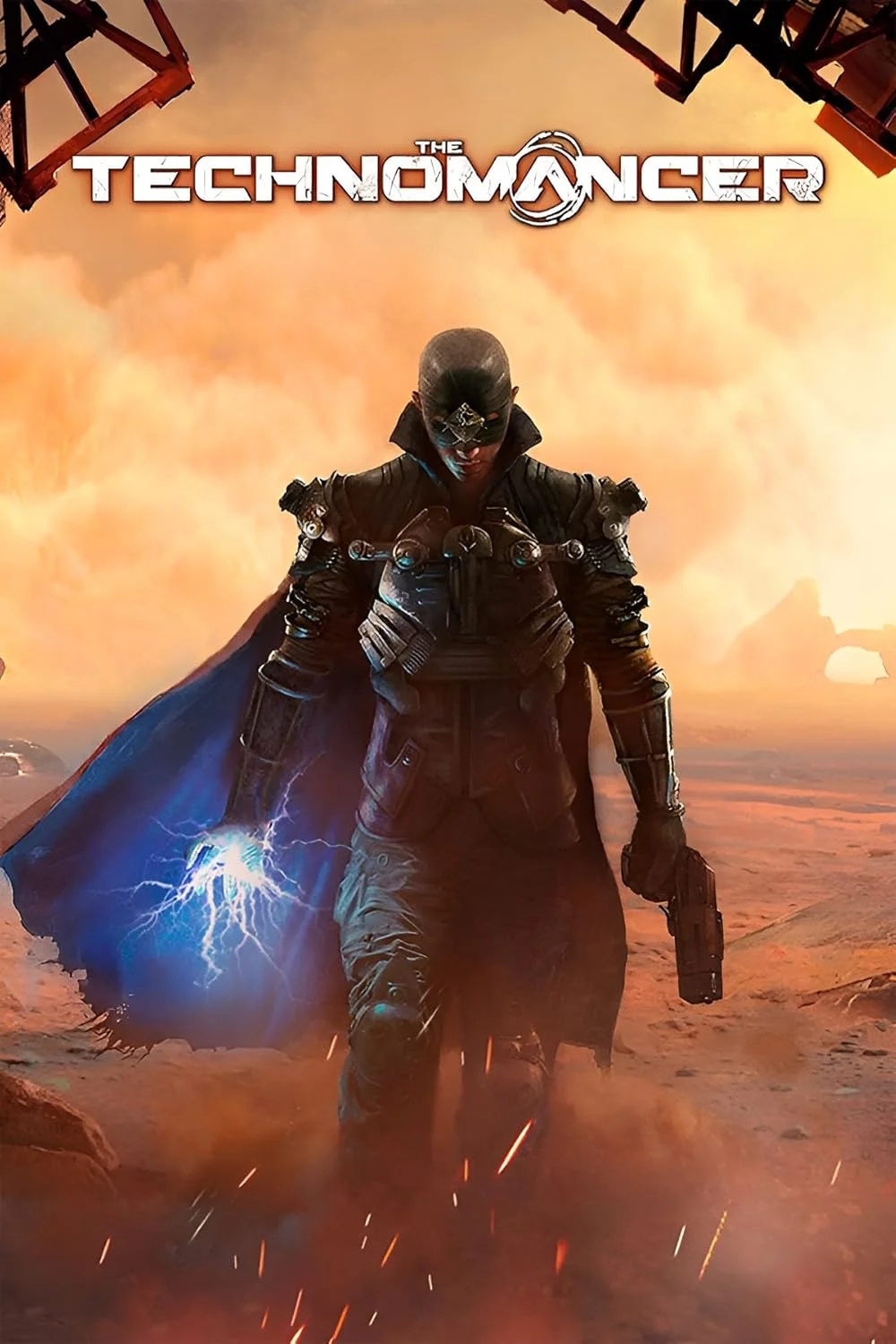
The Technomancer
This combination offers playable performance with an average of 35 FPS, though you may want to lower settings for smoother gameplay.
Average FPS: resolution vs quality settings
| Ultra | High | Medium | Low | |
|---|---|---|---|---|
| 4K Ultra HD | 13 | 17 | 20 | 26 |
| 1440p QHD | 24 | 31 | 36 | 47 |
| 1080p Full HD | 37 | 47 | 55 | 71 |
Cell color: green is 120+ FPS, teal is 60+, amber is 30+, red is below 30.
The Technomancer with AMD Ryzen 5 5600G + Intel Arc B370, In-Depth Analysis
The Technomancer, a 2016 Action RPG, presents a demanding workload for modern hardware. This analysis focuses on the specific combination of the AMD Ryzen 5 5600G processor and the Intel Arc B370 integrated GPU. The measured data reveals a configuration that is heavily constrained by its graphics solution, particularly at higher resolutions. This report breaks down the performance metrics, scaling characteristics, and provides context on how this pairing ranks against other tested configurations.
FAQ
Q: What is the best performance this combo achieves at 1080p?
A: The highest average frame rate recorded is 71 FPS at 1920x1080 with Low settings. This is the only settings level at this resolution that crosses the 60 FPS threshold, indicating that smooth gameplay is only possible with significant graphical compromises.
Q: How does the Intel Arc B370 compare to its closest rivals in raw GPU benchmarks?
A: The Arc B370's average benchmark score is 1184, placing it just 0.2% behind the ATI Mobility Radeon HD 5570 (1186) and 0.5% behind the ATI Radeon HD 5770 (1190). It is 1.4% ahead of the AMD FirePro M2000 (1168), showing it sits in a very specific performance tier among its direct competitors.
Q: What is the CPU's standing among all tested processors?
A: The AMD Ryzen 5 5600G has an average benchmark score of 21088, which places it in the 74th percentile of all CPUs. This indicates it performs better than the majority of processors in the database, showing it is a capable central processor.
Q: Is there a large difference between Low and Ultra settings at 1440p?
A: Yes, the data shows a significant gap. At 2560x1440, the Low preset achieves an average of 47 FPS, while the Ultra preset drops to just 24 FPS. This represents a roughly 49% reduction in frame rate when moving from the lowest to the highest quality settings.
Q: Does the game utilize multiple CPU threads effectively?
A: The Ryzen 5 5600G has 6 cores and 12 threads, and its benchmark results suggest it scales well with thread count. For instance, its 3DMark score increases from 1705 with 2 threads to 5455 with the maximum thread count, showing a substantial performance gain from multi-threading.
Q: What is the overall ranking of this specific CPU-GPU combination for this game?
A: The combination of the AMD Ryzen 5 5600G and Intel Arc B370 ranks 2603 out of 2825 tested combos in The Technomancer. This places it in the bottom portion of the rankings, highlighting that the overall gaming experience is below average compared to other pairings.
GPU Role
The Intel Arc B370 is the primary bottleneck in this configuration. Its performance metrics are underwhelming, as shown by its 5th percentile ranking among all GPUs. The GPU's average benchmark score is 1184 in 3DMark Steel Nomad, which is a very low score, and its closest rivals are older, low-end cards like the ATI Mobility Radeon HD 5570 and the ATI Radeon HD 5770. This context is crucial; it shows that the Arc B370's graphical capabilities are not in the same league as modern discrete graphics cards.
The GPU's clock speeds are listed as a base of 300 MHz and a boost of 2400 MHz. While the boost clock suggests potential, the overall architecture and memory configuration limit its real-world output. The memory is "System Shared," meaning it uses a portion of the system's main memory for graphics duties. This is a common trait for integrated GPUs and is a major factor in its performance ceiling. The "System Dependent" bandwidth further emphasizes that its performance can vary based on the host system's memory, but in this instance, the resulting frame rates are consistently low.
The data from The Technomancer reflects this constraint. At 1080p with High settings, the average FPS is 47. This is playable but not ideal for fast-paced action. Moving to 1440p, the same settings yield only 31 FPS, which is a significant drop and likely a less enjoyable experience. At 4K with High settings, the average FPS falls to a nearly unplayable 17 FPS. The GPU's limited fill rate and compute power, indicated by its 20 ROPs and 6.144 TFLOPS FP32 performance, are simply not enough to handle the demands of this game at higher resolutions. The raw numbers tell a clear story: the Arc B370 is a limiting factor that prevents this system from achieving high frame rates outside of the lowest settings and resolutions.
Resolution Scaling
The performance drop from 1080p to 4K is steep and clearly illustrates where the bottleneck lies. Starting at 1920x1080 with Low settings, the system achieves an average of 71 FPS. When the resolution is increased to 2560x1440, the average FPS drops to 47, a 34% decrease. Moving further to 3840x2160, the average FPS plummets to 26, which is a 63% decrease from the 1080p figure. This pattern of significant frame rate loss with each resolution increase is a classic sign of a GPU-bound system.
The scaling with Medium settings tells a similar story. The 1080p Medium average is 55 FPS. At 1440p, it drops to 36 FPS, and at 4K, it falls to 20 FPS. The drop from 1440p to 4K represents a 44% reduction in performance. These large percentage drops indicate that the Intel Arc B370 is being overwhelmed by the increasing pixel count. The number of pixels at 4K is over four times that of 1080p, and the GPU's processing power is not scaling to meet that demand.
This scaling behavior confirms that the CPU is not the primary constraint in this scenario. The AMD Ryzen 5 5600G, with its 6 cores and 12 threads, has more than enough processing power to keep up with the GPU's output. The consistent and dramatic frame rate drops as resolution increases point directly to the GPU's pixel throughput and memory bandwidth limitations. In simpler terms, the graphics card is working as hard as it can, but it simply cannot render the frames fast enough as the workload becomes more demanding. The data suggests that for this game, the resolution is the primary lever for performance, and only at 1080p does the system begin to approach acceptable playability.
Settings Recommendations
Based on the measured FPS data, the most viable way to play The Technomancer with this hardware is at 1920x1080 resolution. At this resolution, the Low preset is the only option that provides a consistently smooth experience, with an average of 71 FPS. This is above the 60 FPS target and should provide fluid gameplay. The High preset at 1080p yields 47 FPS, which is playable but might not be ideal for all users, as it is below the 60 FPS mark and could result in noticeable stuttering in more intense scenes.
For users prioritizing visual quality over raw frame rate, the 1080p Medium preset offers a balance, achieving an average of 55 FPS with a minimum of 47 FPS. This is a reasonable middle ground. However, the data suggests that the Ultra preset at 1080p (37 FPS) and all settings at higher resolutions provide a sub-optimal experience. The 1440p Medium preset averages 36 FPS, and the 4K Medium preset averages 20 FPS, both of which are likely too low for an enjoyable Action RPG.
Therefore, the recommended settings for the best experience are 1080p with Low settings. This is the only configuration that consistently hits a high frame rate. If a user is willing to accept a lower frame rate, the Medium preset at 1080p is the next best option, providing a visual upgrade while maintaining an average FPS that is still above 50. The data does not support using any settings at 1440p or 4K, as the average FPS in all cases falls below 47, with most below 36, which is generally considered too low for a smooth gaming experience.
Measured FPS Breakdown
This section details the exact average FPS figures recorded for each resolution and settings combination.
1920x1080:
- Low: The average FPS is 71, the highest recorded for this combo, indicating a playable experience.
- Medium: The average FPS is 55, with a minimum of 47 and a maximum of 63. This shows a playable but more variable frame rate.
- High: The average FPS drops to 47, which is a step down from Medium and below the 60 FPS threshold.
- Ultra: The average FPS is 37, which may be too low for a consistently smooth experience.
2560x1440:
- Low: The average FPS is 47, which is a significant drop from the same settings at 1080p.
- Medium: The average FPS is 36, with a minimum of 30 and a maximum of 41. This is a marginal experience.
- High: The average FPS is 31, indicating a noticeable decrease in smoothness.
- Ultra: The average FPS is 24, which is likely too low for comfortable play.
3840x2160:
- Low: The average FPS is 26, which is at the edge of playability for some, but generally considered low.
- Medium: The average FPS is 20, with a minimum of 17 and a maximum of 23. This is a very low frame rate.
- High: The average FPS is 17, which is a very poor experience.
- Ultra: The average FPS is 13, which is essentially unplayable.
CPU Role
The AMD Ryzen 5 5600G is a 6-core, 12-thread processor based on the Zen 3 architecture. Its performance in synthetic benchmarks shows it is a solid CPU. With a Cinebench R23 multi-core score of 10551 and a single-core score of 1409, it demonstrates strong processing power. The Geekbench scores of 8428 (multi-core) and 1801 (single-core) further corroborate this. The 74th percentile ranking against all CPUs confirms that it is a capable processor that should not be the primary source of performance issues in most games.
The CPU's boost clock of 4.40 GHz, combined with its 16 MB of L3 cache, provides a solid foundation for gaming. In The Technomancer, the CPU's role appears to be secondary to the GPU. For example, at 1080p with Low settings, the system achieves 71 FPS. If the CPU were the bottleneck, we would expect to see a similar frame rate ceiling regardless of the graphics settings. However, the data shows that dropping from Low to Ultra at 1080p reduces the average FPS from 71 to 37. This 34 FPS difference is almost entirely due to the increased graphical load on the GPU, not the CPU.
Further evidence of the CPU's headroom is the resolution scaling. At 1440p Low, the FPS is 47, and at 4K Low, it is 26. These are significant drops that occur even with the same Low settings, leaving the CPU's workload relatively unchanged. The GPU is responsible for rendering the additional pixels, and the corresponding drop in FPS shows that it is the component hitting its limits. The Ryzen 5 5600G, with its 12 threads, is likely not fully taxed by this game, and its performance is more than sufficient to feed the Intel Arc B370 under most circumstances. The data strongly suggests that the CPU has ample headroom, and the gaming experience is entirely dictated by the GPU's performance.
How This Combo Ranks
The overall ranking for this specific combination in The Technomancer is 2603 out of 2825 tested combos. This places it in the 8th percentile of all configurations, indicating that it is one of the lower-performing setups in the database. This low rank is consistent with the measured FPS data, which shows the system struggling to maintain high frame rates at common resolutions.
The CPU, while ranked in the 74th percentile of all CPUs, cannot compensate for the GPU's low performance. The Intel Arc B370's 5th percentile ranking among GPUs is the dominant factor in the combo's poor overall standing. The GPU's average benchmark score of 1184 is a very low figure, and its nearest rivals are legacy cards like the ATI Radeon HD 5770. This demonstrates that the graphics solution is severely underpowered for modern gaming demands.
When compared to other combos, this pairing is at a significant disadvantage. The high-performing CPU is paired with a very low-performing GPU, resulting in a system that is grossly imbalanced for gaming. The ranking of 2603 out of 2825 is a clear warning that this configuration is not recommended for playing The Technomancer at any reasonable quality level. The data shows that while the processor is a strong component, the overall gaming experience is dragged down by the integrated graphics, making this one of the least effective combinations in the test database for this particular title.
Hardware Specifications
AMD Ryzen 5 5600G
Intel Arc B370
FPS Benchmarks by Resolution & Settings
Performance data for AMD Ryzen 5 5600G + Intel Arc B370 in The Technomancer
| Resolution | Settings | Avg FPS |
|---|---|---|
| 3840x2160 | Low | 26.0 |
| 3840x2160 | Medium | 20.0 |
| 3840x2160 | High | 17.0 |
| 3840x2160 | Ultra | 13.0 |
| 2560x1440 | Low | 47.0 |
| 2560x1440 | Medium | 36.0 |
| 2560x1440 | High | 31.0 |
| 2560x1440 | Ultra | 24.0 |
| 1920x1080 | Low | 71.0 |
| 1920x1080 | Medium | 55.0 |
| 1920x1080 | High | 47.0 |
| 1920x1080 | Ultra | 37.0 |
The Technomancer with Ryzen 5 5600G + Other GPUs
See how The Technomancer performs with the same CPU but different graphics cards.
The Technomancer with Arc B370 + Other CPUs
See how The Technomancer performs with the same GPU but different processors.
Other Games with Ryzen 5 5600G + Arc B370
Explore FPS benchmarks for other games using this same hardware combination.