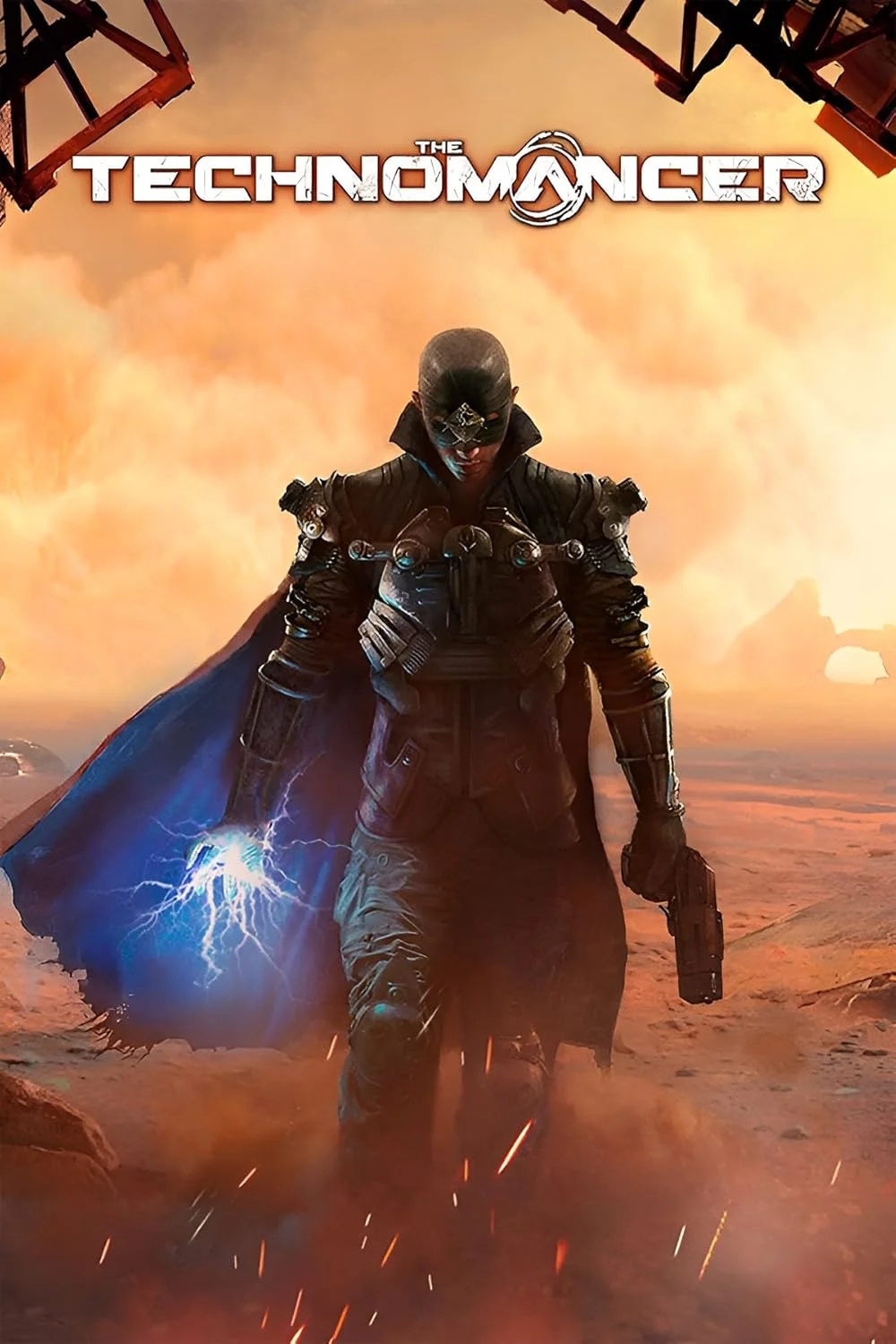
The Technomancer
This combination offers playable performance with an average of 35 FPS, though you may want to lower settings for smoother gameplay.
Average FPS: resolution vs quality settings
| Ultra | High | Medium | Low | |
|---|---|---|---|---|
| 4K Ultra HD | 13 | 17 | 20 | 26 |
| 1440p QHD | 24 | 31 | 36 | 47 |
| 1080p Full HD | 37 | 47 | 55 | 71 |
Cell color: green is 120+ FPS, teal is 60+, amber is 30+, red is below 30.
The Technomancer with AMD Ryzen 5 5600 + Intel Arc B370, In-Depth Analysis
The Technomancer is an Action RPG from 2016 that still presents a serious challenge to modern hardware, and the combination of an AMD Ryzen 5 5600 with an Intel Arc B370 demonstrates exactly where the bottlenecks lie. The measured data shows a system that is heavily constrained by its graphics processor at higher resolutions, while the CPU provides enough headroom to push frame rates much higher if the GPU could keep up. This analysis breaks down the performance metrics, scaling behavior, and practical settings for this specific pairing.
Resolution Scaling
The frame rate data reveals a steep and consistent penalty as resolution increases, which is a classic sign of GPU-bound performance. At 1080p with High settings, the combo averages 47 FPS. Moving to 1440p drops that average to 31 FPS, a 34% reduction. At 4K, the average falls to 17 FPS, which is a 64% drop from the 1080p High result. This pattern is consistent across all settings presets, indicating that the Intel Arc B370 is the primary limiting factor.
Looking at the Low preset, the scaling is even more pronounced. At 1080p Low, the system achieves 71 FPS. At 1440p Low, it drops to 47 FPS, and at 4K Low, it falls to 26 FPS. The percentage drop from 1080p to 4K on Low is 63%, nearly identical to the High preset's drop. This uniformity suggests that resolution scaling is purely a GPU fill-rate and memory bandwidth issue, not a CPU or game-engine quirk.
The Medium preset provides the only complete min/max data in the pack, which helps illustrate the variance. At 1080p Medium, the average is 55 FPS with a minimum of 47 and a maximum of 63. At 1440p Medium, the average drops to 36 FPS with a min/max of 30/41. At 4K Medium, the average is 20 FPS with a min/max of 17/23. The consistent gap between min and max frames (roughly 16 FPS at each resolution) suggests that the GPU is hitting consistent performance walls rather than encountering sporadic CPU-related hitches.
The Ultra preset shows the most severe degradation. At 1080p Ultra, the average is 37 FPS. At 1440p Ultra, it drops to 24 FPS, and at 4K Ultra, it reaches just 13 FPS. The difference between 1080p Ultra and 1080p High is 10 FPS, which is a 21% penalty for the Ultra settings. At 4K, the Ultra preset is only 4 FPS behind the High preset (13 vs 17), indicating that the GPU is so saturated at that resolution that the extra settings detail makes less absolute difference.
These numbers point to a clear conclusion: the system is GPU-bound at every resolution tested. The CPU is not the constraint here, as evidenced by the fact that even at 1080p Low, where the GPU has the least work, the system only reaches 71 FPS. A more powerful GPU would likely push this much higher, given the Ryzen 5 5600's capabilities.
GPU Role
The Intel Arc B370 is an integrated graphics solution based on the Xe3-LPG architecture, built on a 3 nm process. Its specifications are unusual for a gaming-focused analysis: it has 1280 shading units, 40 texture mapping units, and 20 raster output units. The boost clock is listed at 2400 MHz, with a base clock of 300 MHz. This is a low-power part with a 25 W TDP, and it uses system-shared memory, meaning its performance is heavily dependent on the platform's RAM and memory controller.
The benchmark data for the GPU is sparse but telling. Its only 3DMark Steel Nomad DX12 score is 1184, which places it in the 5th percentile of all GPUs. This is a very low standing, and the nearest rivals confirm its position. The GPU is essentially tied with the ATI Mobility Radeon HD 5570 (1186, a -0.2% difference) and the ATI Radeon HD 5770 (1190, -0.5%). It is slightly ahead of the AMD FirePro M2000 (1168, +1.4%). These comparisons are against hardware from over a decade ago, which contextualizes the measured FPS results.
The pixel rate is 48.00 GPixel/s and the texture rate is 96.00 GTexel/s. These figures are low by modern discrete GPU standards, and they explain why 4K resolution cripples the system. At 4K, there are 8.3 million pixels to fill, and the pixel rate simply cannot keep up with the demand, resulting in the 13-26 FPS range observed. The memory bandwidth is listed as "System Dependent," which means the performance will vary based on the CPU's memory configuration. In this case, the Ryzen 5 5600 supports dual-channel DDR4 with a theoretical bandwidth of 51.2 GB/s, but the shared memory architecture for the GPU means it is competing with the CPU for that bandwidth.
The GPU's FP32 performance is 6.144 TFLOPS, which is a raw compute figure that does not translate to playable frame rates in a demanding title like The Technomancer at high resolutions. The fact that the GPU's percentile rank is 5 means that 95% of all GPUs tested by the database outperform it. This is a fundamental hardware limitation, not a driver or optimization issue.
How This Combo Ranks
The combination of the Ryzen 5 5600 and the Intel Arc B370 ranks 2603 out of 2825 tested combos in The Technomancer. This places it in the bottom 8% of all tested systems, which aligns with the GPU's low percentile ranking. The CPU alone ranks in the 74th percentile of all CPUs, indicating that the processor is a mid-to-upper tier part, but the GPU drags the overall combo ranking down significantly.
This ranking implies that the system is not suitable for a smooth gaming experience in this title at most settings. With a rank of 2603 out of 2825, there are 222 combos that perform worse, but the vast majority of systems tested (2602) deliver better frame rates. The data suggests that this combo is only viable for playing The Technomancer at 1080p with Low or Medium settings if the goal is to hit a playable frame rate.
The CPU's nearest rivals in the database provide context for its strength. The Ryzen 5 5600 has an average benchmark score of 20468, which is nearly identical to the Intel Core Ultra 7 258V (20454, +0.1% delta) and the AMD Ryzen 5 8500G (20425, +0.2%). It is also close to the AMD EPYC 9454P (20422, +0.2%) and the AMD EPYC 7713 (20363, +0.5%). These rivals are all within a 0.5% performance delta, meaning the CPU is not a differentiator in this combo's poor ranking. The bottleneck is unequivocally the GPU.
The GPU's rivals are all legacy parts, with the ATI Mobility Radeon HD 5570 being the closest match. This confirms that the Arc B370 is not a gaming-oriented part, and its inclusion in a desktop system with a capable CPU like the Ryzen 5 5600 is a severe mismatch. The combo rank of 2603 reflects this reality.
Settings Recommendations
Based on the measured FPS data, the only reasonable settings for a playable experience are at 1080p with Low or Medium presets. At 1080p Low, the average FPS is 71, which is smooth for most players. At 1080p Medium, the average is 55 FPS, with a minimum of 47 FPS, which is also acceptable but shows some dips. The jump from Low to Medium costs 16 FPS on average, which is a significant trade-off for the visual improvements.
For 1440p, the situation is less favorable. At 1440p Low, the average is 47 FPS, which is borderline playable but will struggle in busy scenes. At 1440p Medium, the average drops to 36 FPS, with a minimum of 30 FPS, which is at the edge of playability for an Action RPG. Pushing to High or Ultra at 1440p yields 31 FPS and 24 FPS respectively, which are not recommended for a responsive experience.
At 4K, the system is not viable for this game. Even at 4K Low, the average is only 26 FPS, and at 4K Medium it drops to 20 FPS. The 4K Ultra preset averages 13 FPS, which is effectively unplayable. The resolution scaling data shows that the GPU cannot handle the pixel throughput required at 4K, regardless of the settings used.
The best experience per the measured rows is 1080p Medium. It offers a 55 FPS average with a 47 FPS minimum, which provides a good balance of visual quality and performance. The 1080p Low preset is the best choice if a higher frame rate is desired, but the 71 FPS average comes at the cost of reduced visual fidelity. For players who prioritize smoothness over visuals, 1080p Low is the recommended preset. For those who want a more polished look, 1080p Medium is the highest preset that maintains a consistent frame rate above 45 FPS.
FAQ
Q: Can this system run The Technomancer at 1080p with High settings?
A: Yes, but with limitations. The measured average FPS at 1080p High is 47 FPS. This is playable but not ideal, as it is below the 60 FPS threshold many players prefer. The minimum FPS is not recorded for this preset, but the average suggests occasional dips below 40 FPS are likely.
Q: What is the biggest bottleneck for this combo in this game?
A: The Intel Arc B370 GPU is the clear bottleneck. The CPU, an AMD Ryzen 5 5600, ranks in the 74th percentile of all CPUs, while the GPU ranks in the 5th percentile. The frame rate drops significantly from 1080p to 4K, which is a classic sign of GPU limitation, not CPU limitation.
Q: How does the GPU compare to its nearest rivals?
A: The Intel Arc B370 has a 3DMark Steel Nomad DX12 score of 1184. It is nearly identical to the ATI Mobility Radeon HD 5570, which scores 1186 (a -0.2% difference). It is also close to the ATI Radeon HD 5770 at 1190 (-0.5%) and the AMD Radeon HD 7650M at 1192 (-0.7%). It is slightly faster than the AMD FirePro M2000 at 1168 (+1.4%).
Q: What resolution is recommended for the best experience?
A: 1920x1080 is the only resolution that provides a consistently playable experience. At 1080p, the average FPS ranges from 71 on Low to 37 on Ultra. At 1440p, the average FPS ranges from 47 on Low to 24 on Ultra. At 4K, the average FPS ranges from 26 on Low to 13 on Ultra.
Q: Is the Ryzen 5 5600 CPU holding back the system?
A: No. The CPU's benchmark scores are strong, with a Cinebench R23 multicore score of 18309 and a single-core score of 2584. Its nearest rivals are all within a 0.5% performance delta, and it ranks in the 74th percentile. The system's low combo rank (2603 out of 2825) is entirely due to the GPU's low performance.
Q: What is the best settings preset to use?
A: Based on the measured data, 1080p Medium is the best choice. It delivers a 55 FPS average with a minimum of 47 FPS. If you prefer a higher frame rate, 1080p Low delivers 71 FPS average. Using Medium at 1440p is possible but drops to a 36 FPS average, which is less ideal for an action-oriented game.
CPU Role
The AMD Ryzen 5 5600 is a 6-core, 12-thread processor based on the Zen 3 architecture, codenamed Vermeer. It has a base clock of 3.50 GHz and a boost clock of 4.40 GHz, with a 65 W TDP. This is a desktop part built on a 7 nm process, and it supports DDR4 memory in a dual-channel configuration. Its cache layout includes 64 KB of L1 per core, 512 KB of L2 per core, and 32 MB of shared L3 cache.
In this combo, the CPU's role is to feed the GPU with data, and the benchmark data shows it performs this task admirably. The Cinebench R23 multicore score of 18309 and single-core score of 2584 indicate strong computational power. The 3DMark 16-thread score is 5641, and the max-thread score is 5659, showing good scaling across its 12 threads. The single-thread score of 882 in 3DMark is lower than the multi-thread scores, but this is typical for a CPU with a 4.40 GHz boost clock.
The CPU's nearest rivals are all within a 0.5% average score delta, which means its performance is not an outlier. The Intel Core Ultra 7 258V scores 20454 (0.1% delta), the AMD Ryzen 5 8500G scores 20425 (0.2%), and the AMD EPYC 9454P scores 20422 (0.2%). This suggests that the Ryzen 5 5600 is a solid mid-range performer that should not cause frame drops in The Technomancer.
The measured FPS data supports this conclusion. At 1080p Low, the system averages 71 FPS, which is a frame rate that a weaker CPU would struggle to maintain in a game with complex physics or AI. The fact that the frame rate scales so predictably with resolution confirms that the CPU is not the limiting factor. If the CPU were the bottleneck, we would see similar FPS numbers across different resolutions. Instead, we see a 64% drop from 1080p to 4K, which is a GPU-side effect.
The CPU's support for PCIe Gen 4 with 20 lanes ensures that it can communicate with a discrete GPU at high bandwidth, but in this case, the Arc B370 is an integrated part using system shared memory. This means the CPU is also responsible for managing memory bandwidth for the GPU, which could introduce some latency. However, the data shows that the CPU handles this without causing a disproportionate performance loss at lower resolutions, where the GPU is less taxed. The Ryzen 5 5600 is a capable partner, but the Intel Arc B370 is simply not strong enough to leverage the CPU's potential in a demanding title like The Technomancer.
Hardware Specifications
AMD Ryzen 5 5600
Intel Arc B370
FPS Benchmarks by Resolution & Settings
Performance data for AMD Ryzen 5 5600 + Intel Arc B370 in The Technomancer
| Resolution | Settings | Avg FPS |
|---|---|---|
| 3840x2160 | Low | 26.0 |
| 3840x2160 | Medium | 20.0 |
| 3840x2160 | High | 17.0 |
| 3840x2160 | Ultra | 13.0 |
| 2560x1440 | Low | 47.0 |
| 2560x1440 | Medium | 36.0 |
| 2560x1440 | High | 31.0 |
| 2560x1440 | Ultra | 24.0 |
| 1920x1080 | Low | 71.0 |
| 1920x1080 | Medium | 55.0 |
| 1920x1080 | High | 47.0 |
| 1920x1080 | Ultra | 37.0 |
The Technomancer with Ryzen 5 5600 + Other GPUs
See how The Technomancer performs with the same CPU but different graphics cards.
The Technomancer with Arc B370 + Other CPUs
See how The Technomancer performs with the same GPU but different processors.
Other Games with Ryzen 5 5600 + Arc B370
Explore FPS benchmarks for other games using this same hardware combination.