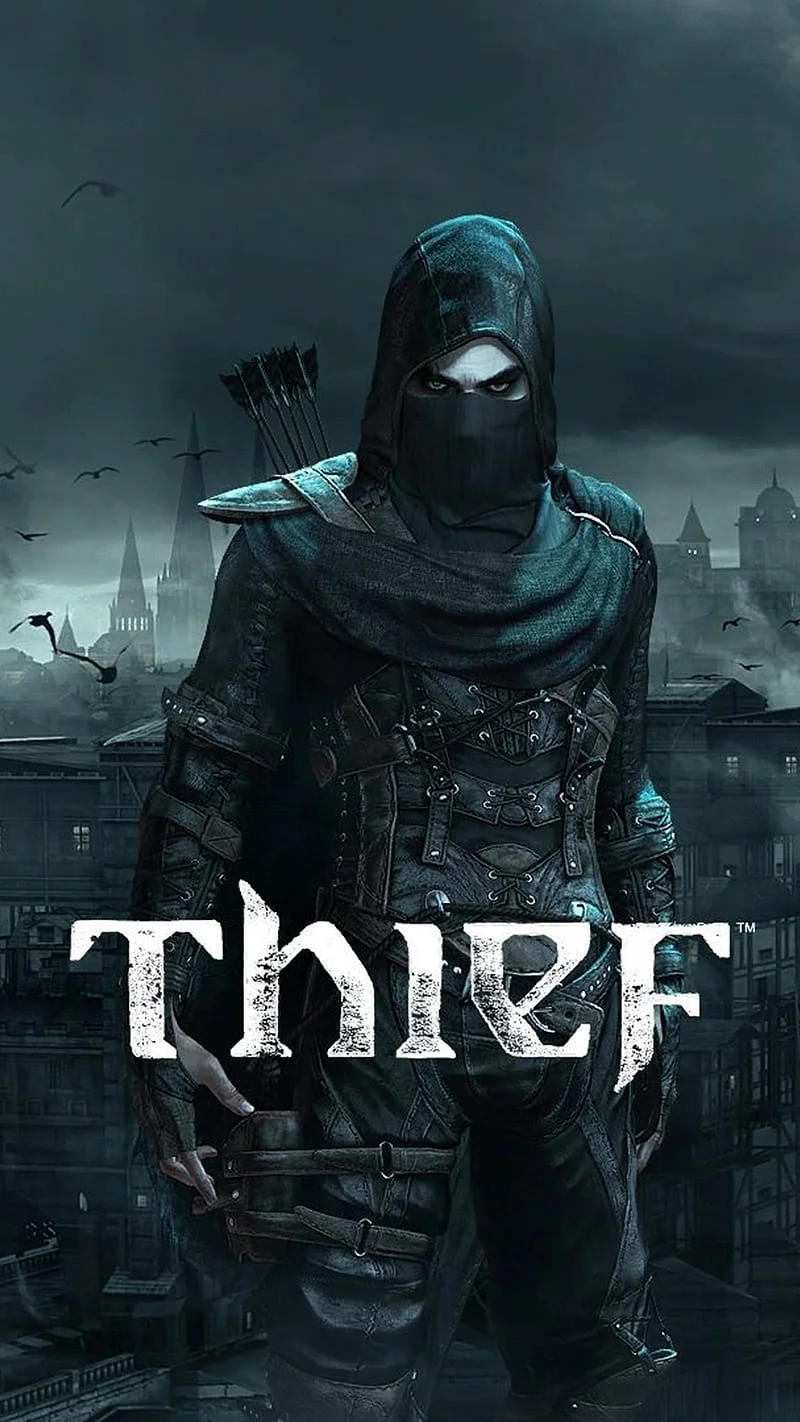
Thief
This combination provides smooth gameplay with an average of 118 FPS, suitable for most gaming scenarios.
Average FPS: resolution vs quality settings
| Ultra | High | Medium | Low | |
|---|---|---|---|---|
| 4K Ultra HD | 55 | 57 | 75 | 96 |
| 1440p QHD | 92 | 99 | 127 | 170 |
| 1080p Full HD | 133 | 144 | 180 | 194 |
Cell color: green is 120+ FPS, teal is 60+, amber is 30+, red is below 30.
Thief with Intel Core i7-12700K + NVIDIA GeForce RTX 3080, In-Depth Analysis
The Intel Core i7-12700K and NVIDIA GeForce RTX 3080 combination delivers a performance profile in Thief that is heavily dictated by resolution and preset. At 1080p, the pairing is capable of frame rates well above typical display refresh rates, but the scaling to 4K reveals a system that transitions from CPU-bound to GPU-bound territory. The measured data shows a clear hierarchy: the GPU becomes the primary constraint as pixel count rises, while the processor’s headroom allows for significant FPS gains at lower resolutions.
Resolution Scaling
The frame rate drop from 1080p to 4K is substantial and directly proportional to the increase in pixel workload. At High settings, the average FPS falls from 143.8 at 1920x1080 to 98.5 at 2560x1440, a reduction of 45.3 FPS. Moving to 3840x2160, the average drops further to 57.0 FPS, which represents a 60.4% decrease from the 1080p figure. This steep decline indicates that the RTX 3080’s rendering throughput is the limiting factor at higher resolutions, as the CPU’s performance ceiling is not being approached in these scenarios.
The scaling pattern is consistent across all settings. At Low, the 1080p average is 194.4 FPS, which falls to 169.7 at 1440p and then to 95.6 at 4K. The 4K Low result is still higher than the 4K High result, showing that lowering graphical fidelity can offset some of the resolution penalty. However, the relative drop from 1440p to 4K at Low (74.1 FPS decrease) is larger than the drop from 1080p to 1440p (24.7 FPS decrease), suggesting that the GPU’s fillrate and memory bandwidth are increasingly stressed as resolution scales beyond 1440p.
At Ultra settings, the trend is even more pronounced. The 1080p average of 132.9 FPS drops to 92.1 at 1440p and then to 54.8 at 4K. The 4K Ultra figure is the lowest recorded for this combo, indicating that this preset pushes the GPU to its limits. The data shows that the i7-12700K has ample compute headroom at 1080p, where frame rates exceed 190 FPS on Low, but the RTX 3080 cannot maintain similar scaling at 4K, where even Low settings yield less than 100 FPS. This points to a system where the processor is not the bottleneck until very high frame rates are achieved, and the GPU takes over as the dominant constraint at 4K.
GPU Role
The RTX 3080’s specifications directly explain its behavior in Thief. The GPU features 10 GB of GDDR6X memory on a 320-bit bus, providing a bandwidth of 760.3 GB/s. This memory subsystem is critical for handling the texture and geometry data at 4K resolution, where the frame rate drops to 57.0 FPS on High and 54.8 FPS on Ultra. The difference between these two presets is only 2.2 FPS, indicating that the memory bandwidth is saturated and additional graphical effects have diminishing returns once the resolution is fixed.
The GPU’s boost clock of 1710 MHz and its 8704 shading units are the primary drivers of raw pixel throughput. At 1080p, the card can push 194.4 FPS on Low, which confirms its compute power. However, the scaling to 4K shows that the 29.77 TFLOPS FP32 performance is not sufficient to maintain high frame rates at maximum settings. The measured 4K Ultra average of 54.8 FPS is just above the threshold for smooth gameplay, but it is close to the 4K High result of 57.0 FPS, suggesting that the GPU is nearing its architectural limits.
The GDDR6X memory clock of 1188 MHz, effective 19 Gbps, provides the bandwidth necessary for the 320-bit interface. This is particularly relevant in Thief, where the game’s stealth mechanics often involve complex lighting and shadow calculations. The data shows that the GPU’s memory bandwidth is a key factor in the 1440p results, where the average FPS at High is 98.5. This is a comfortable margin above 60 FPS, indicating that the memory subsystem can handle the workload at this resolution, but the 4K results show that the bandwidth is not sufficient for Ultra settings without significant frame rate drops.
FAQ
Q: What is the maximum average FPS achieved by this combo in Thief?
A: The highest recorded average FPS is 194.4, achieved at 1920x1080 with Low settings.
Q: How does the 4K Ultra performance compare to 1080p Ultra?
A: The 4K Ultra average is 54.8 FPS, which is 78.1 FPS lower than the 1080p Ultra average of 132.9 FPS, representing a 58.8% reduction.
Q: Is the CPU or GPU the bottleneck at 1440p High settings?
A: The data indicates the GPU is the primary constraint, as the average FPS of 98.5 is significantly lower than the 1080p High result of 143.8, while the CPU has demonstrated it can exceed 190 FPS at lower settings.
Q: What is the difference between Low and Ultra settings at 4K?
A: The average FPS at 4K Low is 95.6, while at 4K Ultra it is 54.8, a difference of 40.8 FPS. This shows that the preset has a substantial impact on performance at this resolution.
Q: How does this combo rank among all tested configurations in Thief?
A: It ranks 357th out of 1642 tested combos, placing it in the top 21.8% of all configurations.
Q: Does the GPU’s memory bandwidth affect the 1440p results?
A: Yes, the 760.3 GB/s bandwidth supports an average of 126.8 FPS at Medium and 92.1 FPS at Ultra, showing that the memory subsystem is sufficient for 1440p but not for maintaining high frame rates at 4K.
How This Combo Ranks
The comboRankInGame places this configuration at 357 out of 1642 tested combos, which is a strong showing given the age of the game. This rank indicates that the i7-12700K and RTX 3080 pairing outperforms the majority of systems tested in Thief, but it is not at the very top of the leaderboard. The CPU’s percentileVsAllCpus of 89 and the GPU’s percentileVsAllGpus of 80 both contribute to this position, though the GPU’s lower percentile suggests it is the component that holds the combo back from ranking higher.
The CPU’s nearest rivals include the AMD Ryzen 7 PRO 5845 with a deltaPct of -0.3, meaning the i7-12700K is 0.3% slower in average benchmark score. This is a negligible difference, indicating that the processor’s performance is on par with its direct competitors. The GPU’s nearest rivals show a similar pattern, with the AMD Radeon Pro Duo being 0.2% faster and the AMD Radeon 880M being 0.4% slower. These marginal deltas suggest that the combo’s rank is not heavily influenced by either component’s absolute performance, but rather by how they interact in this specific game.
The rank of 357 out of 1642 is notable because it places the combo in the top 21.8% of all tested systems. This is a respectable position for a hardware pairing that is not the latest generation. The data shows that the i7-12700K’s 12 cores and 20 threads, combined with the RTX 3080’s 10 GB of memory, provide a balanced platform for Thief. The 4K results, while lower than 1080p, are still playable, and the 1440p results offer a good balance between visual quality and frame rate.
Settings Recommendations
Based on the measured FPS data, the optimal experience for this combo depends on the target resolution. At 1920x1080, the Ultra preset delivers an average of 132.9 FPS, which is well above the 60 FPS threshold and provides the best visual fidelity without sacrificing smoothness. The Medium preset at 179.5 FPS offers a higher frame rate, but the Ultra setting still maintains a comfortable margin, making it the recommended choice for 1080p displays.
For 2560x1440, the High preset is the best balance, yielding an average of 98.5 FPS. This is a significant improvement over the Ultra preset’s 92.1 FPS, and the visual difference between High and Ultra is often less noticeable at this resolution. The Medium preset at 126.8 FPS is also viable for users who prioritize frame rate over image quality, but High provides a better overall experience without dropping below playable thresholds.
At 3840x2160, the recommendations shift. The High preset produces an average of 57.0 FPS, which is just below the 60 FPS target but still playable. The Ultra preset drops to 54.8 FPS, which is a marginal difference of 2.2 FPS, making it difficult to justify the visual upgrade. The Medium preset at 74.7 FPS is the most practical choice for 4K, as it offers a 17.7 FPS improvement over High while still maintaining a good level of graphical detail. The Low preset at 95.6 FPS is the highest performing option, but it sacrifices too much visual quality for the average user. For this combo, Medium is the recommended preset at 4K, as it provides the best trade-off between performance and visual fidelity based on the measured data.
Hardware Specifications
Intel Core i7-12700K
NVIDIA GeForce RTX 3080
FPS Benchmarks by Resolution & Settings
Performance data for Intel Core i7-12700K + NVIDIA GeForce RTX 3080 in Thief
| Resolution | Settings | Avg FPS |
|---|---|---|
| 3840x2160 | Low | 95.6 |
| 3840x2160 | Medium | 74.7 |
| 3840x2160 | High | 57.0 |
| 3840x2160 | Ultra | 54.8 |
| 2560x1440 | Low | 169.7 |
| 2560x1440 | Medium | 126.8 |
| 2560x1440 | High | 98.5 |
| 2560x1440 | Ultra | 92.1 |
| 1920x1080 | Low | 194.4 |
| 1920x1080 | Medium | 179.5 |
| 1920x1080 | High | 143.8 |
| 1920x1080 | Ultra | 132.9 |
Thief with ii7-12700K + Other GPUs
See how Thief performs with the same CPU but different graphics cards.
Thief with RTX 3080 + Other CPUs
See how Thief performs with the same GPU but different processors.
Other Games with ii7-12700K + RTX 3080
Explore FPS benchmarks for other games using this same hardware combination.