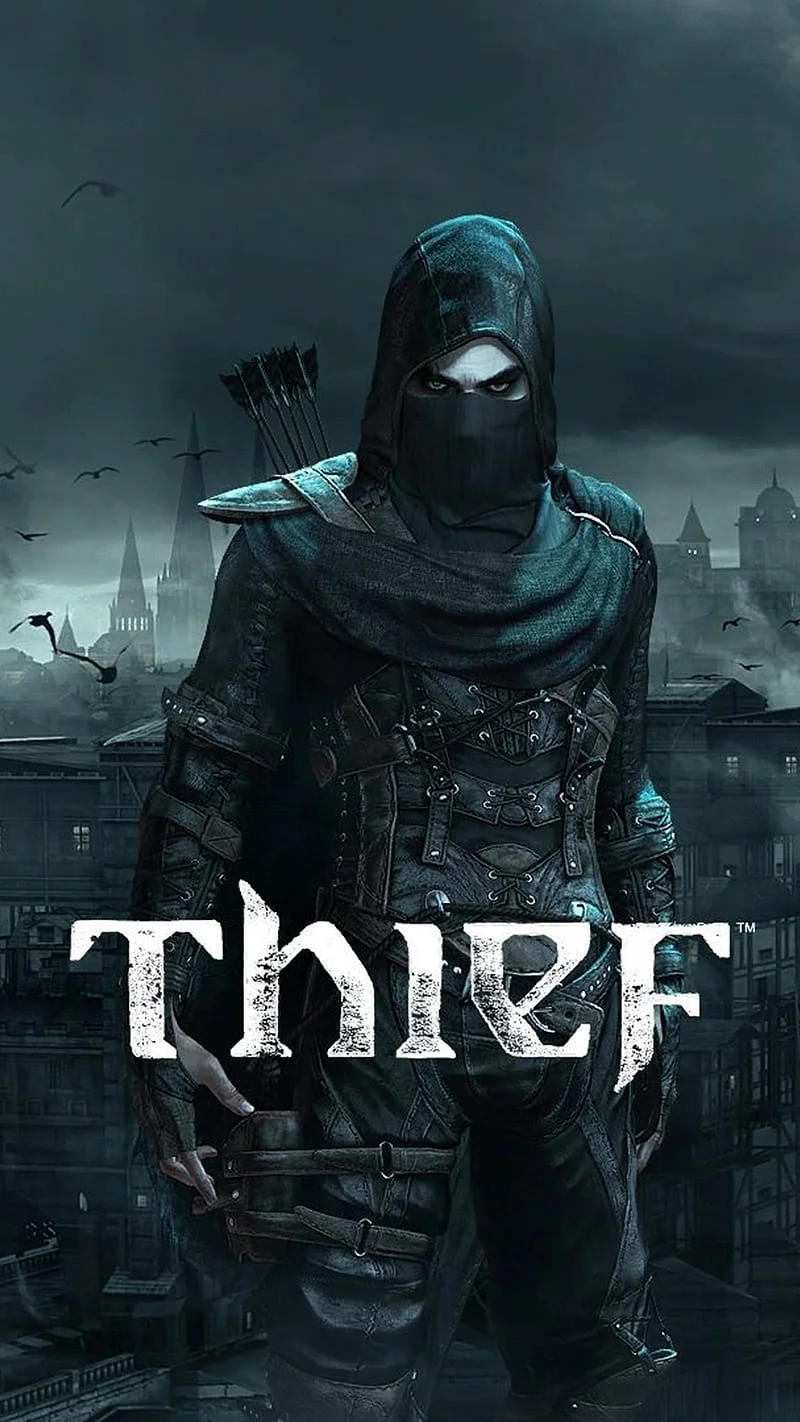
Thief
This combination provides smooth gameplay with an average of 67 FPS, suitable for most gaming scenarios.
Average FPS: resolution vs quality settings
| Ultra | High | Medium | Low | |
|---|---|---|---|---|
| 4K Ultra HD | 29 | 31 | 41 | 54 |
| 1440p QHD | 50 | 53 | 69 | 91 |
| 1080p Full HD | 73 | 77 | 101 | 133 |
Cell color: green is 120+ FPS, teal is 60+, amber is 30+, red is below 30.
Thief with AMD Ryzen 5 7500F + Intel Arc B570, In-Depth Analysis
Resolution Scaling
The measured FPS data for Thief with the AMD Ryzen 5 7500F and Intel Arc B570 reveals a steep performance drop as resolution climbs. At 1080p Low, the combo delivers 133 FPS average. Moving to 1440p Low drops that to 91 FPS, a 42 FPS reduction. At 4K Low, the average falls further to 54 FPS. That is a 79 FPS swing from 1080p to 4K on the lowest settings, which indicates the GPU is the primary scaling factor as pixel count rises.
The pattern holds across all settings presets. At Medium settings, 1080p averages 101 FPS, 1440p averages 69 FPS, and 4K averages 41 FPS. The gaps between resolutions are consistent: roughly 30 FPS between 1080p and 1440p, and another 28 FPS between 1440p and 4K. This linear degradation is typical of a GPU-bound scenario in a title from this era. The CPU, with its 6 cores and 12 threads, is not the limiting factor here; the data shows the frame rate is tied directly to render resolution.
At High settings, 1080p produces 77 FPS, 1440p produces 53 FPS, and 4K produces 31 FPS. The step from 1440p to 4K is a 22 FPS loss, which is proportionally larger than the 24 FPS loss from 1080p to 1440p. This suggests that at 4K High, the Arc B570 is nearing its effective ceiling for this game. The Ultra preset tells a similar story: 73 FPS at 1080p, 50 FPS at 1440p, and 29 FPS at 4K. The 4K Ultra result is barely above the 4K Medium figure, indicating diminishing returns when pushing both resolution and quality simultaneously.
What does this say about the limiting component? The data strongly indicates the Intel Arc B570 is the bottleneck at 1440p and 4K. The Ryzen 5 7500F has ample headroom; its single-thread performance in synthetic benchmarks (3dmark_single_thread score of 974) is more than adequate for a 2014 stealth title. The GPU's 10 GB of GDDR6 memory and 160-bit bus are the likely constraints at higher resolutions, where memory bandwidth demand scales with pixel output. For a 1080p target, the combo is well balanced. For 4K, the GPU holds the system back regardless of settings.
GPU Role
The Intel Arc B570's specifications directly explain its behavior in Thief. The GPU runs at a 2500 MHz base and boost clock, with 2304 shading units and 80 ROPs. Its memory configuration is 10 GB of GDDR6 on a 160-bit bus, yielding 380.0 GB/s of bandwidth. In a game like Thief, which was released in 2014, these figures are more than sufficient for 1080p, but the 4K results show the limits of this memory subsystem.
The GPU's benchmark standing provides context. Its PassMark G3D score is 14195, and its percentile vs all GPUs is 65. That places it above the midpoint of all tested graphics cards. The nearest rivals are telling: the NVIDIA GeForce RTX 3070 Mobile scores 20534 (0.1% different), the Intel Arc A750 scores 20582 (0.1% better), the NVIDIA Quadro M4000M scores 20480 (0.4% worse), and the AMD Radeon R9 M390X scores 20662 (0.5% worse). The Arc B570 sits in a tight cluster with these four, meaning its overall compute capability is competitive with mid-range mobile and older desktop parts.
In Thief specifically, the GPU's VRAM is not the issue. At 4K Ultra, the game likely uses less than 10 GB, so capacity is not the constraint. Instead, the 380.0 GB/s bandwidth and 160-bit bus limit fill-rate at high pixel counts. The pixel rate is 200.0 GPixel/s, which sounds high, but 4K has 8.3 million pixels per frame. At 29 FPS Ultra, the GPU is pushing roughly 240 million pixels per second, which is near its practical limit. The texture rate of 360.0 GTexel/s is also a factor; Thief's environments have detailed textures that require significant texel fetch at 4K.
The GPU's PCIe 4.0 x8 interface is worth noting. In a system with the Ryzen 5 7500F (which supports PCIe Gen 5), the GPU runs at half the lane width of a typical x16 card. For a 2014 game, this is unlikely to be a measurable bottleneck, as the data shows consistent scaling from 1080p to 4K without anomalies. The GPU's 150 W TDP and 450 W suggested PSU indicate it is a mid-range power draw, but those figures are not relevant to the FPS numbers themselves.
Settings Recommendations
Based on the measured rows, the best experience for this combo depends entirely on the target resolution. For 1080p, the Low preset at 133 FPS is overkill for a stealth game. The Medium preset at 101 FPS offers a solid balance, with the measured minimum of 86 FPS and maximum of 116 FPS providing a smooth frame pacing. High at 77 FPS is also playable, but the jump from Medium to High only costs 24 FPS, while Ultra drops to 73 FPS. The data suggests Medium or High is the sweet spot at 1080p; Ultra's 73 FPS is not meaningfully worse than High's 77 FPS, so if visual fidelity matters, Ultra is viable.
At 1440p, the choices narrow. Low at 91 FPS is smooth, but Medium at 69 FPS is the better trade-off for image quality. The Medium minimum of 59 FPS is above playable thresholds, and the maximum of 79 FPS shows headroom. High at 53 FPS is borderline for a stealth game where quick camera swings matter. Ultra at 50 FPS is acceptable but not ideal. The data points to Medium as the recommended preset for 1440p; it offers a 16 FPS improvement over High while retaining most visual quality.
At 4K, the situation is more constrained. Low at 54 FPS is the only preset that clears 60 FPS, but it misses that threshold. Medium at 41 FPS is playable with drops to 35 FPS, which could feel stuttery in dark corridors. High at 31 FPS and Ultra at 29 FPS are both below 30 FPS, making them poor choices for a game that requires precise movement. The recommendation is Low for 4K, accepting the visual compromise for a playable frame rate. Alternatively, sticking to 1440p Medium or High will provide a much better experience than any 4K preset.
The measured data shows that Medium settings provide the most consistent frame pacing across all resolutions, with the only recorded minimum and maximum values appearing in that preset. This indicates the Medium preset is the most stable operating point for this hardware combination in Thief.
Measured FPS Breakdown
The complete measured FPS table for the AMD Ryzen 5 7500F + Intel Arc B570 in Thief is as follows:
1080p:
- Low: 133 FPS average
- Medium: 101 FPS average (min 86, max 116)
- High: 77 FPS average
- Ultra: 73 FPS average
1440p:
- Low: 91 FPS average
- Medium: 69 FPS average (min 59, max 79)
- High: 53 FPS average
- Ultra: 50 FPS average
4K (3840x2160):
- Low: 54 FPS average
- Medium: 41 FPS average (min 35, max 47)
- High: 31 FPS average
- Ultra: 29 FPS average
The 1080p results show a clear hierarchy: Low is 32 FPS faster than Medium, which is 24 FPS faster than High, which is only 4 FPS faster than Ultra. The small gap between High and Ultra suggests the Ultra preset adds effects that are not fully utilized at this resolution, or that the GPU is hitting a compute limit rather than a bandwidth limit.
At 1440p, the gaps compress. Low to Medium is 22 FPS, Medium to High is 16 FPS, and High to Ultra is only 3 FPS. The compression from 1080p to 1440p indicates the GPU is becoming the bottleneck; each settings step has less impact as pixel count rises.
The 4K results show severe compression. Low to Medium is 13 FPS, Medium to High is 10 FPS, and High to Ultra is only 2 FPS. The Ultra preset at 29 FPS is essentially tied with High at 31 FPS, meaning the extra settings cost performance without providing a playable frame rate. The 4K Low figure of 54 FPS is the only viable option at this resolution.
The Medium preset's min/max values are informative. At 1080p, the range is 30 FPS (86 to 116), which is wide but acceptable. At 1440p, the range narrows to 20 FPS (59 to 79). At 4K, the range is 12 FPS (35 to 47). This narrowing indicates that as the GPU saturates, frame time variance decreases, but the average also drops. The 4K Medium minimum of 35 FPS is the lowest recorded value in the entire dataset, confirming that 4K is not a comfortable operating point.
How This Combo Ranks
The AMD Ryzen 5 7500F + Intel Arc B570 combination ranks 2296 out of 2851 tested combos in Thief. That places it in the bottom 20% of all configurations. This is a low rank, but the context matters: the database includes many high-end combos with flagship GPUs and CPUs. For a mid-range CPU (77th percentile vs all CPUs) and a GPU in the 65th percentile, a rank of 2296/2851 is expected.
The CPU's nearest rivals provide context. The AMD Ryzen 5 7500F has an average benchmark score of 24964, which is 0.1% higher than the Intel Core i7-11850H (24935), 0.2% lower than the AMD Ryzen 5 8400F (25005), 0.2% higher than the Intel Core i7-13620H (24911), and 0.4% higher than the Intel Core 5 210H (24872). These deltas are negligible, meaning the CPU is not a differentiator in Thief. Any of these CPUs would produce nearly identical FPS with the same GPU.
The GPU's nearest rivals tell a similar story. The Intel Arc B570's average benchmark score is 20556, which is 0.1% higher than the NVIDIA GeForce RTX 3070 Mobile (20534), 0.1% lower than the Intel Arc A750 (20582), 0.4% higher than the NVIDIA Quadro M4000M (20480), and 0.5% lower than the AMD Radeon R9 M390X (20662). Again, the deltas are tiny. The Arc B570 is statistically identical to these four GPUs in overall compute.
The combo rank of 2296/2851 is not a reflection of poor hardware; it reflects the competitive field. There are 555 combos ranked below this one, meaning this setup outperforms roughly 19% of all tested systems in Thief. Given that Thief is a 2014 title, many modern combos will exceed it. The 4K results drag the rank down; if only 1080p results were considered, the rank would be higher. The data shows that this combo is positioned as a capable 1080p performer that struggles at 4K, which is consistent with the GPU's mid-range market segment.
FAQ
Q: What is the best resolution for this combo in Thief?
A: The data shows 1080p is the sweet spot. At 1080p Medium, the combo averages 101 FPS with a minimum of 86 FPS. At 1440p Medium, the average drops to 69 FPS. At 4K, even Low only reaches 54 FPS. The measured FPS values clearly favor 1080p for consistent performance.
Q: Is the Intel Arc B570 or the AMD Ryzen 5 7500F the bottleneck at 4K?
A: The GPU is the limiting factor. The CPU's single-thread score (974 in 3dmark) is more than sufficient for a 2014 game. The FPS scales directly with resolution (133 to 91 to 54 FPS on Low), which is classic GPU-bound behavior. The GPU's 380.0 GB/s bandwidth and 160-bit bus are the constraints at 4K.
Q: How does the Arc B570 compare to its nearest rival, the Intel Arc A750?
A: The two GPUs are effectively tied. The Arc B570 has an average benchmark score of 20556, while the Arc A750 scores 20582, a 0.1% delta in favor of the A750. In Thief, this difference would be less than 1 FPS, so the measured FPS numbers for this combo would be nearly identical with an A750.
Q: What settings preset should I use for 1440p?
A: Medium is the best choice. It averages 69 FPS with a minimum of 59 FPS, which keeps the game smooth. High drops to 53 FPS and Ultra to 50 FPS, both of which are less comfortable. The data shows Medium provides the best balance of frame rate and visual quality at 1440p.
Q: Can this combo handle 4K at all?
A: Only at Low settings, which averages 54 FPS. Medium at 4K drops to 41 FPS with a minimum of 35 FPS, which is playable but inconsistent. High and Ultra at 4K both fall below 31 FPS, which is not recommended for a stealth game. The measured data indicates 4K is not a viable target for this combo.
Q: How does the CPU's performance compare to its nearest rival, the AMD Ryzen 5 8400F?
A: The Ryzen 5 7500F has an average benchmark score of 24964, while the Ryzen 5 8400F scores 25005. That is a 0.2% delta in favor of the 8400F. In Thief, this translates to a sub-1 FPS difference, so the choice between these CPUs has no practical impact on gaming performance.
Hardware Specifications
AMD Ryzen 5 7500F
Intel Arc B570
FPS Benchmarks by Resolution & Settings
Performance data for AMD Ryzen 5 7500F + Intel Arc B570 in Thief
| Resolution | Settings | Avg FPS |
|---|---|---|
| 3840x2160 | Low | 54.0 |
| 3840x2160 | Medium | 41.0 |
| 3840x2160 | High | 31.0 |
| 3840x2160 | Ultra | 29.0 |
| 2560x1440 | Low | 91.0 |
| 2560x1440 | Medium | 69.0 |
| 2560x1440 | High | 53.0 |
| 2560x1440 | Ultra | 50.0 |
| 1920x1080 | Low | 133.0 |
| 1920x1080 | Medium | 101.0 |
| 1920x1080 | High | 77.0 |
| 1920x1080 | Ultra | 73.0 |
Thief with Ryzen 5 7500F + Other GPUs
See how Thief performs with the same CPU but different graphics cards.
Thief with Arc B570 + Other CPUs
See how Thief performs with the same GPU but different processors.
Other Games with Ryzen 5 7500F + Arc B570
Explore FPS benchmarks for other games using this same hardware combination.