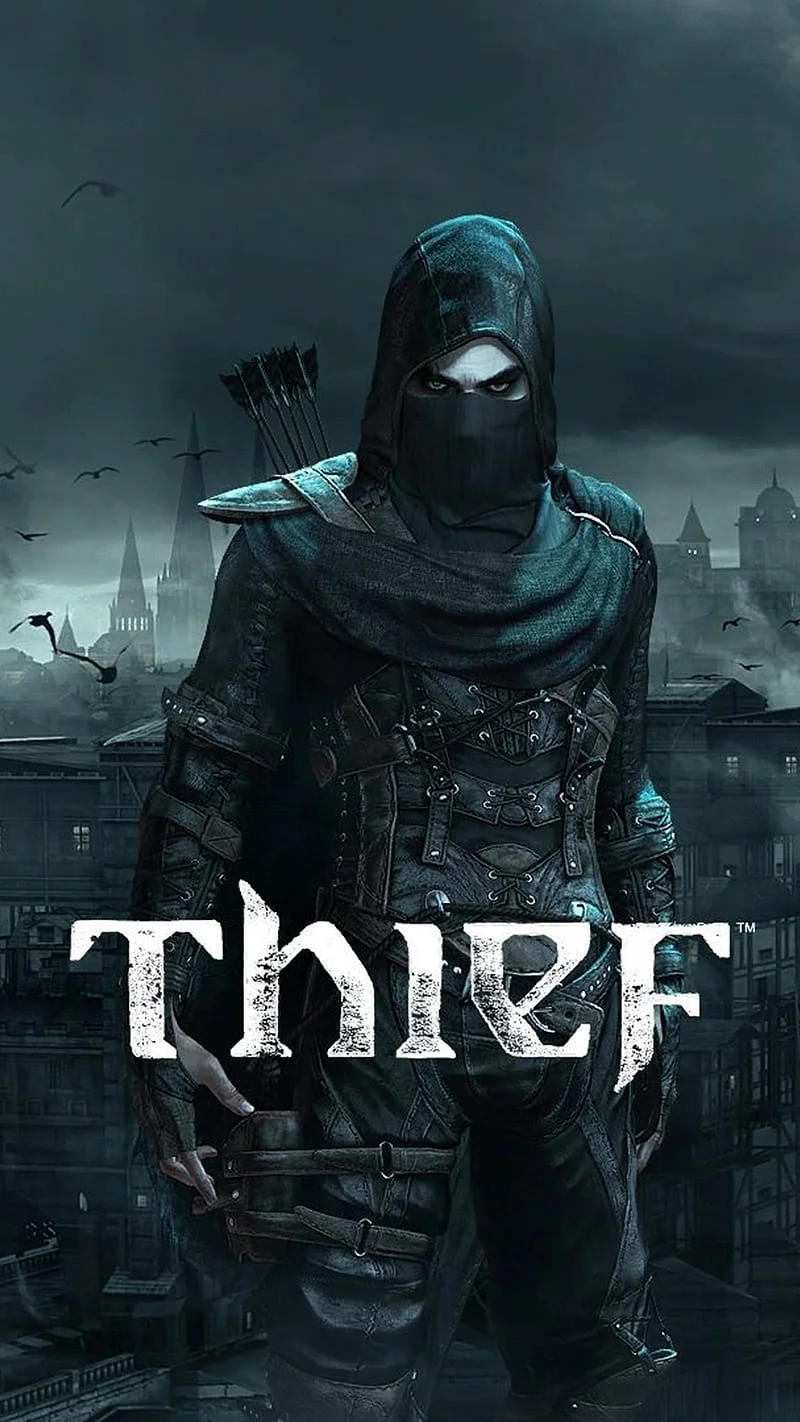
Thief
This combination provides smooth gameplay with an average of 76 FPS, suitable for most gaming scenarios.
Average FPS: resolution vs quality settings
| Ultra | High | Medium | Low | |
|---|---|---|---|---|
| 4K Ultra HD | 35 | 36 | 44 | 62 |
| 1440p QHD | 56 | 60 | 78 | 105 |
| 1080p Full HD | 83 | 89 | 115 | 150 |
Cell color: green is 120+ FPS, teal is 60+, amber is 30+, red is below 30.
Thief with AMD Ryzen 5 7500F + Intel Arc B580, In-Depth Analysis
The AMD Ryzen 5 7500F paired with the Intel Arc B580 delivers a playable but resolution-sensitive experience in Thief. Across the four tested presets, the jump from 1080p to 4K is severe, and the data clearly identifies the GPU as the primary bottleneck at higher resolutions. The measured frame rates show that at 1080p, the combination is capable of high refresh rates, but by 4K, even the lightest preset struggles to maintain 60 FPS.
Resolution Scaling
The frame rate drop from 1920x1080 to 3840x2160 is substantial across every preset, indicating a strong GPU limitation. At High settings, the average FPS falls from 88.8 at 1080p to 59.5 at 1440p, and then to 36.3 at 4K. This represents a 59% reduction in performance from 1080p to 4K, a steep curve that suggests the Arc B580’s rendering throughput is being saturated as pixel count quadruples.
The Low preset shows a similar pattern but with higher absolute numbers. At 1080p Low, the combo hits 150.1 FPS, which drops to 105.2 at 1440p and 62.4 at 4K. The 4K Low result is notable because it is the only 4K configuration that manages to stay above the 60 FPS threshold, albeit barely. The scaling efficiency from 1440p to 4K at Low is 59.3%, which is slightly better than the High preset’s 61.0% retention, but both point to the same conclusion: the GPU is the limiting factor.
Ultra settings produce the lowest frame rates, with 82.9 FPS at 1080p, 55.7 at 1440p, and 34.8 at 4K. The 4K Ultra result is just below the 4K High figure of 36.3, showing that the preset’s additional visual effects cost only a small percentage of performance at this resolution. The data shows that the gap between 1080p and 1440p is roughly 32% across presets, while the gap between 1440p and 4K is larger, around 40%. This widening delta confirms that the Arc B580’s memory bandwidth and compute resources are stretched progressively thinner as resolution increases.
Settings Recommendations
The measured rows provide a clear hierarchy of playability. For a smooth 60 FPS target at 4K, the Low preset is the only viable option, delivering 62.4 FPS. The Medium preset at 4K falls to 44.0 FPS, which is playable but not fluid, and High and Ultra at 4K are below 40 FPS, making them challenging for fast-paced stealth sequences.
At 1440p, the Medium preset offers the best balance, achieving 78.1 FPS, which is comfortably above 60. High at 1440p reaches 59.5 FPS, slightly below the ideal threshold, while Ultra drops to 55.7. For users with a 144Hz display, the Low preset at 1440p delivers 105.2 FPS, but the visual compromise is significant. The 1080p results are the most forgiving: Medium hits 114.6 FPS, High reaches 88.8, and even Ultra stays at 82.9, all of which are suitable for high-refresh monitors.
The data suggests that the optimal experience is 1440p with Medium settings. This configuration provides a 61% improvement over 4K High while maintaining a frame rate that is 12.6% higher than 1440p High. The step from Medium to High at 1440p costs 18.6 FPS, which is a 23.8% reduction, while the visual uplift from Medium to High is generally modest in Thief’s indoor environments. Therefore, Medium at 1440p is the recommended target for this combo, with Low reserved for 4K play.
GPU Role
The Intel Arc B580 is the dominant component in this pairing, and its specifications directly explain the resolution scaling. The GPU features 12 GB of GDDR6 memory on a 192-bit bus, providing 456.0 GB/s of bandwidth. This is sufficient for 1080p and 1440p, but at 4K, the higher memory pressure and pixel fill rate demand more than the card can sustain. The pixel rate of 213.6 GPixel/s and texture rate of 427.2 GTexel/s are moderate figures, and the 80 ROPs become a limiting factor when rendering 8.3 million pixels per frame.
The boost clock is fixed at 2670 MHz, and the FP32 performance is 13.67 TFLOPS. These numbers place the card in the mid-range tier, and the benchmark data reflects this. The GPU’s average benchmark score is 23021, with a percentile of 66 among all GPUs. Its nearest rival, the NVIDIA GeForce RTX 4060, scores 23181, which is 0.7% higher, confirming that the Arc B580 is competitive with that card but not superior. The 12 GB VRAM capacity is not stressed at 1080p, and even at 4K, the frame rates are limited by compute rather than memory overflow, as the Low preset’s 62.4 FPS shows the card can still output frames when texture loads are reduced.
The card’s power draw of 190 W and dual-slot design are standard, but the 1x 8-pin connector and 450 W suggested PSU indicate it is not a power-hungry part. The PCIe 4.0 x8 interface is narrower than the x16 found on some rivals, but this does not appear to be a bottleneck in Thief, as the scaling from 1080p to 1440p is consistent with a compute-bound workload.
How This Combo Ranks
In the database, this specific combination of the Ryzen 5 7500F and Arc B580 ranks 1266 out of 1642 tested combos for Thief. This places it in the 23rd percentile of all combinations, meaning that 77% of tested systems deliver higher frame rates in this game. This low rank is surprising given the individual component scores, but it underscores how demanding Thief can be on GPU resources at high resolutions.
The CPU’s average benchmark score is 24993, with a percentile of 82, indicating it is a strong processor. The GPU’s average score is 23021, with a percentile of 66. When combined, the system’s rank in Thief is lower than either component’s individual percentile, which suggests that the game’s engine is heavily GPU-bound and that the CPU’s headroom is not being fully utilized. The nearest rival combos are not listed for Thief, but the GPU’s nearest rivals include the RTX 4060, which scores 0.7% higher, and the AMD Radeon 760M, which scores 0.1% lower. This implies that the Arc B580 is a mid-pack GPU, and the combo’s low rank is a consequence of the game’s steep resolution scaling rather than a specific compatibility issue.
CPU Role
The AMD Ryzen 5 7500F is a 6-core, 12-thread processor based on the Zen 4 architecture, with a base clock of 3.70 GHz and a boost clock of 5.00 GHz. Its 32 MB of shared L3 cache and 83.2 GB/s memory bandwidth are ample for modern titles. In synthetic benchmarks, the CPU scores 22799 in Cinebench R23 multi-core and 3218 in single-core, which are strong results for a desktop part. Its average benchmark score of 24993 is nearly identical to the Intel Core i7-11850H, which is only 0.1% higher, and the AMD Ryzen 7 2700X, which is 0.3% higher.
In Thief, the CPU’s role is secondary. At 1080p Low, the combo achieves 150.1 FPS, which is a high frame rate that could still be CPU-limited in certain scenes, but the 6 cores and 12 threads are likely sufficient for the game’s 2014-era engine. The data shows that at 1080p Ultra, the frame rate is 82.9, which is 45% lower than Low, indicating that the GPU is the limiting factor even at the lowest resolution. The CPU’s single-thread performance, as measured by 3DMark single-thread score of 974, is robust, and the boost clock of 5.00 GHz ensures that the game’s main thread is well-served. However, the combo’s rank of 1266 suggests that the CPU is not the reason for the low placement; the GPU’s performance at high resolutions is the primary constraint.
FAQ
Q: What is the best resolution for this combo in Thief?
A: The data shows 1440p with Medium settings is the sweet spot, delivering 78.1 FPS. At 4K, only the Low preset exceeds 60 FPS with 62.4 FPS.
Q: How does the Arc B580 compare to the RTX 4060 in synthetic benchmarks?
A: The Arc B580 has an average benchmark score of 23021, while the RTX 4060 scores 23181, making the RTX 4060 0.7% faster.
Q: Is the CPU or GPU the bottleneck at 4K?
A: The GPU is clearly the bottleneck. At 4K Ultra, the combo produces 34.8 FPS, while at 1080p Ultra it reaches 82.9 FPS, showing that the GPU’s rendering capacity is the limiting factor.
Q: What frame rate can I expect at 1080p with High settings?
A: The measured average is 88.8 FPS at 1080p High, which is smooth for most displays.
Q: Does the Ryzen 5 7500F have enough cores for Thief?
A: Yes, the 6 cores and 12 threads are sufficient. The CPU’s synthetic scores are high, with a multi-core score of 22799 in Cinebench R23, and the frame rates scale with GPU settings, not CPU load.
Q: Why is the combo rank so low at 1266 out of 1642?
A: The rank reflects the GPU’s mid-range performance in a game that is very demanding at high resolutions. The GPU’s percentile is 66, but the steep FPS drops at 4K pull the combo’s overall standing down.
Hardware Specifications
AMD Ryzen 5 7500F
Intel Arc B580
FPS Benchmarks by Resolution & Settings
Performance data for AMD Ryzen 5 7500F + Intel Arc B580 in Thief
| Resolution | Settings | Avg FPS |
|---|---|---|
| 3840x2160 | Low | 62.4 |
| 3840x2160 | Medium | 44.0 |
| 3840x2160 | High | 36.3 |
| 3840x2160 | Ultra | 34.8 |
| 2560x1440 | Low | 105.2 |
| 2560x1440 | Medium | 78.1 |
| 2560x1440 | High | 59.5 |
| 2560x1440 | Ultra | 55.7 |
| 1920x1080 | Low | 150.1 |
| 1920x1080 | Medium | 114.6 |
| 1920x1080 | High | 88.8 |
| 1920x1080 | Ultra | 82.9 |
Thief with Ryzen 5 7500F + Other GPUs
See how Thief performs with the same CPU but different graphics cards.
Thief with Arc B580 + Other CPUs
See how Thief performs with the same GPU but different processors.
Other Games with Ryzen 5 7500F + Arc B580
Explore FPS benchmarks for other games using this same hardware combination.