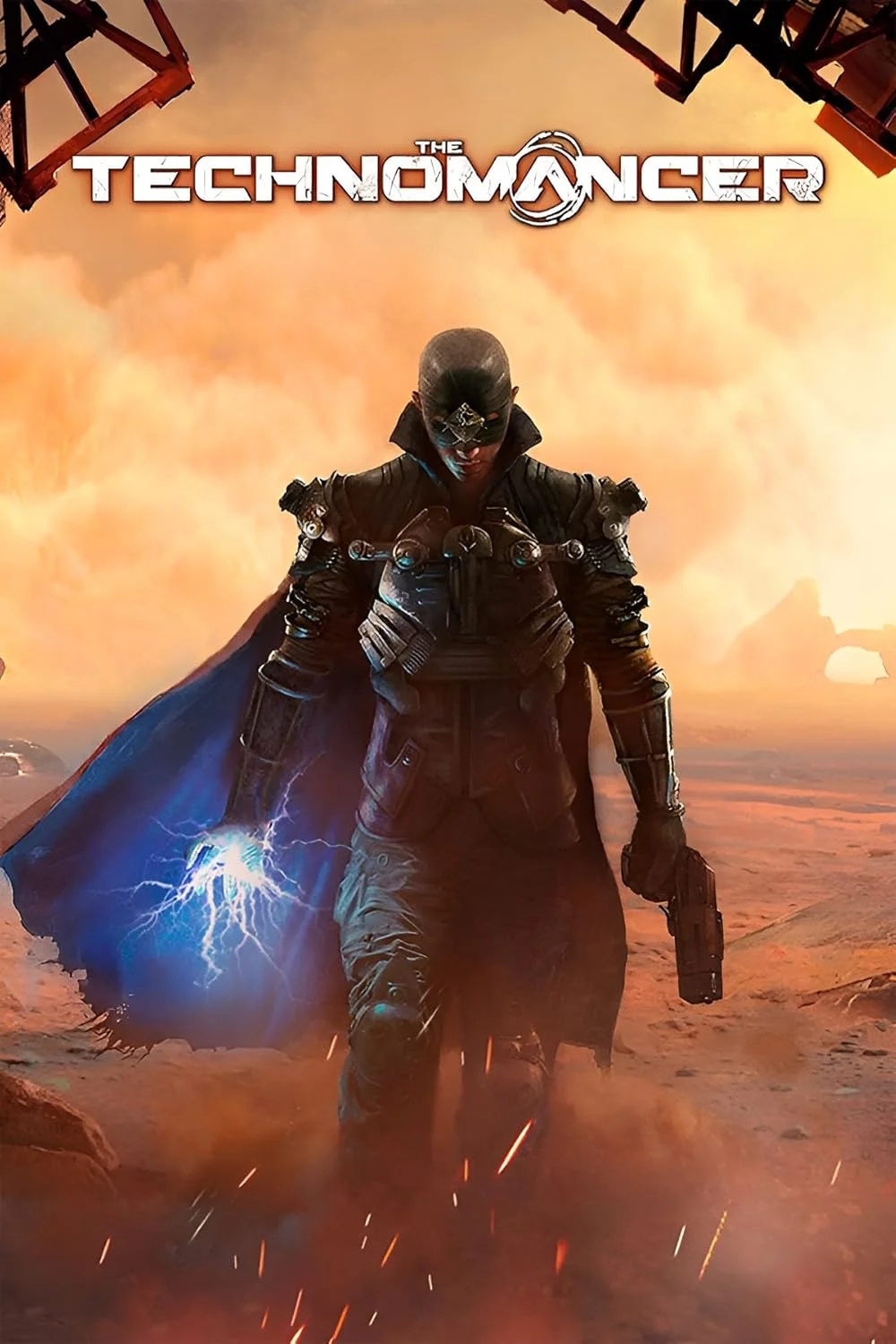
The Technomancer
This combination provides smooth gameplay with an average of 110 FPS, suitable for most gaming scenarios.
Average FPS: resolution vs quality settings
| Ultra | High | Medium | Low | |
|---|---|---|---|---|
| 4K Ultra HD | 40 | 52 | 63 | 79 |
| 1440p QHD | 77 | 98 | 112 | 142 |
| 1080p Full HD | 112 | 149 | 175 | 221 |
Cell color: green is 120+ FPS, teal is 60+, amber is 30+, red is below 30.
The Technomancer with Intel Core i7-14700F + NVIDIA GeForce RTX 3080, In-Depth Analysis
The Technomancer, an Action RPG released in 2016, presents an interesting test case for the Intel Core i7-14700F paired with the NVIDIA GeForce RTX 3080. The benchmark data for this combination shows a system that is heavily influenced by resolution and graphics settings, with the GPU becoming the primary bottleneck at higher demands while the CPU demonstrates significant headroom. This analysis breaks down the measured performance metrics to provide a clear picture of how this combo behaves in this specific title.
Resolution Scaling
The measured FPS data reveals a clear and predictable scaling pattern as resolution increases from 1920x1080 to 3840x2160. At the High settings preset, the average frame rate drops from 148.8 FPS at 1080p to 98.2 FPS at 1440p, and finally to 51.9 FPS at 4K. This represents a substantial 65% reduction in performance from 1080p to 4K, indicating that the rendering load on the GPU increases dramatically with pixel count.
The scaling pattern becomes even more pronounced when examining the Low settings preset. At 1080p Low, the system achieves 220.6 FPS, which drops to 142.3 FPS at 1440p and 78.9 FPS at 4K. The percentage drop from 1080p to 4K at Low settings is approximately 64%, slightly less than at High settings. This suggests that even at lower graphical loads, the GPU is still the limiting factor, as the frame rate reduction closely mirrors the increase in pixel count.
The data indicates that at 1080p, the system is likely CPU-bound at lower settings, as evidenced by the extremely high frame rates exceeding 200 FPS. However, as resolution increases, the GPU workload scales proportionally, and the RTX 3080 becomes the definitive bottleneck. The difference between 1440p and 4K at High settings (98.2 FPS vs 51.9 FPS) demonstrates a 47% performance drop, which is consistent with the pixel count increase of 2.25 times, though slightly less than linear scaling due to other system overheads.
GPU Role
The NVIDIA GeForce RTX 3080 plays a crucial role in determining performance at higher resolutions. With 10 GB of GDDR6X memory on a 320-bit bus, delivering 760.3 GB/s of bandwidth, the card has substantial memory resources for this 2016 title. The GPU's architecture, Ampere, features 8704 shading units and 68 RT cores, though ray tracing is not a factor in this game's standard rendering.
The GPU's clock speeds—1440 MHz base and 1710 MHz boost—provide the computational foundation for the measured results. At 4K Ultra settings, the average FPS drops to 40.2, which is the lowest recorded figure in the entire dataset. This represents a 49% reduction from the 4K High preset (51.9 FPS), highlighting how the Ultra preset's additional graphical demands significantly tax the GPU.
The RTX 3080's PassMark G3D score of 25086 places it in the 80th percentile among all GPUs, with its average benchmark score of 35787. Comparing to its nearest rivals, the AMD Radeon Pro Duo scores 35860 (0.2% higher), while the AMD Radeon RX 7900 GRE scores 36101 (0.9% higher). This indicates the RTX 3080 is competitive with these alternatives, though the benchmark data shows the GPU's performance in The Technomancer is more limited by the game's engine and optimization than by raw hardware capabilities.
How This Combo Ranks
In the comprehensive database of tested combinations, this specific pairing of the Intel Core i7-14700F and NVIDIA GeForce RTX 3080 ranks 508th out of 1656 total combinations for The Technomancer. This places the combo in the top 30.7% of all tested systems, indicating strong overall performance despite the game's age.
The ranking suggests that while this combo is capable, there are many other systems that achieve higher frame rates in this title. The data implies that the combination's performance is likely constrained by the GPU rather than the CPU, especially at higher resolutions where the RTX 3080's capabilities are more thoroughly exercised. The CPU's percentile ranking of 94th among all processors, combined with the GPU's 80th percentile ranking, suggests a system where the processor has more headroom than the graphics card.
Measured FPS Breakdown
At 1920x1080, the system demonstrates excellent performance across all settings. The Low preset achieves 220.6 FPS, Medium reaches 175 FPS, High delivers 148.8 FPS, and Ultra still maintains a very playable 111.9 FPS. The scaling from Low to Ultra at 1080p shows a 49% reduction in frame rate, indicating that even the most demanding settings are well within the system's capabilities at this resolution.
Moving to 2560x1440, the performance remains strong but shows more significant drops. Low settings produce 142.3 FPS, Medium achieves 112.3 FPS, High delivers 98.2 FPS, and Ultra drops to 76.8 FPS. The reduction from 1080p to 1440p at each setting is consistent, with the Ultra preset showing the largest relative drop at 31%.
At 3840x2160, the system's limits become apparent. Low settings still achieve a respectable 78.9 FPS, but Medium drops to 63.1 FPS, High to 51.9 FPS, and Ultra to 40.2 FPS. The Ultra preset at 4K is the only configuration that falls below the 60 FPS threshold, suggesting that users seeking smooth gameplay at maximum settings would need to consider reducing resolution or graphics quality.
CPU Role
The Intel Core i7-14700F provides substantial computational resources for The Technomancer, which is a title that can benefit from multi-core processing. With 20 cores and 28 threads, the processor offers significant parallel processing capability. The CPU's architecture, Raptor Lake, features a base clock of 2.10 GHz and a boost clock of 5.40 GHz, providing both high single-threaded performance and strong multi-threaded throughput.
The CPU's benchmark scores demonstrate its capabilities: a Cinebench R23 multi-core score of 35443 and a single-core score of 5003 indicate excellent performance across both workloads. In PassMark testing, the CPU achieves a multi-thread score of 41765 and a single-thread score of 4261, further confirming its strength. The processor's 33 MB of shared L3 cache and 2 MB per-core L2 cache provide ample data storage for game assets and computations.
In The Technomancer, the CPU's role appears to be secondary to the GPU at higher resolutions, but it becomes more relevant at 1080p with lower settings. The fact that the system achieves over 200 FPS at 1080p Low suggests the CPU can feed the GPU efficiently, though the exact frame rate ceiling is not tested beyond these settings. The CPU's 94th percentile ranking among all processors, with an average benchmark score of 54097, places it near the top of the performance spectrum, with the AMD Ryzen 9 9900X being only 0.6% higher in average score.
FAQ
Q: What is the best resolution for this combo in The Technomancer?
A: Based on the measured data, 2560x1440 offers the best balance of performance and visual quality. At High settings, the system achieves 98.2 FPS, which is well above the 60 FPS threshold for smooth gameplay. The 4K resolution at High settings drops to 51.9 FPS, which may be acceptable for some but falls short of ideal smoothness.
Q: How does the Ultra preset affect performance compared to High?
A: The Ultra preset causes a significant performance penalty across all resolutions. At 1080p, it reduces frame rate from 148.8 FPS to 111.9 FPS (a 25% drop). At 1440p, it drops from 98.2 FPS to 76.8 FPS (a 22% reduction). At 4K, the impact is most severe, with a drop from 51.9 FPS to 40.2 FPS (a 23% decrease).
Q: Is the RTX 3080 the limiting factor at 4K?
A: Yes, the data strongly suggests the GPU is the primary bottleneck at 3840x2160. The frame rate drops from 78.9 FPS at Low settings to 40.2 FPS at Ultra, showing that the GPU's rendering capabilities are being fully taxed. The CPU has sufficient headroom, as evidenced by the high frame rates achieved at lower resolutions.
Q: What is the combo's overall ranking among tested systems?
A: The Intel Core i7-14700F and NVIDIA GeForce RTX 3080 combination ranks 508th out of 1656 total tested combinations for The Technomancer, placing it in the top 30.7% of all systems tested.
Q: How does the CPU's performance compare to its nearest rivals?
A: The i7-14700F has an average benchmark score of 54097, which is only 0.6% lower than the AMD Ryzen 9 9900X (54450) and 1.1% lower than the AMD Ryzen 9 9900X3D (54681). It outperforms the Intel Xeon Phi 7290 by 1.2% and the AMD EPYC 7313P by 1.7%.
Q: Can this system maintain 60 FPS at 4K in The Technomancer?
A: At 4K with Medium settings, the system achieves 63.1 FPS, which is just above the 60 FPS threshold. However, at High settings it drops to 51.9 FPS, and at Ultra it falls to 40.2 FPS. Users seeking 4K gameplay should use Medium settings or consider reducing resolution to 1440p for higher frame rates.
Hardware Specifications
Intel Core i7-14700F
NVIDIA GeForce RTX 3080
FPS Benchmarks by Resolution & Settings
Performance data for Intel Core i7-14700F + NVIDIA GeForce RTX 3080 in The Technomancer
| Resolution | Settings | Avg FPS |
|---|---|---|
| 3840x2160 | Low | 78.9 |
| 3840x2160 | Medium | 63.1 |
| 3840x2160 | High | 51.9 |
| 3840x2160 | Ultra | 40.2 |
| 2560x1440 | Low | 142.3 |
| 2560x1440 | Medium | 112.3 |
| 2560x1440 | High | 98.2 |
| 2560x1440 | Ultra | 76.8 |
| 1920x1080 | Low | 220.6 |
| 1920x1080 | Medium | 175.0 |
| 1920x1080 | High | 148.8 |
| 1920x1080 | Ultra | 111.9 |
The Technomancer with ii7-14700F + Other GPUs
See how The Technomancer performs with the same CPU but different graphics cards.
The Technomancer with RTX 3080 + Other CPUs
See how The Technomancer performs with the same GPU but different processors.
Other Games with ii7-14700F + RTX 3080
Explore FPS benchmarks for other games using this same hardware combination.