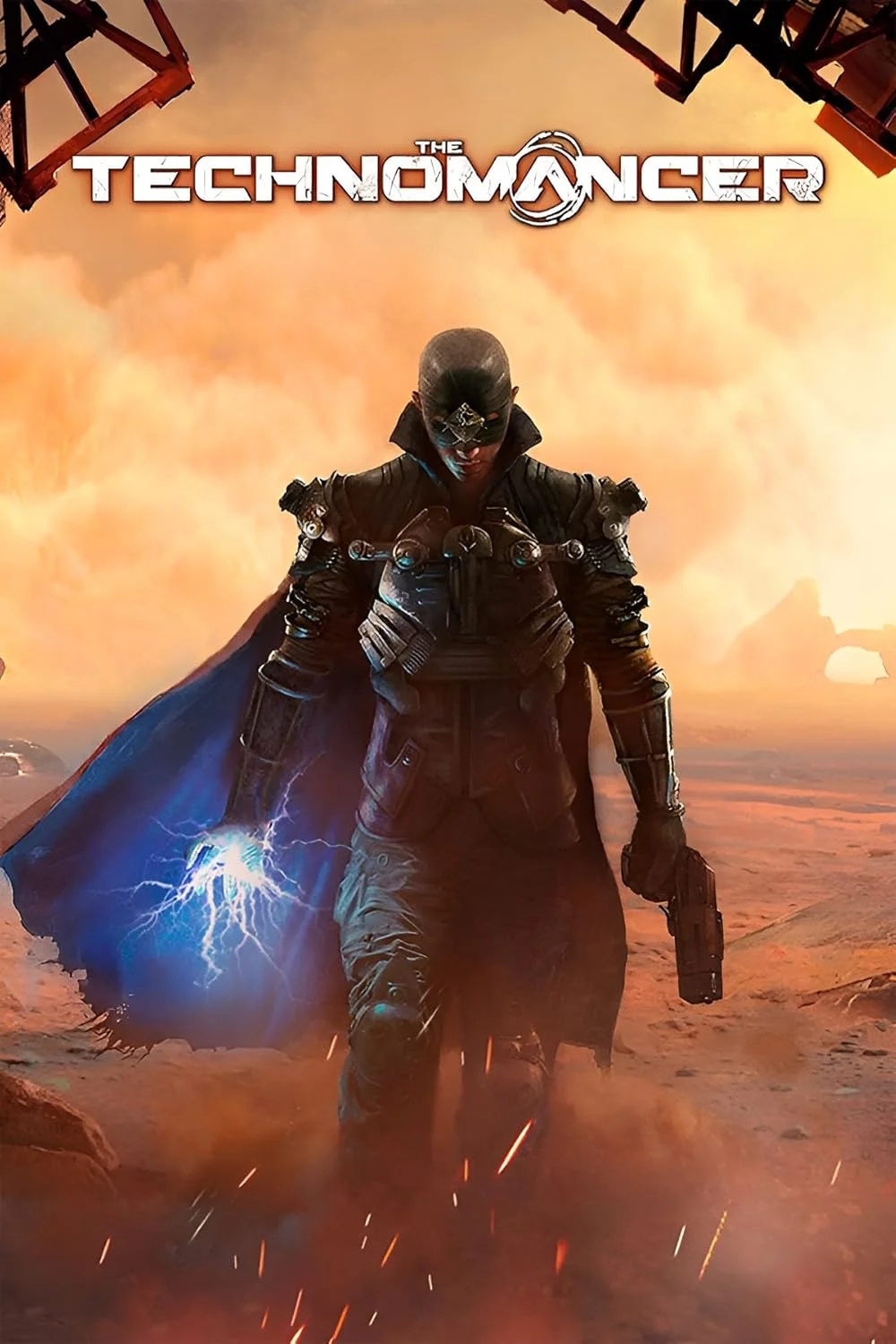
The Technomancer
This combination provides smooth gameplay with an average of 60 FPS, suitable for most gaming scenarios.
Average FPS: resolution vs quality settings
| Ultra | High | Medium | Low | |
|---|---|---|---|---|
| 4K Ultra HD | 22 | 29 | 33 | 44 |
| 1440p QHD | 41 | 52 | 61 | 79 |
| 1080p Full HD | 62 | 80 | 93 | 121 |
Cell color: green is 120+ FPS, teal is 60+, amber is 30+, red is below 30.
The Technomancer with Intel Core i7-12700KF + Intel Arc B570, In-Depth Analysis
# The Technomancer with Intel Core i7-12700KF + Intel Arc B570
The Intel Core i7-12700KF paired with the Intel Arc B570 produces a decidedly mixed experience in The Technomancer, a 2016 Action RPG that scales predictably across resolutions but struggles to maintain smooth frame rates at the highest settings. With measured averages ranging from 22 FPS at 4K Ultra to 121 FPS at 1080p Low, this combo lands in the 2256th position out of 2825 tested combinations, placing it in the lower percentile of systems evaluated for this title. The data reveals a configuration that is capable at lower fidelity targets but clearly constrained by the graphics card's limits as resolution and preset quality increase.
Resolution Scaling
The frame rate progression from 1080p to 4K follows a steep and consistent decline across all settings presets, indicating that the Intel Arc B570 becomes the primary bottleneck as pixel count rises. At High settings, the average frame rate drops from 80 FPS at 1920x1080 to 52 FPS at 2560x1440, a reduction of 28 FPS (35%), and then further to 29 FPS at 3840x2160, representing a total loss of 51 FPS (64%) from the 1080p baseline. This scaling pattern is typical of a GPU-limited scenario where the rendering workload outpaces the card's capabilities at higher resolutions.
Low settings exhibit the most dramatic absolute frame rate at 1080p with 121 FPS, but this falls to 79 FPS at 1440p and 44 FPS at 4K. The percentage drop from 1080p to 4K at Low settings is 64%, mirroring the High preset's degradation. Medium settings show a similar trajectory: 93 FPS at 1080p, 61 FPS at 1440p, and 33 FPS at 4K — a cumulative reduction of 65%. Ultra settings start at a modest 62 FPS at 1080p and plummet to 41 FPS at 1440p and 22 FPS at 4K, a total decline of 65% as well.
The consistency of these percentage drops across presets suggests that resolution scaling is uniform regardless of quality level, which points squarely at the GPU as the limiting component. The Core i7-12700KF, with its 12 cores and 20 threads, is not the bottleneck here; even at 1080p Low where the GPU produces 121 FPS, the processor's headroom is sufficient. The fact that frame rates scale almost linearly with pixel count — roughly halving when moving from 1080p to 4K — indicates that the Arc B570's 10 GB of GDDR6 memory and 380.0 GB/s bandwidth are insufficient to maintain throughput at higher resolutions, particularly when texture and shading complexity increase.
How This Combo Ranks
The combination of the Intel Core i7-12700KF and Intel Arc B570 achieves a rank of 2256 out of 2825 tested combos in The Technomancer, placing it in the bottom 20% of all system configurations evaluated. This ranking is notably worse than the individual components' standalone positions would suggest: the CPU sits at the 85th percentile among all processors, while the GPU rests at the 65th percentile among all graphics cards. The disparity between component percentiles and the final combo rank highlights how poorly this pairing performs specifically in this game, likely due to the Arc B570's architectural characteristics and driver maturity rather than raw compute capability.
Examining the GPU's nearest rivals provides context for this underperformance. The Arc B570's average benchmark score of 20556 is within 0.1% of the NVIDIA GeForce RTX 3070 Mobile (20534) and 0.1% below the Intel Arc A750 (20582). Yet in actual gameplay, these synthetic benchmark parity scores do not translate to competitive frame rates in The Technomancer. The gap between synthetic scores and real-world performance suggests that the Arc B570's driver optimization for this specific title is lacking, or that the game's engine does not efficiently utilize the card's Xe2-HPG architecture.
The CPU's nearest rivals — the Intel Core i7-13700T (35403 average score, -0.1% delta), Intel Core i5-13600T (35305, +0.2%), Intel Core 5 213PE (35428, -0.2%), and Intel Core i7-12700K (35287, +0.2%) — all exhibit nearly identical synthetic performance to the i7-12700KF's 35365 average. This indicates that the processor is performing as expected and is not the source of the combo's poor game ranking. The bottleneck is squarely in the GPU, which is confirmed by the resolution scaling analysis showing consistent GPU-limited behavior across all settings.
GPU Role
The Intel Arc B570 is built on TSMC's 5 nm process with the BMG-G21 chip, featuring 19,600 million transistors on a 272 mm² die. Its 2,304 shading units, 144 texture mapping units, and 80 raster output pipelines deliver a theoretical FP32 performance of 11.52 TFLOPS. The card operates at a fixed 2500 MHz base and boost clock, with memory running at 2375 MHz (19 Gbps effective) across a 160-bit bus, yielding 380.0 GB/s of bandwidth. The 10 GB GDDR6 frame buffer is substantial for a card in this tier, yet the memory bus width of 160 bits may constrain performance in memory-intensive scenarios.
In The Technomancer, the GPU's role as the limiting factor is unambiguous. At 1080p Low, the card produces 121 FPS, which demonstrates respectable raw throughput for lighter workloads. However, the frame rate collapses to 44 FPS at 4K Low, a drop of 64% that cannot be attributed to the CPU. The Arc B570's pixel rate of 200.0 GPixel/s and texture rate of 360.0 GTexel/s are the theoretical ceilings, but real-world performance falls far short of these numbers at higher resolutions, suggesting that memory bandwidth (380.0 GB/s) is the primary constraint.
The synthetic benchmark scores for the Arc B570 — 14195 in Passmark G3D, 2649 in 3DMark Steel Nomad DX12, 96844 in Geekbench Vulkan, and 83514 in Geekbench OpenCL — indicate a capable mid-range card. Yet in this game, the card's percentile rank of 65 among all GPUs does not translate to playable frame rates at 4K, where even Medium settings only achieve 33 FPS. The GPU's 18 ray tracing cores are irrelevant for this 2016 title, which predates widespread RT adoption, and the card's DirectX 12 Ultimate support does not appear to provide any advantage in this older engine.
Settings Recommendations
Based on the measured frame rates, the optimal experience balances visual fidelity with playable performance. At 1920x1080, Medium settings deliver 93 FPS average with a minimum of 79 FPS and maximum of 107 FPS, providing smooth gameplay while maintaining moderate visual quality. High settings at 1080p achieve 80 FPS, which is still fluid, but the jump to Medium offers a 16% frame rate improvement with only a modest reduction in graphical detail. Ultra settings at 1080p drop to 62 FPS, which is playable but begins to approach the threshold where frame pacing issues become noticeable.
For 2560x1440, Medium settings produce 61 FPS with a minimum of 52 FPS and maximum of 70 FPS, which is the recommended configuration for this resolution. High settings at 1440p yield 52 FPS, which is borderline for smooth gameplay, while Low settings at 79 FPS sacrifice too much visual quality for only a 30% gain over Medium. Ultra at 1440p falls to 41 FPS, which is below the ideal threshold for a responsive experience.
At 3840x2160, no setting provides a fully smooth experience. Low settings achieve 44 FPS, which is the highest 4K average available, but even this is marginal. Medium settings drop to 33 FPS with a minimum of 28 FPS, which is not recommended for action-oriented gameplay. High and Ultra at 4K produce 29 FPS and 22 FPS respectively, making them unsuitable for anything but static exploration. Users targeting 4K should accept Low settings at best, or consider reducing resolution to 1440p for a better balance.
Measured FPS Breakdown
At 1920x1080, the full range of settings shows clear tiering. Low settings average 121 FPS, representing the absolute ceiling for this combo. Medium settings average 93 FPS, with a minimum of 79 FPS and maximum of 107 FPS, demonstrating solid frame pacing. High settings average 80 FPS, a 14% reduction from Medium. Ultra settings average 62 FPS, a 34% drop from Medium and 49% below Low. The spread between Low and Ultra at 1080p is 59 FPS, showing that the preset choice significantly impacts performance.
At 2560x1440, Low settings average 79 FPS, which is 35% lower than the 1080p Low result. Medium settings average 61 FPS, with a minimum of 52 FPS and maximum of 70 FPS, maintaining a playable range. High settings average 52 FPS, a 15% reduction from Medium. Ultra settings average 41 FPS, which is 34% below Medium and 48% below Low. The resolution increase from 1080p to 1440p costs roughly 35% of performance at every preset level.
At 3840x2160, Low settings average 44 FPS, a 44% drop from the 1440p Low result. Medium settings average 33 FPS, with a minimum of 28 FPS and maximum of 39 FPS, showing significant frame time variance. High settings average 29 FPS, and Ultra settings average 22 FPS. The progression from 1440p to 4K costs another 44-46% of performance, compounding the earlier resolution penalty. The data shows that this combo is best suited for 1080p gaming, acceptable at 1440p with Medium settings, and marginal at 4K even on Low.
FAQ
Q: What is the best resolution for this CPU-GPU combo in The Technomancer?
A: The data shows 1920x1080 provides the most consistent results, with Medium settings achieving 93 FPS average (79 FPS minimum, 107 FPS maximum). At 2560x1440, Medium settings drop to 61 FPS average, while 3840x2160 peaks at 44 FPS on Low settings.
Q: How does the Intel Arc B570 compare to its nearest rivals in synthetic benchmarks?
A: The Arc B570's average benchmark score of 20556 is within 0.1% of the NVIDIA GeForce RTX 3070 Mobile (20534) and 0.1% below the Intel Arc A750 (20582). It also sits 0.4% above the NVIDIA Quadro M4000M (20480) and 0.5% below the AMD Radeon R9 M390X (20662).
Q: Is the Intel Core i7-12700KF the bottleneck in this configuration?
A: No. The CPU ranks at the 85th percentile among all processors with an average benchmark score of 35365, while the GPU ranks at the 65th percentile. The resolution scaling pattern — consistent 64-65% frame rate drops from 1080p to 4K across all presets — indicates the GPU is the limiting component.
Q: Can this combo handle 4K gaming in The Technomancer?
A: Only at Low settings, which average 44 FPS. Medium settings drop to 33 FPS with a minimum of 28 FPS, and High/Ultra fall to 29 FPS and 22 FPS respectively. None of these provide a consistently smooth experience for action gameplay.
Q: What settings provide the best balance of visual quality and performance?
A: At 1080p, Medium settings (93 FPS) offer the best trade-off. At 1440p, Medium settings (61 FPS) are recommended. At 4K, Low settings (44 FPS) are the only viable option, though frame rates remain borderline.
Q: How does this combo rank compared to all tested systems for this game?
A: The combo ranks 2256th out of 2825 tested configurations, placing it in the bottom 20% of all combinations evaluated for The Technomancer. This is notably worse than the individual component percentiles might suggest, indicating poor game-specific optimization for this pairing.
Hardware Specifications
Intel Core i7-12700KF
Intel Arc B570
FPS Benchmarks by Resolution & Settings
Performance data for Intel Core i7-12700KF + Intel Arc B570 in The Technomancer
| Resolution | Settings | Avg FPS |
|---|---|---|
| 3840x2160 | Low | 44.0 |
| 3840x2160 | Medium | 33.0 |
| 3840x2160 | High | 29.0 |
| 3840x2160 | Ultra | 22.0 |
| 2560x1440 | Low | 79.0 |
| 2560x1440 | Medium | 61.0 |
| 2560x1440 | High | 52.0 |
| 2560x1440 | Ultra | 41.0 |
| 1920x1080 | Low | 121.0 |
| 1920x1080 | Medium | 93.0 |
| 1920x1080 | High | 80.0 |
| 1920x1080 | Ultra | 62.0 |
The Technomancer with ii7-12700KF + Other GPUs
See how The Technomancer performs with the same CPU but different graphics cards.
The Technomancer with Arc B570 + Other CPUs
See how The Technomancer performs with the same GPU but different processors.
Other Games with ii7-12700KF + Arc B570
Explore FPS benchmarks for other games using this same hardware combination.