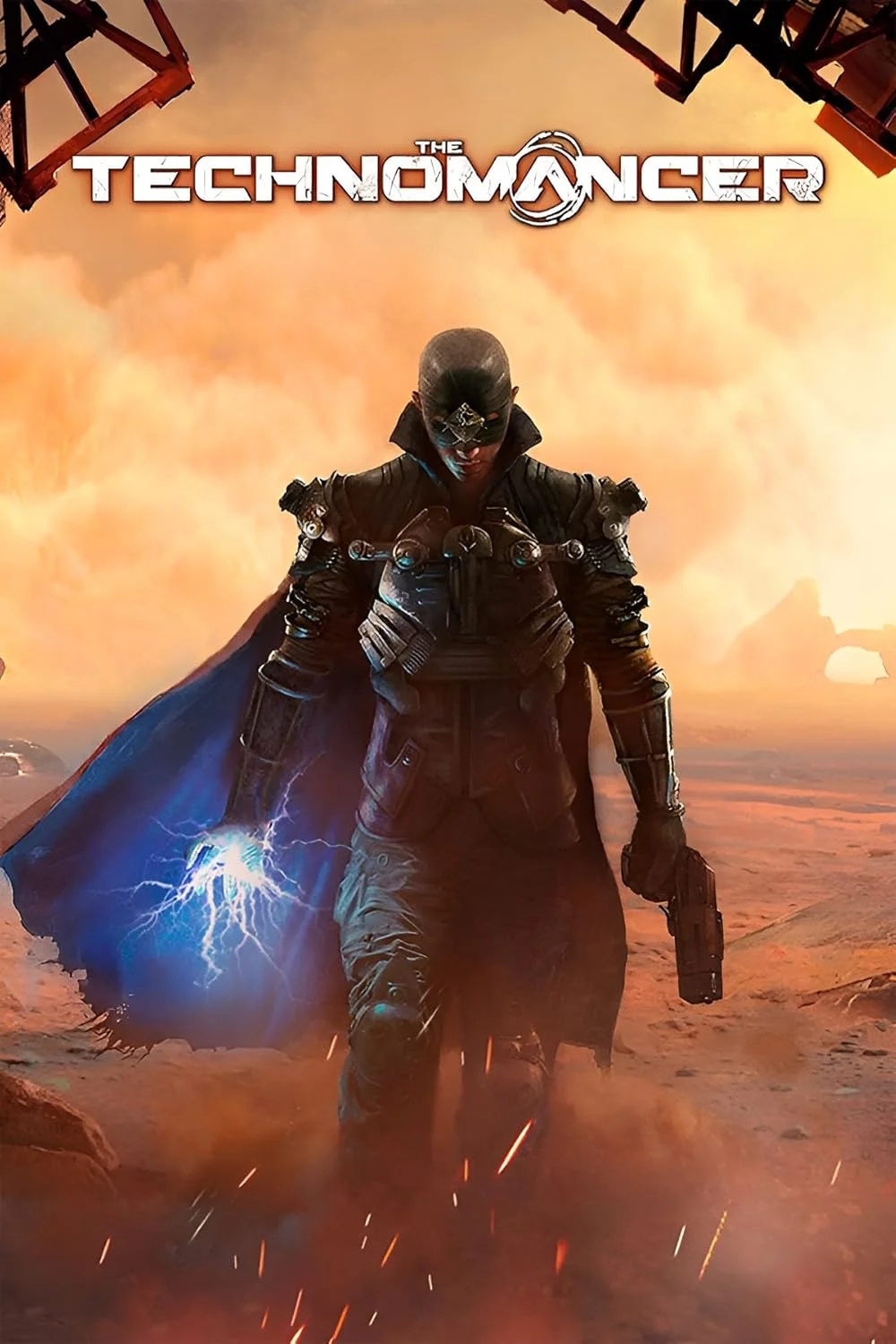
The Technomancer
This combination provides smooth gameplay with an average of 60 FPS, suitable for most gaming scenarios.
Average FPS: resolution vs quality settings
| Ultra | High | Medium | Low | |
|---|---|---|---|---|
| 4K Ultra HD | 22 | 29 | 33 | 44 |
| 1440p QHD | 41 | 52 | 61 | 79 |
| 1080p Full HD | 62 | 80 | 93 | 121 |
Cell color: green is 120+ FPS, teal is 60+, amber is 30+, red is below 30.
The Technomancer with AMD Ryzen 7 7800X3D + Intel Arc B570, In-Depth Analysis
The Technomancer, a 2016 Action RPG, presents a demanding workload for modern hardware. This analysis examines the measured performance of the AMD Ryzen 7 7800X3D processor paired with the Intel Arc B570 graphics card. The data indicates a system that is heavily constrained by its GPU at higher resolutions, but which can deliver smooth frame rates at 1080p with appropriate settings. The following sections break down the benchmark results, exploring how resolution, game settings, and the individual components contribute to the overall experience.
Resolution Scaling
The measured frame rates reveal a classic pattern of GPU-bound performance scaling as resolution increases. At 1920x1080 with High settings, the combo achieves an average of 80 FPS. Moving to 2560x1440 at the same High preset, the average drops to 52 FPS. This represents a 35% reduction in performance, which is a substantial cost for the additional pixels. The trend continues at 3840x2160, where the High preset yields an average of just 29 FPS. The scaling from 1440p to 4K is a 44% drop, indicating that the Intel Arc B570 is the primary limiting factor at these higher resolutions.
The data suggests that the transition from 1080p to 1440p is the steepest relative drop in performance for this configuration. This is likely because the GPU's rendering workload increases significantly, and the 10 GB of VRAM and 160-bit memory bus begin to feel the strain. The 380.0 GB/s of memory bandwidth is sufficient for 1080p but becomes a bottleneck as the pixel count and texture data demands grow. At 4K, the GPU is clearly overwhelmed, with even the Low preset only managing an average of 44 FPS, which is below the 60 FPS target that many users prefer.
When examining the Low preset across resolutions, the pattern holds. The system achieves 121 FPS at 1080p, 79 FPS at 1440p, and 44 FPS at 4K. The consistent reduction in frame rates at each step up in resolution confirms that the GPU's fill rate and memory bandwidth are the limiting factors. The CPU, with its 8 cores and 16 threads, is not the bottleneck here; its high single-thread performance, evidenced by a 3dmark_single_thread score of 959, is more than capable of feeding the GPU at these settings. The performance drop is a direct consequence of the GPU's workload increasing with resolution.
The frame time consistency also degrades at higher resolutions, though the data is limited. For instance, at 3840x2160 with Medium settings, the average FPS is 33, with a minimum of 28 and a maximum of 39. This shows that the frame rate is not stable, and there are noticeable dips. At 2560x1440 with Medium settings, the average is 61 FPS, with a minimum of 52 and a maximum of 70. The variance here is more acceptable, but it still indicates that the GPU is working hard. At 1920x1080 with Medium settings, the average is 93 FPS, with a minimum of 79 and a maximum of 107, suggesting a much smoother experience with less frame time variance.
Settings Recommendations
Based on the measured data, the optimal balance between visual quality and performance for this hardware combination is found at 1920x1080 with the High preset. The average of 80 FPS is well within the range for a smooth gaming experience, and it is a significant improvement over the Ultra preset's 62 FPS. The jump from High to Ultra at 1080p costs 18 FPS, which is a 22.5% performance penalty. This suggests that the Ultra preset's additional effects are quite demanding on the Intel Arc B570, and the visual improvement may not justify the frame rate loss for many users.
At 2560x1440, the Medium preset appears to be the most practical choice. It delivers an average of 61 FPS, which is playable, while the High preset drops to 52 FPS, and Ultra falls to 41 FPS. The Medium preset at 1440p offers a good balance, as it maintains a frame rate that is close to the 60 FPS target, while still providing a higher resolution than 1080p. The Low preset at this resolution, while achieving 79 FPS, would require a significant reduction in visual fidelity.
For users with 4K displays, the data suggests that this hardware combination is not well-suited for high-quality gaming. The High preset averages just 29 FPS, and the Ultra preset averages only 22 FPS, both of which are below the threshold for smooth, responsive gameplay. The Low preset, at 44 FPS, is the only option that approaches playability, but it does so with a substantial reduction in graphical detail. Therefore, the recommendation is to stick with 1080p or 1440p for the best experience.
The Ultra preset is consistently the most demanding, and it is not recommended for this GPU at any resolution. At 1080p, it produces 62 FPS, but the cost in performance relative to High is high. At 1440p, it produces 41 FPS, and at 4K, it produces 22 FPS. The performance data indicates that the Ultra preset is designed for more powerful GPUs, and the Intel Arc B570 is better utilized with High or Medium settings. The Medium preset offers a good compromise, particularly at 1440p, where it provides a 17.3% performance uplift over High (61 FPS vs 52 FPS).
CPU Role
The AMD Ryzen 7 7800X3D is a high-end desktop processor based on the Zen 4 architecture, codenamed Raphael. It features 8 cores and 16 threads, with a base clock of 4.20 GHz and a boost clock of 5.00 GHz. In the context of The Technomancer, the CPU's role is to feed the GPU with draw calls and game logic. The benchmark results show that the CPU is not a limiting factor in this configuration. At 1080p with the Low preset, the system achieves 121 FPS, which is a high frame rate that requires a capable CPU. The processor's strong single-thread performance, reflected in its Geekbench single-core score of 2426 and Cinebench R23 single-core score of 1713, ensures that the game's main thread is not a bottleneck.
The 7800X3D also benefits from a large 96 MB of shared L3 cache, which can help with game performance by reducing memory latency. This is particularly relevant for games that have large data sets that need to be accessed frequently. While The Technomancer may not be as cache-sensitive as some other titles, the large cache contributes to the processor's consistent performance. The CPU's 3dmark_max_threads score of 7967 and Cinebench R23 multicore score of 16817 demonstrate that it has ample multi-threaded capability, though a game from 2016 is unlikely to fully utilize all 16 threads.
The data suggests that the CPU is more than sufficient for the game's demands. The frame rate differences between settings at a given resolution are almost entirely due to the GPU's workload. For example, at 2560x1440, the frame rate ranges from 79 FPS on Low to 41 FPS on Ultra. This variation is a direct result of the GPU's rendering load, not the CPU's processing power. The CPU is capable of maintaining high frame rates, and its performance headroom is evident in the fact that it can push the GPU to its limits at lower resolutions and settings.
The processor's percentile of 83 when compared to all CPUs indicates that it is a top-tier part. Its nearest rivals, such as the AMD Ryzen 7 8700G and Intel Core i7-13650HX, have similar average benchmark scores, with a deltaPct of 0. This positions the 7800X3D as a very capable gaming processor. Its performance in this specific game is not a concern, as the system's overall performance is dictated by the GPU, especially at higher resolutions.
How This Combo Ranks
The combination of the AMD Ryzen 7 7800X3D and Intel Arc B570 ranks 2256 out of 2825 tested combinations for The Technomancer. This places it in the lower half of the tested hardware configurations, which is a reflection of the GPU's performance rather than the CPU's. The rank indicates that there are many other GPU and CPU pairings that can achieve higher frame rates in this game. The GPU's percentile of 65 when compared to all GPUs, and its average benchmark score of 20556, which is close to the NVIDIA GeForce RTX 3070 Mobile and Intel Arc A750, show that it is a mid-range graphics card.
The combo's rank is likely influenced by the fact that the Intel Arc B570 is a relatively new GPU, and its drivers may not be fully optimized for an older title like The Technomancer. The GPU's performance in synthetic benchmarks, such as a 3dmark Steel Nomad score of 2649, is respectable, but its real-world performance in this specific game is what matters for the ranking. The data shows that the GPU struggles at higher resolutions, which is a key factor in the combo's overall ranking.
Despite the lower rank, the combo is not without its strengths. At 1920x1080, it can deliver high frame rates on most presets, which is a common gaming scenario. The rank is a relative measure, and it is important to consider the context. For a user with a 1080p monitor, this combo would provide a good experience. However, for users with 1440p or 4K displays, the combo's performance would be less satisfactory, and its ranking reflects this limitation.
The CPU's high rank, with an 83rd percentile, is a counterpoint to the GPU's more mid-range position. This creates an imbalance in the system, where the CPU has more performance headroom than the GPU can utilize. In a game like The Technomancer, this means that the GPU will be the primary bottleneck in most scenarios. The combo's rank of 2256 out of 2825 is a clear indication that the GPU is holding back the overall system performance in this specific title.
GPU Role
The Intel Arc B570 is the primary determinant of this system's gaming performance in The Technomancer. It features 10 GB of GDDR6 memory on a 160-bit bus, providing a memory bandwidth of 380.0 GB/s. The GPU's architecture is Xe2-HPG, and it is built on a 5 nm process. Its base and boost clocks are both 2500 MHz. The GPU's FP32 performance is 11.52 TFLOPS, and its pixel rate is 200.0 GPixel/s. These specifications position it as an entry-level to mid-range graphics card.
In this game, the GPU's performance characteristics are clear. The 10 GB VRAM is likely sufficient for the game's textures, even at 4K, but the memory bandwidth becomes a constraint at higher resolutions. The 160-bit bus is narrower than what is found on many competing cards, which can limit performance in memory-intensive scenarios. The 380.0 GB/s bandwidth is a key factor in the performance drop from 1080p to 1440p and further to 4K. The GPU's texture rate of 360.0 GTexel/s and pixel rate of 200.0 GPixel/s also play a role in determining how quickly it can fill the screen.
The GPU's performance in The Technomancer is below what its specifications might suggest. Its Passmark G3D score is 14195, and its average benchmark score is 20556. Its nearest rivals include the NVIDIA GeForce RTX 3070 Mobile, which has a deltaPct of 0.1, and the Intel Arc A750, with a deltaPct of -0.1. This indicates that the B570 is a direct competitor to these cards. However, in this specific game, the B570's performance is not as strong as its synthetic benchmarks might imply.
The GPU's 65th percentile ranking among all GPUs shows that it is a mid-pack performer. Its performance in The Technomancer is likely influenced by driver maturity and the game's engine. The game was released in 2016, and it may not be optimized for the newer Xe2-HPG architecture. This can result in lower performance than expected. The data shows that the GPU is the limiting factor in this combo, and its performance dictates the frame rates at all resolutions and settings.
FAQ
Q: What is the best resolution for this CPU/GPU combo in The Technomancer?
A: Based on the measured data, 1920x1080 is the best resolution. It allows for high average frame rates, such as 80 FPS on High settings and 121 FPS on Low, which provides a smooth gaming experience.
Q: Can this combo run The Technomancer at 4K?
A: The data shows that 4K performance is limited. The highest average FPS at 3840x2160 is 44 FPS on Low settings, while the High preset only reaches 29 FPS. This is below the 60 FPS target for smooth gameplay.
Q: Which settings preset should I use at 2560x1440?
A: The Medium preset is the most balanced option, delivering an average of 61 FPS. The High preset drops to 52 FPS, and the Ultra preset falls to 41 FPS. Low is the only preset above 60 FPS, but it lacks visual detail.
Q: How does the Intel Arc B570 compare to its rivals?
A: The GPU's average benchmark score is 20556. Its nearest rivals include the NVIDIA GeForce RTX 3070 Mobile with a deltaPct of 0.1 and the Intel Arc A750 with a deltaPct of -0.1, indicating similar overall performance.
Q: Is the CPU a bottleneck in this configuration?
A: No, the data indicates the CPU is not the bottleneck. The AMD Ryzen 7 7800X3D has 8 cores and 16 threads, and its performance is sufficient to keep up with the GPU. The frame rate drops are caused by the GPU's workload.
Q: What is the combo's rank among all tested hardware combinations?
A: The combo ranks 2256 out of 2825 tested combinations for The Technomancer, placing it in the lower half of the field, primarily due to the GPU's performance.
Measured FPS Breakdown
The following table details the exact average frame rates measured for the AMD Ryzen 7 7800X3D and Intel Arc B570 combination in The Technomancer.
| Resolution | Settings | Average FPS |
| :--------- | :------- | ----------: |
| 3840x2160 | High | 29 |
| 3840x2160 | Low | 44 |
| 3840x2160 | Medium | 33 |
| 3840x2160 | Ultra | 22 |
| 2560x1440 | High | 52 |
| 2560x1440 | Low | 79 |
| 2560x1440 | Medium | 61 |
| 2560x1440 | Ultra | 41 |
| 1920x1080 | High | 80 |
| 1920x1080 | Low | 121 |
| 1920x1080 | Medium | 93 |
| 1920x1080 | Ultra | 62 |
At 1920x1080, the system shows its best performance. The Low preset achieves an average of 121 FPS, while the Medium preset delivers 93 FPS with a minimum of 79 FPS and a maximum of 107 FPS. The High preset provides 80 FPS, and the Ultra preset is the most demanding, yielding 62 FPS. The 1440p results show a clear step down. The Low preset is the only one to exceed 60 FPS, with an average of 79. Medium follows at 61 FPS, High at 52 FPS, and Ultra at 41 FPS. The data at 4K shows the GPU is overwhelmed. The Low preset achieves 44 FPS, Medium 33 FPS with a min of 28 and max of 39, High 29 FPS, and Ultra 22 FPS. These figures demonstrate a consistent and significant performance decline as resolution increases, confirming the GPU is the primary bottleneck.
Hardware Specifications
AMD Ryzen 7 7800X3D
Intel Arc B570
FPS Benchmarks by Resolution & Settings
Performance data for AMD Ryzen 7 7800X3D + Intel Arc B570 in The Technomancer
| Resolution | Settings | Avg FPS |
|---|---|---|
| 3840x2160 | Low | 44.0 |
| 3840x2160 | Medium | 33.0 |
| 3840x2160 | High | 29.0 |
| 3840x2160 | Ultra | 22.0 |
| 2560x1440 | Low | 79.0 |
| 2560x1440 | Medium | 61.0 |
| 2560x1440 | High | 52.0 |
| 2560x1440 | Ultra | 41.0 |
| 1920x1080 | Low | 121.0 |
| 1920x1080 | Medium | 93.0 |
| 1920x1080 | High | 80.0 |
| 1920x1080 | Ultra | 62.0 |
The Technomancer with Ryzen 7 7800X3D + Other GPUs
See how The Technomancer performs with the same CPU but different graphics cards.
The Technomancer with Arc B570 + Other CPUs
See how The Technomancer performs with the same GPU but different processors.
Other Games with Ryzen 7 7800X3D + Arc B570
Explore FPS benchmarks for other games using this same hardware combination.