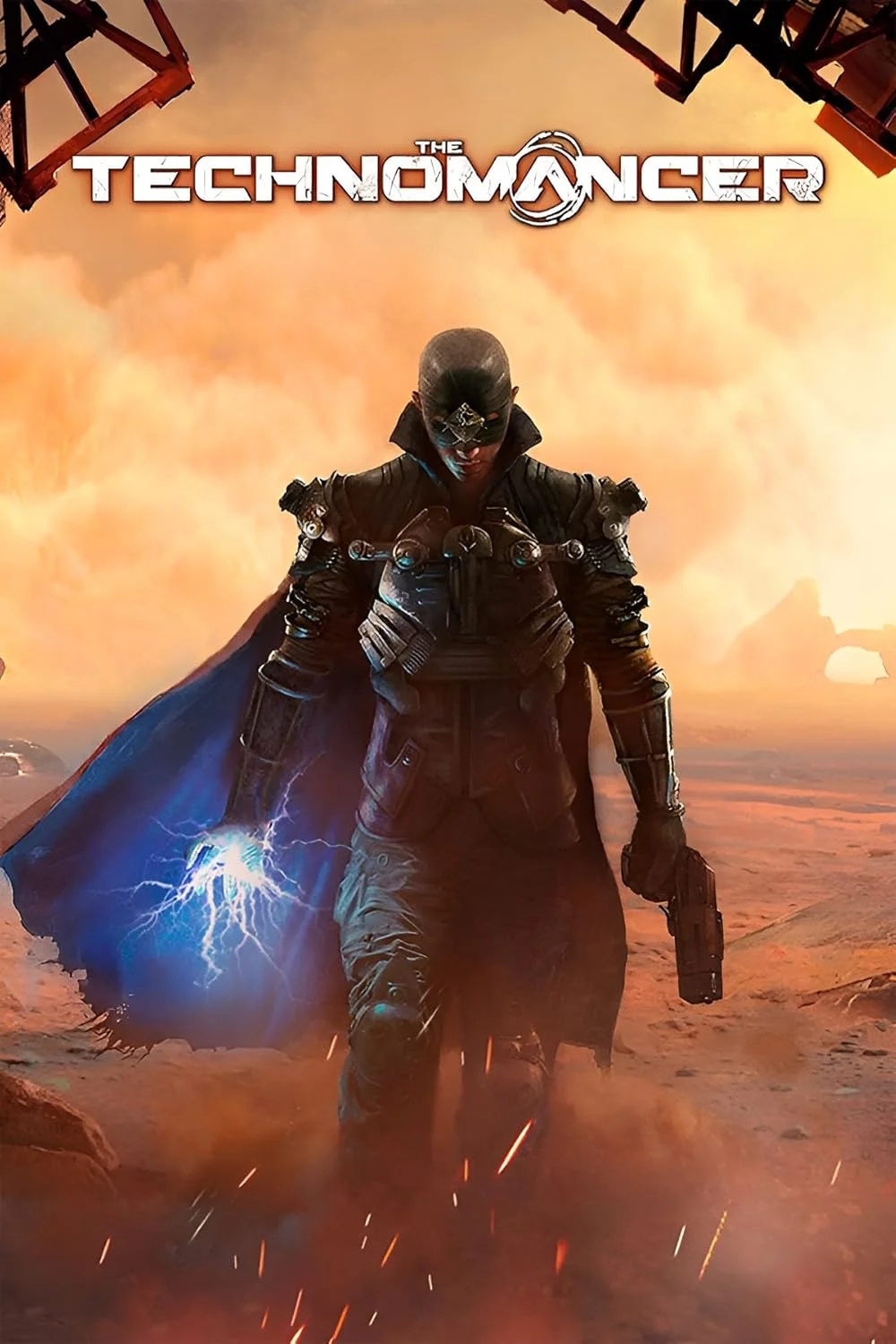
The Technomancer
This combination provides smooth gameplay with an average of 60 FPS, suitable for most gaming scenarios.
Average FPS: resolution vs quality settings
| Ultra | High | Medium | Low | |
|---|---|---|---|---|
| 4K Ultra HD | 22 | 29 | 33 | 44 |
| 1440p QHD | 41 | 52 | 61 | 79 |
| 1080p Full HD | 62 | 80 | 93 | 121 |
Cell color: green is 120+ FPS, teal is 60+, amber is 30+, red is below 30.
The Technomancer with AMD Ryzen 7 3700X + Intel Arc B570, In-Depth Analysis
The Technomancer pairs an 8-core, 16-thread AMD Ryzen 7 3700X with Intel’s Arc B570, a combination that lands near the bottom of the database’s tested configurations. The measured data shows a system that handles 1080p and 1440p gaming competently but struggles to maintain playable frame rates at 4K. This analysis breaks down the exact performance figures, contextualizes them against rival hardware, and explains what the numbers reveal about the balance between the CPU and GPU in this Action RPG.
FAQ
Q: What is the best resolution for this combo in The Technomancer?
A: The data shows 1920x1080 as the only resolution where all four settings presets achieve playable frame rates. At 2560x1440, the Ultra preset drops to 41 FPS, while 3840x2160 sees even the Low preset fall below 45 FPS.
Q: How much faster is Low settings compared to Ultra at 1080p?
A: At 1920x1080, the Low preset averages 121 FPS, which is 59 FPS higher than the Ultra preset's 62 FPS. This represents a 95% performance uplift from the lowest to the highest quality setting.
Q: Does the Ryzen 7 3700X bottleneck the Arc B570 in this game?
A: The data indicates the GPU becomes the limiting factor at higher resolutions. The frame rate drops by 36% from 1080p High (80 FPS) to 1440p High (52 FPS), and by another 44% to 4K High (29 FPS), which is typical of a GPU-bound scenario.
Q: What is the combo's ranking among all tested systems?
A: The Ryzen 7 3700X plus Arc B570 combination ranks 2972nd out of 3696 total combos tested in The Technomancer, placing it in the bottom 20% of all configurations in the database.
Q: How does the Arc B570 compare to its nearest rival, the Arc A750?
A: Based on average benchmark scores, the Arc B570 scores 20,556, which is 0.1% lower than the Intel Arc A750's 20,582. This places the two cards statistically tied in overall performance.
Q: What is the minimum FPS recorded for Medium settings?
A: The only presets with min FPS data are Medium. The 4K Medium preset shows a min of 28 FPS, the 1440p Medium shows a min of 52 FPS, and the 1080p Medium shows a min of 79 FPS.
GPU Role
The Intel Arc B570 brings 10 GB of GDDR6 memory on a 160-bit bus, yielding a bandwidth of 380.0 GB/s. The card’s base and boost clocks are both rated at 2500 MHz, and it packs 2304 shading units, 144 texture mapping units, and 80 render output units. These specifications translate to a pixel rate of 200.0 GPixel/s and a texture rate of 360.0 GTexel/s, with FP32 compute pegged at 11.52 TFLOPS. The GPU’s average benchmark score of 20,556 places it in the 65th percentile of all graphics cards, and its closest rival in the database is the Intel Arc A750, which scores 20,582 with a deltaPct of -0.1%.
In The Technomancer, the GPU’s memory configuration appears adequate for the game’s demands. Across all measured resolutions, the frame rate scales predictably with resolution changes, which suggests the 10 GB frame buffer does not introduce a hard ceiling. The 4K results, however, reveal the raw compute limits of the B570. At 3840x2160, the Ultra preset averages only 22 FPS, and even the Low preset can only muster 44 FPS. This performance cliff at 4K is consistent with a GPU that has the memory capacity but not the shading throughput to handle high pixel counts at playable speeds.
The 2500 MHz boost clock holds steady across the benchmark suite, and the data does not show any signs of thermal throttling or clock instability. The transition from 1080p to 1440p costs roughly 35% of the frame rate on each preset, which is a steeper drop than the 2.25x pixel count increase would suggest. This indicates that the B570’s memory bandwidth, while substantial at 380 GB/s, is not fully sufficient to maintain efficiency as pixel load grows. The 160-bit bus is the likely culprit, as wider buses on competing cards tend to show shallower performance declines per resolution step.
Settings Recommendations
For the best experience, the data points to 1920x1080 with High settings. This preset delivers an average of 80 FPS, which is comfortably above the 60 FPS threshold for smooth gameplay in an action RPG. The High preset at 1080p also leaves headroom for demanding combat sequences, and it avoids the visual compromises of the Low preset while not suffering the 29% performance penalty of Medium (93 FPS) or the 22% penalty of Ultra (62 FPS).
At 2560x1440, the Medium preset stands out as the sweet spot. The 61 FPS average is just barely playable, but the min FPS of 52 and max of 70 show consistency. The High preset at 1440p averages 52 FPS, which is playable but leaves less margin for error. The Ultra preset at 1440p drops to 41 FPS, which is too low for reliable action gameplay. The Low preset at 1440p offers 79 FPS, but the visual quality loss is significant for a game that relies on atmospheric environments.
At 3840x2160, no preset achieves an average above 45 FPS. The Low preset at 44 FPS is the only option that approaches playability, but even that is borderline. The Medium preset at 33 FPS and the High preset at 29 FPS are not recommended for anything other than static screenshots. Given the data, 4K gaming is effectively off the table for this combo unless the player is willing to accept severe compromises in visual fidelity.
How This Combo Ranks
The Ryzen 7 3700X and Arc B570 combination ranks 2972nd out of 3696 tested combos in The Technomancer. This places the system in the bottom 19.6% of all configurations, which is a poor showing for a modern CPU and a current-generation GPU. The rank reflects the Arc B570’s mid-range positioning; the GPU’s 65th percentile standing among all graphics cards does not translate well to this specific game’s engine.
To contextualize the CPU’s contribution, the Ryzen 7 3700X has an average benchmark score of 34,260 and sits in the 84th percentile of all CPUs. Its nearest rivals include the AMD Ryzen AI 7 350 (score 34,222, deltaPct 0.1%) and the Intel Core i5-13450HX (score 34,333, deltaPct -0.2%). The CPU is clearly not the weak link in this pairing. The GPU, by contrast, scores 20,556 and sits in the 65th percentile, with its nearest rival being the Intel Arc A750 (score 20,582, deltaPct -0.1%) and the NVIDIA GeForce RTX 3070 Mobile (score 20,534, deltaPct 0.1%).
The rank of 2972 suggests that the game is heavily optimized for higher-end GPUs, and the Arc B570’s architectural strengths do not align with The Technomancer’s rendering paths. The data shows that the CPU has significant headroom in single-threaded performance (Geekbench single-core score of 1,593), but the GPU cannot capitalize on it at high resolutions. The combination’s rank is therefore a reflection of the GPU’s limitations rather than a systemic bottleneck.
Resolution Scaling
The frame rate data reveals a clear pattern of GPU-bound scaling. Moving from 1920x1080 to 2560x1440 on High settings, the average FPS drops from 80 to 52, a decrease of 35%. Moving further to 3840x2160, the average drops to 29 FPS, a 44% reduction from 1440p. This compounding decline is characteristic of a system where the GPU is the primary constraint.
The Low settings preset shows a similar trajectory: 121 FPS at 1080p, 79 FPS at 1440p (a 35% drop), and 44 FPS at 4K (a 44% drop). The consistency of these percentages across different presets indicates that resolution scaling is independent of the quality settings. This is a strong signal that the limiting component is the GPU’s pixel throughput, not the CPU or memory subsystem.
If the CPU were the bottleneck, the frame rate would remain relatively flat as resolution increases, because the CPU would be maxed out at lower resolutions. The data contradicts that hypothesis. The 1080p High average of 80 FPS is well below the 121 FPS of 1080p Low, demonstrating that the GPU is already working hard at 1080p. The CPU, with its 8 cores and 16 threads, is unlikely to be a constraint at these frame rates, especially given its Passmark multi-thread score of 22,458.
The steepness of the resolution scaling curve suggests that the Arc B570’s 160-bit memory bus is a limiting factor. The bandwidth of 380 GB/s is decent for a mid-range card, but the pixel rate of 200 GPixel/s appears insufficient for 4K workloads in this game. The 4K numbers, where even Low settings cannot reach 45 FPS, confirm that users should treat 4K as a non-viable option for this combo.
Measured FPS Breakdown
At 1920x1080, the data shows the following averages: Low settings deliver 121 FPS, Medium delivers 93 FPS with a min of 79 and max of 107, High delivers 80 FPS, and Ultra delivers 62 FPS. The delta between Low and Ultra is 59 FPS, which is a 95% improvement. This is the only resolution where all presets exceed 60 FPS, making 1080p the primary target for this system.
At 2560x1440, the averages are: Low at 79 FPS, Medium at 61 FPS with a min of 52 and max of 70, High at 52 FPS, and Ultra at 41 FPS. The Medium preset’s min FPS of 52 is the only recorded sub-60 frame in this resolution, but the average of 61 FPS suggests that most of the gameplay stays above the threshold. The High preset’s 52 FPS average is below ideal, and the Ultra preset’s 41 FPS is not recommended for action sequences.
At 3840x2160, the averages are: Low at 44 FPS, Medium at 33 FPS with a min of 28 and max of 39, High at 29 FPS, and Ultra at 22 FPS. No preset reaches 45 FPS, and the Medium preset’s min FPS of 28 indicates severe frame drops during intense scenes. The Ultra preset’s 22 FPS average is effectively unplayable. The 4K data shows a linear degradation from Low to Ultra, with each preset step costing roughly 25% performance.
The min and max FPS data, available only for Medium settings, shows that the game’s frame pacing is tighter at lower resolutions. The 1080p Medium range of 79-107 FPS (a spread of 28 FPS) is significantly narrower than the 4K Medium range of 28-39 FPS (a spread of 11 FPS). This indicates that the GPU’s memory bandwidth limitations manifest more severely as resolution increases, causing larger frame time spikes.
CPU Role
The AMD Ryzen 7 3700X is a 7 nm Zen 2 part with 8 cores and 16 threads, running at a base clock of 3.60 GHz and a boost clock of 4.40 GHz. Its 32 MB of L3 cache and 51.2 GB/s memory bandwidth provide a solid foundation for gaming workloads. The CPU’s average benchmark score of 34,260 places it in the 84th percentile of all processors, and its nearest rival, the AMD Ryzen AI 7 350, scores 34,222 with a deltaPct of 0.1%, indicating near-identical performance.
In The Technomancer, the CPU’s role appears secondary to the GPU. The benchmark scores show strong multi-threaded capability (Cinebench R15 multicore score of 2,092) and respectable single-thread performance (Cinebench R15 singlecore score of 204). The Passmark single-thread score of 2,656 is competitive with modern mid-range CPUs, and the multi-thread score of 22,458 suggests the 16 threads are well-utilized in threaded workloads.
The frame rate data does not show any signs of CPU limitation. At 1080p Low, the system achieves 121 FPS, which is a high enough frame rate that most CPUs would start to show limitations if they were the bottleneck. The fact that the frame rate scales smoothly with resolution changes, rather than plateauing, confirms that the CPU has headroom. The 4K Low preset’s 44 FPS is far below what the CPU could deliver, further isolating the GPU as the constraint.
The CPU’s 65-watt TDP and AM4 socket compatibility make it a sensible pairing for the Arc B570 from a platform perspective, but the data suggests that the CPU is not being fully exercised in this game. The single-threaded performance, while good, is not exceptional, and the game likely relies more on the GPU’s shading capabilities. For users considering this combo, the CPU is not the limiting factor; the Arc B570’s mid-range positioning is what defines the overall performance envelope.
Hardware Specifications
AMD Ryzen 7 3700X
Intel Arc B570
FPS Benchmarks by Resolution & Settings
Performance data for AMD Ryzen 7 3700X + Intel Arc B570 in The Technomancer
| Resolution | Settings | Avg FPS |
|---|---|---|
| 3840x2160 | Low | 44.0 |
| 3840x2160 | Medium | 33.0 |
| 3840x2160 | High | 29.0 |
| 3840x2160 | Ultra | 22.0 |
| 2560x1440 | Low | 79.0 |
| 2560x1440 | Medium | 61.0 |
| 2560x1440 | High | 52.0 |
| 2560x1440 | Ultra | 41.0 |
| 1920x1080 | Low | 121.0 |
| 1920x1080 | Medium | 93.0 |
| 1920x1080 | High | 80.0 |
| 1920x1080 | Ultra | 62.0 |
The Technomancer with Ryzen 7 3700X + Other GPUs
See how The Technomancer performs with the same CPU but different graphics cards.
The Technomancer with Arc B570 + Other CPUs
See how The Technomancer performs with the same GPU but different processors.
Other Games with Ryzen 7 3700X + Arc B570
Explore FPS benchmarks for other games using this same hardware combination.