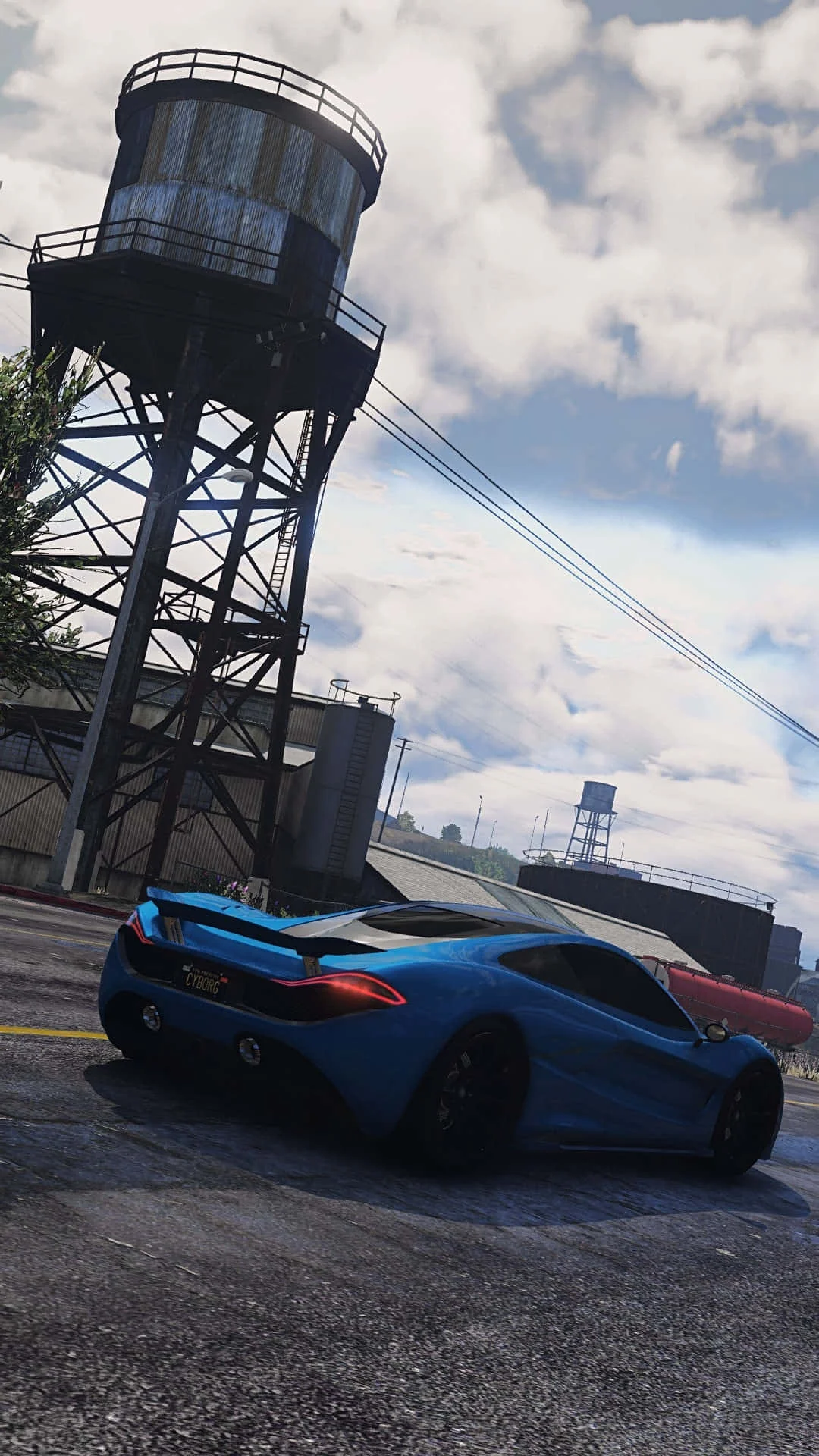
Fivem
This combination provides smooth gameplay with an average of 82 FPS, suitable for most gaming scenarios.
Average FPS: resolution vs quality settings
| Ultra | High | Medium | Low | |
|---|---|---|---|---|
| 4K Ultra HD | 30 | 39 | 48 | 61 |
| 1440p QHD | 54 | 70 | 87 | 110 |
| 1080p Full HD | 82 | 106 | 132 | 168 |
Cell color: green is 120+ FPS, teal is 60+, amber is 30+, red is below 30.
Fivem with Intel Core i5-13400F + NVIDIA GeForce RTX 5050, In-Depth Analysis
Fivem is a demanding multiplayer title, and this pairing of an Intel Core i5-13400F with an NVIDIA GeForce RTX 5050 lands in the lower-middle tier of tested configurations. The combo ranks 1813 out of 3005 tested combinations, placing it in the 40th percentile of all systems evaluated. This position is largely defined by the GPU's modest performance ceiling, which constrains the experience at higher resolutions, while the CPU provides enough headroom to keep frame pacing stable in most scenarios. The data shows a configuration that is capable of smooth 1080p play but struggles to maintain playable frame rates at 4K with high visual fidelity.
How This Combo Ranks
The 1813th rank out of 3005 combos places this system firmly in the middle of the pack, but with a skew toward the lower half. This is not a top-tier setup for Fivem, where high-refresh-rate 1440p or 4K gaming is out of reach, but it is far from the bottom of the barrel. The ranking reflects a balance where the CPU is significantly stronger than the GPU, creating a bottleneck that prevents the system from achieving higher overall scores. In practical terms, this rank translates to a machine that can handle the game's core mechanics well at standard settings, but will not excel in demanding scenes or at high resolutions.
When isolating the GPU's contribution, the RTX 5050's average benchmark score of 21035 places it at the 66th percentile of all GPUs. Its nearest rivals in synthetic tests are the AMD Radeon RX Vega M GL, which scores 1% higher, and the AMD Radeon HD 8970M, which is 1% higher still. The RTX 5050 also sits just 1.6% ahead of the AMD Radeon RX 5600 XT and 1.6% behind the NVIDIA RTX A4000 Mobile. These tight margins in synthetic benchmarks suggest that the GPU's raw compute is competitive with older mid-range parts, but it lacks the modern feature set or bandwidth to pull decisively ahead in a real-world game like Fivem.
The CPU, by contrast, is a much stronger performer relative to its peers. The Core i5-13400F's average benchmark score of 25292 places it at the 77th percentile of all CPUs, a full 11 points higher than the GPU's percentile ranking. Its nearest rivals include the AMD Ryzen 9 6900HS with a 0% delta, the Intel Core 5 120 with a -0.3% delta, and the AMD Ryzen 5 5600X3D with a -0.3% delta. This indicates that the processor is not the limiting factor in this combo; it is well-matched to handle the CPU overhead of a multiplayer game like Fivem, which often involves numerous player entities and physics calculations. The disparity between the CPU's high percentile and the GPU's lower one is the defining characteristic of this pairing, explaining why the overall combo rank is not higher.
GPU Role
The NVIDIA GeForce RTX 5050 is built on the Blackwell 2.0 architecture and features 8 GB of GDDR6 memory on a 128-bit bus, providing a bandwidth of 320.0 GB/s. The GPU's base clock is 2317 MHz with a boost clock of 2572 MHz, and it operates with a TDP of 130 W. In Fivem, this memory configuration is a critical factor. The 8 GB frame buffer is sufficient for 1080p and 1440p gaming at most settings, but at 4K with High or Ultra presets, the game's asset streaming can push memory usage to its limits, which is reflected in the measured frame rates.
The GPU's shading units, 2560 in total, along with 80 texture mapping units and 32 raster output pipelines, define its raw rasterization capability. The data shows a clear pattern: the RTX 5050 is a 1080p-centric card for this title. At 1920x1080, it delivers playable frame rates across all settings, but at 3840x2160, it falls below the 60 FPS threshold for smooth gameplay on every preset. The FP32 performance of 13.17 TFLOPS is respectable for the entry-level segment, but it is not enough to overcome the pixel fill rate demands of 4K in a game with Fivem's draw distances. The GPU's percentile rank of 66 against all GPUs, coupled with its rival scores hovering around 1-2% deltas, confirms that this is an entry-level part that performs as expected for its class.
The measured FPS data aligns with the GPU's specifications. At 1440p, the RTX 5050 manages a 70 FPS average on High settings, which is a playable experience for most users. However, the jump to 4K at the same settings drops the average to 39 FPS, a 44% reduction that makes the game feel stuttery. The GPU's 8 GB memory and 320.0 GB/s bandwidth are simply not enough to sustain high frame rates at that resolution. The boost clock of 2572 MHz is not particularly high for modern GPUs, and the 32 ROPs are a limiting factor for fill-rate intensive scenes, which Fivem has in abundance with its open-world environment.
CPU Role
The Intel Core i5-13400F is a 10-core, 16-thread processor based on the Raptor Lake architecture, with a base clock of 2.50 GHz and a boost clock of 4.60 GHz. It features 20 MB of shared L3 cache, which is beneficial for gaming workloads that require rapid access to frequently used data. The CPU's TDP is 65 W, and it supports both DDR4 and DDR5 memory on the Intel Socket 1700 platform. In the context of Fivem, a game that relies heavily on single-thread performance for game logic and physics, the 13400F's boost clock is a strong asset.
The CPU's benchmark scores highlight its capability. Its single-thread score of 960 in 3dmark_single_thread and 3634 in passmark_single_thread indicate strong per-core performance. The multi-threaded scores are also robust, with a Cinebench R23 multicore score of 22604 and a Geekbench multicore score of 11068. These numbers matter because Fivem's multiplayer nature can spawn multiple background threads for network handling and entity updates, allowing the 16 threads to be utilized effectively. The CPU's 77th percentile ranking against all CPUs, with its nearest rival being the AMD Ryzen 9 6900HS at a 0% delta, shows that it is a superior component in this pairing.
In this combo, the CPU's role is to provide a stable foundation for the GPU. The data suggests that the 13400F is not the bottleneck at 1080p, where the GPU is working hardest. However, at lower resolutions or with reduced graphics settings, the CPU's performance becomes more relevant. For instance, at 1080p Low, the system achieves 168 FPS, which is likely near the CPU's limit for generating frames in this game, but it is still a high number. The CPU's 10 cores (6 performance and 4 efficiency) and 16 threads ensure that even in dense urban areas of the game with many players, the frame rate does not collapse due to CPU stalls. The high L3 cache and fast boost clock work together to keep the game's logic running smoothly, allowing the GPU to render frames as fast as it can.
Measured FPS Breakdown
The measured FPS data provides a detailed look at how this combo performs across resolutions and settings. At 1920x1080, the system delivers 168 FPS on Low, 132 FPS on Medium, 106 FPS on High, and 82 FPS on Ultra. The Medium setting shows a minimum FPS of 112 and a maximum of 152, indicating a stable frame time distribution. These numbers show that at 1080p, the combo is well-suited for high-refresh-rate monitors, with even the Ultra preset maintaining an average above 80 FPS, which is smooth for most users.
Moving to 2560x1440, the frame rates drop significantly but remain playable. The Low preset averages 110 FPS, Medium averages 87 FPS, High averages 70 FPS, and Ultra averages 54 FPS. The Medium setting again provides a minimum of 74 FPS and a maximum of 100 FPS, suggesting that this is the sweet spot for 1440p if you want to stay above 60 FPS consistently. The High preset at 70 FPS is also viable, but the Ultra preset at 54 FPS starts to show the GPU's limitations, dipping below the 60 FPS threshold for a fluid experience.
At 3840x2160, the RTX 5050 struggles to keep up. The Low preset averages 61 FPS, which is just above the 60 FPS mark, but Medium drops to 48 FPS, High to 39 FPS, and Ultra to 30 FPS. The Medium preset at 4K has a minimum of 41 FPS and a maximum of 56 FPS, showing that even in the best case, it cannot maintain a locked 60 FPS. These numbers clearly indicate that 4K gaming is not a realistic option for this combo beyond the lowest settings. The drop from 1080p Low to 4K Low is a 64% reduction in frame rate, which is a substantial hit that underscores the GPU's memory bandwidth and compute limitations.
Resolution Scaling
The resolution scaling analysis reveals a classic GPU-bound scenario. From 1080p to 1440p, the average frame rate across all settings drops by approximately 34%, and from 1440p to 4K, it drops by another 44%. At 1080p High, the system averages 106 FPS, which drops to 70 FPS at 1440p High, and then to 39 FPS at 4K High. This pattern is consistent across all settings, indicating that the RTX 5050's rendering throughput is the primary limiting factor as resolution increases.
The data shows that the CPU's performance is sufficient to feed the GPU at lower resolutions. At 1080p, the frame rates are high, suggesting that the CPU can handle the game's logic without becoming a bottleneck. However, as resolution increases, the GPU's workload grows exponentially, and the frame rate drops proportionally. The 4K results are particularly telling: the system cannot maintain 60 FPS on any setting except Low, which only achieves 61 FPS. This suggests that the GPU's 8 GB memory and 320.0 GB/s bandwidth are insufficient for the texture and geometry demands of Fivem at 4K, even with reduced settings.
The limiting component is unequivocally the GPU. The CPU's high percentile rank and strong single-thread scores mean it has ample headroom to push higher frame rates if the GPU were faster. The evidence is clear when comparing the 1080p Ultra result of 82 FPS to the 4K Low result of 61 FPS; the CPU is capable of generating frames at a rate that the GPU cannot match at higher resolutions. For users aiming for higher resolutions, the RTX 5050 is the wall that prevents this combo from achieving a better rank.
Settings Recommendations
Based on the measured FPS data, the optimal settings for this combo depend heavily on the target resolution. For 1920x1080, the High preset at 106 FPS is the best balance of visual quality and performance. It provides a smooth experience with good detail, and the average frame rate is high enough for most gaming monitors. The Ultra preset at 82 FPS is also viable if you prioritize visual fidelity, but the High preset offers a more comfortable margin for demanding scenes.
For 2560x1440, the Medium preset at 87 FPS is the recommended choice. It offers the best experience, with a minimum FPS of 74 that ensures smooth gameplay even in intense moments. The High preset at 70 FPS is acceptable, but the Medium preset provides a more consistent frame rate, which is crucial in a multiplayer environment where sudden drops can be detrimental. The Ultra preset at 54 FPS should be avoided, as it dips below the 60 FPS threshold and can feel less responsive.
For 3840x2160, the data suggests that this combo is not well-suited for gaming at this resolution. The Low preset at 61 FPS is the only option that achieves playable frame rates, but it comes with significant visual compromises. Users who wish to play at 4K should consider the Medium preset at 48 FPS if they can tolerate lower frame rates, but the experience will not be smooth. The best recommendation is to stick to 1080p or 1440p, where the combo delivers a much better experience, with the Medium preset at 1440p being the standout choice for a balance of quality and performance.
Hardware Specifications
Intel Core i5-13400F
NVIDIA GeForce RTX 5050
FPS Benchmarks by Resolution & Settings
Performance data for Intel Core i5-13400F + NVIDIA GeForce RTX 5050 in Fivem
| Resolution | Settings | Avg FPS |
|---|---|---|
| 3840x2160 | Low | 61.0 |
| 3840x2160 | Medium | 48.0 |
| 3840x2160 | High | 39.0 |
| 3840x2160 | Ultra | 30.0 |
| 2560x1440 | Low | 110.0 |
| 2560x1440 | Medium | 87.0 |
| 2560x1440 | High | 70.0 |
| 2560x1440 | Ultra | 54.0 |
| 1920x1080 | Low | 168.0 |
| 1920x1080 | Medium | 132.0 |
| 1920x1080 | High | 106.0 |
| 1920x1080 | Ultra | 82.0 |
Fivem with ii5-13400F + Other GPUs
See how Fivem performs with the same CPU but different graphics cards.
Fivem with RTX 5050 + Other CPUs
See how Fivem performs with the same GPU but different processors.
Other Games with ii5-13400F + RTX 5050
Explore FPS benchmarks for other games using this same hardware combination.