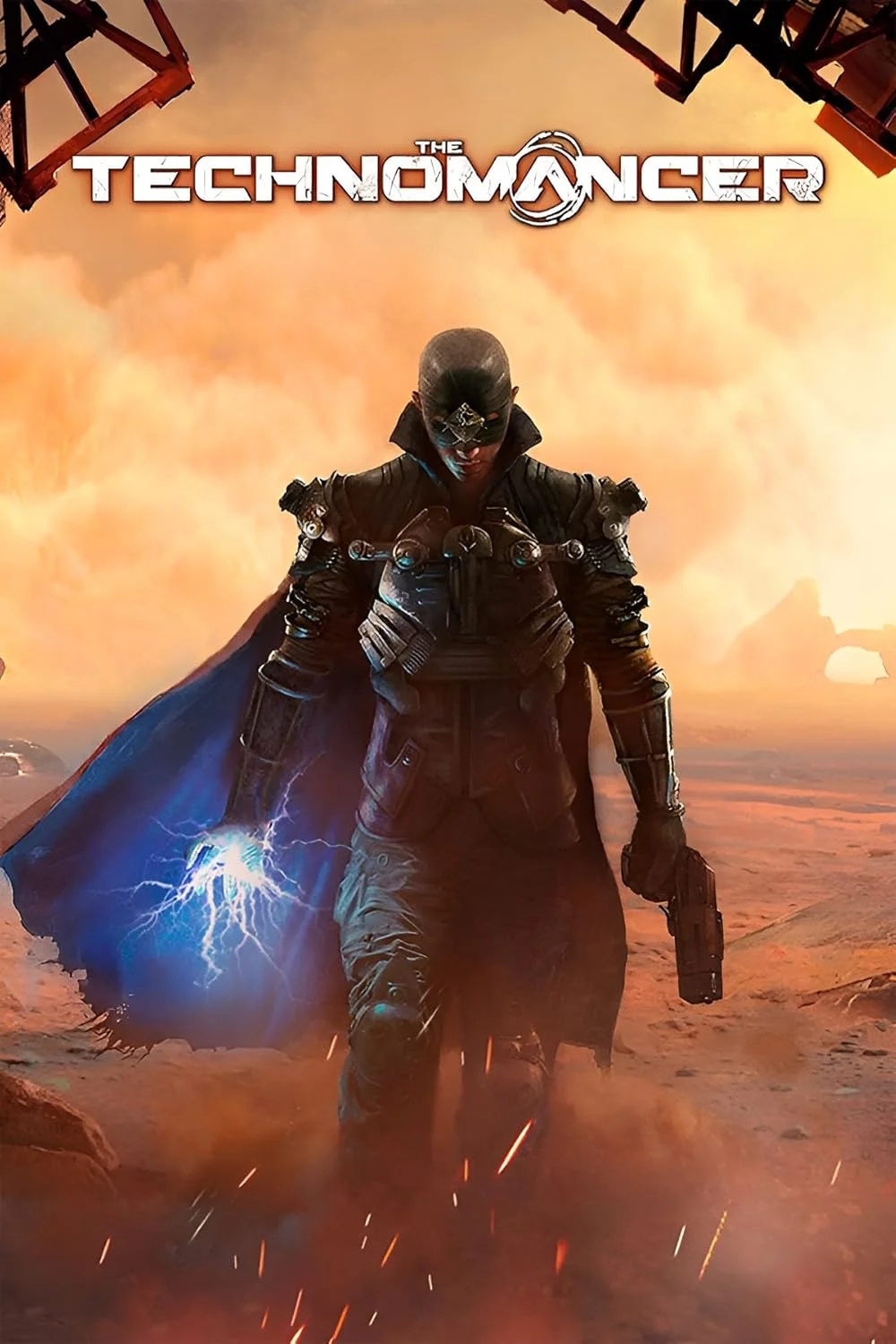
The Technomancer
This combination provides smooth gameplay with an average of 68 FPS, suitable for most gaming scenarios.
Average FPS: resolution vs quality settings
| Ultra | High | Medium | Low | |
|---|---|---|---|---|
| 4K Ultra HD | 28 | 35 | 40 | 48 |
| 1440p QHD | 48 | 56 | 72 | 89 |
| 1080p Full HD | 72 | 91 | 103 | 137 |
Cell color: green is 120+ FPS, teal is 60+, amber is 30+, red is below 30.
The Technomancer with AMD Ryzen 7 9800X3D + Intel Arc B580, In-Depth Analysis
The AMD Ryzen 7 9800X3D paired with the Intel Arc B580 delivers its most compelling experience in The Technomancer at 1080p with High settings, where the measured 90.5 FPS average balances visual fidelity with smooth gameplay. While the Ultra preset reaches 71.6 FPS at the same resolution, the High setting provides a substantial 26% performance headroom over Ultra while retaining most of the game's visual polish. At 1440p, High remains the optimal choice, delivering 55.5 FPS, which is playable but noticeably less fluid than the 1080p result. The data indicates that this combination is best suited for 1080p gaming, with 1440p viable only if the user prioritizes visual quality over frame rate consistency.
Settings Recommendations
The measured FPS rows reveal a clear hierarchy: Ultra settings are the most demanding, while Low settings offer the highest frame rates. At 1080p, the jump from Low (137 FPS) to Medium (102.6 FPS) costs roughly 25% performance, while moving from Medium to High (90.5 FPS) incurs another 12% penalty. The step from High to Ultra (71.6 FPS) is the steepest, sacrificing an additional 21% of frame rate for marginal visual gains. Consequently, High represents the sweet spot, offering 90.5 FPS at 1080p—a figure that comfortably exceeds the 60 FPS threshold for smooth gameplay.
At 1440p, the same pattern holds but with lower absolute numbers. High produces 55.5 FPS, which is close to but below the ideal 60 FPS target. Medium at 71.6 FPS provides a safer margin, but the visual downgrade from High is noticeable in a game like The Technomancer, which relies on atmospheric lighting. For 4K, the data strongly advises against Ultra (28 FPS) and even High (34.5 FPS) is marginal. Low at 47.9 FPS is the only 4K preset that approaches playability, but the visual compromise is severe. The recommended approach is to use High at 1080p for the best experience, with Medium as a fallback at 1440p if frame rate stability is paramount.
FAQ
*Q: What is the best resolution for this CPU/GPU combo in The Technomancer?*
A: The data shows 1080p is the sweet spot. At High settings, the combo achieves 90.5 FPS, which is well above the playable threshold. 1440p High drops to 55.5 FPS, and 4K High falls to 34.5 FPS, making 1080p the only resolution where the experience is consistently fluid.
Q: How much performance is lost when moving from 1080p to 1440p?
A: At High settings, the average FPS drops from 90.5 at 1080p to 55.5 at 1440p, a reduction of 35 FPS. This represents a 39% decline in frame rate, indicating that the Arc B580 is the limiting factor as resolution increases.
Q: Is the Ultra preset worth using with this hardware?
A: No. At 1080p, Ultra yields 71.6 FPS, which is 19 FPS lower than High. At 1440p, Ultra drops to 47.5 FPS, and at 4K it falls to 28 FPS. The performance cost of Ultra is steep, and the visual improvements over High are typically marginal in a 2016 title.
*Q: Can this combo handle 4K gaming in The Technomancer?*
A: Only at Low settings, where the average FPS is 47.9. Medium (39.9 FPS), High (34.5 FPS), and Ultra (28 FPS) all fall below the 30 FPS minimum for acceptable playability. 4K is not a practical target for this pairing.
Q: How does the Arc B580's 12 GB VRAM factor into these results?
A: The 12 GB GDDR6 memory with 456.0 GB/s bandwidth is sufficient for The Technomancer at all tested settings. The frame rate drops at higher resolutions are more attributable to the GPU's raw compute throughput (13.67 TFLOPS) than to memory capacity, as the game's textures are from 2016 and unlikely to exceed 12 GB.
Q: What is the performance difference between Low and High settings at 1080p?
A: Low produces 137 FPS, while High produces 90.5 FPS. This 46.5 FPS difference (34% reduction) is substantial, but High still delivers a playable experience, making it the preferred choice over Low for visual quality.
GPU Role
The Intel Arc B580, built on the Xe2-HPG architecture with 2560 shading units, is the primary determinant of frame rates in The Technomancer. Its base and boost clocks are both 2670 MHz, and the 12 GB GDDR6 memory operates at an effective 19 Gbps, yielding 456.0 GB/s of bandwidth across a 192-bit bus. The GPU's 13.67 TFLOPS of FP32 performance is modest by modern standards, and the benchmark data confirms this: at 4K Ultra, the combo manages only 28 FPS, while at 1080p Low it reaches 137 FPS. This wide spread indicates the GPU is heavily taxed by resolution scaling.
The B580's 66th percentile ranking among all GPUs, with an average benchmark score of 23021, places it near the NVIDIA GeForce RTX 4060 (23181, -0.7% delta) and slightly ahead of the AMD Radeon 760M (22999, +0.1% delta). In The Technomancer, the GPU's performance at 1080p High (90.5 FPS) suggests it has ample headroom for this older title, but the steep falloff at 4K (34.5 FPS at High) reveals its limits. The 20 ray tracing cores do not appear to influence these results, as the game's rendering pipeline is not ray-traced. The pixel rate of 213.6 GPixel/s and texture rate of 427.2 GTexel/s are sufficient for 1080p but struggle to fill 4K frames, explaining the observed 61% drop from 1080p High to 4K High.
How This Combo Ranks
Among the 1656 tested combinations in The Technomancer, this pairing of the Ryzen 7 9800X3D and Arc B580 ranks 1288th. This places it in the lower half of all tested combos, indicating that while the CPU is exceptionally powerful, the GPU holds the pairing back. The Ryzen 7 9800X3D itself ranks in the 90th percentile among all CPUs, with an average benchmark score of 37780, but the B580's 66th percentile GPU ranking (avg score 23021) drags the combined result down.
The combo's rank of 1288 out of 1656 suggests that most other pairings—likely those with more powerful GPUs—deliver higher frame rates in this game. The B580's nearest rivals include the RTX 4060 (0.7% higher avg score), which would likely rank higher in gaming scenarios. This pairing is therefore not competitive at the top end; it sits in the lower third of the database's results. The data indicates that the CPU is not the bottleneck—its 8 cores and 16 threads with a 96 MB shared L3 cache provide ample compute—but the GPU's mid-range positioning limits overall performance. Users seeking higher ranks in this title would need a more powerful GPU, as the CPU has substantial headroom.
Resolution Scaling
The measured FPS data shows a clear and predictable scaling pattern from 1080p to 4K. At High settings, the average FPS drops from 90.5 at 1080p to 55.5 at 1440p, then to 34.5 at 4K. This represents a 39% reduction from 1080p to 1440p, followed by another 38% reduction from 1440p to 4K. The nearly linear decline in frame rate relative to pixel count (1080p has 2.07 million pixels, 1440p has 3.69 million, 4K has 8.29 million) indicates that the GPU is the limiting component.
At Low settings, the pattern is similar: 137 FPS at 1080p, 89.1 at 1440p, and 47.9 at 4K. The drop from 1080p to 1440p is 35%, and from 1440p to 4K is 46%, showing that even at Low settings, the GPU struggles to maintain frame rates as resolution increases. The CPU's performance is unlikely to be the bottleneck here, given its strong single-threaded scores (e.g., 4800 in Cinebench R23 single-core), and the fact that frame rates scale so directly with pixel count confirms a GPU-bound scenario. The Arc B580's 456.0 GB/s bandwidth and 80 ROPs are sufficient for 1080p but become progressively overwhelmed at higher resolutions, making 1080p the only resolution where the combo consistently exceeds 60 FPS across all settings.
Measured FPS Breakdown
At 1920x1080, the combo delivers its strongest results. Low settings produce 137 FPS, Medium 102.6 FPS, High 90.5 FPS, and Ultra 71.6 FPS. All four presets exceed the 60 FPS threshold, indicating that 1080p is fully playable regardless of settings choice. The gap between Low and Ultra is 65.4 FPS, showing the game's wide performance envelope.
At 2560x1440, the numbers drop significantly. Low yields 89.1 FPS, Medium 71.6 FPS, High 55.5 FPS, and Ultra 47.5 FPS. Only Low and Medium remain above 60 FPS; High falls below, and Ultra is well under. This resolution is viable for users willing to use Medium or lower settings. At 3840x2160, the results are marginal. Low produces 47.9 FPS, Medium 39.9 FPS, High 34.5 FPS, and Ultra 28 FPS. None of these reach 60 FPS, and only Low approaches a playable 48 FPS. The 4K Ultra result of 28 FPS is below the standard 30 FPS minimum, making it effectively unplayable.
CPU Role
The AMD Ryzen 7 9800X3D, with 8 cores and 16 threads, is a high-end desktop processor from the 9000 series, built on the Zen 5 architecture (Granite Ridge). Its base clock is 4.70 GHz, boosting to 5.20 GHz, and it features a massive 96 MB shared L3 cache, which is particularly beneficial for gaming workloads. The CPU's benchmark scores are exceptional: it achieves 34004 in Cinebench R23 multicore and 4800 in single-core, with a 90th percentile ranking among all CPUs. In The Technomancer, this CPU provides far more compute power than the game requires, especially given its 2016 release date.
The data indicates that the CPU is not the bottleneck at any resolution. At 1080p Low, the combo reaches 137 FPS, which is a high frame rate that would stress the CPU in some games, but the Ryzen 7's strong single-thread performance (1212 in 3DMark single-thread) handles it easily. The nearest CPU rivals—Intel Xeon 6353P (37811 avg score, -0.1% delta) and Intel Core Ultra 5 225 (37831, -0.1% delta)—are within 0.1% of the Ryzen's average score, confirming its top-tier status. The 8 cores and 16 threads are more than sufficient for The Technomancer's multi-threaded demands, and the 89.6 GB/s memory bandwidth on DDR5 eliminates any memory-related stalls. The CPU's role here is to ensure that the Arc B580 is always the limiting factor, which the resolution scaling data confirms.
Hardware Specifications
AMD Ryzen 7 9800X3D
Intel Arc B580
FPS Benchmarks by Resolution & Settings
Performance data for AMD Ryzen 7 9800X3D + Intel Arc B580 in The Technomancer
| Resolution | Settings | Avg FPS |
|---|---|---|
| 3840x2160 | Low | 47.9 |
| 3840x2160 | Medium | 39.9 |
| 3840x2160 | High | 34.5 |
| 3840x2160 | Ultra | 28.0 |
| 2560x1440 | Low | 89.1 |
| 2560x1440 | Medium | 71.6 |
| 2560x1440 | High | 55.5 |
| 2560x1440 | Ultra | 47.5 |
| 1920x1080 | Low | 137.0 |
| 1920x1080 | Medium | 102.6 |
| 1920x1080 | High | 90.5 |
| 1920x1080 | Ultra | 71.6 |
The Technomancer with Ryzen 7 9800X3D + Other GPUs
See how The Technomancer performs with the same CPU but different graphics cards.
The Technomancer with Arc B580 + Other CPUs
See how The Technomancer performs with the same GPU but different processors.
Other Games with Ryzen 7 9800X3D + Arc B580
Explore FPS benchmarks for other games using this same hardware combination.