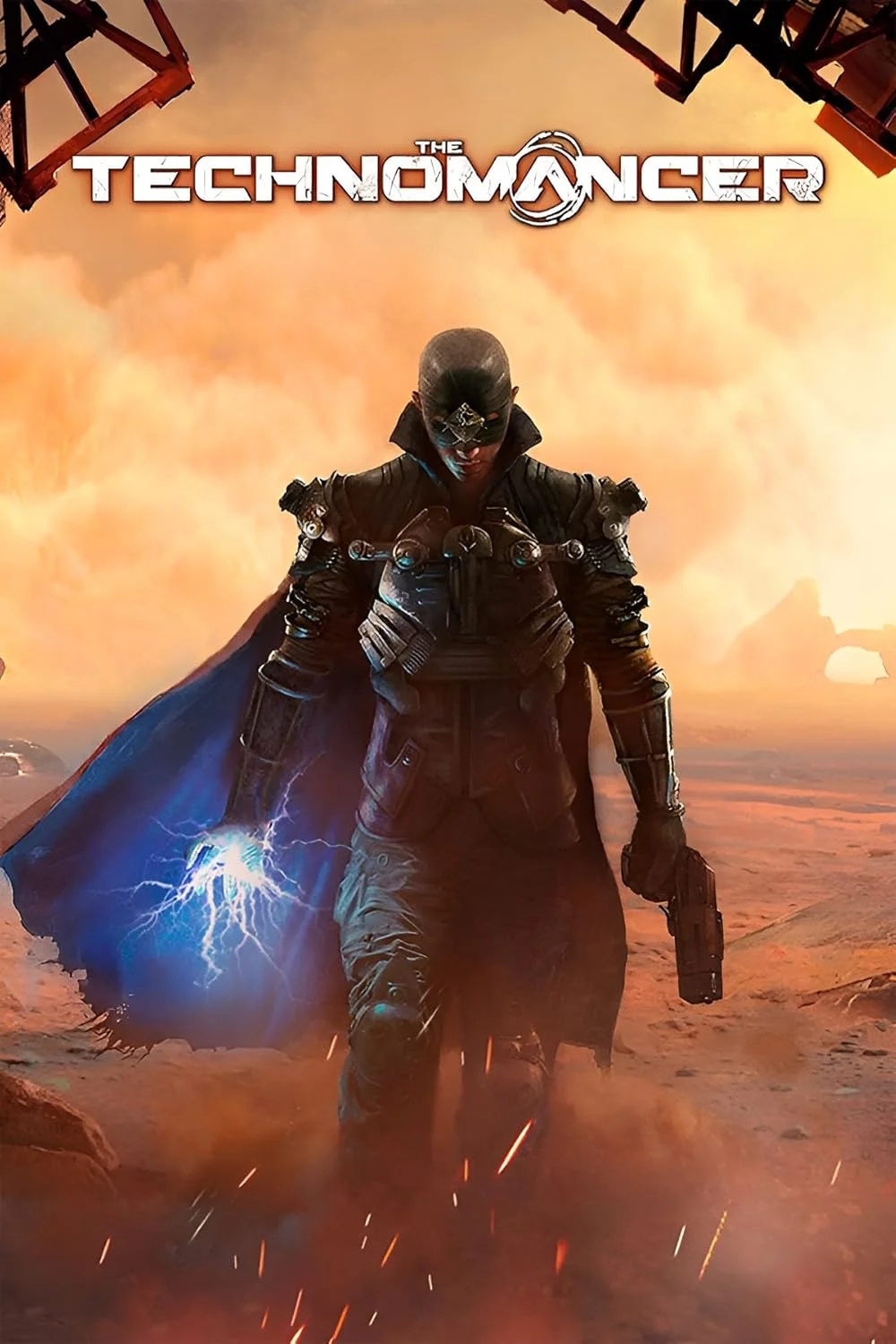
The Technomancer
This combination offers playable performance with an average of 35 FPS, though you may want to lower settings for smoother gameplay.
Average FPS: resolution vs quality settings
| Ultra | High | Medium | Low | |
|---|---|---|---|---|
| 4K Ultra HD | 13 | 17 | 20 | 26 |
| 1440p QHD | 24 | 31 | 36 | 47 |
| 1080p Full HD | 37 | 47 | 55 | 71 |
Cell color: green is 120+ FPS, teal is 60+, amber is 30+, red is below 30.
The Technomancer with AMD Ryzen 7 5800X + Intel Arc B370, In-Depth Analysis
The Technomancer, a 2016 action RPG, presents a demanding workload that quickly exposes hardware limits. The pairing of the AMD Ryzen 7 5800X with the Intel Arc B370 yields a specific performance profile that is heavily constrained by the graphics solution, particularly at higher resolutions and settings. The data indicates that this combination is best suited for 1080p gaming, where it can achieve playable frame rates, but it struggles significantly at higher resolutions. The following analysis breaks down the measured performance, settings recommendations, and how this specific combo stacks up against other tested configurations.
Settings Recommendations
The measured frame rates across all resolutions and settings presets show a clear hierarchy, with the Low preset consistently providing the highest average FPS. At 1920x1080, the Low preset achieves an average of 71 FPS, which is the only configuration in the entire dataset to break the 60 FPS barrier. This makes it the sole option for a consistently smooth experience, as the next highest average at this resolution is the Medium preset at 55 FPS, a significant 16 FPS drop. For users prioritizing frame rate and responsiveness, the Low preset at 1080p is the only viable choice based on the data.
Moving to the Medium preset, the experience becomes more mixed. At 1080p, the average FPS of 55 is still within a playable range for many, and the recorded minimum of 47 FPS suggests that frame pacing remains relatively stable, with the maximum reaching 63 FPS. This preset offers a balance between visual fidelity and performance, but it falls short of the smoothness provided by the Low preset. At 2560x1440, the Medium preset drops to an average of 36 FPS, with a minimum of 30 FPS, which is on the borderline of playability for a slower-paced action RPG. The High preset at 1080p yields 47 FPS, which is acceptable but not ideal, and it drops to 31 FPS at 1440p, making it a less attractive option.
The Ultra preset is the most demanding and delivers the poorest results. Even at 1920x1080, the average FPS is only 37, which is below the threshold for a smooth experience. At 2560x1440, this drops to 24 FPS, and at 3840x2160, it falls to an unplayable 13 FPS. The performance cost of Ultra settings is substantial, with the 1080p average being roughly half that of the Low preset. The data strongly suggests that the Ultra preset should be avoided entirely with this hardware combination, as it fails to provide a satisfactory frame rate at any tested resolution.
The recommendation is clear: for the best experience on this system, users should select the Low preset at 1920x1080. This is the only configuration that provides an average frame rate above 60 FPS, ensuring the smoothest gameplay. While the Medium preset at 1080p is a viable alternative for those who want improved visuals, the performance penalty is significant. The data shows that the Arc B370 is the primary bottleneck, and compromising on settings is the only way to achieve acceptable performance.
GPU Role
The Intel Arc B370 is a low-power integrated graphics solution with a TDP of 25 W, and its performance profile is the defining factor in this combo's results. Its role is to render the game, and the data shows it is severely underpowered for this task at higher resolutions and settings. The GPU's boost clock is listed at 2400 MHz, with a base clock of 300 MHz, and it features 1280 shading units, 40 TMUs, and 20 ROPs. These specifications, combined with its system-shared memory architecture, result in a compute capability of 6.144 TFLOPS FP32, which is simply insufficient for the demands of The Technomancer at 1440p and 4K.
The memory configuration is a critical weakness. The Arc B370 uses "System Shared" memory, with its bandwidth listed as "System Dependent." This means the GPU relies on the system's DDR4 memory, which operates on a dual-channel bus with a bandwidth of 51.2 GB/s for the CPU. This shared memory architecture creates a significant bottleneck, as the GPU must compete with the CPU for memory bandwidth, limiting texture uploads and frame buffer operations. This is a major contributing factor to the low frame rates observed, particularly at higher resolutions where memory demands increase.
The GPU's benchmark scores further contextualize its position. It has a single 3DMark Steel Nomad DX12 score of 1184, placing it in the 5th percentile of all GPUs. Its nearest rivals include the ATI Mobility Radeon HD 5570, which is only 0.2% behind, and the ATI Radeon HD 5770, which is 0.5% behind. This places the Arc B370 in a performance class that is over a decade old, confirming that it is not designed for modern gaming at high graphical loads. The data shows that the GPU is the primary limiting factor in this combo, and its low performance is the reason why the frame rates are so heavily constrained by resolution and settings.
Resolution Scaling
The impact of resolution on frame rate is drastic and clearly illustrates the GPU bottleneck. Scaling from 1920x1080 to 2560x1440 and then to 3840x2160 results in a steep, non-linear performance drop across all settings. For example, at the Low preset, the average FPS falls from 71 at 1080p to 47 at 1440p, a 34% reduction, and then further to 26 at 4K, an additional 45% reduction from the 1440p figure. This pattern indicates that the GPU is being saturated by the increasing pixel count, and its rendering throughput is the limiting factor.
The scaling is even more pronounced at higher settings. At the High preset, the average FPS is 47 at 1080p, 31 at 1440p, and 17 at 4K. This shows that the performance penalty for moving to 4K is severe, with the frame rate dropping by over half from 1080p to 4K. The Ultra preset demonstrates the most extreme scaling, with 37 FPS at 1080p, 24 FPS at 1440p, and a mere 13 FPS at 4K. The data suggests that the GPU's compute and memory resources are overwhelmed as the resolution increases, and the frame rate is almost entirely dependent on the pixel count.
This behavior confirms that the CPU, the AMD Ryzen 7 5800X, is not the bottleneck in this scenario. The Ryzen 7 5800X is a high-performance 8-core, 16-thread processor, and its benchmark scores, such as a Cinebench R23 multi-core score of 15476 and a single-core score of 1574.5, are far more capable than what is needed to drive the Arc B370. If the CPU were the limiting factor, we would expect to see more consistent frame rates across different resolutions, as the CPU workload would remain constant. Instead, the frame rates drop dramatically with resolution, which is a classic sign of a GPU-limited system. The Arc B370 is the clear bottleneck, and its performance is the sole determinant of the frame rates in this dataset.
Measured FPS Breakdown
The complete set of measured average FPS values provides a detailed view of the combo's capabilities. At 1920x1080, the performance is as follows: the Low preset achieves an average of 71 FPS, the Medium preset achieves 55 FPS with a minimum of 47 FPS and a maximum of 63 FPS, the High preset achieves 47 FPS, and the Ultra preset achieves 37 FPS. This is the only resolution where any preset is playable, with the Low preset being the clear winner.
At 2560x1440, the performance drops significantly. The Low preset averages 47 FPS, the Medium preset averages 36 FPS with a minimum of 30 FPS and a maximum of 41 FPS, the High preset averages 31 FPS, and the Ultra preset averages 24 FPS. Only the Low preset approaches a playable frame rate here, but the Medium preset's minimum of 30 FPS suggests it may be playable with occasional stutter.
At 3840x2160, the performance is largely unplayable. The Low preset averages 26 FPS, the Medium preset averages 20 FPS with a minimum of 17 FPS and a maximum of 23 FPS, the High preset averages 17 FPS, and the Ultra preset averages 13 FPS. None of these configurations provide an acceptable gaming experience, as all averages are well below the 30 FPS threshold.
The data shows a consistent pattern: the frame rate is directly proportional to the inverse of the resolution and settings. The difference between the Low and Ultra presets is substantial at every resolution. At 1080p, the difference is 34 FPS (71 vs 37). At 1440p, the difference is 23 FPS (47 vs 24). At 4K, the difference is 13 FPS (26 vs 13). This indicates that the graphical settings have a compounding effect on the GPU's workload, further confirming that the Arc B370 is the primary performance limiter.
How This Combo Ranks
The combination of the AMD Ryzen 7 5800X and the Intel Arc B370 is ranked 2603 out of 2825 tested combos for The Technomancer. This places it in the bottom 8% of all configurations, indicating that it is among the lowest-performing setups in the database for this specific game. The rank highlights that while the CPU is powerful, the GPU's limitations are so severe that they drag the entire system's performance down.
The GPU's individual rank further emphasizes this point. The Arc B370 sits in the 5th percentile of all GPUs, with its nearest rivals being the ATI Mobility Radeon HD 5570 (0.2% faster) and the AMD Radeon HD 7650M (0.7% faster). This places it in a performance tier that is roughly equivalent to integrated graphics solutions from over a decade ago. The CPU, on the other hand, is in the 81st percentile, with an average benchmark score of 29123, placing it near the Intel Core Ultra 5 135H (0.1% faster) and the Intel Core i5-13500HX (0.5% slower).
The disparity between the CPU and GPU performance is stark. The Ryzen 7 5800X is a high-end desktop processor, while the Arc B370 is a low-power integrated GPU. The combo rank of 2603 out of 2825 is a direct reflection of this mismatch. The data shows that the GPU is the overwhelming bottleneck, and its low performance prevents the system from leveraging the CPU's capabilities. This results in a configuration that is unsuitable for playing The Technomancer at any setting above the bare minimum at 1080p.
FAQ
Q: What is the best resolution and settings combo for this hardware?
A: The data shows that the Low preset at 1920x1080 is the only configuration that achieves an average FPS above 60, with a measured average of 71 FPS. All other settings and resolutions result in average frame rates below this threshold.
Q: How does the Intel Arc B370's performance compare to its closest rivals?
A: The Arc B370 has a 3DMark Steel Nomad score of 1184, which is 0.2% lower than the ATI Mobility Radeon HD 5570 and 0.5% lower than the ATI Radeon HD 5770. It ranks in the 5th percentile of all GPUs.
Q: Is the CPU or GPU the main bottleneck for this game?
A: The GPU is the clear bottleneck. The frame rates drop dramatically when moving from 1080p to 1440p and 4K, which is a classic sign of a GPU-limited system, while the Ryzen 7 5800X's high benchmark scores indicate it is not the limiting factor.
Q: What is the average frame rate at 1440p with High settings?
A: The measured average FPS for the High preset at 2560x1440 is 31 FPS. This is below the generally accepted threshold for smooth gameplay.
Q: Can this system handle 4K gaming in The Technomancer?
A: No. The data shows that even at the Low preset, the average FPS at 3840x2160 is only 26 FPS. The Medium, High, and Ultra presets yield averages of 20, 17, and 13 FPS, respectively, all of which are unplayable.
Q: How does the combo rank compared to all other tested systems?
A: The combination of the AMD Ryzen 7 5800X and Intel Arc B370 ranks 2603 out of 2825 tested combos for this game, placing it in the bottom 8% of all configurations due to the GPU's low performance.
Hardware Specifications
AMD Ryzen 7 5800X
Intel Arc B370
FPS Benchmarks by Resolution & Settings
Performance data for AMD Ryzen 7 5800X + Intel Arc B370 in The Technomancer
| Resolution | Settings | Avg FPS |
|---|---|---|
| 3840x2160 | Low | 26.0 |
| 3840x2160 | Medium | 20.0 |
| 3840x2160 | High | 17.0 |
| 3840x2160 | Ultra | 13.0 |
| 2560x1440 | Low | 47.0 |
| 2560x1440 | Medium | 36.0 |
| 2560x1440 | High | 31.0 |
| 2560x1440 | Ultra | 24.0 |
| 1920x1080 | Low | 71.0 |
| 1920x1080 | Medium | 55.0 |
| 1920x1080 | High | 47.0 |
| 1920x1080 | Ultra | 37.0 |
The Technomancer with Ryzen 7 5800X + Other GPUs
See how The Technomancer performs with the same CPU but different graphics cards.
The Technomancer with Arc B370 + Other CPUs
See how The Technomancer performs with the same GPU but different processors.
Other Games with Ryzen 7 5800X + Arc B370
Explore FPS benchmarks for other games using this same hardware combination.