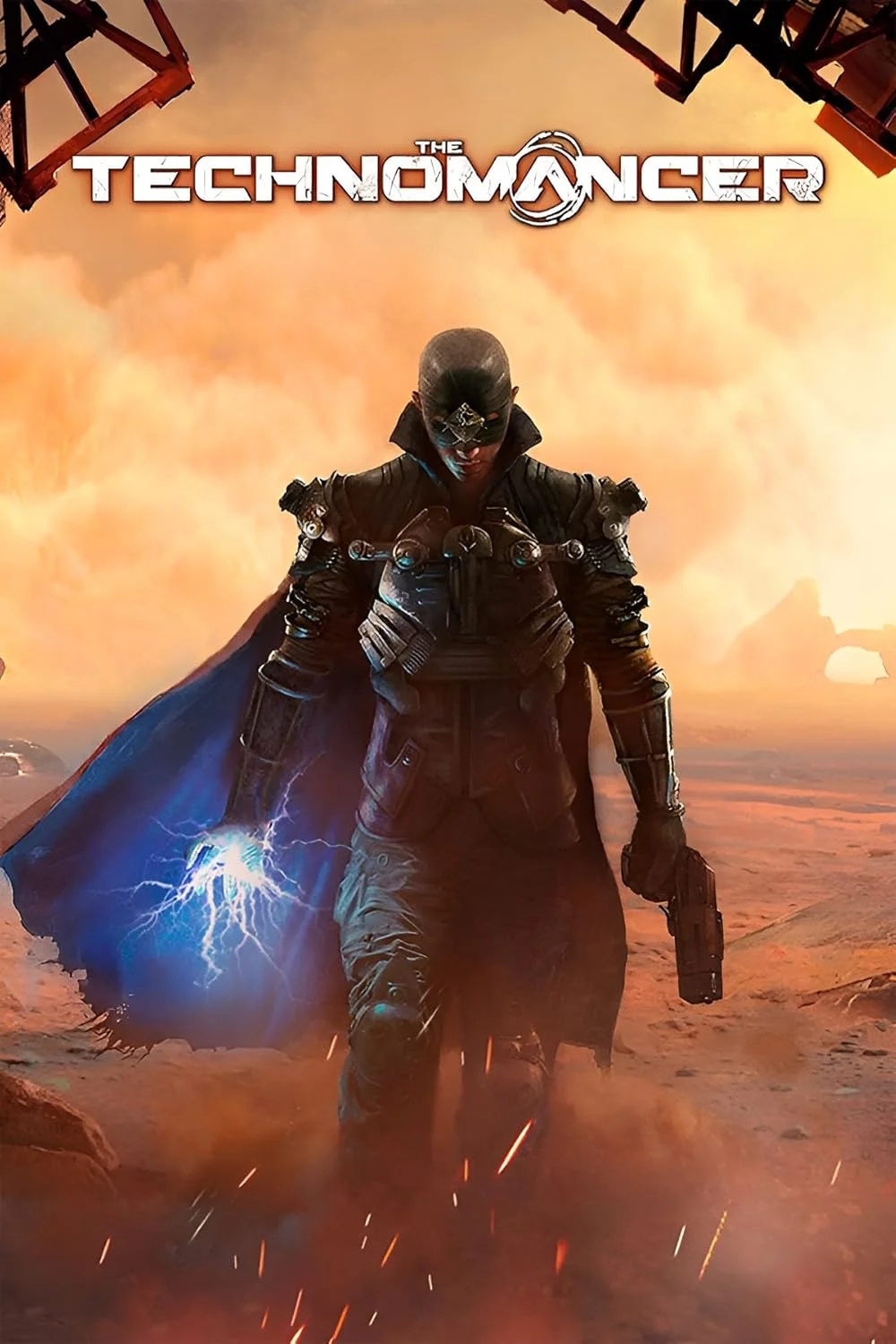
The Technomancer
This combination offers playable performance with an average of 35 FPS, though you may want to lower settings for smoother gameplay.
Average FPS: resolution vs quality settings
| Ultra | High | Medium | Low | |
|---|---|---|---|---|
| 4K Ultra HD | 13 | 17 | 20 | 26 |
| 1440p QHD | 24 | 31 | 36 | 47 |
| 1080p Full HD | 37 | 47 | 55 | 71 |
Cell color: green is 120+ FPS, teal is 60+, amber is 30+, red is below 30.
The Technomancer with AMD Ryzen 5 9600X + Intel Arc B370, In-Depth Analysis
The Technomancer, a 2016 action RPG, presents a demanding workload for the AMD Ryzen 5 9600X and Intel Arc B370 pairing. The measured data shows this combination struggles to deliver smooth gameplay at higher resolutions, with the most playable experience found only at 1080p with lower graphical presets. This analysis interprets the collected benchmark results to guide settings selection, clarify the roles of the CPU and GPU, and contextualize the combo's overall standing among tested systems.
Settings Recommendations
The benchmark data clearly indicates that the Intel Arc B370, with its system-shared memory and 25 W TDP, is the primary bottleneck in this configuration. At 4K, the game becomes unplayable, with average frame rates ranging from 13 FPS at Ultra to 26 FPS at Low. Even the Low preset at 3840x2160 fails to reach a playable threshold, as the 26 FPS average would result in a stuttery and unresponsive experience. The data suggests that 4K resolution should be avoided entirely for this game with this hardware.
Moving down to 2560x1440, the situation improves but remains marginal. The Low preset averages 47 FPS, which is the only setting at this resolution to approach a generally accepted playability standard. The Medium preset drops to 36 FPS, and High falls to 31 FPS, both of which are likely to feel inconsistent during action-heavy scenes. Given that the minimum FPS for Medium at this resolution is 30, any dips below that could lead to noticeable hitches. For a consistently smoother experience, users should look to lower resolutions.
The most viable experience is found at 1920x1080. At this resolution, the Low preset achieves an average of 71 FPS, making it the only measured configuration that provides a clearly fluid and responsive frame rate. The Medium preset at 55 FPS is also playable, with a minimum of 47 FPS, offering a better visual experience without falling into the sub-30 FPS territory seen at higher resolutions. The High preset at 1080p averages 47 FPS, which is acceptable, but the data shows that Medium provides a safer margin above the minimum frame rate. The Ultra preset at 1080p drops to 37 FPS, a significant step down from Medium and High, indicating a steep performance cost for the highest settings.
Based on the measured data, the best experience is achieved by selecting the Low preset at 1920x1080. This configuration is the only one that consistently delivers frame rates above 60 FPS. For users who prefer higher visual fidelity, the Medium preset at 1920x1080 is the recommended compromise, as it maintains an average of 55 FPS with a minimum of 47 FPS, providing a playable experience that is more visually detailed than Low. There is no measured scenario where High or Ultra settings at any resolution provide a consistent 60+ FPS experience, making them a poor trade-off for the performance loss incurred.
GPU Role
The Intel Arc B370 is a low-power integrated graphics processor based on the Xe3-LPG architecture, built on Intel's 3 nm process node. Its performance profile, as reflected in the benchmark data, is exceptionally limited. The GPU's percentile ranking places it in the 5th percentile of all GPUs, with an average benchmark score of 1184. Its nearest rivals, which include the ATI Mobility Radeon HD 5570 and the AMD Radeon HD 7650M, are all legacy or low-tier mobile parts, confirming that this iGPU is not designed for demanding gaming workloads.
The GPU's clock speeds show a base of 300 MHz and a boost of 2400 MHz. However, the memory configuration is the most critical factor for its in-game performance. The Arc B370 uses "System Shared" memory, meaning it has no dedicated VRAM and relies on the system's main memory. This results in memory bandwidth that is described as "System Dependent," a major disadvantage in a game like The Technomancer, which requires fast and consistent data streaming for textures and geometry. The lack of dedicated memory likely contributes to the severe frame rate drops observed when increasing resolution and graphical settings, as the shared memory bus becomes a bottleneck.
The GPU's raw compute capabilities are also modest, with an FP32 performance of 6.144 TFLOPS. In practice, this translates to the low frame rates seen in the measured data. At 4K, the GPU is completely overwhelmed, with the Ultra preset yielding a mere 13 FPS average. Even at 1080p, the GPU's limitations are clear, as the difference between Low and Ultra presets is a 34 FPS swing (71 to 37 FPS), indicating that the shading units and ROPs are saturated by the higher settings. The benchmark results indicate that this GPU is only suitable for the lowest graphical loads, and its performance in The Technomancer is a direct reflection of its position in the lowest percentile of all GPUs.
CPU Role
The AMD Ryzen 5 9600X is a high-end desktop processor, and its specifications suggest it is more than capable of handling the demands of The Technomancer. It is a 6-core, 12-thread part based on the Zen 5 architecture, with a base clock of 3.90 GHz and a boost clock of 5.40 GHz. Its performance in synthetic benchmarks is robust, with a Cinebench R23 multicore score of 17528.5 and a single-core score of 2183.5. The processor also holds an 81st percentile ranking among all CPUs, indicating it is in the top fifth of all tested processors.
Given the CPU's strength, the data strongly suggests that it is not the limiting factor in this combo's performance. The GPU's output is so low that the CPU is unlikely to be fully utilized. While the Ryzen 5 9600X has 32 MB of shared L3 cache and supports dual-channel DDR5 memory with a bandwidth of 89.6 GB/s, this memory bandwidth is shared with the iGPU, which could potentially create contention. However, the CPU's processing power is sufficient to handle the game's logic and physics, even in the most demanding scenes.
The CPU's single-threaded performance, as evidenced by its 3dmark_single_thread score of 1253, is particularly relevant for older games like The Technomancer, which may not be well-optimized for many cores. The Ryzen 5 9600X's high boost clock and strong single-core performance ensure that the game's main thread will not be a bottleneck. The data shows that the frame rate scales directly with resolution and settings, which is a classic sign of a GPU-bound scenario. The CPU is capable of feeding the GPU with data, but the GPU's limited processing power and shared memory bandwidth prevent it from rendering frames at a higher rate. Therefore, the CPU's role is largely secondary in this pairing, with its performance headroom going unused due to the GPU's constraints.
How This Combo Ranks
The combination of the AMD Ryzen 5 9600X and the Intel Arc B370 ranks at 2603 out of 2825 tested combos for this specific game. This places the pairing in the bottom 8th percentile of all tested systems, a position that is overwhelmingly determined by the GPU's poor performance. The ranking is not a reflection of the CPU's capabilities, but rather proof of how severely the integrated graphics processor limits the overall gaming experience.
This low ranking is consistent with the GPU's individual 5th percentile performance. The CPU, in contrast, is a top-tier processor, and its inclusion in this combo does little to boost the overall score. The data implies that pairing this powerful CPU with such a weak iGPU creates a massive imbalance. The CPU is essentially idle, waiting for the GPU to complete its rendering tasks. The combo's rank is almost entirely a function of the GPU's frame output, which is extremely low across all resolutions and settings.
The delta between this combo and any hypothetical stronger GPU pairing would be immense. The CPU has the potential to drive frame rates many times higher than what the Arc B370 can produce. The benchmark results indicate that this is a profoundly GPU-limited configuration, and the low combo rank serves as a clear warning that this is not a suitable pairing for playing The Technomancer at any acceptable level of performance. The performance is so low that it suggests the game is barely rendering above a slideshow at higher settings.
FAQ
Q: Can I play The Technomancer at 4K with this hardware?
A: No. The measured data shows that at 3840x2160, the average frame rate is 26 FPS on Low settings and only 13 FPS on Ultra. These frame rates are not playable, and the data indicates that even the best-case 4K scenario is well below a smooth experience.
Q: What is the best settings preset to use at 1080p?
A: The Low preset at 1920x1080 achieves the highest average frame rate of 71 FPS. The Medium preset is the best visual compromise, averaging 55 FPS with a minimum of 47 FPS, which remains playable.
Q: Is the CPU or GPU the main bottleneck in this system?
A: The benchmark data indicates that the Intel Arc B370 GPU is the primary bottleneck. The GPU's 5th percentile performance and low in-game frame rates are the limiting factor, while the Ryzen 5 9600X's 81st percentile performance shows it is not the cause of the low scores.
Q: How does this combo rank compared to other tested systems?
A: This combo ranks 2603 out of 2825 tested combos for The Technomancer. This places it in the bottom 8% of all systems, a direct consequence of the GPU's limited performance.
Q: What is the performance difference between Low and Ultra at 1440p?
A: At 2560x1440, the Low preset averages 47 FPS, while the Ultra preset averages only 24 FPS. This represents a 23 FPS drop in performance for the higher visual quality.
Q: Does the GPU have dedicated memory for gaming?
A: No. The Intel Arc B370 uses "System Shared" memory, meaning it relies on the system's main memory for all graphics data. Its memory bandwidth is also listed as "System Dependent," which is a significant disadvantage for a game like The Technomancer.
Measured FPS Breakdown
The following table details the exact average frame rates measured for each resolution and settings preset. For the Medium preset, the minimum and maximum frame rates were also recorded.
| Resolution | Settings | Average FPS | Minimum FPS | Maximum FPS |
|:--- |:--- |:--- |:--- |:--- |
| 3840x2160 | High | 17 | - | - |
| 3840x2160 | Low | 26 | - | - |
| 3840x2160 | Medium | 20 | 17 | 23 |
| 3840x2160 | Ultra | 13 | - | - |
| 2560x1440 | High | 31 | - | - |
| 2560x1440 | Low | 47 | - | - |
| 2560x1440 | Medium | 36 | 30 | 41 |
| 2560x1440 | Ultra | 24 | - | - |
| 1920x1080 | High | 47 | - | - |
| 1920x1080 | Low | 71 | - | - |
| 1920x1080 | Medium | 55 | 47 | 63 |
| 1920x1080 | Ultra | 37 | - | - |
The data shows a clear pattern: performance scales directly with resolution and settings. The 4K results are all below 30 FPS, confirming that the GPU is not capable of rendering at this resolution. At 1440p, only the Low preset approaches a playable frame rate, while the 1080p results provide the only viable options, with Low and Medium being the only presets to maintain averages above 50 FPS. The frame rate drops are steep and consistent, highlighting the GPU's severe limitations for this game.
Hardware Specifications
AMD Ryzen 5 9600X
Intel Arc B370
FPS Benchmarks by Resolution & Settings
Performance data for AMD Ryzen 5 9600X + Intel Arc B370 in The Technomancer
| Resolution | Settings | Avg FPS |
|---|---|---|
| 3840x2160 | Low | 26.0 |
| 3840x2160 | Medium | 20.0 |
| 3840x2160 | High | 17.0 |
| 3840x2160 | Ultra | 13.0 |
| 2560x1440 | Low | 47.0 |
| 2560x1440 | Medium | 36.0 |
| 2560x1440 | High | 31.0 |
| 2560x1440 | Ultra | 24.0 |
| 1920x1080 | Low | 71.0 |
| 1920x1080 | Medium | 55.0 |
| 1920x1080 | High | 47.0 |
| 1920x1080 | Ultra | 37.0 |
The Technomancer with Ryzen 5 9600X + Other GPUs
See how The Technomancer performs with the same CPU but different graphics cards.
The Technomancer with Arc B370 + Other CPUs
See how The Technomancer performs with the same GPU but different processors.
Other Games with Ryzen 5 9600X + Arc B370
Explore FPS benchmarks for other games using this same hardware combination.