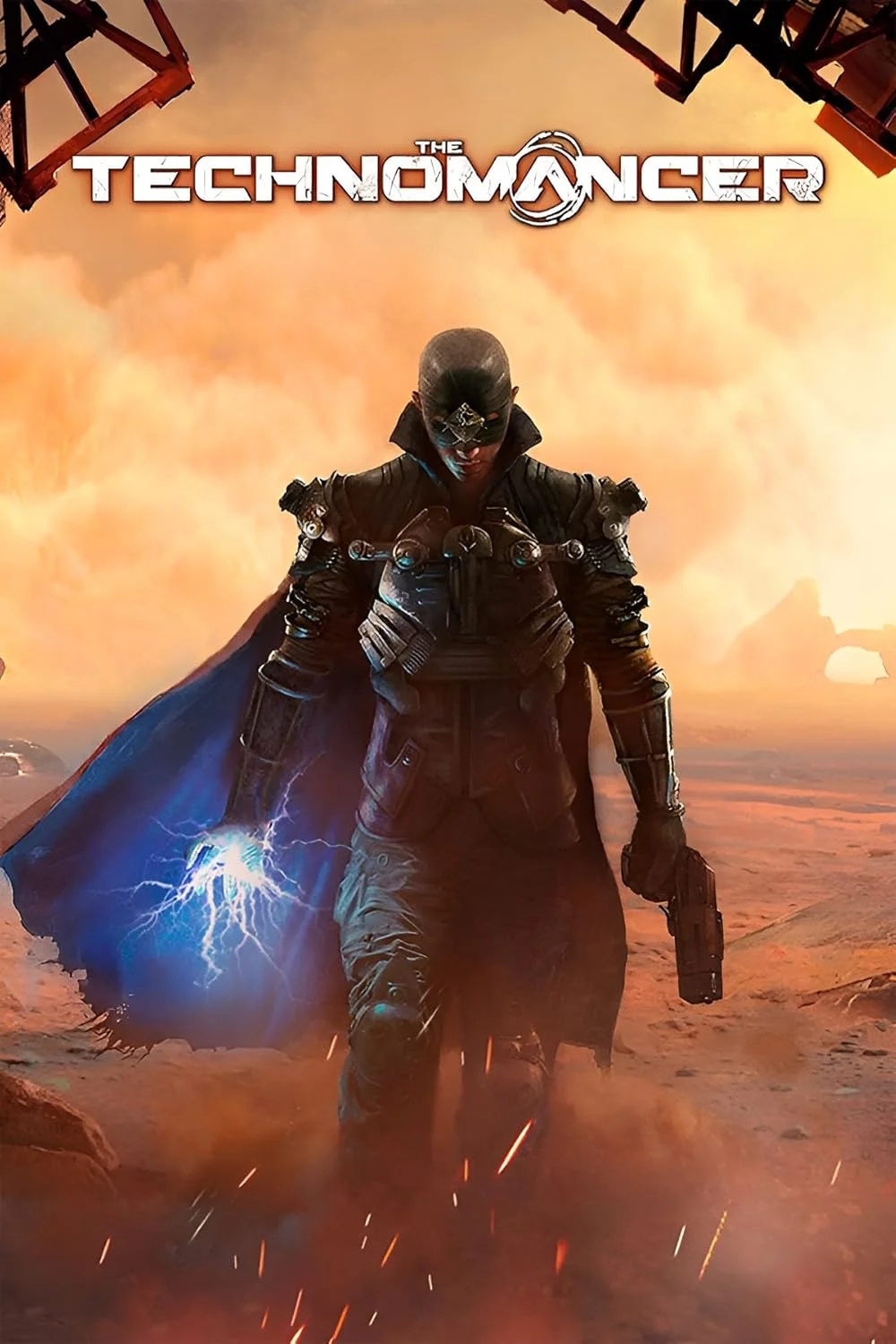
The Technomancer
This combination provides smooth gameplay with an average of 60 FPS, suitable for most gaming scenarios.
Average FPS: resolution vs quality settings
| Ultra | High | Medium | Low | |
|---|---|---|---|---|
| 4K Ultra HD | 22 | 29 | 33 | 44 |
| 1440p QHD | 41 | 52 | 61 | 79 |
| 1080p Full HD | 62 | 80 | 93 | 121 |
Cell color: green is 120+ FPS, teal is 60+, amber is 30+, red is below 30.
The Technomancer with AMD Ryzen 5 7600X + Intel Arc B570, In-Depth Analysis
The AMD Ryzen 5 7600X and Intel Arc B570 combination lands at rank 2256 out of 2825 tested combos for The Technomancer, placing it in the lower half of the database for this specific title. This pairing of a high-end desktop CPU with a mid-range graphics card is not an obvious bottleneck pairing, yet the data indicates the GPU carries the performance load, and its positioning relative to other combos reflects that dynamic. The rank suggests that while the system is playable, it is not a top-tier performer in this game, and users should calibrate expectations accordingly.
How This Combo Ranks
Within the database of 2,825 tested combinations for The Technomancer, this specific pairing of the Ryzen 5 7600X and Arc B570 achieves a rank of 2256. That places it in the 21st percentile of all tested combos, meaning roughly four out of five other configurations deliver higher average frame rates in this title. The ranking is heavily influenced by the GPU, as the Arc B570 sits at the 65th percentile among all GPUs tested, while the CPU is significantly stronger, ranking at the 79th percentile among all CPUs. This mismatch is a central theme in the data: the processor is capable of far more than the graphics card can extract in this game.
The combo rank becomes more understandable when examining the GPU's direct rivals. The Arc B570’s average benchmark score of 20556 is within 0.1% of the NVIDIA GeForce RTX 3070 Mobile and 0.1% below the Intel Arc A750. It is also 0.4% ahead of the NVIDIA Quadro M4000M and 0.5% behind the AMD Radeon R9 M390X. These margins are razor-thin, indicating the Arc B570 is a stable, predictable performer within a tight cluster of comparable GPUs. For The Technomancer, this means the combo’s rank is not an outlier; it is consistent with the GPU’s overall standing, suggesting the game is not uniquely punishing or rewarding this specific hardware pairing.
The CPU’s position in the broader market reinforces this interpretation. The Ryzen 5 7600X has an average benchmark score of 27636, which is 0.2% higher than both the AMD Ryzen 7 5700X and the Intel Core i5-12600K, and 0.4% higher than the AMD Ryzen 7 5800. It trails the AMD Ryzen 5 8500GE by 0.3%. These are negligible differences, confirming that the CPU is not the limiting factor in this combo. The rank of 2256 is therefore a direct reflection of the GPU’s performance ceiling in this title, not a sign of CPU inadequacy or a poorly matched pair.
GPU Role
The Intel Arc B570 is built on the Xe2-HPG architecture, known as Battlemage, and is a 5 nm design from TSMC with 19,600 million transistors on a 272 mm² die. Its memory configuration is substantial for its class: 10 GB of GDDR6 on a 160-bit bus, delivering 380.0 GB/s of bandwidth. The GPU operates at a fixed clock speed of 2500 MHz for both base and boost, which is a straightforward design choice that simplifies expected performance. Memory runs at 2375 MHz, or 19 Gbps effective, which is a high-speed setting that helps feed the 2304 shading units, 144 texture mapping units, and 80 render output units.
In The Technomancer, these specifications translate into a GPU that is capable but not overbearing. The 10 GB VRAM buffer is more than sufficient for this 2016 title, even at higher resolutions, as the game’s texture demands are modest by modern standards. The bandwidth of 380.0 GB/s is adequate for the data throughput the game requires, and the fixed clock speed ensures consistent frame pacing rather than variable boosts. The GPU’s compute capabilities, rated at 11.52 TFLOPS for FP32 and 23.04 TFLOPS for FP16, are not fully stretched by this game’s engine, but they do provide headroom for the visual effects present in the higher settings presets.
The Arc B570’s measured performance in this title shows a clear dependency on resolution and settings, but the GPU’s role is most evident in the 4K results. At 3840x2160, even the Low preset yields only 44 FPS, and the Ultra preset drops to 22 FPS. This is a GPU-bound scenario, as the CPU is not the constraint. The GPU’s raw fillrate and pixel throughput—200.0 GPixel/s and 360.0 GTexel/s—are being challenged by the pixel count at 4K. The data suggests the Arc B570 is positioned as a 1080p and 1440p performer for this game, with 4K being a stretch that only the Low preset can handle with any semblance of fluidity.
Resolution Scaling
The performance drop from 1080p to 4K is severe and tells a clear story about the limiting component. At 1080p with High settings, the combo delivers 80 FPS, which drops to 52 FPS at 1440p and then to 29 FPS at 4K. That is a 35% reduction going from 1080p to 1440p, and a further 44% reduction going from 1440p to 4K. The scaling is not linear, indicating that the GPU is being saturated as pixel count rises, while the CPU has ample headroom to keep up with the increased load.
Looking at the Low preset, the pattern is even more pronounced. At 1080p, the system hits 121 FPS, which is a strong result. At 1440p, it falls to 79 FPS, a 35% drop. At 4K, it reaches 44 FPS, another 44% drop from 1440p. The consistency of these percentage drops across different presets—35% and 44%—suggests that the GPU is the bottleneck at all resolutions. If the CPU were the constraint, the frame rate would plateau or scale differently, especially at lower resolutions where the CPU’s workload is relatively higher. The fact that the frame rate continues to fall steadily with resolution confirms the Arc B570 is the limiting factor.
For the Medium preset, the scaling follows the same trajectory but with a slightly different starting point. At 1080p, the average is 93 FPS, dropping to 61 FPS at 1440p and then to 33 FPS at 4K. The 4K result includes a minimum frame rate of 28 FPS and a maximum of 39 FPS, showing some variance but no catastrophic stuttering. The Ultra preset is the most demanding, with 62 FPS at 1080p, 41 FPS at 1440p, and 22 FPS at 4K. This resolution scaling data strongly indicates that users targeting 4K will need to use the Low preset to achieve a playable 44 FPS, while 1440p is viable at Medium or High, and 1080p can handle Ultra with acceptable results.
Measured FPS Breakdown
At 1920x1080, the system performs admirably across all settings. The Low preset delivers an average of 121 FPS, which is a fluid experience for any action RPG. The Medium preset averages 93 FPS, with a minimum of 79 FPS and a maximum of 107 FPS, indicating stable performance without major dips. The High preset averages 80 FPS, which is still very playable, and the Ultra preset averages 62 FPS. None of these 1080p results have recorded minimum or maximum values for Low and High, but the Medium preset’s range suggests the game is well-optimized for this resolution. The jump from Ultra to Low is nearly a 2x increase in frame rate, from 62 to 121 FPS, showing that settings have a significant impact at this resolution.
At 2560x1440, the performance is solid but requires more careful settings management. The Low preset averages 79 FPS, which is a good result for 1440p. The Medium preset averages 61 FPS, with a minimum of 52 FPS and a maximum of 70 FPS, providing a playable experience with some headroom. The High preset averages 52 FPS, which is acceptable for a slower-paced game but might feel less responsive in combat. The Ultra preset averages 41 FPS, which is borderline for a smooth experience. The data shows that 1440p is where the Arc B570 starts to show its limits, but the Medium preset offers a good balance of visual quality and frame rate, with the 52 FPS minimum ensuring no severe stutters.
At 3840x2160, the system struggles to maintain high frame rates. The Low preset averages 44 FPS, which is playable but not ideal for a game that may require quick reactions. The Medium preset averages 33 FPS, with a minimum of 28 FPS and a maximum of 39 FPS, which is a noticeable compromise in fluidity. The High preset averages 29 FPS, and the Ultra preset drops to 22 FPS. These 4K numbers are below the threshold for smooth gameplay, and the data indicates that 4K is not a recommended target for this combo in The Technomancer. The minimum frame rate of 28 FPS at Medium 4K suggests that even the most conservative settings will not prevent occasional dips into the high 20s.
Settings Recommendations
The measured FPS data points to a clear hierarchy of presets depending on the target resolution. For 1080p users, the Ultra preset at 62 FPS is the best choice for visual fidelity, as it remains above the 60 FPS threshold that most players consider smooth. However, if a higher frame rate is preferred for competitive or fast-paced play, the High preset at 80 FPS offers a significant boost with a modest visual downgrade. The Medium preset at 93 FPS is the sweet spot for those who prioritize frame rate over graphics, and the Low preset at 121 FPS is only necessary for high-refresh-rate displays, which are unlikely to be a concern for this older title.
For 1440p, the recommendation is the Medium preset, which averages 61 FPS with a minimum of 52 FPS. This is the only preset that maintains an average above 60 FPS, and the minimum frame rate ensures that the experience remains playable during heavy scenes. The High preset at 52 FPS is a fallback for those who want better visuals, but the lower average and lack of recorded minimums suggest it may dip below 50 FPS in demanding moments. The Low preset at 79 FPS is the best choice for a buttery-smooth experience, but it sacrifices too much graphical detail for a game that is not visually demanding by modern standards. The Ultra preset at 41 FPS is not recommended, as it falls below the playability threshold.
For 4K, the data is unequivocal: the Low preset at 44 FPS is the only viable option. The Medium preset at 33 FPS and the High preset at 29 FPS are too choppy for a satisfying experience, and the Ultra preset at 22 FPS is unplayable. Users with 4K displays should either accept the Low preset or consider dropping to 1440p for a better balance. The game’s age means that the Low preset still looks acceptable, but the performance gap between Low and Medium at 4K—a 33% difference—is substantial and makes the higher presets impractical.
CPU Role
The AMD Ryzen 5 7600X is a 6-core, 12-thread processor based on the Zen 4 architecture, codenamed Raphael. It operates on the AMD Socket AM5 platform and is built on a 5 nm process with 6,570 million transistors. The CPU has a base clock of 4.70 GHz and a boost clock of 5.30 GHz, which are high frequencies that provide excellent single-threaded performance. This is reflected in its benchmark scores, such as a single-core Geekbench score of 2603 and a Cinebench R23 single-core score of 1965. These numbers are strong for gaming, where single-threaded performance often matters more than core count.
In The Technomancer, the CPU’s role is largely supportive, as the game is not heavily threaded. The 6 cores and 12 threads are more than sufficient for the game’s engine, and the high boost clock ensures that the CPU is never a bottleneck, even at lower resolutions where the frame rate is higher. The CPU’s multi-threaded performance, such as a Cinebench R23 multi-core score of 15236 and a Geekbench multi-core score of 13858, is overkill for this title, but it does provide headroom for background tasks or streaming. The 32 MB of shared L3 cache also helps with data locality, reducing latency in game logic.
The CPU’s memory support for DDR5 with a bandwidth of 83.2 GB/s is another advantage, though The Technomancer is unlikely to stress memory bandwidth significantly. The integrated Radeon Graphics are present but unused in this configuration, as the discrete Arc B570 handles all rendering. The CPU’s position among rivals confirms its capability: it is within 0.4% of the AMD Ryzen 7 5800 and 0.2% of the Intel Core i5-12600K, both of which are strong gaming processors. The data shows that the Ryzen 5 7600X is a top-tier CPU that is not holding back the Arc B570, and any performance limitations in this combo are squarely the GPU’s responsibility.
Hardware Specifications
AMD Ryzen 5 7600X
Intel Arc B570
FPS Benchmarks by Resolution & Settings
Performance data for AMD Ryzen 5 7600X + Intel Arc B570 in The Technomancer
| Resolution | Settings | Avg FPS |
|---|---|---|
| 3840x2160 | Low | 44.0 |
| 3840x2160 | Medium | 33.0 |
| 3840x2160 | High | 29.0 |
| 3840x2160 | Ultra | 22.0 |
| 2560x1440 | Low | 79.0 |
| 2560x1440 | Medium | 61.0 |
| 2560x1440 | High | 52.0 |
| 2560x1440 | Ultra | 41.0 |
| 1920x1080 | Low | 121.0 |
| 1920x1080 | Medium | 93.0 |
| 1920x1080 | High | 80.0 |
| 1920x1080 | Ultra | 62.0 |
The Technomancer with Ryzen 5 7600X + Other GPUs
See how The Technomancer performs with the same CPU but different graphics cards.
The Technomancer with Arc B570 + Other CPUs
See how The Technomancer performs with the same GPU but different processors.
Other Games with Ryzen 5 7600X + Arc B570
Explore FPS benchmarks for other games using this same hardware combination.