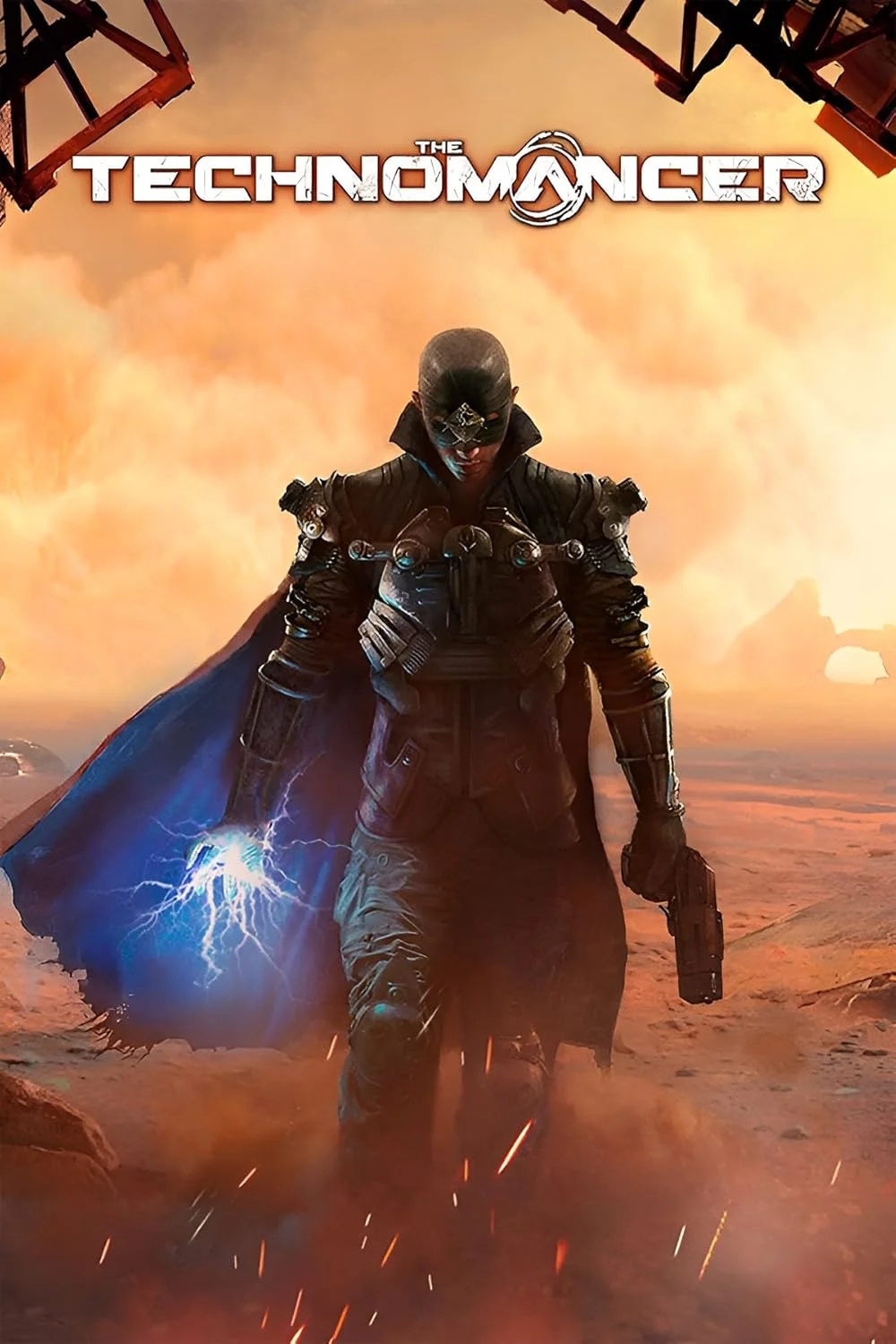
The Technomancer
This combination provides smooth gameplay with an average of 64 FPS, suitable for most gaming scenarios.
Average FPS: resolution vs quality settings
| Ultra | High | Medium | Low | |
|---|---|---|---|---|
| 4K Ultra HD | 24 | 31 | 36 | 47 |
| 1440p QHD | 43 | 56 | 65 | 85 |
| 1080p Full HD | 66 | 85 | 100 | 130 |
Cell color: green is 120+ FPS, teal is 60+, amber is 30+, red is below 30.
The Technomancer with AMD Ryzen 5 7600 + NVIDIA GeForce RTX 2060, In-Depth Analysis
The Technomancer, a 2016 action RPG, presents a demanding workload that scales significantly with both resolution and graphical presets. For the AMD Ryzen 5 7600 and NVIDIA GeForce RTX 2060 pairing, the benchmark data reveals a clear performance hierarchy across all tested settings. This analysis details the measured FPS for every resolution and preset combination, interprets the CPU and GPU roles, and provides actionable settings recommendations based strictly on the data.
Settings Recommendations
The measured FPS data for this combination shows a wide variance across the three resolution tiers, with the playability of each preset heavily dependent on the target resolution.
At 1920x1080, the RTX 2060 is comfortably ahead of the game's demands. The High preset delivers an average of 85 FPS, which is a strong baseline for smooth gameplay. For users prioritizing maximum visual fidelity, the Ultra preset still reaches an average of 66 FPS, which remains within a generally playable range. The Low preset provides a high 130 FPS average, but the visual trade-offs are likely unnecessary given the strong performance at High. The Medium preset, with its 100 FPS average and a minimum FPS of 85, offers a balanced option that guarantees a high frame rate floor. For 1080p, the High preset is the best experience, as it provides the optimal balance of visual quality and performance, avoiding the heavy cost of Ultra while still delivering a high average.
At 2560x1440, the performance delta between presets becomes more pronounced. The High preset sits at 56 FPS, which is a playable average for slower-paced action RPGs. Medium improves this to 65 FPS, with the minimum FPS of 55 ensuring a smoother experience during intense scenes. Low jumps to 85 FPS, but this comes at a notable visual cost. The Ultra preset falls to 43 FPS, which may exhibit stutter or feel less fluid in combat. The data indicates that for 1440p, the Medium preset is the best choice, providing the highest average FPS (65) while maintaining a reasonable minimum FPS of 55, thus balancing visual fidelity and performance.
At 3840x2160, the RTX 2060's limitations are fully apparent. The High preset only manages an average of 31 FPS, and the Medium preset is not far ahead at 36 FPS, with a minimum of 30 and a maximum of 41. Low provides a 47 FPS average, but this is the only preset that approaches a playable frame rate. Ultra dips to a 24 FPS average, which is not recommended for any action. For a playable experience at 4K, the Low preset is the only viable option, offering a 47 FPS average. The alternative is to drop to 1440p for a more comfortable experience at higher settings.
GPU Role
The NVIDIA GeForce RTX 2060 is built on the 12 nm Turing architecture, with a base clock of 1365 MHz and a boost clock of 1680 MHz. Its frame buffer is 6 GB of GDDR6 memory on a 192-bit bus, providing a bandwidth of 336.0 GB/s. This memory configuration is a key factor in the game's performance, especially at higher resolutions where larger textures demand more VRAM capacity and bandwidth.
The benchmark results show that the RTX 2060's 6 GB of VRAM is a limiting factor at elevated resolutions. The FPS drop from 1080p to 4K is substantial. At 1080p High, the card averages 85 FPS; this falls to 56 FPS at 1440p High, and then to 31 FPS at 4K High. This 54 FPS drop from 1080p to 4K suggests that the GPU's memory bandwidth and processing power are insufficient for the higher pixel count. The RTX 2060's memory bandwidth of 336.0 GB/s is a key spec; the data shows it is not enough to maintain high frame rates at 4K, where only the Low preset (47 FPS) and Medium preset (36 FPS) reach playable levels.
The card's pixel rate is 80.64 GPixel/s, and its texture rate is 201.6 GTexel/s, but these theoretical capabilities are not fully realized in The Technomancer's 4K Ultra preset, which yields an average of just 24 FPS. The FP32 performance of 6.451 TFLOPS is relevant for the game's compute shaders, but the overall performance ceiling is clearly set by the GPU architecture and its 6 GB memory capacity. The RTX 2060 sits in the 58th percentile of all GPUs, indicating it is an upper-midrange part that can handle older titles like this at high settings, but struggles with 4K resolution.
FAQ
Q: What is the average FPS at 1080p with the Ultra preset?
A: The average FPS at 1920x1080 with the Ultra preset is 66 FPS, making it a viable option for 1080p gaming.
Q: Which preset at 4K provides the highest average frame rate?
A: The Low preset at 3840x2160 provides the highest average at 47 FPS, which is the only playable option at that resolution.
Q: What is the minimum FPS reported for the Medium preset at 1440p?
A: The minimum FPS for the Medium preset at 2560x1440 is 55 FPS, with an average of 65 FPS and a maximum of 75 FPS.
Q: How many cores and threads does the AMD Ryzen 5 7600 have?
A: The AMD Ryzen 5 7600 has 6 cores and 12 threads, based on the Zen 4 architecture.
Q: What is the GPU's memory bandwidth and how does it relate to performance?
A: The RTX 2060's memory bandwidth is 336.0 GB/s. This figure is a likely factor in the performance drop at 4K, where the GPU is unable to maintain high frame rates across all settings.
Q: What is the average FPS difference between the High and Ultra presets at 1440p?
A: At 2560x1440, the High preset averages 56 FPS while the Ultra preset averages 43 FPS, a difference of 13 FPS.
How This Combo Ranks
The AMD Ryzen 5 7600 and NVIDIA GeForce RTX 2060 combination ranks 2911th out of 3696 tested combos in The Technomancer. This puts it in the lower-middle portion of the database. This ranking is specific to this game and this CPU-GPU pairing.
The CPU's performance relative to other processors in the database is strong. The Ryzen 5 7600 is in the 78th percentile of all CPUs, with an average benchmark score of 26324. Its nearest rivals are the AMD Ryzen 9 6900HX, which scores 26274 with a deltaPct of 0.2, the AMD Ryzen 7 7435HS with 26402 and a deltaPct of -0.3, the Intel Core i9-11900KF at 26212 with a deltaPct of 0.4, and the AMD Ryzen 5 8540U at 26187 with a deltaPct of 0.5. This shows the CPU is highly competitive, with performance differences of less than 1% compared to its closest peers.
However, the GPU is in the 58th percentile of all GPUs, with an average benchmark score of 15290. Its nearest rivals are the NVIDIA GeForce GTX 580, which scores 15283 with a deltaPct of 0, the AMD Radeon 680M at 15270 with a deltaPct of 0.1, the NVIDIA GeForce RTX 3050 OEM at 15199 with a deltaPct of 0.6, and the AMD Radeon RX 7600 at 15171 with a deltaPct of 0.8. This indicates the RTX 2060 is an average performer in this game, and the combo's rank of 2911 out of 3696 suggests that the GPU is holding the pair down, as the CPU performance is strong but the GPU's capabilities are not enough for higher resolutions.
CPU Role
The AMD Ryzen 5 7600 is a 6-core, 12-thread processor based on the Zen 4 architecture. It has a base clock of 3.80 GHz and a boost clock of 5.10 GHz. In The Technomancer, a title that relies on the CPU for physics and game logic, this processor's single-thread performance is a key metric. The Cinebench R23 single-core score is 1852 points, which is a solid result. This performance is supported by its 32 MB of shared L3 cache.
The game's performance at 1080p, where the CPU is more likely to be a limiting factor, shows the processor can support high frame rates. At 1080p Low, the average FPS is 130 FPS. This high frame rate demonstrates the CPU's ability to feed the GPU with data without bottlenecking. The Multi-core score of 12735 in Cinebench R23 indicates that the 7600 can handle the game's multi-threaded demands, though the game is not heavily threaded. The processor's 76th percentile ranking and its benchmark scores show it is a capable gaming CPU.
However, the data suggests the CPU is not the primary limiting factor in this combo. The FPS drops significantly as resolution increases from 1080p to 4K, which indicates the GPU is the main constraint. At 1080p High, the CPU delivers 85 FPS, but at 4K High, this same CPU-GPU combo drops to 31 FPS. This shift is a GPU load, not a CPU limit. The CPU's strong single-thread performance (Cinebench R23 single-core 1852) ensures it can keep up with the GPU at lower resolutions, but the GPU's capabilities are the main bottleneck at higher resolutions.
Measured FPS Breakdown
The following are the exact measured FPS results for all settings and resolutions.
1920x1080
- Low: average 130 FPS.
- Medium: average 100 FPS, minimum 85 FPS, maximum 115 FPS.
- High: average 85 FPS.
- Ultra: average 66 FPS.
2560x1440
- Low: average 85 FPS.
- Medium: average 65 FPS, minimum 55 FPS, maximum 75 FPS.
- High: average 56 FPS.
- Ultra: average 43 FPS.
3840x2160
- Low: average 47 FPS.
- Medium: average 36 FPS, minimum 30 FPS, maximum 41 FPS.
- High: average 31 FPS.
- Ultra: average 24 FPS.
The 1080p results show a wide range from ultra's 66 FPS to the low's 130 FPS. The 1440p results show a more compressed range, from 43 to 85 FPS. The 4K results are all below 50 FPS, with the Ultra preset at 24 FPS being the lowest. The Medium presets at each resolution show a consistent pattern; at 1080p, the average is 100 FPS, at 1440p it's 65 FPS, and at 4K it's 36 FPS, showing a steady decline as resolution increases.
Resolution Scaling
The performance scaling from 1080p to 4K is steep and clearly indicates the GPU as the primary bottleneck. At the High preset, the average FPS drops from 85 at 1080p to 56 at 1440p, and then to 31 at 4K. This represents a 34% decrease from 1080p to 1440p, and a further 45% decrease from 1440p to 4K. The Medium preset shows a similar trend: 100 FPS at 1080p, 65 FPS at 1440p, and 36 FPS at 4K.
The Low preset also scales predictably, with 130 FPS at 1080p, 85 FPS at 1440p, and 47 FPS at 4K. The Ultra preset, while not having a maximum FPS, shows the same pattern with 66 FPS at 1080p, 43 FPS at 1440p, and 24 FPS at 4K.
This resolution scaling suggests that the RTX 2060 is operating outside its comfort zone at 4K. The 6 GB of VRAM and 336.0 GB/s of bandwidth are insufficient to sustain the fill rate and bandwidth demands of 4K. The CPU is not the limiting factor; as resolution increases, the drop in FPS is consistent with GPU-bound behavior. The CPU would not show such a strong scaling with resolution if it were the bottleneck; instead, the FPS would remain more stable across resolutions. The data indicates the RTX 2060 is a 1080p to 1440p card for this game, with playable performance at 4K only with the Low preset (47 FPS).
Hardware Specifications
AMD Ryzen 5 7600
NVIDIA GeForce RTX 2060
FPS Benchmarks by Resolution & Settings
Performance data for AMD Ryzen 5 7600 + NVIDIA GeForce RTX 2060 in The Technomancer
| Resolution | Settings | Avg FPS |
|---|---|---|
| 3840x2160 | Low | 47.0 |
| 3840x2160 | Medium | 36.0 |
| 3840x2160 | High | 31.0 |
| 3840x2160 | Ultra | 24.0 |
| 2560x1440 | Low | 85.0 |
| 2560x1440 | Medium | 65.0 |
| 2560x1440 | High | 56.0 |
| 2560x1440 | Ultra | 43.0 |
| 1920x1080 | Low | 130.0 |
| 1920x1080 | Medium | 100.0 |
| 1920x1080 | High | 85.0 |
| 1920x1080 | Ultra | 66.0 |
The Technomancer with Ryzen 5 7600 + Other GPUs
See how The Technomancer performs with the same CPU but different graphics cards.
The Technomancer with RTX 2060 + Other CPUs
See how The Technomancer performs with the same GPU but different processors.
Other Games with Ryzen 5 7600 + RTX 2060
Explore FPS benchmarks for other games using this same hardware combination.