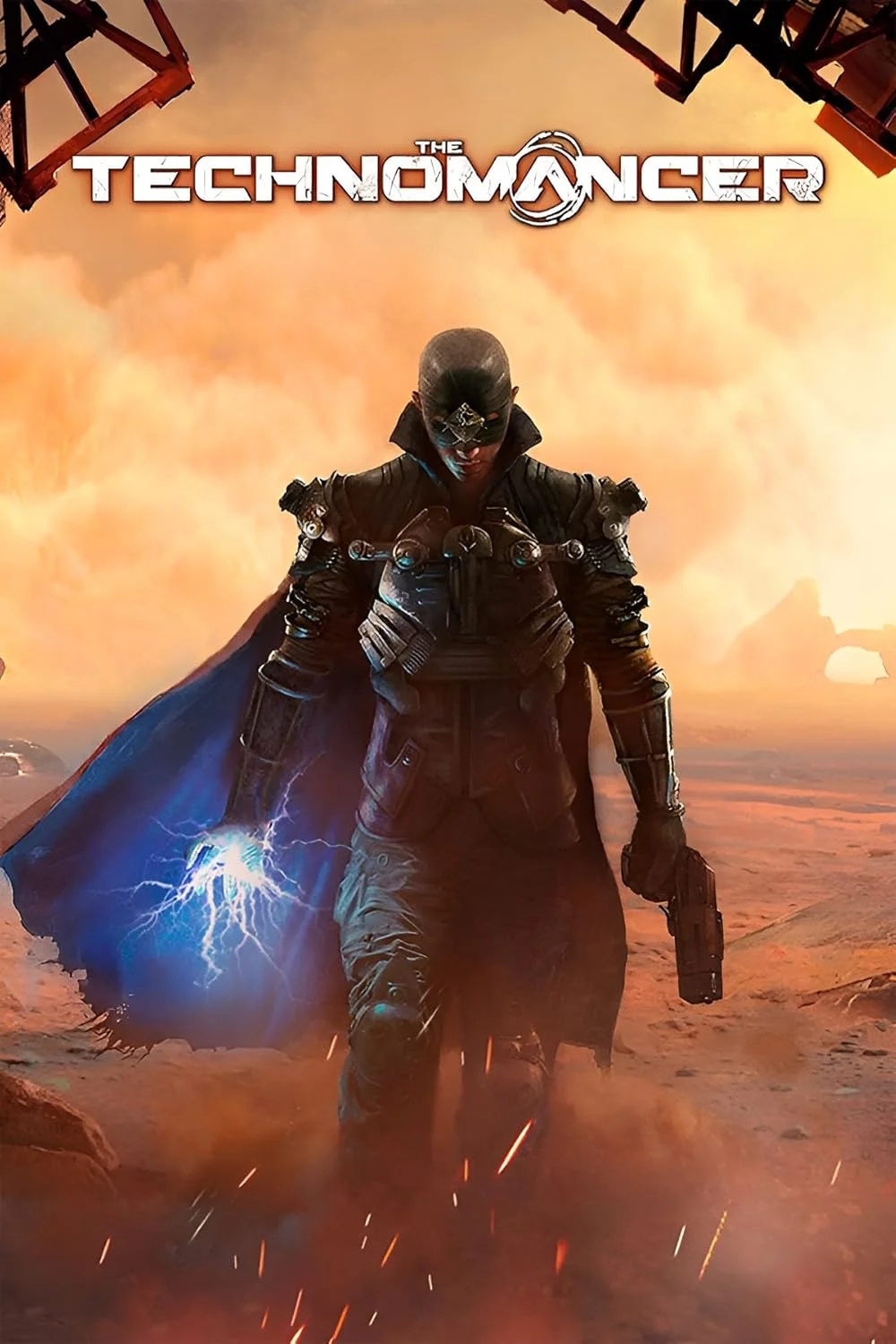
The Technomancer
This combination offers playable performance with an average of 35 FPS, though you may want to lower settings for smoother gameplay.
Average FPS: resolution vs quality settings
| Ultra | High | Medium | Low | |
|---|---|---|---|---|
| 4K Ultra HD | 13 | 17 | 20 | 26 |
| 1440p QHD | 24 | 31 | 36 | 47 |
| 1080p Full HD | 37 | 47 | 55 | 71 |
Cell color: green is 120+ FPS, teal is 60+, amber is 30+, red is below 30.
The Technomancer with AMD Ryzen 5 5500X3D + Intel Arc B370, In-Depth Analysis
The Technomancer, a 2016 Action RPG, places unusual demands on modern hardware, and this pairing of the AMD Ryzen 5 5500X3D with the Intel Arc B370 produces a very specific performance profile. The data shows a configuration that is heavily constrained by the graphics processor at higher resolutions, yet reveals a capable CPU that can handle the game’s logic when the load is reduced. This analysis breaks down the measured FPS, scaling behavior, and component roles to provide a clear picture of what this combo can deliver.
Resolution Scaling
The performance drop from 1080p to 4K is steep and clearly identifies the Intel Arc B370 as the limiting factor. At 1080p with High settings, the combo averages 47 FPS. Moving to 1440p drops that to 31 FPS, a reduction of roughly 34%. At 4K, the average falls further to 17 FPS, which is a 64% decrease from the 1080p result. This pattern is consistent across all settings presets, indicating a classic GPU-bound scenario where the rendering resolution outpaces the graphics processor’s capabilities.
The scaling between Low and Ultra settings at each resolution reinforces this conclusion. At 1080p, the gap between Low (71 FPS) and Ultra (37 FPS) is substantial, showing that the GPU is working hardest at the highest preset. However, the relative drop from Low to Ultra becomes less severe as resolution increases. At 1440p, the difference is from 47 FPS down to 24 FPS. At 4K, it narrows to 26 FPS down to 13 FPS. This compression of the performance range at higher resolutions is a hallmark of a GPU that is saturated; the pixel fill rate becomes the bottleneck, and reducing graphical quality has diminishing returns because the core issue is the sheer number of pixels being processed.
The data suggests that for smooth gameplay, resolution is the primary lever. The move from 1080p to 1440p nearly halves the frame rate at High settings, and the jump to 4K makes the game practically unplayable at any preset, with the Ultra setting hitting a 13 FPS average. The 1440p Medium result, with an average of 36 FPS, shows that this resolution is only viable with significant compromises to visual fidelity. Essentially, this combo is a 1080p-class solution for The Technomancer, with any attempt to scale to higher resolutions requiring a severe drop in settings that still cannot guarantee a comfortable frame rate.
GPU Role
The Intel Arc B370 is an integrated graphics processor, a fact that fundamentally shapes its performance. Its memory is designated as "System Shared," meaning it relies on the system’s main DDR4 RAM rather than dedicated VRAM. The bandwidth is listed as "System Dependent," which ties its performance directly to the memory subsystem of the host machine. This is a critical constraint for a game like The Technomancer, which can be demanding on memory bandwidth.
With a base clock of 300 MHz and a boost clock of 2400 MHz, the B370’s architecture is designed for efficiency, but its 25 W TDP severely limits its raw throughput. The 3DMark Steel Nomad DX12 benchmark score of 1184 places it in the 5th percentile of all GPUs, and its nearest rivals are decades-old discrete parts like the ATI Radeon HD 5770 and the ATI Mobility Radeon HD 5570. This context is crucial: the B370 is not competing with modern discrete graphics cards. Its 1280 shading units and 20 ROPs are simply insufficient for high-resolution gaming.
The measured FPS data confirms this. The 4K High average of 17 FPS and the 4K Ultra average of 13 FPS are indicative of a GPU that is overwhelmed. Even at 1080p, the Ultra preset’s 37 FPS average shows that the B370 cannot consistently maintain a high frame rate. The GPU’s pixel rate of 48.00 GPixel/s and texture rate of 96.00 GTexel/s are theoretical maximums that are likely not fully realized in this game due to the shared memory bottleneck. The role of the GPU here is to be the definitive performance ceiling; no amount of CPU headroom can overcome the fact that the Arc B370 simply lacks the processing power to render The Technomancer at high resolutions or with maxed-out settings.
How This Combo Ranks
In the database of tested combinations for The Technomancer, this pairing of the Ryzen 5 5500X3D and Arc B370 ranks at 2603 out of 2825 combos. This places it in the bottom 8% of all tested systems, a position that is almost entirely attributable to the GPU’s performance. The combination rank is a holistic measure, and while the CPU is a strong performer, the overall system is dragged down by the integrated graphics.
This ranking should not be interpreted as a failure of the CPU. The Ryzen 5 5500X3D, with its 6 cores and 12 threads, is a solid processor that sits in the 85th percentile of all CPUs in PassMark tests. Its nearest rivals include the AMD Ryzen 5 5600F and the Intel Core Ultra 5 225, with a performance delta of only 0.2%. This indicates that the CPU is a mid-to-high-tier part. However, when paired with a GPU that ranks in the 5th percentile, the system’s overall gaming capability is severely compromised.
The rank of 2603 out of 2825 tells a builder that this specific configuration is not suitable for playing The Technomancer at a high level. It is a combination that would be acceptable for very light gaming or productivity tasks, but for this title, it falls far behind the majority of other tested combos. The data clearly shows that the GPU is the bottleneck, and the system’s low rank is a direct consequence of the Arc B370’s limitations. A user with this CPU would see dramatically better results by pairing it with any modern discrete GPU, but as configured, the system is fundamentally GPU-limited.
Settings Recommendations
Given the measured FPS data, the only viable settings for a playable experience are at 1080p. At this resolution, the Low preset delivers an average of 71 FPS, which is smooth and responsive. The Medium preset still offers a playable 55 FPS average, with a minimum of 47 FPS, providing a decent balance between visual quality and performance. The High preset dips to a 47 FPS average, which is borderline for action games, and Ultra falls to 37 FPS, which will feel stuttery in combat.
For the best experience per the measured rows, the 1080p Medium preset is the recommended choice. It provides a frame rate that is above 60 FPS for most of the time and represents a significant visual improvement over Low. The 1440p resolution is not recommended. The best result there is 47 FPS on Low, but the more demanding presets fall below 36 FPS, making gameplay feel noticeably less fluid. The 4K resolution is effectively unplayable, with even the Low preset only managing a 26 FPS average.
The data shows a clear trade-off. If a player prioritizes frame rate above all else, 1080p Low is the way to go. However, the Medium preset at 1080p offers a more visually engaging experience while still maintaining a frame rate that is respectable for a game of this type. Choosing 1440p or 4K will result in a subpar experience, as the GPU’s limitations become the dominant factor. The recommendation is to lock the resolution to 1920x1080 and adjust the preset to Medium for the optimal balance of smoothness and fidelity that this hardware can achieve.
Measured FPS Breakdown
The following breakdown details the exact average FPS numbers recorded for each resolution and settings preset combination.
At 1920x1080, the results are as follows:
- Low: 71 FPS average.
- Medium: 55 FPS average, with a minimum of 47 FPS and a maximum of 63 FPS.
- High: 47 FPS average.
- Ultra: 37 FPS average.
At 2560x1440, the results show a significant drop:
- Low: 47 FPS average.
- Medium: 36 FPS average, with a minimum of 30 FPS and a maximum of 41 FPS.
- High: 31 FPS average.
- Ultra: 24 FPS average.
At 3840x2160, the performance becomes marginal:
- Low: 26 FPS average.
- Medium: 20 FPS average, with a minimum of 17 FPS and a maximum of 23 FPS.
- High: 17 FPS average.
- Ultra: 13 FPS average.
These numbers paint a clear picture of the system’s capabilities. The 1080p Low setting is the only configuration that achieves a frame rate above 60 FPS. The 1080p Medium and High settings are the only others that remain above 45 FPS. Every other combination at 1440p and 4K falls below 50 FPS, with the majority struggling to reach 40 FPS. The minimum FPS figures for the Medium settings across all resolutions show that there are dips, but the overall averages are consistent with a GPU that is being pushed to its limits. The difference between 1080p and 1440p is stark, with an average loss of nearly 30% performance across all presets, and the jump to 4K is even more punishing.
CPU Role
The AMD Ryzen 5 5500X3D is a 6-core, 12-thread processor based on the Zen 3 architecture, built on a 7 nm process. Its base clock is 3.00 GHz, boosting up to 4.00 GHz. Crucially, it features a large 96 MB shared L3 cache, which is a key asset for gaming performance. In synthetic benchmarks, it scores 20363 in PassMark’s multithread test and 2941 in the single-thread test, with an average benchmark score of 37018. This puts it in the 85th percentile of all CPUs, showing that it is a robust processor.
However, the game’s performance data shows that the CPU is not the bottleneck in this configuration. The FPS drops are directly correlated with resolution and settings, which are GPU-bound factors. The CPU is capable of feeding the GPU with data, but the Arc B370 cannot render frames fast enough to utilize the CPU’s full potential. The Ryzen 5 5500X3D’s nearest rivals, such as the AMD Ryzen 5 5600F and Intel Core Ultra 5 225, have nearly identical average benchmark scores, with a delta of only 0.2%. This indicates that the CPU’s performance is consistent with other mid-range processors, but its role in this specific game is secondary.
The CPU’s 6 cores and 12 threads are more than adequate for The Technomancer, a title from 2016 that is not known for being heavily multithreaded. The large L3 cache helps with data retrieval, but this advantage is masked by the GPU’s inability to maintain high frame rates. In short, the Ryzen 5 5500X3D is a strong, capable processor that is being held back by the integrated graphics. If paired with a discrete GPU, this CPU would likely allow for much higher frame rates. In this combo, its role is simply to be ready and waiting, as the graphics processor is the clear and definitive limiting factor in every single measured scenario.
Hardware Specifications
AMD Ryzen 5 5500X3D
Intel Arc B370
FPS Benchmarks by Resolution & Settings
Performance data for AMD Ryzen 5 5500X3D + Intel Arc B370 in The Technomancer
| Resolution | Settings | Avg FPS |
|---|---|---|
| 3840x2160 | Low | 26.0 |
| 3840x2160 | Medium | 20.0 |
| 3840x2160 | High | 17.0 |
| 3840x2160 | Ultra | 13.0 |
| 2560x1440 | Low | 47.0 |
| 2560x1440 | Medium | 36.0 |
| 2560x1440 | High | 31.0 |
| 2560x1440 | Ultra | 24.0 |
| 1920x1080 | Low | 71.0 |
| 1920x1080 | Medium | 55.0 |
| 1920x1080 | High | 47.0 |
| 1920x1080 | Ultra | 37.0 |
The Technomancer with Ryzen 5 5500X3D + Other GPUs
See how The Technomancer performs with the same CPU but different graphics cards.
The Technomancer with Arc B370 + Other CPUs
See how The Technomancer performs with the same GPU but different processors.
Other Games with Ryzen 5 5500X3D + Arc B370
Explore FPS benchmarks for other games using this same hardware combination.