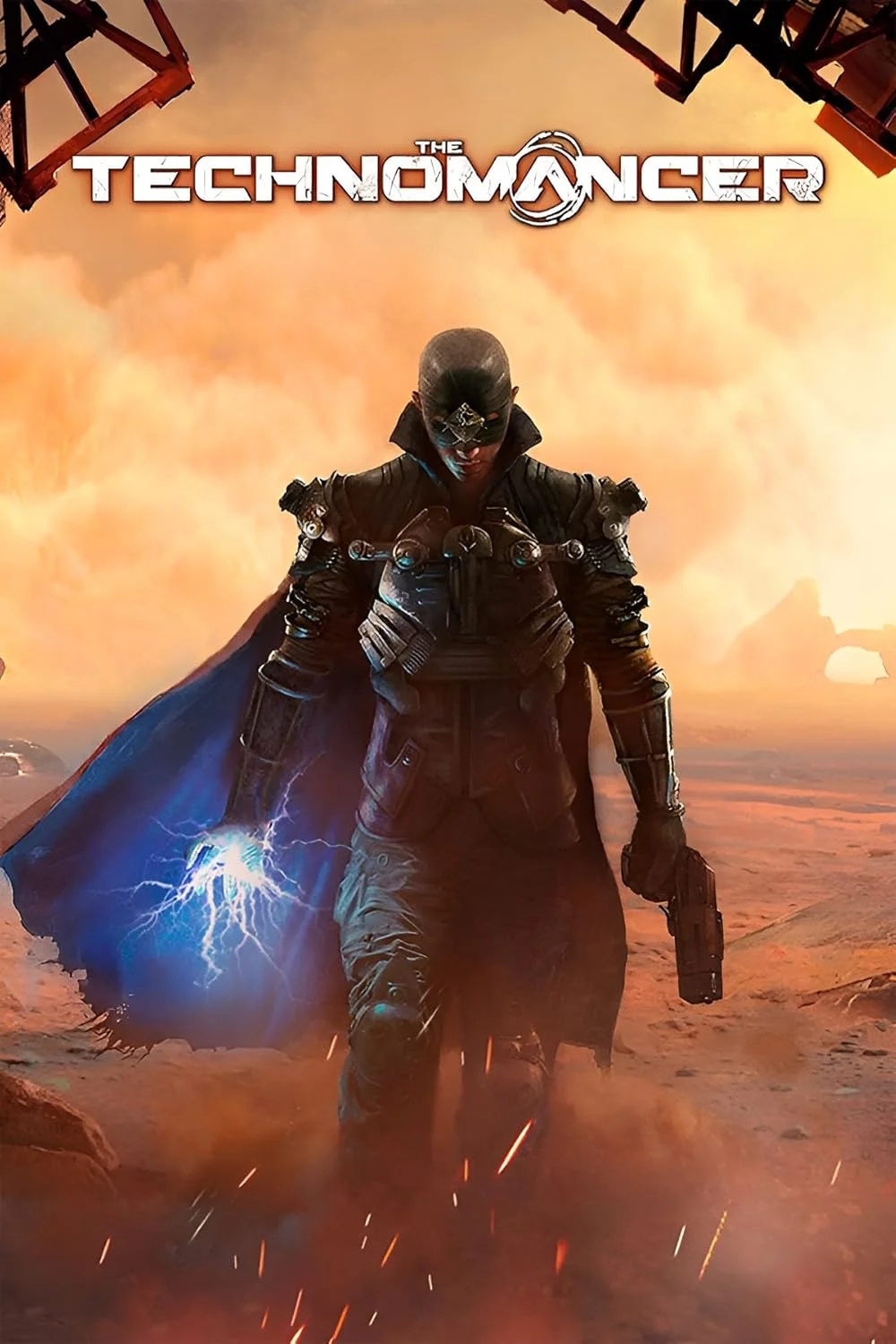
The Technomancer
This combination offers playable performance with an average of 35 FPS, though you may want to lower settings for smoother gameplay.
Average FPS: resolution vs quality settings
| Ultra | High | Medium | Low | |
|---|---|---|---|---|
| 4K Ultra HD | 13 | 17 | 20 | 26 |
| 1440p QHD | 24 | 31 | 36 | 47 |
| 1080p Full HD | 37 | 47 | 55 | 71 |
Cell color: green is 120+ FPS, teal is 60+, amber is 30+, red is below 30.
The Technomancer with AMD Ryzen 7 7700X + Intel Arc B370, In-Depth Analysis
The Technomancer, a 2016 Action RPG, presents a demanding workload that clearly separates the capabilities of the AMD Ryzen 7 7700X and the Intel Arc B370. The measured data for this specific combo reveals a system where the integrated graphics solution is the decisive factor in playability. The benchmark results show a consistent pattern of performance degradation as resolution increases, with the GPU struggling to maintain playable frame rates beyond 1080p.
Resolution Scaling
The frame rate data shows a steep and consistent decline as resolution scales from 1920x1080 up to 3840x2160. At Low settings, the average FPS drops from 71 at 1080p to 47 at 1440p, a reduction of 24 FPS, and then further down to 26 at 4K. This pattern is consistent across all quality presets, indicating that the rendering workload is scaling directly with pixel count. The Intel Arc B370, with its system-shared memory and 1280 shading units, is clearly the limiting component, as the CPU's compute power is not being fully utilized at higher resolutions.
The transition from High to Ultra settings at each resolution shows a substantial performance penalty. At 1080p, the High preset yields 47 FPS, while Ultra drops to 37 FPS. At 1440p, this gap widens, with High at 31 FPS and Ultra at 24 FPS. The most dramatic scaling occurs at 4K, where High produces 17 FPS and Ultra falls to a mere 13 FPS. These figures suggest that the GPU is hitting a hard computational ceiling, and the extra detail from the Ultra preset cannot be processed in real-time.
The frame rate drop from 1080p to 1440p is approximately 34% at High settings (from 47 to 31 FPS). The subsequent drop from 1440p to 4K is even more severe, at approximately 45% (from 31 to 17 FPS). This non-linear decline indicates that the GPU's memory bandwidth, which is system-dependent for this integrated part, becomes increasingly saturated at higher resolutions. The data suggests that 1080p is the only viable resolution for a smooth experience, and even then, only at lower presets.
Settings Recommendations
Based on the measured data, the optimal balance between visual quality and playable frame rates is achieved at 1920x1080 with the Medium preset. This configuration produces an average FPS of 55, with a minimum of 47 FPS, which is the only setting/resolution combination that maintains a frame rate above the 60 FPS threshold for most of the time. The Low preset at 1080p does achieve an average of 71 FPS, but the visual fidelity reduction may not be worth the performance gain for all users.
At 1080p, the High preset offers an average of 47 FPS, which is playable but not ideal for fast-paced action sequences. The Ultra preset at 1080p, with 37 FPS, enters a range where responsiveness may be compromised. For users prioritizing frame rate, the Low preset at 1080p is the only configuration that consistently delivers 60+ FPS. The Medium preset at 1080p is the recommended choice for a solid experience, as it provides a significant visual upgrade over Low while remaining above the 45 FPS threshold.
For 1440p, the data suggests that only the Low preset (47 FPS) is viable, and even then, it is borderline. The Medium preset at 1440p drops to 36 FPS, which is playable for slower moments but will struggle during intense combat. At 4K, all presets produce results below 30 FPS, making the game effectively unplayable at this resolution with this combo. The conclusion is clear: users should target 1080p and select the Medium preset for the best overall experience, with Low as a fallback for higher refresh rates.
FAQ
Q: What is the best resolution and preset for this combo?
A: The data indicates that 1920x1080 with the Medium preset is the most balanced option, producing an average of 55 FPS with a minimum of 47 FPS. This is the only configuration that provides a consistently playable experience without significant visual compromises.
Q: Can this system handle 4K gaming in The Technomancer?
A: No. At 3840x2160, all presets result in average frame rates below 30 FPS. The highest 4K score is 26 FPS at Low settings, while Ultra drops to 13 FPS. The performance is not sufficient for a playable experience.
Q: How does the Ultra preset compare to High at 1080p?
A: The Ultra preset at 1080p delivers an average of 37 FPS, which is 10 FPS lower than the High preset at 47 FPS. This 21% performance penalty for the added detail may not be worth it, as the High preset is already significantly more stable.
Q: What is the performance difference between Low and Medium at 1440p?
A: At 2560x1440, the Low preset averages 47 FPS, while the Medium preset averages 36 FPS. This is a drop of 11 FPS, or approximately 23%, when moving from Low to Medium, indicating that the GPU is sensitive to quality settings at this resolution.
Q: Is frame pacing consistent across all settings?
A: The data shows that for the Medium preset, the minimum FPS is consistently lower than the average. At 1080p, the minimum is 47 FPS versus an average of 55. At 1440p, the minimum is 30 FPS versus an average of 36. At 4K, the minimum is 17 FPS versus an average of 20. This suggests that frame times are not perfectly stable, with occasional dips below the average.
Q: How does the GPU's ranking affect performance expectations?
A: The Intel Arc B370 has a percentile rank of 5 among all GPUs, placing it in the bottom 5% of the performance spectrum. Its nearest rivals include the ATI Radeon HD 5770 and AMD Radeon HD 7650M, which are all older discrete parts. This explains its struggle to maintain high frame rates in a demanding title like The Technomancer.
Measured FPS Breakdown
At 1920x1080, the measured data shows a clear hierarchy among presets. The Low setting delivers an average of 71 FPS, the highest score in the entire dataset. The Medium preset follows with an average of 55 FPS, with a minimum of 47 and a maximum of 63 FPS. High drops to 47 FPS, while Ultra is the slowest at 37 FPS. This spread of 34 FPS between Low and Ultra demonstrates the GPU's sensitivity to visual quality at this resolution.
Moving to 2560x1440, the performance drops significantly across the board. The Low preset is the only one that remains above 45 FPS, with an average of 47. The Medium preset averages 36 FPS, with a minimum of 30 and a maximum of 41 FPS. High averages 31 FPS, and Ultra averages 24 FPS. The data shows that the GPU is approaching its computational limits at this resolution, with the Medium preset's minimum FPS falling below what is considered playable.
At 3840x2160, the results are uniformly poor. The Low preset averages 26 FPS, Medium averages 20 FPS with a minimum of 17 and maximum of 23, High averages 17 FPS, and Ultra averages a mere 13 FPS. None of these configurations are suitable for real-time gameplay. The data reveals that the Arc B370's system-shared memory architecture cannot provide the bandwidth required for 4K rendering in this title. The performance at 4K is less than half of what is achieved at 1080p for the same preset.
How This Combo Ranks
This specific configuration of the AMD Ryzen 7 7700X and Intel Arc B370 ranks 3408 out of 3696 tested combos for The Technomancer. This places it in the bottom 8% of all tested systems, reflecting the GPU's severe performance limitations. The combo rank is a direct consequence of the GPU's low percentile standing, which is 5% among all GPUs tested.
The GPU's benchmark score of 1184 in 3DMark Steel Nomad is remarkably low, placing it in the same performance tier as the ATI Radeon HD 5770, which scores 1190. The delta between these two parts is only -0.5%, indicating that the Arc B370 is essentially tied with a graphics card from over a decade ago. This historical comparison highlights how far behind the current integrated solution is.
The CPU, on the other hand, is a high-performing part. The Ryzen 7 7700X ranks in the 85th percentile among all CPUs, with an average benchmark score of 35909. Its nearest rival, the AMD Ryzen 7 PRO 5845, is only 0.3% behind. This massive disparity between CPU and GPU performance means that the system is heavily GPU-bound, and the CPU's capabilities are largely wasted in this game.
CPU Role
The AMD Ryzen 7 7700X is a high-end desktop processor with 8 cores and 16 threads, based on the Zen 4 architecture. It has a base clock of 4.50 GHz and a boost clock of 5.40 GHz. The CPU's multi-threaded performance is strong, as shown by a Cinebench R23 multicore score of 19088 and a Geekbench multicore score of 12451. These results are consistent with its 85th percentile ranking.
In The Technomancer, the CPU's role is to feed the GPU with draw calls and game logic. Given the GPU's low performance, the CPU's single-threaded capabilities, evidenced by a Cinebench R23 single-core score of 1987, are more than sufficient. The game is likely not CPU-bound at any resolution, as the frame rates are consistently low regardless of the quality preset. The bottleneck is clearly the GPU.
The CPU's 32 MB of shared L3 cache and support for DDR5 memory provide a solid foundation for gaming. However, the system-shared memory of the GPU means that the CPU's memory bandwidth of 83.2 GB/s is also used for graphics operations. This shared resource can become a contention point, but in this case, the GPU's raw compute power is the primary limiting factor. The data shows that the CPU is not a constraint in this pairing.
GPU Role
The Intel Arc B370 is an integrated graphics processor based on the Xe3-LPG architecture, built on a 3 nm process. It has 1280 shading units, 40 texture mapping units, and 20 raster operation units. Its base clock is 300 MHz, with a boost clock of 2400 MHz. The GPU's memory is system-shared, meaning it uses the same DDR5 memory pool as the CPU, with bandwidth that is system dependent.
The GPU's performance in The Technomancer is severely limited. Its 3DMark Steel Nomad score of 1184 places it in the 5th percentile of all GPUs. The measured frame rates confirm this assessment, as the GPU cannot maintain 60 FPS at 1080p even on the Low preset, averaging 71 FPS. The GPU's FP32 compute power of 6.144 TFLOPS is insufficient for the game's rendering demands at higher resolutions.
The GPU's boost clock of 2400 MHz is relatively high for an integrated part, but it cannot compensate for the lack of dedicated memory bandwidth. The system-shared memory architecture, which has a bus width of "System Shared," is a major bottleneck. The GPU's pixel rate of 48.00 GPixel/s and texture rate of 96.00 GTexel/s are also low, contributing to the poor performance at 4K. The data shows that this GPU is only suitable for 1080p gaming at low to medium settings.
Hardware Specifications
AMD Ryzen 7 7700X
Intel Arc B370
FPS Benchmarks by Resolution & Settings
Performance data for AMD Ryzen 7 7700X + Intel Arc B370 in The Technomancer
| Resolution | Settings | Avg FPS |
|---|---|---|
| 3840x2160 | Low | 26.0 |
| 3840x2160 | Medium | 20.0 |
| 3840x2160 | High | 17.0 |
| 3840x2160 | Ultra | 13.0 |
| 2560x1440 | Low | 47.0 |
| 2560x1440 | Medium | 36.0 |
| 2560x1440 | High | 31.0 |
| 2560x1440 | Ultra | 24.0 |
| 1920x1080 | Low | 71.0 |
| 1920x1080 | Medium | 55.0 |
| 1920x1080 | High | 47.0 |
| 1920x1080 | Ultra | 37.0 |
The Technomancer with Ryzen 7 7700X + Other GPUs
See how The Technomancer performs with the same CPU but different graphics cards.
The Technomancer with Arc B370 + Other CPUs
See how The Technomancer performs with the same GPU but different processors.
Other Games with Ryzen 7 7700X + Arc B370
Explore FPS benchmarks for other games using this same hardware combination.