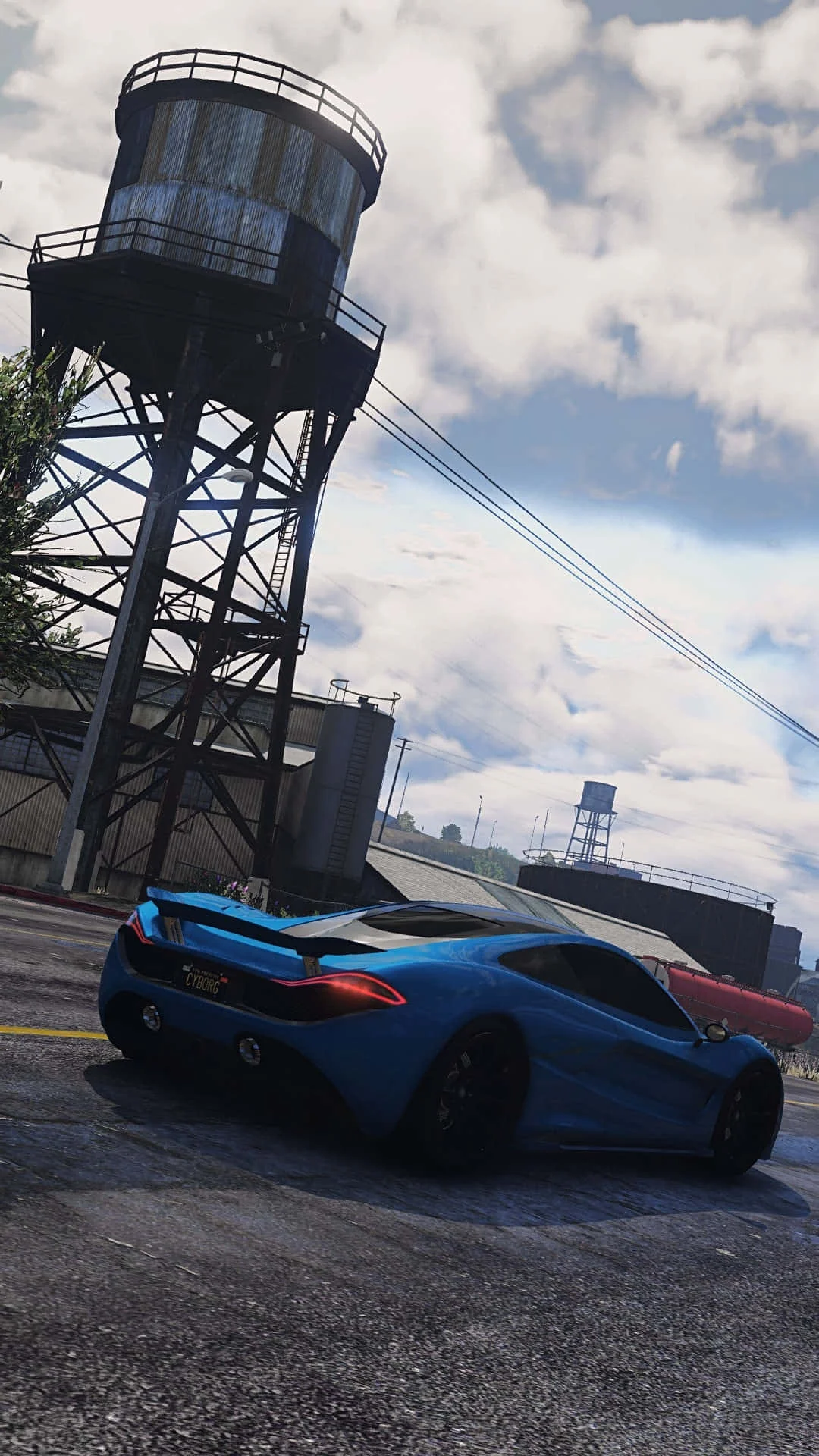
Fivem
This combination offers playable performance with an average of 43 FPS, though you may want to lower settings for smoother gameplay.
Average FPS: resolution vs quality settings
| Ultra | High | Medium | Low | |
|---|---|---|---|---|
| 4K Ultra HD | 16 | 20 | 25 | 32 |
| 1440p QHD | 29 | 37 | 46 | 58 |
| 1080p Full HD | 43 | 56 | 70 | 88 |
Cell color: green is 120+ FPS, teal is 60+, amber is 30+, red is below 30.
Fivem with Intel Core Ultra 7 265K + Intel Arc B390, In-Depth Analysis
The Intel Core Ultra 7 265K paired with the Intel Arc B390 delivers a severely constrained gaming experience in Fivem, with the combo ranking 2656th out of 3005 tested combinations. The data shows that while the CPU is a top-tier performer in synthetic benchmarks, the integrated GPU becomes the overwhelming bottleneck, limiting frame rates to sub-60 territory even at 1080p Low settings. This analysis breaks down the measured performance across resolutions and settings, explains the role of each component, and contextualizes the results against the nearest rival hardware.
FAQ
Q: What is the best average FPS this combo achieves in Fivem?
A: The highest measured average frame rate is 88 FPS, achieved at 1920x1080 resolution with Low settings. This is the only tested configuration that breaks the 60 FPS barrier.
Q: How does this combo rank among all tested systems in Fivem?
A: The combo ranks 2656th out of 3005 tested combinations, placing it in the bottom 12% of all systems tested for this game.
Q: What is the performance difference between Low and Ultra settings at 1080p?
A: At 1920x1080, the average FPS drops from 88 FPS on Low to 43 FPS on Ultra, representing a 51% reduction in frame rate when moving from the lowest to the highest preset.
Q: Does the Intel Core Ultra 7 265K's 20-core configuration help in Fivem?
A: The CPU has 20 cores and 20 threads, but the benchmark results indicate that the GPU is the limiting factor. The CPU's multi-core strength does not translate into high frame rates in this game because the Arc B390 cannot push enough frames to utilize the CPU's capacity.
Q: Is the Intel Arc B390 a discrete graphics card?
A: No, the Arc B390 is an integrated graphics processor (IGP) with a bus interface listed as "IGP" and a slot width of "IGP", meaning it is built into the processor package rather than being a separate add-in card.
Q: What is the lowest average FPS recorded in the measured data?
A: The lowest average frame rate is 16 FPS, recorded at 3840x2160 resolution with Ultra settings. This is the most demanding configuration tested and produces an unplayable experience.
CPU Role
The Intel Core Ultra 7 265K is a 20-core, 20-thread processor from the Core Ultra Series 2, based on the Arrow Lake architecture. It operates with a base clock of 3.90 GHz and a boost clock of 5.50 GHz, and it has a 30 MB shared L3 cache. The CPU's synthetic benchmark scores are impressive, including a Cinebench R23 multi-core score of 35850 and a single-core score of 2020, with a Geekbench multi-core score of 23085. Its average benchmark score of 70879 places it in the 94th percentile of all CPUs, and it sits slightly above the Intel Core i7-14700KF (deltaPct 1) and the AMD Ryzen 7 9700F (deltaPct 1.3).
In Fivem, however, this processing power goes largely underutilized. The measured FPS data shows that the system is not CPU-bound in any meaningful way. For instance, at 1080p Low settings, the system achieves 88 FPS, but at 1080p Ultra settings, it drops to 43 FPS. If the CPU were the primary constraint, changing graphics settings would have a minimal impact on frame rates. Instead, the heavy scaling with settings indicates that the GPU is the bottleneck. The CPU's high single-thread performance, as evidenced by its Passmark single-thread score of 4928, should theoretically handle Fivem's game logic and simulation loads, but the frame output is capped by what the integrated graphics can render.
The processor's memory support for DDR5 with dual-channel configuration and a bandwidth of 102.4 GB/s provides a solid foundation, but the Arc B390 uses "System Shared" memory, meaning it relies on the same DDR5 pool. This shared memory architecture likely contributes to the performance ceiling, as the GPU must compete with the CPU for memory bandwidth. The CPU's 20 lanes of PCIe Gen 5 are irrelevant here since the GPU is integrated and does not use the PCIe bus for data transfer.
GPU Role
The Intel Arc B390 is an integrated graphics solution based on the Xe3-LPG architecture, part of the Panther Lake chip. It features 1536 shading units, 48 texture mapping units, and 24 raster operation units, along with 12 ray tracing cores. The GPU operates at a base clock of 300 MHz and boosts to 2500 MHz. Its memory configuration is entirely "System Shared," meaning it has no dedicated VRAM and instead uses the system's main memory, with bandwidth described as "System Dependent."
The GPU's synthetic performance is extremely low. It scores 1482 in 3DMark Steel Nomad DX12, which places it in the 9th percentile of all GPUs. Its nearest rivals in the benchmark database are the NVIDIA GeForce GT 520MX (deltaPct 1.3), the NVIDIA GeForce 800M (deltaPct 1.5), and the NVIDIA GeForce GT 625 OEM (deltaPct 2.5). These are all legacy or ultra-low-end parts from a decade ago, underscoring how limited the Arc B390's raw graphics throughput is. The GPU's FP32 performance is rated at 7.680 TFLOPS, which is a theoretical peak that the measured FPS data shows is not sustained in real-world gaming.
In Fivem, the GPU is the clear limiting factor. The measured FPS scales dramatically with both resolution and settings, which is the classic signature of a GPU-bound system. At 1080p Low, the system hits 88 FPS, but this drops to 56 FPS at High settings and 43 FPS at Ultra. Moving to 4K Ultra yields just 16 FPS. The Arc B390's lack of dedicated VRAM is particularly problematic for higher resolutions, as the system shared memory bandwidth becomes a constraint. The GPU's 24 ROPs and 48 TMUs are insufficient for modern game rendering at high resolutions, and the 12 RT cores offer no practical benefit in this title at playable frame rates.
How This Combo Ranks
The Intel Core Ultra 7 265K + Intel Arc B390 combo ranks 2656th out of 3005 tested combinations in Fivem. This places it in the bottom 11.6% of all systems, which is consistent with the low GPU percentile (9th) rather than the high CPU percentile (94th). The ranking reflects the fact that Fivem is primarily GPU-limited in this configuration, and the Arc B390's performance is comparable to entry-level discrete GPUs from over a decade ago.
The CPU's nearest rivals in the synthetic benchmark database—such as the Intel Xeon 6511P (deltaPct -0.2), the Intel Xeon Platinum 8270 (deltaPct -0.7), the Intel Core i7-14700KF (deltaPct 1), and the AMD Ryzen 7 9700F (deltaPct 1.3)—all have similar average scores. However, any of these CPUs paired with a more capable discrete GPU would likely rank significantly higher in Fivem, as the CPU's compute power is not the issue. The combo's low ranking is almost entirely attributable to the GPU's weak performance, which drags down the overall system capability despite the CPU's strength.
The data indicates that this pairing is severely imbalanced for gaming. The CPU is a high-end desktop part with a launch MSRP of $394, while the GPU is an integrated component with no separate MSRP. In Fivem, the system's performance is closer to what would be expected from an ultra-budget laptop or a low-power desktop, rather than a modern enthusiast desktop with a flagship-class CPU.
Settings Recommendations
Based on the measured FPS data, the only viable settings for a playable experience are at 1080p with Low settings, which yields an average of 88 FPS. This is the only configuration that exceeds 60 FPS, which is generally considered the minimum for smooth gameplay in a multiplayer title like Fivem. The 1080p Medium preset delivers 70 FPS average with a minimum of 59 FPS, which is also playable but with occasional dips below the 60 FPS threshold.
For higher resolutions, the performance is poor across the board. At 1440p, the Low preset drops to 58 FPS average, which is borderline, while Medium drops to 46 FPS and High to 37 FPS. At 4K, even the Low preset only achieves 32 FPS, which is not acceptable for a fast-paced multiplayer game. The Ultra preset is not recommended at any resolution, as it produces 43 FPS at 1080p, 29 FPS at 1440p, and a mere 16 FPS at 4K.
The best experience per the measured rows is achieved at 1920x1080 with Low settings, offering the highest frame rate. If visual quality is a priority, the Medium preset at 1080p provides a reasonable balance with an average of 70 FPS, but users should expect frame dips to 59 FPS. For players who prefer higher resolutions, the Low preset at 1440p is the only option that approaches playability, but it falls short of 60 FPS. The data strongly suggests that this combo is only suitable for 1080p gaming with reduced settings.
Measured FPS Breakdown
At 1920x1080, the system delivers its best performance. Low settings produce an average of 88 FPS, Medium settings yield 70 FPS with a minimum of 59 FPS and a maximum of 80 FPS, High settings drop to 56 FPS, and Ultra settings fall to 43 FPS. The spread from Low to Ultra is 45 FPS, showing a substantial performance cost for higher visual fidelity.
At 2560x1440, the performance degrades noticeably. Low settings average 58 FPS, Medium settings average 46 FPS with a minimum of 39 FPS and a maximum of 53 FPS, High settings average 37 FPS, and Ultra settings average 29 FPS. The step from 1080p to 1440p costs roughly 30-35% of the frame rate at each settings level, consistent with the increased pixel count.
At 3840x2160, the system struggles to maintain playable frame rates. Low settings average 32 FPS, Medium settings average 25 FPS with a minimum of 22 FPS and a maximum of 29 FPS, High settings average 20 FPS, and Ultra settings average 16 FPS. None of these configurations provide a smooth experience, and the Ultra preset at 4K is effectively a slideshow. The data shows that the Arc B390 is not capable of handling 4K rendering in Fivem under any settings configuration.
Resolution Scaling
The FPS drop from 1080p to 4K is steep and consistent across all settings. At Low settings, the average FPS falls from 88 at 1080p to 58 at 1440p (a 34% reduction) and then to 32 at 4K (a 64% reduction from 1080p). At Medium settings, the drop is from 70 to 46 to 25, representing a 64% reduction from 1080p to 4K. At High settings, the values are 56 to 37 to 20, a 64% reduction. At Ultra settings, the values are 43 to 29 to 16, a 63% reduction.
This scaling pattern is highly indicative of a GPU-bound system. If the CPU were the limiting factor, the FPS would remain relatively flat across resolutions, as the CPU workload does not change with resolution. Instead, the frame rate drops roughly in proportion to the increase in pixel count. Moving from 1080p (2.07 million pixels) to 1440p (3.69 million pixels) increases the pixel count by 78%, and the FPS drops by about 34%. Moving to 4K (8.29 million pixels) represents a 300% increase from 1080p, and the FPS drops by about 64%.
The non-linear scaling (a 300% pixel increase causing a 64% FPS drop) suggests that the GPU is not purely fill-rate limited, but also constrained by memory bandwidth and shader throughput. The Arc B390's "System Shared" memory bandwidth is "System Dependent," meaning it shares the CPU's DDR5 bandwidth, which becomes a bottleneck at higher resolutions. The data confirms that the integrated GPU is the sole limiting component in this pairing, and the CPU's substantial compute resources are left idle waiting for the GPU to render each frame.
Hardware Specifications
Intel Core Ultra 7 265K
Intel Arc B390
FPS Benchmarks by Resolution & Settings
Performance data for Intel Core Ultra 7 265K + Intel Arc B390 in Fivem
| Resolution | Settings | Avg FPS |
|---|---|---|
| 3840x2160 | Low | 32.0 |
| 3840x2160 | Medium | 25.0 |
| 3840x2160 | High | 20.0 |
| 3840x2160 | Ultra | 16.0 |
| 2560x1440 | Low | 58.0 |
| 2560x1440 | Medium | 46.0 |
| 2560x1440 | High | 37.0 |
| 2560x1440 | Ultra | 29.0 |
| 1920x1080 | Low | 88.0 |
| 1920x1080 | Medium | 70.0 |
| 1920x1080 | High | 56.0 |
| 1920x1080 | Ultra | 43.0 |
Fivem with iUltra 7 265K + Other GPUs
See how Fivem performs with the same CPU but different graphics cards.
Fivem with Arc B390 + Other CPUs
See how Fivem performs with the same GPU but different processors.
Other Games with iUltra 7 265K + Arc B390
Explore FPS benchmarks for other games using this same hardware combination.