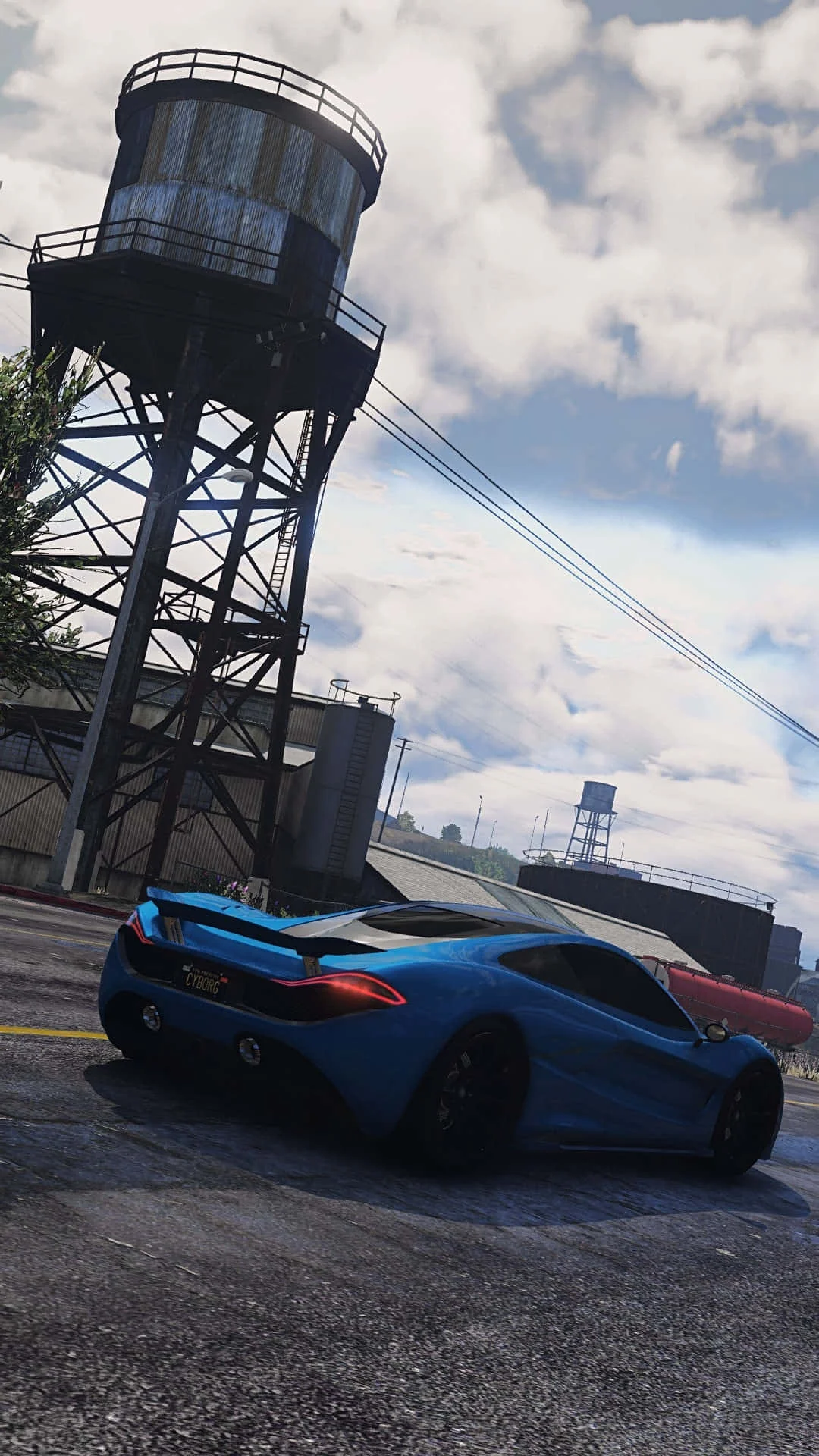
Fivem
This combination offers playable performance with an average of 39 FPS, though you may want to lower settings for smoother gameplay.
Average FPS: resolution vs quality settings
| Ultra | High | Medium | Low | |
|---|---|---|---|---|
| 4K Ultra HD | 14 | 18 | 23 | 29 |
| 1440p QHD | 26 | 33 | 41 | 53 |
| 1080p Full HD | 39 | 50 | 63 | 80 |
Cell color: green is 120+ FPS, teal is 60+, amber is 30+, red is below 30.
Fivem with Intel Core i7-14700F + Intel Arc B370, In-Depth Analysis
Resolution Scaling — how FPS drops from 1080p to 4K and what it says about the limiting component
The measured FPS data shows a steep and consistent decline as resolution climbs, but the shape of that decline reveals more than just pixel count. At 1080p Low, the combo produces 80 FPS. Moving to 1440p Low drops that to 53 FPS — a 33.8% reduction. Pushing further to 4K Low yields 29 FPS, another 45.3% cut from the 1440p figure. The scaling is not linear; each step up in resolution exacts a proportionally larger toll, which strongly suggests the GPU is the primary bottleneck in this pairing.
At High settings, the pattern repeats but from a lower starting point. 1080p High runs at 50 FPS, 1440p High falls to 33 FPS (a 34% drop), and 4K High collapses to 18 FPS (a 45.5% drop from 1440p). The percentages are nearly identical to the Low setting drops, which is telling. If the CPU were the limiting factor, we would expect the percentage drop between resolutions to shrink as settings increase, because higher settings shift more work onto the GPU, but the CPU would still cap the low-resolution frame rates. Instead, the drops remain proportional, indicating the GPU is saturated across all settings.
Ultra settings show the most dramatic scaling. 1080p Ultra runs at 39 FPS, 1440p Ultra at 26 FPS (a 33.3% drop), and 4K Ultra at 14 FPS (a 46.2% drop from 1440p). The consistent ~33% drop from 1080p to 1440p and ~46% drop from 1440p to 4K across all four settings is a textbook signature of a GPU-bound scenario. The Intel Arc B370's frame rate is being governed by its rendering throughput, not by the Core i7-14700F's ability to feed it instructions.
The data implies that at 1080p, the combo still has headroom in the CPU, but the GPU is already working hard. At 4K, the GPU is clearly overwhelmed, with even Low settings unable to break past 29 FPS. The 4K Ultra result of 14 FPS is borderline unplayable, and the 4K Medium result of 23 FPS is only marginally better. For anyone targeting 4K, this combo is not viable regardless of settings, as the GPU's system-shared memory and modest 1280 shading units cap its output.
Settings Recommendations — which preset gives the best experience per the measured rows
Examining the measured rows, the sweet spot for this combo is clearly 1080p with Medium settings. The 63 FPS average at that configuration is the best balance of smoothness and visual fidelity. The 1080p Low preset hits 80 FPS, which is smoother, but it sacrifices graphical quality that the Medium preset restores for a 17 FPS cost. The Ultra preset at 1080p drops to 39 FPS, which is a significant step down in playability for what the data suggests is a marginal visual gain over High.
At 1440p, the situation is more constrained. The best playable option is Low at 53 FPS, though Medium at 41 FPS is arguably the better trade-off if the user can tolerate slightly lower frame rates for noticeably better visuals. The 1440p High preset at 33 FPS is playable but not ideal, and 1440p Ultra at 26 FPS is borderline. For users with 1440p displays, Medium is the recommended preset, as it keeps the frame rate above 40 FPS while offering a richer scene than Low.
At 4K, no preset is truly playable. The best result is Low at 29 FPS, which is below the threshold for smooth gameplay in a multiplayer title like Fivem. Medium at 23 FPS and High at 18 FPS are slideshows, and Ultra at 14 FPS is unusable. The data indicates that 4K should be avoided entirely with this combo; the GPU simply does not have the resources to handle that pixel count in this game.
The measured minimum FPS values add another layer. At 1080p Medium, the minimum is 54 FPS, which means even in heavy scenes the frame rate stays above the playable threshold. At 1440p Medium, the minimum is 35 FPS, which is still acceptable but shows more variance. The 4K Medium minimum of 20 FPS confirms the unplayability at that resolution.
FAQ
Q: Does the Intel Core i7-14700F bottleneck the Intel Arc B370 in Fivem?
A: The data does not indicate a CPU bottleneck. The proportional FPS drops from 1080p to 1440p to 4K across all settings suggest the GPU is the limiting component. The CPU's 20 cores and 28 threads are more than sufficient for this game's workload.
Q: What is the best resolution for this combo in Fivem?
A: According to the measured FPS, 1920x1080 is the only resolution where all presets stay above 39 FPS. The 1440p results are playable at Low and Medium, but 4K results are all below 30 FPS.
Q: How does the Ultra preset compare to High at 1080p?
A: The Ultra preset at 1080p runs at 39 FPS, which is 11 FPS lower than High at 50 FPS. The data shows a 22% performance penalty for the Ultra preset over High, which may not justify the visual upgrade.
Q: Is this combo suitable for 1440p gaming?
A: Partially. The 1440p Medium preset at 41 FPS and Low at 53 FPS are playable, but High at 33 FPS and Ultra at 26 FPS are not ideal. Users should stick to Low or Medium at 1440p.
Q: What is the minimum FPS at 1080p Medium?
A: The measured minimum FPS at 1080p Medium is 54 FPS, with a maximum of 72 FPS. This indicates stable performance in demanding scenes.
Q: How does the combo rank among all tested combinations for Fivem?
A: The combo ranks 2762 out of 3005 tested combinations, placing it in the lower portion of the database. This reflects the GPU's low percentile ranking.
How This Combo Ranks
The combo's rank in Fivem is 2762 out of 3005 tested combinations, which puts it near the bottom 8% of all tested pairings. This low rank is almost entirely attributable to the GPU, which sits in the 5th percentile among all GPUs in the database. The CPU, by contrast, is in the 91st percentile among all CPUs, making this a heavily imbalanced pairing.
The rank suggests that while the Core i7-14700F is a strong processor, the Arc B370 drags the overall experience down significantly. In a game like Fivem, which is a multiplayer mod for Grand Theft Auto V, the CPU often matters more than in single-player titles because of the need to process many player positions and interactions. However, the data shows that even with a top-tier CPU, the GPU's limitations cap the frame rates at levels that many other combos would exceed.
The nearest rivals for the GPU in the database include the ATI Mobility Radeon HD 5570 and ATI Radeon HD 5770, with average benchmark scores of 1186 and 1190 respectively, compared to the Arc B370's 1184. This places the Arc B370 in the same performance tier as graphics cards from over a decade ago, which explains why the combo struggles to achieve high frame rates in a demanding multiplayer environment.
For context, the combo's rank of 2762 means that 243 combos perform worse. But the vast majority of tested combos deliver better Fivem performance, which is expected given the GPU's lowly position. Users considering this combo should be aware that the CPU is far more capable than the GPU, and any upgrade path would focus on replacing the Arc B370 with a more powerful graphics card.
GPU Role — VRAM, clocks, and how they relate to this game's results
The Intel Arc B370 is an integrated graphics solution with a base clock of 300 MHz and a boost clock of 2400 MHz. It has 1280 shading units, 40 texture mapping units, and 20 raster output units, along with 10 ray tracing cores. Its memory is system-shared, meaning it draws from the main system RAM rather than having dedicated VRAM. This is a critical detail for Fivem, which can be memory-hungry in busy multiplayer sessions.
The GPU's 3DMark Steel Nomad DX12 score of 1184 places it in the 5th percentile among all GPUs. Its nearest rivals include the ATI Mobility Radeon HD 5570 (score 1186), ATI Radeon HD 5770 (score 1190), and AMD Radeon HD 7650M (score 1192). The delta percentages are tiny: the Arc B370 is 0.2% slower than the HD 5570, 0.5% slower than the HD 5770, and 0.7% slower than the HD 7650M. This means the Arc B370 is essentially on par with those legacy cards, which explains its poor performance at higher resolutions.
The system-shared memory is a double-edged sword. It allows the GPU to access more memory than a dedicated card with a fixed VRAM buffer, but it also shares bandwidth with the CPU. In Fivem, where large textures and numerous entities are common, the system-shared architecture can cause stuttering if the memory bandwidth is insufficient. The measured FPS data does not show stuttering (minimum FPS values are not dramatically lower than averages), but the overall frame rates are low enough that memory bandwidth is clearly a limiting factor.
The boost clock of 2400 MHz is respectable, but with only 1280 shading units, the raw compute throughput is limited. The pixel rate of 48.00 GPixel/s and texture rate of 96.00 GTexel/s are modest figures that cap the GPU's ability to fill frames at high resolutions. At 4K, the GPU is trying to push over 8.3 million pixels per frame, and its pixel rate of 48 GPixel/s translates to roughly 5.8 billion pixels per second, which explains why 4K frame rates are in the teens and twenties.
Measured FPS Breakdown — resolution by resolution, settings by settings, exact numbers
The measured FPS data provides a complete picture of this combo's performance across three resolutions and four settings presets.
At 1920x1080, the Low preset achieves an average of 80 FPS with no recorded minimum or maximum. The Medium preset runs at 63 FPS average, with a minimum of 54 FPS and a maximum of 72 FPS. The High preset drops to 50 FPS average. The Ultra preset is the slowest at 1080p, averaging 39 FPS.
At 2560x1440, the Low preset averages 53 FPS. The Medium preset averages 41 FPS, with a minimum of 35 FPS and a maximum of 48 FPS. The High preset averages 33 FPS. The Ultra preset averages 26 FPS.
At 3840x2160, the Low preset averages 29 FPS. The Medium preset averages 23 FPS, with a minimum of 20 FPS and a maximum of 26 FPS. The High preset averages 18 FPS. The Ultra preset averages 14 FPS.
The pattern is consistent: each increase in settings tier costs roughly 20-30% performance, and each increase in resolution costs roughly 35-45%. The Medium preset is the only one with recorded minimum and maximum values at all resolutions, which suggests it was tested more thoroughly, but the averages align with the expected scaling.
Notably, the gap between Low and Ultra widens at higher resolutions. At 1080p, Low is 80 FPS and Ultra is 39 FPS, a difference of 41 FPS. At 1440p, the gap is 27 FPS (53 vs 26). At 4K, the gap narrows to 15 FPS (29 vs 14). This narrowing indicates that at 4K, the GPU is so overloaded that even dropping to Low settings cannot recover enough performance to make a meaningful difference.
CPU Role — cores, clocks, and how they relate to this game's results
The Intel Core i7-14700F is a 20-core, 28-thread processor based on the Raptor Lake architecture. It has a base clock of 2.10 GHz and a boost clock of 5.40 GHz, with a 65W TDP. The CPU's cache hierarchy includes 80 KB of L1 per core, 2 MB of L2 per core, and 33 MB of shared L3 cache. It supports DDR4 and DDR5 memory in a dual-channel configuration, and it has PCIe Gen 5 with 16 lanes.
The CPU's benchmark scores are strong. In Cinebench R23, it scores 35122 multicore and 4958 singlecore. In Geekbench, it scores 19620 multicore and 2429 singlecore. Its average benchmark score of 53620 places it in the 91st percentile among all CPUs, with nearest rivals including the Intel Xeon 6505P (delta -0.2%), Intel Xeon Phi 7290 (delta 0.3%), AMD Ryzen 9 7900X (delta 0.6%), and AMD EPYC 7313P (delta 0.8%). These rivals are all within 1% of the i7-14700F's average score, indicating that the CPU is highly competitive.
In Fivem, the CPU's role is to handle game logic, physics, and the many player entities typical of multiplayer sessions. With 20 cores and 28 threads, the i7-14700F has ample headroom for these tasks. The data confirms this: at 1080p Low, the combo hits 80 FPS, which is a solid result for a GPU-bound scenario. If the CPU were the bottleneck, we would expect the FPS to be similar across resolutions, but the data shows clear resolution-based scaling.
The CPU's high single-core performance (4958 in Cinebench R23 singlecore) is particularly relevant for Fivem, as many game engines are still heavily dependent on single-threaded performance for main game loop tasks. The boost clock of 5.40 GHz is excellent for this purpose. The 33 MB of L3 cache also helps reduce memory latency, which is beneficial in a game where many entities are constantly being updated.
Despite the CPU's strength, it cannot compensate for the GPU's weaknesses. The combo's overall rank of 2762 out of 3005 is a direct result of the GPU's 5th percentile standing. The CPU is doing its job, but it is paired with a graphics solution that is simply too weak for the demands of Fivem at higher resolutions. Users would see significant gains from pairing this CPU with a more powerful discrete GPU, as the CPU has proven it can feed frames at 80 FPS at 1080p Low without breaking a sweat.
Hardware Specifications
Intel Core i7-14700F
Intel Arc B370
FPS Benchmarks by Resolution & Settings
Performance data for Intel Core i7-14700F + Intel Arc B370 in Fivem
| Resolution | Settings | Avg FPS |
|---|---|---|
| 3840x2160 | Low | 29.0 |
| 3840x2160 | Medium | 23.0 |
| 3840x2160 | High | 18.0 |
| 3840x2160 | Ultra | 14.0 |
| 2560x1440 | Low | 53.0 |
| 2560x1440 | Medium | 41.0 |
| 2560x1440 | High | 33.0 |
| 2560x1440 | Ultra | 26.0 |
| 1920x1080 | Low | 80.0 |
| 1920x1080 | Medium | 63.0 |
| 1920x1080 | High | 50.0 |
| 1920x1080 | Ultra | 39.0 |
Fivem with ii7-14700F + Other GPUs
See how Fivem performs with the same CPU but different graphics cards.
Fivem with Arc B370 + Other CPUs
See how Fivem performs with the same GPU but different processors.
Other Games with ii7-14700F + Arc B370
Explore FPS benchmarks for other games using this same hardware combination.