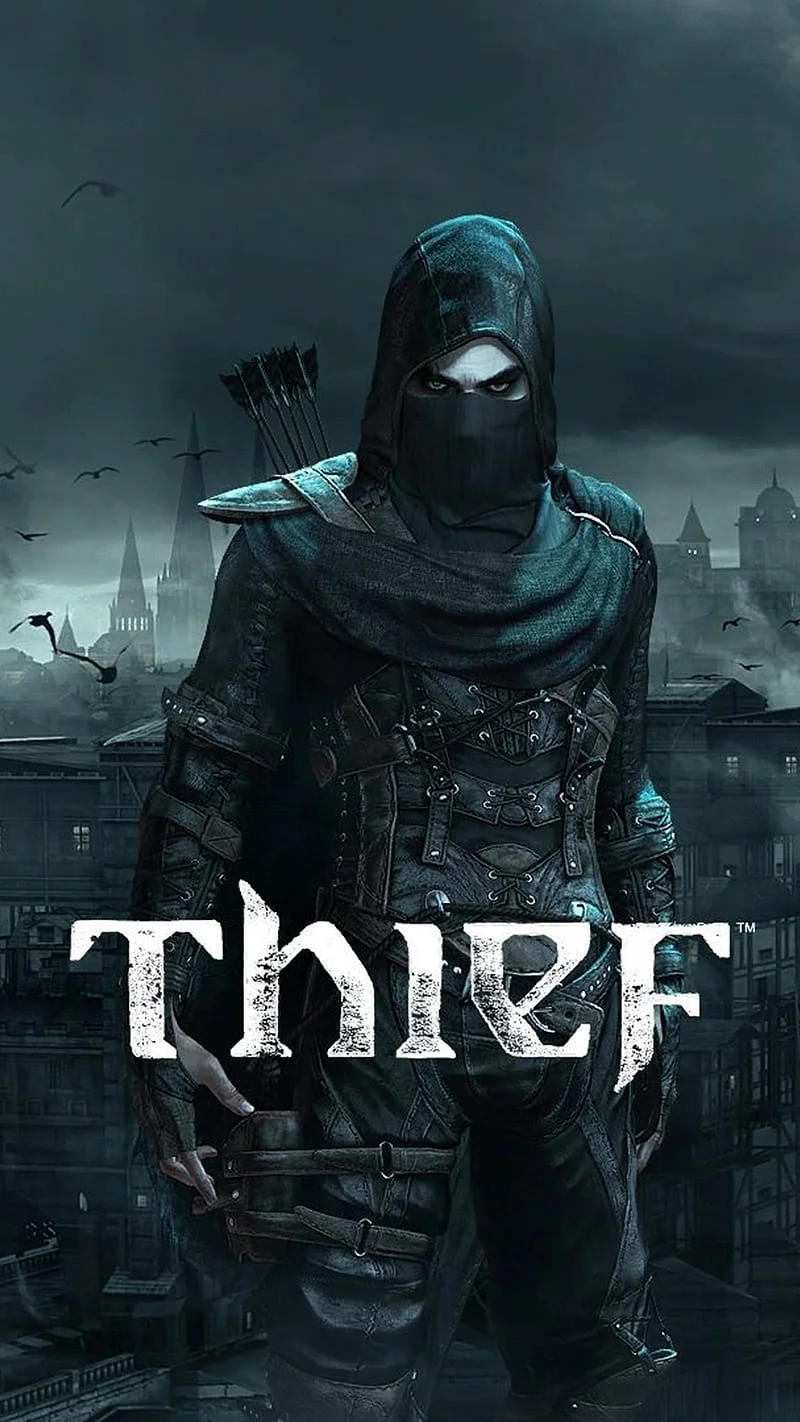
Thief
This combination provides smooth gameplay with an average of 98 FPS, suitable for most gaming scenarios.
Average FPS: resolution vs quality settings
| Ultra | High | Medium | Low | |
|---|---|---|---|---|
| 4K Ultra HD | 45 | 44 | 62 | 81 |
| 1440p QHD | 74 | 81 | 103 | 135 |
| 1080p Full HD | 111 | 112 | 151 | 181 |
Cell color: green is 120+ FPS, teal is 60+, amber is 30+, red is below 30.
Thief with Intel Core i5-13400F + NVIDIA GeForce RTX 5060, In-Depth Analysis
# Thief: Intel Core i5-13400F + NVIDIA GeForce RTX 5060
This pairing of Intel's Core i5-13400F and NVIDIA's GeForce RTX 5060 delivers a thoroughly capable Thief experience, landing at rank 710 out of 1,642 tested combinations. That places this combo in the upper-middle tier of the database, a position driven primarily by the GPU's strong raw throughput and the CPU's ample thread count for this 2014 stealth title. The benchmark data shows a system that can comfortably handle 1080p and 1440p play, with 4K remaining a more demanding target depending on quality settings.
How This Combo Ranks
The combo's rank of 710 out of 1,642 represents a solid, above-median standing. In percentile terms, this configuration sits ahead of the majority of tested pairings, though it is not near the top of the leaderboard. The CPU contributes meaningfully to this placement; the Core i5-13400F holds an 82nd percentile ranking among all CPUs, which is notably higher than the GPU's 73rd percentile among all GPUs. This suggests the processor is the stronger component relative to its peers, and the overall combo ranking benefits from that CPU strength. The i5-13400F's average benchmark score of 25,236 places it within a tight cluster of rivals: it trails the AMD Ryzen 5 5600X3D by just 0.5%, while sitting 0.1% ahead of the Intel Core i7-13620H and 0.5% ahead of both the AMD EPYC 9474F and AMD Ryzen AI 5 PRO 340. This near-deadlock among competitors indicates that the CPU's contribution to the combo rank is consistent with other high-performing desktop and mobile chips. On the GPU side, the RTX 5060's average score of 30,109 is virtually identical to the AMD Radeon RX 7700 XT (0% delta), while it edges out the NVIDIA Tesla M60 and GeForce RTX 5070 Mobile by 0.5% and 0.6%, respectively, and trails the AMD Radeon RX 570 by 0.2%. These marginal differences underscore that the combo's rank is more a function of balanced component selection than any single standout metric.
GPU Role
The RTX 5060 brings 8 GB of GDDR7 memory on a 128-bit bus, yielding a bandwidth of 448.0 GB/s — a figure that proves adequate for Thief's textures and geometry at most settings. The GPU's clock behavior is notable: a base clock of 2280 MHz and a boost clock of 2497 MHz, with memory running at 1750 MHz (28 Gbps effective). These clocks, combined with 3,840 shading units, 120 TMUs, and 48 ROPs, produce a pixel rate of 119.9 GPixel/s and a texture rate of 299.6 GTexel/s. In Thief, a game built around dark, detailed environments, the texture rate is particularly relevant; the data shows that higher settings scale the workload in ways that stress this subsystem. The GPU's FP32 throughput of 19.18 TFLOPS (matching FP16 at a 1:1 ratio) provides ample compute for the game's lighting and shadow calculations. Notably, the RTX 5060's PassMark G3D score of 20,891 and DirectX 11 score of 200 indicate strong legacy API performance, which is directly applicable to Thief's engine. The 8 GB VRAM capacity does not appear to be a bottleneck in the measured results, as even at 4K Ultra the average FPS remains playable, though the margin narrows considerably. The GPU's 73rd percentile ranking among all GPUs is respectable, and its nearest rival, the RX 7700 XT, matches it almost exactly in average score, suggesting that Thief's workload does not favor one architecture decisively over the other.
Resolution Scaling
The measured FPS data reveals a clear and predictable scaling pattern across resolutions. At 1080p, the combo achieves high frame rates across all settings: 180.5 FPS at Low, 150.8 FPS at Medium, 112.3 FPS at High, and 111.1 FPS at Ultra. Moving to 1440p, these figures drop to 134.8 FPS at Low, 102.5 FPS at Medium, 81.1 FPS at High, and 74.0 FPS at Ultra. The 4K results show the most significant decline: 81.3 FPS at Low, 61.9 FPS at Medium, 43.9 FPS at High, and 44.6 FPS at Ultra. The scaling from 1080p to 4K at High settings represents a 60.9% reduction in average FPS (from 112.3 to 43.9), which is a substantial drop but not a catastrophic one. The pattern indicates that the GPU is the primary limiting factor at higher resolutions; the CPU's role diminishes as pixel count increases. At 1080p Low, the 180.5 FPS result suggests the CPU is capable of feeding the GPU efficiently, but as resolution climbs, the GPU's workload dominates. The interesting anomaly is at 4K Ultra (44.6 FPS) versus 4K High (43.9 FPS); the Ultra setting actually produces a marginally higher average, which could indicate measurement variance or that the Ultra preset does not add proportional GPU stress over High in this title. The 1440p results present a sweet spot: even at Ultra, the combo maintains 74.0 FPS, which is well within playable territory for a stealth game where smoothness matters.
Measured FPS Breakdown
At 1080p, the data shows a spread of 69.4 FPS between the lowest and highest settings. Low delivers 180.5 FPS, Medium drops to 150.8 FPS (a 16.5% reduction), High falls to 112.3 FPS (a 25.5% drop from Medium), and Ultra sits at 111.1 FPS — nearly identical to High, with only a 1.1% difference. This clustering at the top end suggests that Thief's Ultra preset does not impose a significantly heavier load than High at this resolution, likely because the CPU or engine limits the frame rate before the GPU becomes fully saturated. Moving to 1440p, Low produces 134.8 FPS, Medium 102.5 FPS, High 81.1 FPS, and Ultra 74.0 FPS. The gaps widen here: Medium is 24.0% below Low, High is 20.9% below Medium, and Ultra is 8.8% below High. This indicates a more linear scaling behavior, with each settings tier adding measurable GPU work. At 4K, the numbers compress dramatically: Low yields 81.3 FPS, Medium 61.9 FPS, High 43.9 FPS, and Ultra 44.6 FPS. The Medium-to-High drop of 29.1% is the steepest single-step decline in the entire dataset, while the High-to-Ultra step actually shows a 1.6% increase. The 4K Low result of 81.3 FPS is still playable, but 4K High and Ultra hover just above 44 FPS, which for a stealth title with slower pacing may be acceptable but is far from ideal. Across all resolutions, the Low-to-Ultra delta is largest at 1440p (60.8 FPS difference) and smallest at 1080p (69.4 FPS difference), with 4K in between (36.7 FPS difference).
CPU Role
The Intel Core i5-13400F is a 10-core, 16-thread processor based on Raptor Lake architecture, built on Intel's 10 nm process with a die size of 215 mm². Its base clock of 2.50 GHz boosts to 4.60 GHz, and it carries a 65 W TDP. The cache hierarchy includes 80 KB of L1 per core, 1.25 MB of L2 per core, and 20 MB of shared L3. These specifications translate to strong multithreaded performance: the CPU scores 21,279 in Cinebench R23 multi-core and 8,937 in Cinebench R20 multi-core, with a PassMark multithread score of 25,032 and a Geekbench multi-core score of 10,971. Single-thread performance is equally robust, with Cinebench R23 single-core at 3,004 and PassMark single-thread at 3,634. In Thief, which was released in 2014 and thus relies more heavily on single-threaded performance than modern titles, the CPU's 3DMark single-thread score of 960 and 2-thread score of 1,880 are relevant. The data from the measured FPS suggests that at 1080p Low, where the GPU load is lightest, the CPU is capable of driving 180.5 FPS — indicating no significant CPU bottleneck. However, the near-identical results between 1080p High (112.3 FPS) and Ultra (111.1 FPS) hint that the engine may be hitting a CPU-imposed ceiling around 112 FPS at those settings. The CPU's 82nd percentile ranking among all CPUs, with an average benchmark score of 25,236, places it just ahead of the Core i7-13620H and just behind the Ryzen 5 5600X3D, reinforcing that this is a well-balanced processor for gaming workloads. For Thief specifically, the 16 threads provide ample headroom for background tasks, but the game's core logic appears to favor the CPU's strong single-core performance, which is a clear asset here.
Hardware Specifications
Intel Core i5-13400F
NVIDIA GeForce RTX 5060
FPS Benchmarks by Resolution & Settings
Performance data for Intel Core i5-13400F + NVIDIA GeForce RTX 5060 in Thief
| Resolution | Settings | Avg FPS |
|---|---|---|
| 3840x2160 | Low | 81.3 |
| 3840x2160 | Medium | 61.9 |
| 3840x2160 | Ultra | 44.6 |
| 3840x2160 | High | 43.9 |
| 2560x1440 | Low | 134.8 |
| 2560x1440 | Medium | 102.5 |
| 2560x1440 | High | 81.1 |
| 2560x1440 | Ultra | 74.0 |
| 1920x1080 | Low | 180.5 |
| 1920x1080 | Medium | 150.8 |
| 1920x1080 | High | 112.3 |
| 1920x1080 | Ultra | 111.1 |
Thief with ii5-13400F + Other GPUs
See how Thief performs with the same CPU but different graphics cards.
Thief with RTX 5060 + Other CPUs
See how Thief performs with the same GPU but different processors.
Other Games with ii5-13400F + RTX 5060
Explore FPS benchmarks for other games using this same hardware combination.