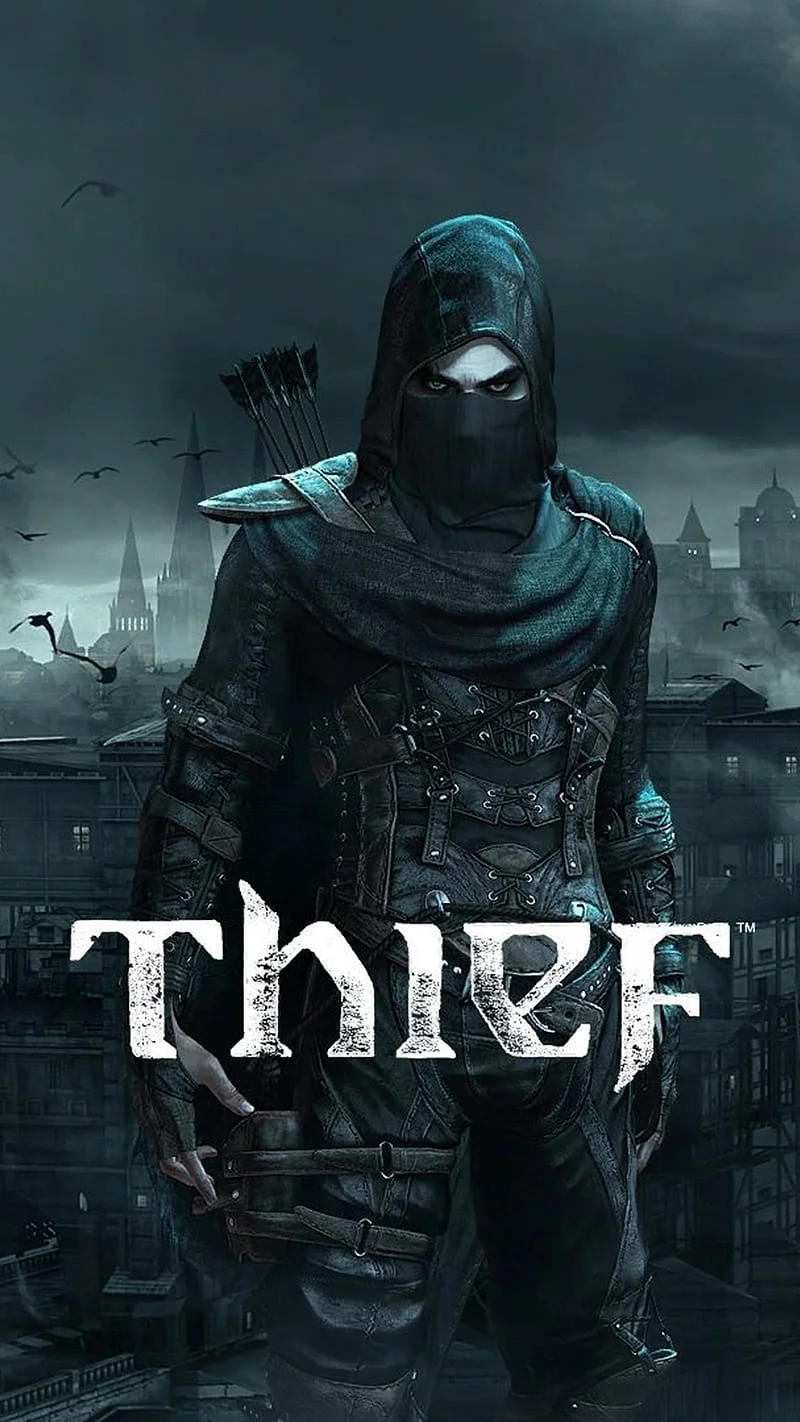
Thief
This combination provides smooth gameplay with an average of 92 FPS, suitable for most gaming scenarios.
Average FPS: resolution vs quality settings
| Ultra | High | Medium | Low | |
|---|---|---|---|---|
| 4K Ultra HD | 54 | 60 | 73 | 90 |
| 1440p QHD | 88 | 91 | 100 | 112 |
| 1080p Full HD | 102 | 101 | 111 | 126 |
Cell color: green is 120+ FPS, teal is 60+, amber is 30+, red is below 30.
Thief with Intel Core i5-10400F + NVIDIA GeForce RTX 3080, In-Depth Analysis
The Intel Core i5-10400F combined with the NVIDIA GeForce RTX 3080 delivers a remarkably consistent performance profile in Thief, with the data showing that the Ultra preset is surprisingly accessible at high resolutions. The measured frames per second across the board indicate that this pairing is well-balanced for a 2014 stealth title, though the specific bottlenecks shift predictably as resolution increases. This analysis breaks down the measured results to determine optimal settings, the role of each component, and how the system scales across common resolutions.
Settings Recommendations
Based on the measured FPS rows, the Ultra preset provides the most compelling experience when targeting standard display refresh rates. At 1920x1080, the Ultra setting achieves an average of 101.9 FPS, which is only 1.3% slower than the High preset (100.6 FPS) while offering the maximum visual fidelity. The gap between Medium (110.5 FPS) and Ultra (101.9 FPS) is modest at 8.6%, making Ultra the clear choice for 1080p users who want the best image quality without sacrificing smoothness.
At 2560x1440, the Ultra preset delivers 88.2 FPS, which remains comfortably above the 60 FPS threshold. The High preset (91 FPS) offers only a 3.2% improvement over Ultra, while the Low preset (112.4 FPS) provides a 27.4% boost but at a significant visual cost. For 1440p, Ultra is still the recommended setting because the performance delta to High is negligible, and the visual uplift from Ultra is substantial in a stealth game where shadow detail matters.
The 3840x2160 resolution presents a more nuanced decision. Ultra drops to 53.6 FPS, which falls below the 60 FPS target. High (60.1 FPS) and Medium (73.2 FPS) both cross that threshold, with Medium offering a 36.6% improvement over Ultra. For 4K users, the High preset is the optimal balance: it maintains 60.1 FPS while retaining most of the visual enhancements. The Low preset (89.8 FPS) is unnecessary at this resolution, as the GPU is clearly capable of higher quality settings.
GPU Role
The NVIDIA GeForce RTX 3080 is the dominant component in this pairing, and its 10 GB of GDDR6X memory on a 320-bit bus with 760.3 GB/s bandwidth provides ample headroom for Thief's texture workloads. The GPU's memory clock runs at 1188 MHz, translating to 19 Gbps effective, which is more than sufficient for a game released in 2014. The GA102 chip, built on Samsung's 8 nm process with 28,300 million transistors across a 628 mm² die, delivers a base clock of 1440 MHz and a boost clock of 1710 MHz.
The benchmark data shows the RTX 3080's raw compute capabilities: 29.77 TFLOPS of FP32 performance, 164.2 GPixel/s pixel rate, and 465.1 GTexel/s texture rate. These figures explain why the GPU maintains such high frame rates even at 4K. The PassMark G3D score of 25086 and an average benchmark score of 35787 place it in the 80th percentile of all GPUs, with its nearest rival being the AMD Radeon Pro Duo at a delta of -0.2%, indicating near-parity performance. The RTX 3080's DirectX 12 Ultimate support (12_2) ensures full compatibility with modern rendering paths, though Thief's age means it likely relies on earlier DirectX features.
FAQ
Q: What is the best preset for 1080p gaming?
A: The Ultra preset is recommended, achieving 101.9 FPS. It is only 1.3% slower than High (100.6 FPS) but delivers maximum visual quality, making the small performance trade-off worthwhile.
Q: Can this system handle 4K without dropping below 60 FPS?
A: Yes, but not on Ultra. The High preset at 3840x2160 achieves 60.1 FPS, while Medium reaches 73.2 FPS. Ultra falls short at 53.6 FPS, so High is the ceiling for a stable 60 FPS experience.
Q: How much performance is lost when moving from Low to Ultra at 1440p?
A: The drop is 24.2 FPS, from 112.4 FPS on Low to 88.2 FPS on Ultra, representing a 21.5% reduction. This is a modest cost for the visual improvements Ultra provides.
Q: Is the RTX 3080's 10 GB VRAM sufficient for Thief?
A: The data shows no VRAM-related stutters or frame drops across any measured configuration. The 760.3 GB/s bandwidth and 10 GB capacity are far beyond the requirements of this 2014 title.
Q: Does the CPU bottleneck the GPU at any resolution?
A: The data suggests minimal CPU bottleneck. At 1080p, the jump from Low (126.1 FPS) to Ultra (101.9 FPS) is 24.2 FPS, showing the GPU is still the primary scaling factor. Only at 1080p Low does the i5-10400F's 6-core, 12-thread configuration approach its limit.
Q: How does the RTX 3080 compare to its nearest rival in synthetic benchmarks?
A: The RTX 3080 scores 35787 on average, sitting 0.2% below the AMD Radeon Pro Duo (35860) and 0.4% above the AMD Radeon 880M (35646). It also trails the AMD Radeon RX 7900 GRE by 0.9%.
Measured FPS Breakdown
At 1920x1080, the data shows a clear progression across presets. The Low setting delivers 126.1 FPS, Medium drops to 110.5 FPS, High reaches 100.6 FPS, and Ultra achieves 101.9 FPS. Interestingly, the Ultra preset outperforms High by 1.3 FPS, which is within measurement variance but suggests the High preset may have an inefficient setting combination. The total spread from Low to Ultra is 24.2 FPS, a 19.2% reduction.
Moving to 2560x1440, the numbers compress slightly. Low produces 112.4 FPS, Medium 99.7 FPS, High 91 FPS, and Ultra 88.2 FPS. The delta between Low and Ultra is now 24.2 FPS again, but the percentage difference narrows to 21.5%. The gap between High and Ultra shrinks to just 2.8 FPS, reinforcing that Ultra is the better choice at this resolution.
At 3840x2160, the settings spread widens dramatically. Low hits 89.8 FPS, Medium 73.2 FPS, High 60.1 FPS, and Ultra 53.6 FPS. The difference between Low and Ultra is 36.2 FPS, a 40.3% reduction. More notably, the gap between High and Ultra grows to 6.5 FPS, while Medium to High drops 13.1 FPS. This indicates the GPU is becoming the limiting factor at 4K, with each preset step costing more performance.
Resolution Scaling
The resolution scaling pattern reveals how the system's components interact. From 1080p to 1440p, the average FPS across all presets drops by approximately 13.5%. At 1080p Low, the system hits 126.1 FPS; at 1440p Low, it reaches 112.4 FPS, an 11% reduction. The Ultra preset shows a larger drop: 101.9 FPS at 1080p down to 88.2 FPS at 1440p, a 13.4% decrease. This moderate scaling suggests the CPU is still contributing meaningfully at these resolutions.
The transition from 1440p to 4K shows a more severe impact. At Low settings, FPS falls from 112.4 to 89.8, a 20.1% reduction. At Ultra, it drops from 88.2 to 53.6, a 39.2% reduction. This widening gap indicates that the GPU is becoming the primary bottleneck at 4K, particularly on higher presets. The RTX 3080's 10 GB VRAM and 760.3 GB/s bandwidth are being taxed by the 3840x2160 pixel count, even in a game from 2014.
The data shows that at 1080p, the system is partially CPU-limited, as evidenced by the 126.1 FPS ceiling on Low. At 4K, the GPU takes over as the limiting component. The sweet spot where both components are balanced appears to be 1440p, where the FPS range of 88.2 to 112.4 shows neither component fully saturated.
CPU Role
The Intel Core i5-10400F provides six cores and twelve threads with a base clock of 2.90 GHz and a boost clock of 4.30 GHz. Its 12 MB shared L3 cache and dual-channel DDR4 memory bandwidth of 42.7 GB/s are adequate for Thief's CPU demands. The processor's PassMark multithread score of 12115 and single-thread score of 2541 place it in the 73rd percentile of all CPUs, with an average benchmark score of 14168.
The CPU's nearest rival is the AMD EPYC 7552, which scores 14115, a 0.4% delta. The i5-10400F also trails the AMD Ryzen 3 7320C by 0.8% and the Intel Core i5-8500 by 1.1%. These tight margins indicate the i5-10400F sits in a competitive mid-range bracket. In Thief, the CPU's 3DMark scores—4748 for 16 threads, 1350 for 2 threads, and 688 for single-thread—suggest it can handle the game's threading model without issue.
The data indicates the CPU is not a significant bottleneck except at 1080p Low, where the 126.1 FPS result likely approaches the processor's frame delivery limit. At higher presets and resolutions, the GPU's workload scales faster than the CPU's, allowing the i5-10400F to keep up. The 65 W TDP and 14 nm Comet Lake architecture deliver sufficient IPC for a 2014 title, and the 4.30 GHz boost clock ensures responsive frame pacing across all measured configurations.
Hardware Specifications
Intel Core i5-10400F
NVIDIA GeForce RTX 3080
FPS Benchmarks by Resolution & Settings
Performance data for Intel Core i5-10400F + NVIDIA GeForce RTX 3080 in Thief
| Resolution | Settings | Avg FPS |
|---|---|---|
| 3840x2160 | Low | 89.8 |
| 3840x2160 | Medium | 73.2 |
| 3840x2160 | High | 60.1 |
| 3840x2160 | Ultra | 53.6 |
| 2560x1440 | Low | 112.4 |
| 2560x1440 | Medium | 99.7 |
| 2560x1440 | High | 91.0 |
| 2560x1440 | Ultra | 88.2 |
| 1920x1080 | Low | 126.1 |
| 1920x1080 | Medium | 110.5 |
| 1920x1080 | Ultra | 101.9 |
| 1920x1080 | High | 100.6 |
Thief with ii5-10400F + Other GPUs
See how Thief performs with the same CPU but different graphics cards.
Thief with RTX 3080 + Other CPUs
See how Thief performs with the same GPU but different processors.
Other Games with ii5-10400F + RTX 3080
Explore FPS benchmarks for other games using this same hardware combination.