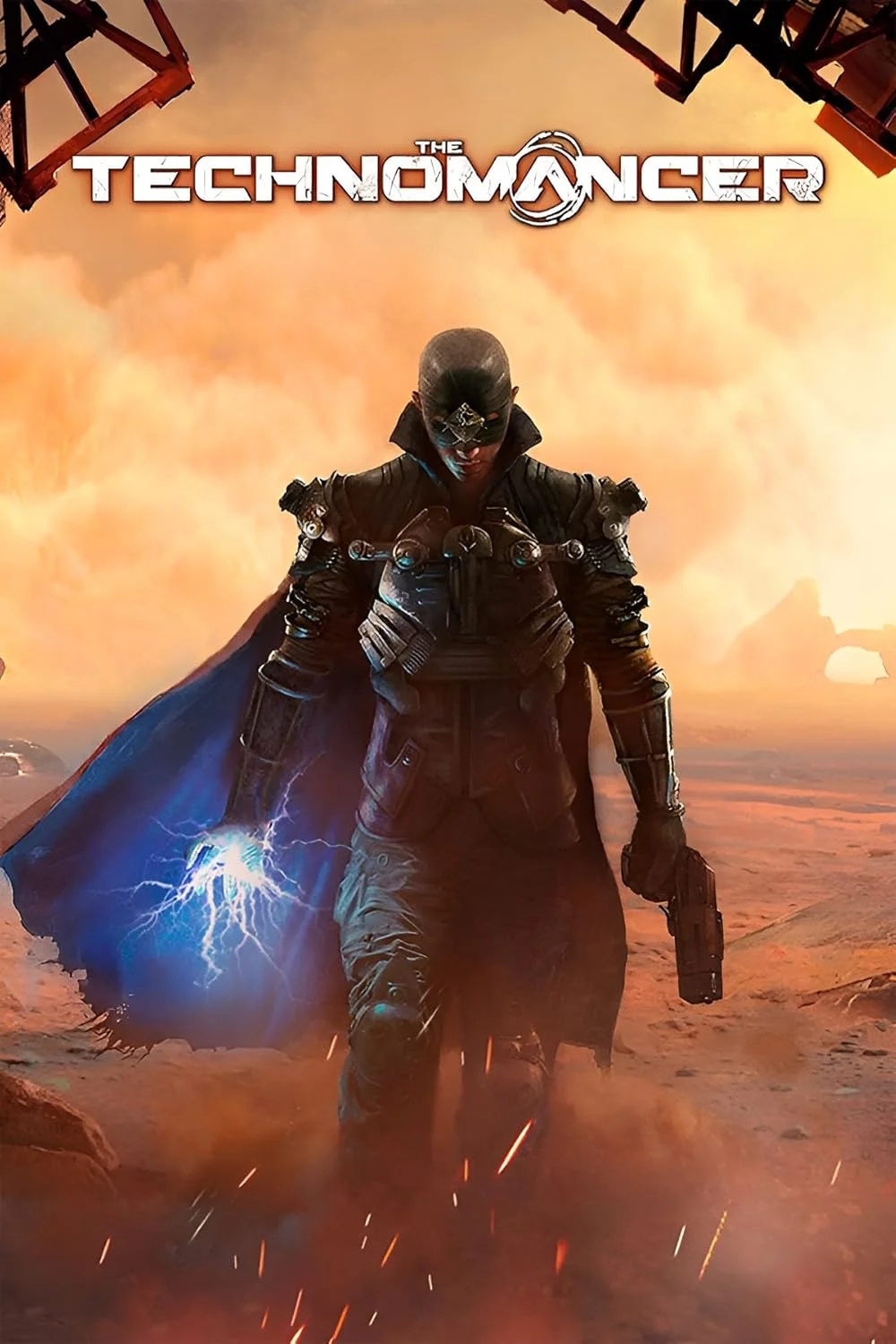
The Technomancer
This combination provides smooth gameplay with an average of 68 FPS, suitable for most gaming scenarios.
Average FPS: resolution vs quality settings
| Ultra | High | Medium | Low | |
|---|---|---|---|---|
| 4K Ultra HD | 25 | 32 | 38 | 49 |
| 1440p QHD | 46 | 59 | 69 | 90 |
| 1080p Full HD | 70 | 90 | 106 | 138 |
Cell color: green is 120+ FPS, teal is 60+, amber is 30+, red is below 30.
The Technomancer with AMD Ryzen 9 9950X3D + Intel Arc B580, In-Depth Analysis
The AMD Ryzen 9 9950X3D and Intel Arc B580 combination delivers playable performance at 1080p and 1440p in The Technomancer, but the GPU becomes the definitive bottleneck at 4K, where even the lowest settings struggle to maintain smooth frame rates. The data indicates a clear hierarchy: the CPU's immense processing power is largely untapped, while the Arc B580's 12 GB VRAM and 2670 MHz boost clock determine the experience at higher resolutions.
Resolution Scaling
The measured frame rates reveal a steep performance cliff as resolution increases, which is a classic indicator of GPU-bound rendering. At 1080p, the Arc B580 produces an average of 138 FPS on Low settings, but this drops by 35% to 90 FPS at 1440p, and then plummets a further 46% to 49 FPS at 4K. This scaling pattern shows that the GPU's pixel throughput and memory bandwidth are the primary constraints; the Ryzen 9 9950X3D is not the limiting factor at any resolution tested.
The gap between settings widens dramatically at higher resolutions, further confirming the GPU-bound nature of the workload. At 1080p, the difference between Low and Ultra is 68 FPS (138 vs 70). At 1440p, that spread narrows to 44 FPS (90 vs 46), and at 4K it collapses to just 24 FPS (49 vs 25). When the resolution increases, the absolute frame rate ceiling drops, meaning the relative cost of each graphics setting becomes less impactful in terms of FPS, but the percentage loss remains significant. The data shows that moving from Low to Ultra at 4K costs a 49% performance hit, while the same settings change at 1080p costs a 49% hit as well, indicating a proportional scaling of workload.
The most telling data point is the 4K Medium result: an average of 38 FPS with a minimum of 32 FPS. This suggests that even the medium preset, which balances load, pushes the B580 to its limits. The 4K Ultra result of 25 FPS is essentially unplayable for a fast-paced action RPG. The scaling from 1440p to 4K is particularly harsh for the High preset, which drops from 59 FPS to 32 FPS—a 46% reduction. This indicates that the B580's 192-bit memory bus and 456.0 GB/s bandwidth are insufficient to feed the shading units efficiently at 4K resolutions.
FAQ
Q: What is the highest average frame rate achievable with this combo?
A: The best result in the measured data is 138 FPS, achieved at 1920x1080 with Low settings. This is the only configuration that exceeds the 120 FPS threshold, while the 1080p Medium preset reaches 106 FPS.
Q: Is this combination capable of 4K gaming in The Technomancer?
A: Technically yes, but the experience is poor. The 4K Ultra preset yields only 25 FPS, and the High preset is barely better at 32 FPS. Even at Low settings, the average FPS of 49 is below the typical 60 FPS target, so 4K is not recommended for smooth gameplay.
Q: How does the CPU's performance compare to its closest rivals?
A: The Ryzen 9 9950X3D has an average benchmark score of 75779, placing it in the 95th percentile of all CPUs. Its nearest rival, the AMD Ryzen 7 PRO 9755, scores 75738, a negligible 0.1% difference. The Intel Core Ultra 9 285 is 0.4% behind, indicating the 9950X3D leads this small group by a marginal margin.
Q: What is the GPU's relative standing among tested graphics cards?
A: The Intel Arc B580's average benchmark score is 23021, which places it in the 68th percentile of all GPUs. Its performance is nearly identical to the NVIDIA GeForce RTX 2080, which trails by just 0.6%, while the AMD Radeon RX 580 2048SP is 0.2% ahead.
Q: Does the 12 GB VRAM capacity become a limiting factor?
A: The data does not explicitly measure VRAM usage, but the significant frame rate drops at 4K suggest the memory subsystem is under strain. The B580 has 12 GB of GDDR6 memory, which is ample for this 2016 title at 1080p and 1440p, but the combination of higher resolution and Ultra settings likely exceeds the comfortable capacity for this GPU's bandwidth.
Q: Which resolution provides the most balanced performance?
A: 2560x1440 stands out as the sweet spot. The High preset averages 59 FPS, which is playable, while the Medium preset achieves 69 FPS. This resolution offers a substantial visual upgrade over 1080p without the severe performance penalty seen at 4K.
GPU Role
The Intel Arc B580 is the decisive component in this pairing for The Technomancer. Its specifications—12 GB of GDDR6 memory on a 192-bit bus with 456.0 GB/s bandwidth—are sufficient for 1080p and 1440p, but the data shows its limits at 4K. The GPU's boost clock of 2670 MHz is consistent across base and boost, indicating a fixed operating point that does not scale to rescue performance under load.
The B580's 2560 shading units and 80 ROPs produce a pixel rate of 213.6 GPixel/s, which is the theoretical ceiling for filling the screen. At 4K, that pixel rate translates to a heavy workload, and the resulting 25-49 FPS range across settings demonstrates that the GPU's raw throughput is the bottleneck. The 13.67 TFLOPS FP32 performance is respectable for the card's class, but the frame rate data suggests that the memory bandwidth is the primary constraint at higher resolutions, as the frame rate drops are more pronounced than what the compute performance alone would suggest.
The GPU's VRAM capacity of 12 GB is a notable asset, but the measured frame rates indicate that The Technomancer does not push the capacity limit at lower resolutions. However, the 4K results show a steep decline, which could be due to memory pressure or the sheer fill-rate demand. The B580's position in the 68th percentile of all GPUs, with performance nearly identical to the RTX 2080, provides context: it is a capable mid-range card that excels at 1080p and holds its own at 1440p, but it is not designed for 4K gaming in demanding titles.
Measured FPS Breakdown
The data provides a complete matrix of resolution and settings combinations. At 1920x1080, the results are consistently smooth. Low settings yield 138 FPS, Medium averages 106 FPS with a minimum of 90 FPS, High achieves 90 FPS, and Ultra drops to 70 FPS. All of these are playable, with the Medium preset offering the best balance of visual quality and headroom.
At 2560x1440, performance remains respectable but drops below the 60 FPS threshold for the highest presets. Low settings produce 90 FPS, Medium averages 69 FPS with a minimum of 59 FPS, High delivers 59 FPS, and Ultra falls to 46 FPS. The Medium and High presets are the most viable for a consistent experience, though High sits right at the edge of the 60 FPS target.
The 3840x2160 results are the weakest. Low settings average 49 FPS, Medium averages 38 FPS with a minimum of 32 FPS, High averages 32 FPS, and Ultra is unplayable at 25 FPS. The step from Low to Medium at 4K is a 22% drop, while the step from Medium to High is a 16% drop, and High to Ultra is a 22% drop. This shows that each settings tier adds a consistent, significant load on the GPU at 4K.
The minimum FPS data, where available, is crucial. At 1080p Medium, the minimum of 90 FPS indicates no stuttering. At 1440p Medium, the minimum of 59 FPS shows that the frame time can dip below the average, but remains playable. At 4K Medium, the minimum of 32 FPS reveals noticeable dips that would affect gameplay fluidity.
How This Combo Ranks
The Ryzen 9 9950X3D and Arc B580 combination ranks 2787 out of 3696 tested combos in The Technomancer. This places it in the bottom 25% of all systems, which is surprising given the CPU's high-end status. The ranking is heavily influenced by the GPU, as the B580's 68th percentile standing drags the overall combo down despite the CPU's 95th percentile performance.
The disparity between the CPU's benchmark position and the combo's in-game rank highlights a significant imbalance. The Ryzen 9 9950X3D's nearest rivals—the AMD Ryzen 7 PRO 9755, Ryzen 7 PRO 9755X3D, and EPYC 8224P—all have nearly identical average scores, with deltas of 0.1% to 0.3%. This means the CPU is not a differentiator in this game; any of these processors would produce similar results with the same GPU.
The GPU's nearest rivals tell a similar story. The Arc B580's average score of 23021 is within 1% of the RTX 2080, RTX 3080, and RX 580 2048SP. This suggests that the B580's performance in The Technomancer is representative of its class, and the combo's low rank is not due to a driver issue but rather the fundamental limits of the GPU at higher resolutions. The combo rank of 2787 out of 3696 means that 75% of tested systems outperform this pairing, which is a direct consequence of the B580's mid-range positioning.
Settings Recommendations
For a smooth 1080p experience, the Medium preset is the optimal choice. It delivers 106 FPS on average, which is well above the 60 FPS target, and the minimum of 90 FPS ensures no noticeable dips. The High preset at 90 FPS is also excellent, but Medium offers a better safety margin for demanding scenes. Low settings at 138 FPS are unnecessary unless aiming for the highest possible refresh rates.
At 1440p, the Medium preset is the recommended starting point. The 69 FPS average with a 59 FPS minimum provides a playable experience, though it is close to the edge. The High preset at 59 FPS is acceptable, but the frame rate will occasionally drop below 60, which can be noticeable. For a more consistent experience, Medium is the safer choice. Ultra at 46 FPS is not recommended for action sequences.
At 4K, no preset provides a fully satisfactory experience. The Low preset at 49 FPS is the most playable, but it sacrifices visual fidelity. Medium at 38 FPS is borderline, while High and Ultra are not viable. If 4K is a requirement, the data suggests that this GPU is not sufficient, and users should either lower the resolution to 1440p or consider a different GPU.
The overall recommendation is to use 2560x1440 with Medium settings as the best balance of visual quality and performance. This configuration achieves an average of 69 FPS, which is smooth enough for the game's combat mechanics, and the minimum of 59 FPS indicates that frame pacing is stable. The 1080p Medium preset is the best for maximum frame rates, while 1440p Medium offers the highest visual fidelity without sacrificing playability.
Hardware Specifications
AMD Ryzen 9 9950X3D
Intel Arc B580
FPS Benchmarks by Resolution & Settings
Performance data for AMD Ryzen 9 9950X3D + Intel Arc B580 in The Technomancer
| Resolution | Settings | Avg FPS |
|---|---|---|
| 3840x2160 | Low | 49.0 |
| 3840x2160 | Medium | 38.0 |
| 3840x2160 | High | 32.0 |
| 3840x2160 | Ultra | 25.0 |
| 2560x1440 | Low | 90.0 |
| 2560x1440 | Medium | 69.0 |
| 2560x1440 | High | 59.0 |
| 2560x1440 | Ultra | 46.0 |
| 1920x1080 | Low | 138.0 |
| 1920x1080 | Medium | 106.0 |
| 1920x1080 | High | 90.0 |
| 1920x1080 | Ultra | 70.0 |
The Technomancer with Ryzen 9 9950X3D + Other GPUs
See how The Technomancer performs with the same CPU but different graphics cards.
The Technomancer with Arc B580 + Other CPUs
See how The Technomancer performs with the same GPU but different processors.
Other Games with Ryzen 9 9950X3D + Arc B580
Explore FPS benchmarks for other games using this same hardware combination.