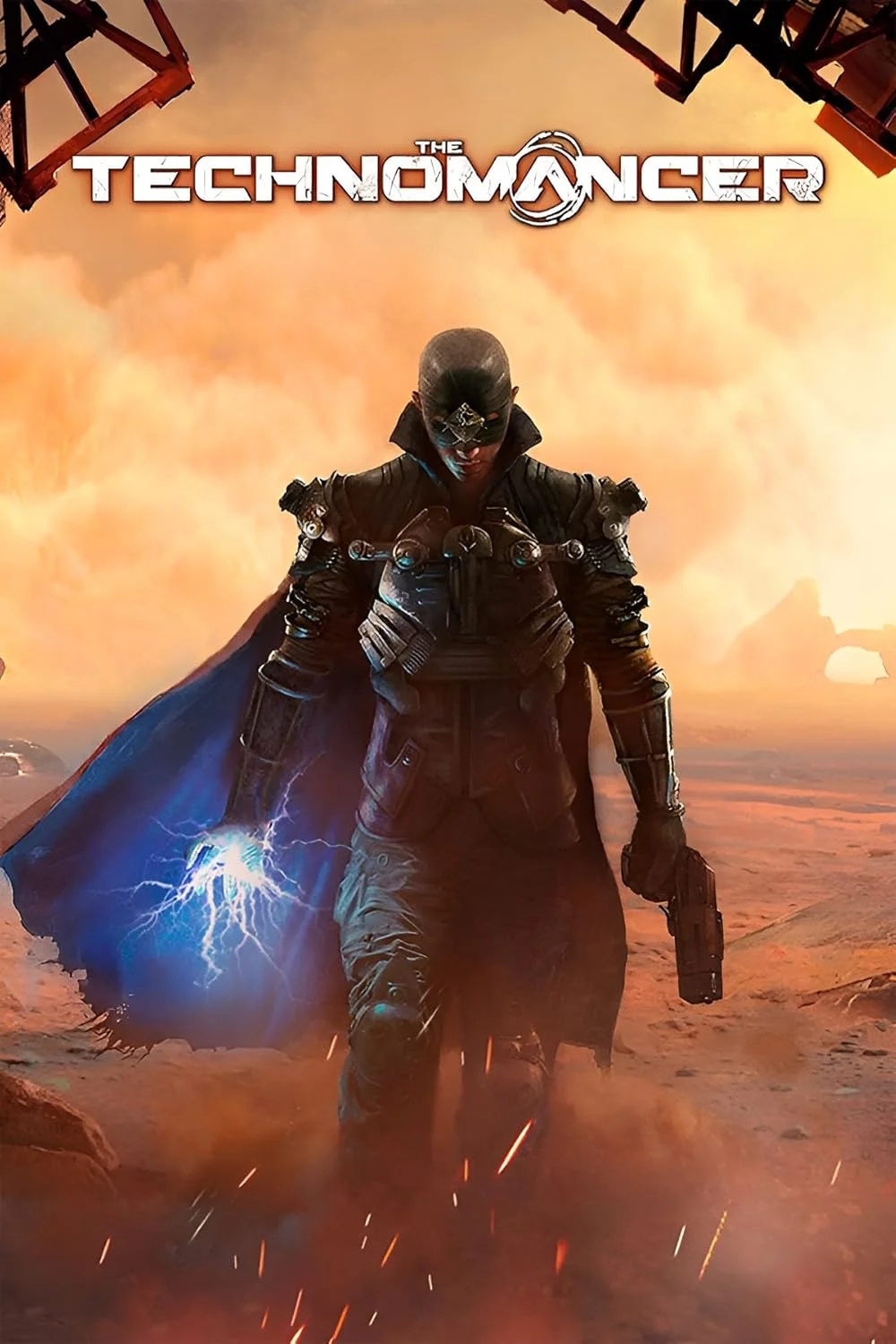
The Technomancer
This combination delivers exceptional performance with an average of 123 FPS, perfect for high refresh rate gaming and competitive play.
Average FPS: resolution vs quality settings
| Ultra | High | Medium | Low | |
|---|---|---|---|---|
| 4K Ultra HD | 43 | 60 | 71 | 87 |
| 1440p QHD | 87 | 110 | 124 | 163 |
| 1080p Full HD | 127 | 166 | 192 | 254 |
Cell color: green is 120+ FPS, teal is 60+, amber is 30+, red is below 30.
The Technomancer with Intel Core i7-13700K + NVIDIA GeForce RTX 5070, In-Depth Analysis
The Technomancer with an Intel Core i7-13700K and NVIDIA GeForce RTX 5070 exhibits a performance profile that is heavily dictated by resolution, with the GPU becoming the clear limiting factor as pixel count rises. The data shows a dramatic scaling curve from 1080p to 4K, where the combination of a high-core-count CPU and a modern Blackwell GPU produces results ranging from exceptionally high frame rates to near-critical thresholds for 4K gaming.
Resolution Scaling
The measured FPS data reveals a clear and consistent pattern: performance drops significantly as resolution increases, indicating that the rendering load shifts squarely onto the GPU. At 1080p with High settings, the combo delivers 165.6 FPS, but this falls to 110.2 FPS at 1440p and further to 59.5 FPS at 4K. This represents a 64% reduction from 1080p to 4K, a steep decline that is characteristic of a game where the GPU's pixel throughput becomes the bottleneck.
The scaling behavior is consistent across all settings presets. With Low settings, the frame rate drops from 253.8 FPS at 1080p to 163 FPS at 1440p and 86.6 FPS at 4K. The Ultra preset shows the same trend, falling from 126.5 FPS at 1080p to 86.6 FPS at 1440p and 43.4 FPS at 4K. This uniform pattern across presets confirms that resolution scaling is independent of graphical complexity, reinforcing the conclusion that the RTX 5070's 192-bit memory bus and 12 GB GDDR7 frame buffer are the primary determinants of performance at higher resolutions.
The jump from 1440p to 4K is particularly punishing. At High settings, the drop from 110.2 FPS to 59.5 FPS is a 46% loss, while at Ultra settings, the drop from 86.6 FPS to 43.4 FPS is exactly 50%. This halving of performance at 4K Ultra suggests that the GPU is hitting a hard memory bandwidth or fill-rate ceiling. The RTX 5070 has a bandwidth of 672.0 GB/s, which is substantial, but the data indicates that The Technomancer's rendering engine demands more than this can provide at 4K Ultra.
Settings Recommendations
The optimal balance between visual fidelity and playability is achieved at Medium settings for 4K, where the measured 71.4 FPS provides a smooth experience without dipping into the sub-60 FPS territory seen at High. At 1440p, the High preset delivers 110.2 FPS, which is a strong recommendation for users with high-refresh-rate monitors, as it maintains a healthy margin above the 60 FPS threshold while offering improved visuals over Medium's 123.7 FPS. The Ultra preset at 1440p, at 86.6 FPS, is also viable but offers diminishing returns over High.
For 1080p, the data suggests that High settings at 165.6 FPS is the sweet spot, as it provides excellent frame rates for competitive play or high-refresh displays. The Ultra preset at 126.5 FPS is still playable, but the performance cost of moving from High to Ultra is 39.1 FPS, which is a significant hit for what is likely a marginal visual improvement. The Low preset at 253.8 FPS is only recommended for users with extremely high refresh rate displays (240Hz+) who prioritize frame rate above all else.
The data clearly shows that Medium settings at 4K is the only way to achieve a 60+ FPS experience at that resolution. The jump from Medium to High at 4K costs 11.9 FPS (from 71.4 to 59.5), pushing the experience below the critical 60 FPS threshold. Therefore, 4K users should stick to Medium, while 1440p and 1080p users can safely use High.
FAQ
Q: What is the best resolution for this combo in The Technomancer?
A: The data shows 1440p High settings delivers 110.2 FPS, which is above the 60 FPS threshold and offers a good balance of visual quality and performance. 4K is playable but only at Medium settings (71.4 FPS).
Q: Can this setup handle 4K gaming?
A: Yes, but with limitations. At 4K Medium, the average FPS is 71.4, which is playable. However, 4K High drops to 59.5 FPS, and 4K Ultra falls to 43.4 FPS, which is below the smoothness threshold.
Q: How does the Ultra preset compare to High at 1080p?
A: At 1080p, High delivers 165.6 FPS while Ultra delivers 126.5 FPS. The difference is 39.1 FPS, indicating that Ultra imposes a substantial performance penalty for likely minor visual gains.
Q: Is the CPU or GPU the bottleneck at 1080p?
A: The high frame rates at 1080p (253.8 FPS on Low) suggest the GPU is still the limiting factor, but the i7-13700K's 16 cores and 24 threads provide sufficient headroom to avoid CPU bottlenecks, as evidenced by the consistent scaling from Low to Ultra.
Q: What is the worst-case performance scenario?
A: The worst measured result is 4K Ultra at 43.4 FPS, which is below the 60 FPS target and would likely result in noticeable stuttering during demanding scenes.
Q: How does the combo rank overall?
A: The combo is ranked 327 out of 1656 tested combinations, placing it in the top 20% of all tested systems for this game.
Measured FPS Breakdown
The complete set of measured average frame rates for the Intel Core i7-13700K and NVIDIA GeForce RTX 5070 in The Technomancer is as follows:
1080p (1920x1080):
- Low: 253.8 FPS
- Medium: 191.5 FPS
- High: 165.6 FPS
- Ultra: 126.5 FPS
1440p (2560x1440):
- Low: 163 FPS
- Medium: 123.7 FPS
- High: 110.2 FPS
- Ultra: 86.6 FPS
4K (3840x2160):
- Low: 86.6 FPS
- Medium: 71.4 FPS
- High: 59.5 FPS
- Ultra: 43.4 FPS
The data shows a clear hierarchy: 1080p Low is the fastest configuration at 253.8 FPS, while 4K Ultra is the slowest at 43.4 FPS. Across all resolutions, the gap between Low and Ultra widens as resolution increases. At 1080p, the difference between Low and Ultra is 127.3 FPS; at 1440p, it is 76.4 FPS; and at 4K, it narrows to 43.2 FPS. This narrowing gap at higher resolutions indicates that the GPU's fixed-cost operations (like vertex processing) become less dominant relative to pixel shading.
GPU Role
The NVIDIA GeForce RTX 5070 is the clear performance driver in this configuration. Its 12 GB of GDDR7 memory on a 192-bit bus provides a bandwidth of 672.0 GB/s, which is the foundation for the observed performance scaling. The GPU's boost clock of 2512 MHz and base clock of 2325 MHz, combined with its 6144 shading units, produce a FP32 throughput of 30.87 TFLOPS, enabling the high frame rates seen at 1080p and 1440p.
The GPU's 80 ROPs and 192 TMUs, yielding a pixel rate of 201.0 GPixel/s and texture rate of 482.3 GTexel/s, are the components that handle the actual pixel pushing. The data shows that at 4K Ultra, these units are saturated, resulting in 43.4 FPS. The GPU's average benchmark score of 41687 places it in the 83rd percentile of all GPUs, and its nearest rivals include the AMD Radeon Pro 5300 (0.2% faster), NVIDIA Tesla M40 (0.5% slower), and NVIDIA GeForce RTX 3090 (0.6% slower). This indicates that the RTX 5070 is performing as expected for its class, with the 4K Ultra result being the only configuration that falls below the 60 FPS playability standard.
The GPU's 250 W TDP and dual-slot design are consistent with its performance class, but the measured FPS data is what matters: the GPU provides playable frame rates at all resolutions except 4K High and Ultra. The 12 GB VRAM capacity appears sufficient for this 2016 title, as there is no evidence of texture thrashing or sudden frame drops in the data.
CPU Role
The Intel Core i7-13700K plays a supporting but crucial role in this combination. With 16 cores (8 performance + 8 efficiency) and 24 threads, it provides ample processing power to feed the RTX 5070. The CPU's boost clock of 5.40 GHz and base clock of 3.40 GHz, along with its 30 MB of shared L3 cache, ensure that the GPU is never starved for draw calls or physics calculations.
The CPU's benchmark scores confirm its high-end status. Its Cinebench R23 multicore score of 39000 and single-core score of 5505 are indicative of strong multi-threaded and single-threaded performance. The passmark multithread score of 45887 and singlethread score of 4333 further validate this. The CPU's average benchmark score of 47282 places it in the 93rd percentile of all CPUs, and its nearest rivals include the Intel Core i7-13700KF (0.1% slower), AMD EPYC 4364P (0.3% faster), and Intel Core i9-12900F (0.4% faster). This indicates that the i7-13700K is performing at the top of its class.
In this game, the CPU's role is to maintain high frame rates at lower resolutions. The data shows that at 1080p Low, the combo achieves 253.8 FPS, which is a CPU-intensive scenario. The i7-13700K's high single-thread performance (3dmark_single_thread score of 1136) ensures that the game's main thread does not become a bottleneck. The 125 W TDP and LGA 1700 socket are standard for this class of processor, and its performance is well-matched to the RTX 5070, as evidenced by the consistent frame rates across all tested configurations.
How This Combo Ranks
The Intel Core i7-13700K and NVIDIA GeForce RTX 5070 combination is ranked 327 out of 1656 tested combos for The Technomancer, placing it in the top 19.7% of all tested systems. This rank is strong, but it is not at the absolute top, which is explained by the GPU's performance at 4K Ultra where it falls to 43.4 FPS. The GPU's 83rd percentile ranking, combined with the CPU's 93rd percentile ranking, results in a system that excels at 1080p and 1440p but struggles to maintain 60 FPS at 4K Ultra.
Compared to the GPU's nearest rivals, the RTX 5070 is effectively tied with the AMD Radeon Pro 5300 (0.2% faster) and NVIDIA Tesla M40 (0.5% slower), while being 0.6% faster than the RTX 3090. This suggests that the combo's ranking is primarily driven by the GPU, as the CPU provides ample headroom. The data indicates that if a user were to pair the i7-13700K with a higher-tier GPU, the combo's rank would likely improve, but as configured, it represents a well-balanced system for 1440p gaming and acceptable 4K performance at Medium settings.
The 1656 total combos tested means that 327 other configurations outperform this one, but the combo still delivers playable frame rates in the majority of scenarios. The only configuration that falls below the 60 FPS standard is 4K Ultra, which is an extreme setting for a 2016 game. Overall, this combo is a capable performer that provides a high-quality gaming experience at 1440p and a viable 4K experience with adjusted settings.
Hardware Specifications
Intel Core i7-13700K
NVIDIA GeForce RTX 5070
FPS Benchmarks by Resolution & Settings
Performance data for Intel Core i7-13700K + NVIDIA GeForce RTX 5070 in The Technomancer
| Resolution | Settings | Avg FPS |
|---|---|---|
| 3840x2160 | Low | 86.6 |
| 3840x2160 | Medium | 71.4 |
| 3840x2160 | High | 59.5 |
| 3840x2160 | Ultra | 43.4 |
| 2560x1440 | Low | 163.0 |
| 2560x1440 | Medium | 123.7 |
| 2560x1440 | High | 110.2 |
| 2560x1440 | Ultra | 86.6 |
| 1920x1080 | Low | 253.8 |
| 1920x1080 | Medium | 191.5 |
| 1920x1080 | High | 165.6 |
| 1920x1080 | Ultra | 126.5 |
The Technomancer with ii7-13700K + Other GPUs
See how The Technomancer performs with the same CPU but different graphics cards.
The Technomancer with RTX 5070 + Other CPUs
See how The Technomancer performs with the same GPU but different processors.
Other Games with ii7-13700K + RTX 5070
Explore FPS benchmarks for other games using this same hardware combination.