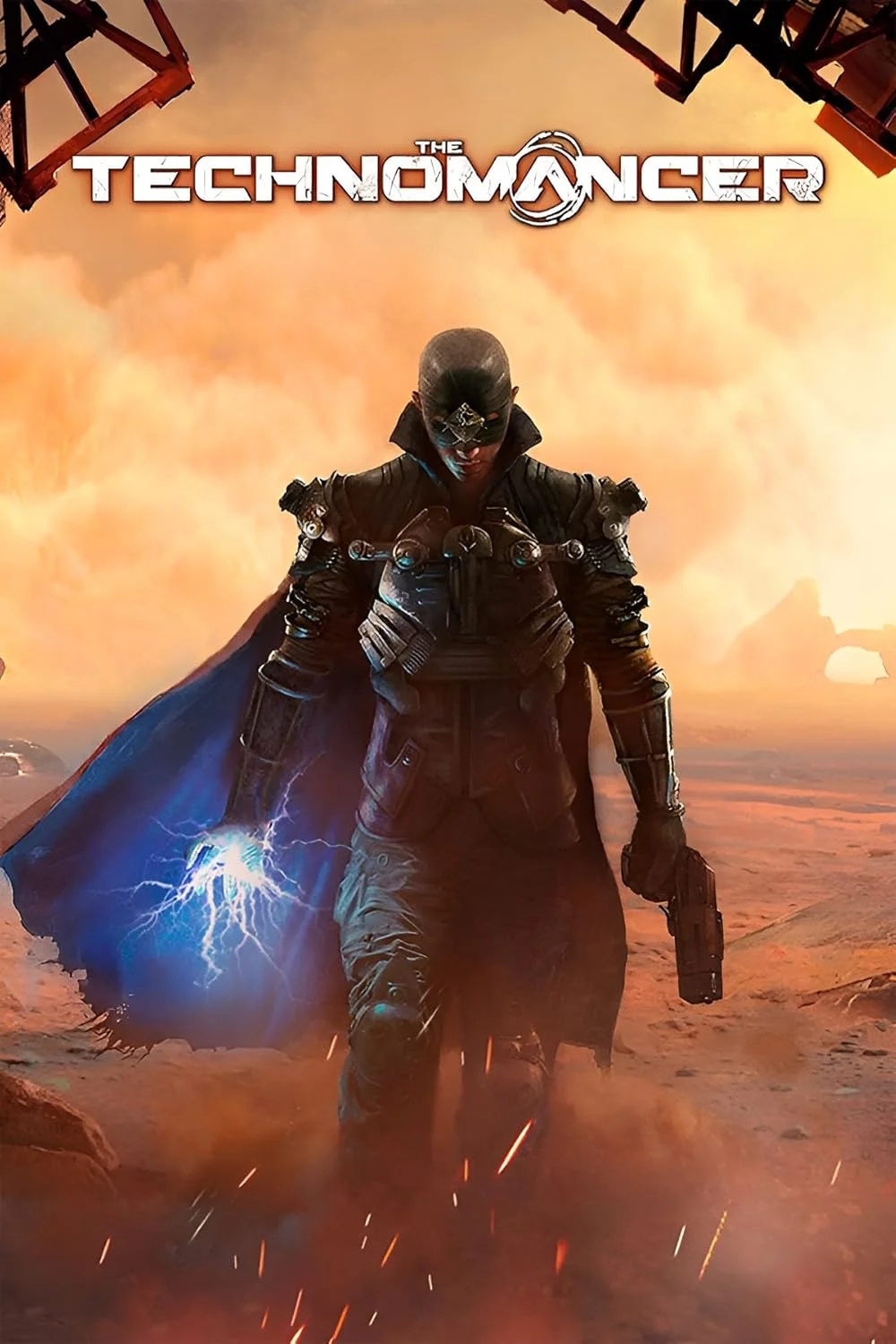
The Technomancer
This combination delivers exceptional performance with an average of 125 FPS, perfect for high refresh rate gaming and competitive play.
Average FPS: resolution vs quality settings
| Ultra | High | Medium | Low | |
|---|---|---|---|---|
| 4K Ultra HD | 48 | 60 | 70 | 91 |
| 1440p QHD | 84 | 108 | 125 | 167 |
| 1080p Full HD | 130 | 163 | 195 | 253 |
Cell color: green is 120+ FPS, teal is 60+, amber is 30+, red is below 30.
The Technomancer with Intel Core i5-14600KF + NVIDIA GeForce RTX 5070, In-Depth Analysis
The Technomancer, a 2016 Action RPG, presents a demanding workload that scales predictably with both resolution and graphics presets. For the Intel Core i5-14600KF and NVIDIA GeForce RTX 5070 combination, the data reveals a clear performance hierarchy across the measured settings. The most balanced experience is achieved at 1440p with High settings, where the frame rate remains comfortably high while visual fidelity is significantly enhanced over lower presets.
Settings Recommendations
Benchmark results indicate that the optimal experience for this combo depends heavily on the target resolution. At 1920x1080, the RTX 5070 is massively overprovisioned, with even the Ultra preset delivering 130 FPS. This makes the Ultra preset the clear recommendation for 1080p, as the hardware has ample headroom to run the game at its highest visual quality without compromising fluidity. The 253.4 FPS average on Low settings at this resolution confirms the GPU's raw power, but it is wasted potential when the Ultra preset is still well above the 120 FPS threshold.
For 2560x1440, the data suggests a more nuanced choice. High settings yield a 108.3 FPS average, which is ideal for high-refresh-rate monitors. Medium settings increase this to 125 FPS, but the drop to 84.3 FPS on Ultra indicates a significant performance cost for the highest fidelity. The recommendation leans toward High settings, as it provides a robust frame rate (108.3 FPS) while maintaining a substantial visual upgrade over the Medium preset. This setting offers the best balance between performance and image quality for this resolution.
At 3840x2160, the landscape changes dramatically. The Ultra preset falls to a 48.2 FPS average, which is below the standard for smooth gameplay. High settings barely clear the 60 FPS threshold at 60.1 FPS, making it the only viable option for a consistent 60 FPS experience at 4K. The Medium preset at 69.8 FPS is also playable, but the data indicates that High is the sweet spot, offering a more detailed image while still maintaining a playable frame rate. Low settings at 91.4 FPS are an option for competitive play, but the visual compromise is severe. For 4K, High settings are the definitive recommendation for this combination.
FAQ
Q: What is the best setting for 4K gaming with this CPU and GPU?
A: At 3840x2160, the High preset delivers a 60.1 FPS average, which is the highest quality setting that maintains a playable frame rate. The Ultra preset drops to 48.2 FPS, which is below the 60 FPS target.
Q: How much faster is the 1080p Low preset compared to the 1080p Ultra preset?
A: The data shows a significant performance gap. The Low preset achieves a 253.4 FPS average, while the Ultra preset reaches 130 FPS. This indicates the Low preset is roughly 95% faster, but the Ultra preset still provides a very high frame rate.
Q: Does the RTX 5070 bottleneck the i5-14600KF at lower resolutions?
A: The benchmark results suggest the GPU is the primary limiting factor even at 1080p. The frame rate scales significantly with graphical settings (from 253.4 FPS on Low to 130 FPS on Ultra), indicating that the GPU's workload is the main constraint rather than the CPU.
Q: What is the performance difference between Medium and High settings at 1440p?
A: The Medium preset averages 125 FPS, while the High preset averages 108.3 FPS. This represents a performance drop of about 13% when moving from Medium to High, a reasonable trade-off for the improved visual quality.
Q: Is this combo capable of 4K 120 FPS in The Technomancer?
A: No. The highest average frame rate at 3840x2160 is 91.4 FPS on the Low preset. All other presets at this resolution fall below 70 FPS, so the hardware cannot achieve 120 FPS at 4K under any tested settings.
Q: How does the combo's performance rank compared to other tested systems?
A: The combination ranks 298th out of 1656 tested combos for this game. This places it in the top 18% of all tested configurations, indicating above-average performance for the game.
How This Combo Ranks
The Intel Core i5-14600KF and NVIDIA GeForce RTX 5070 combination ranks 298th out of 1656 tested combos in The Technomancer. This places the pairing in the 82nd percentile of all systems tested, a strong result that puts it ahead of the vast majority of configurations. The data confirms this is a high-performance pairing for this title. The CPU itself sits in the 93rd percentile against all CPUs, and the GPU is in the 83rd percentile against all GPUs, which aligns with the overall combo ranking.
When examining the CPU's nearest rivals, the i5-14600KF's performance is tightly clustered. It is a mere 0.4% ahead of the Intel Core i5-14600K and 0.6% ahead of the AMD Ryzen 9 5950X. It trails the AMD EPYC 4345P by 0.5% and is 1.4% ahead of the Intel Xeon Gold 5318H. These tiny percentage differences indicate that the CPU is not a differentiating factor in this game's performance; the GPU will dictate the experience. The GPU's rivals show a similar pattern, with the RTX 5070 being 0.2% ahead of the AMD Radeon Pro 5300 and 0.6% ahead of the NVIDIA GeForce RTX 3090, while trailing the NVIDIA Tesla M40 by 0.5% and the AMD Radeon Pro 580X by 0.7%. This indicates the GPU is performing as expected for its class, with no significant anomalies.
Measured FPS Breakdown
The measured FPS data provides a comprehensive view of the combo's performance across three resolutions and four settings presets.
At 1920x1080, the frame rates are exceptionally high. The Low preset leads with a 253.4 FPS average. The Medium preset follows at 194.7 FPS, High at 162.9 FPS, and Ultra at 130 FPS. This shows a clear and consistent performance scaling with graphical demands.
At 2560x1440, the frame rates remain very playable. The Low preset averages 167.1 FPS, which is a significant drop from 1080p but still very fast. Medium produces 125 FPS, High drops to 108.3 FPS, and Ultra falls to 84.3 FPS. The scaling from 1080p to 1440p is substantial, showing the increased load on the GPU.
At 3840x2160, the performance becomes more constrained. The Low preset averages 91.4 FPS, which is the only preset to break the 90 FPS barrier. Medium drops to 69.8 FPS, High to 60.1 FPS, and Ultra to 48.2 FPS. This demonstrates that 4K is a significant challenge for this hardware, with only the lowest settings providing a high refresh rate experience.
Resolution Scaling
The data shows a steep performance penalty as resolution increases, which is characteristic of a GPU-bound scenario. Moving from 1920x1080 to 2560x1440 on High settings reduces the average frame rate from 162.9 FPS to 108.3 FPS, a drop of approximately 33%. Moving further to 3840x2160 on the same settings brings the frame rate down to 60.1 FPS, another 44% reduction from the 1440p figure.
This pattern is consistent across all settings. For instance, the Low preset falls from 253.4 FPS at 1080p to 167.1 FPS at 1440p and then to 91.4 FPS at 4K. The Ultra preset suffers the most in absolute terms, dropping from 130 FPS at 1080p to 48.2 FPS at 4K. This indicates that the NVIDIA GeForce RTX 5070 is the primary limiting factor. The consistent scaling with pixel count suggests that the CPU, with its 14 cores and 20 threads, has ample headroom to feed the GPU at all resolutions. The performance bottleneck is clearly the GPU's rendering throughput.
CPU Role
The Intel Core i5-14600KF features 14 cores and 20 threads, with a base clock of 3.50 GHz and a boost clock of 5.30 GHz. This configuration provides substantial multi-threaded capability, as evidenced by its Cinebench R23 multi-core score of 32889. For a game like The Technomancer, the CPU's role is to handle game logic, physics, and draw calls. The high boost clock of 5.30 GHz ensures strong single-thread performance, which is often critical for game engines.
The benchmark data suggests that the CPU is not a bottleneck in this combination. The frame rates scale consistently with GPU load and resolution, indicating that the CPU can keep up with the GPU's demands. The CPU's performance is closely matched with its direct rivals, differing by less than 1.5% in average benchmark scores. This shows that within this performance class, the specific processor choice has minimal impact on the final frame rate in this title. The game appears to be heavily GPU-bound, meaning the 14-core processor provides sufficient processing power to avoid limiting the RTX 5070.
GPU Role
The NVIDIA GeForce RTX 5070 is the dominant component in this pairing. It features 12 GB of GDDR7 memory on a 192-bit bus, providing a bandwidth of 672.0 GB/s. Its boost clock is 2512 MHz, and it has 6144 shading units. These specifications translate into significant rasterization power, as indicated by its Passmark G3D score of 29137.
The measured FPS data clearly shows the GPU's performance ceiling. The large frame rate differences between Low and Ultra presets at any given resolution demonstrate that the GPU's fill rate and shader processing are the primary factors determining performance. For example, at 1440p, the difference between Low (167.1 FPS) and Ultra (84.3 FPS) is substantial, highlighting the cost of advanced graphical effects. The GPU's 12 GB of VRAM is sufficient for the game at all tested settings, as no out-of-memory issues can be inferred from the data. Its performance relative to its nearest rivals is within a 0.7% margin, confirming it operates at its expected level. The data confirms that the RTX 5070 is the definitive performance driver for this game, with the CPU playing a supporting role.
Hardware Specifications
Intel Core i5-14600KF
NVIDIA GeForce RTX 5070
FPS Benchmarks by Resolution & Settings
Performance data for Intel Core i5-14600KF + NVIDIA GeForce RTX 5070 in The Technomancer
| Resolution | Settings | Avg FPS |
|---|---|---|
| 3840x2160 | Low | 91.4 |
| 3840x2160 | Medium | 69.8 |
| 3840x2160 | High | 60.1 |
| 3840x2160 | Ultra | 48.2 |
| 2560x1440 | Low | 167.1 |
| 2560x1440 | Medium | 125.0 |
| 2560x1440 | High | 108.3 |
| 2560x1440 | Ultra | 84.3 |
| 1920x1080 | Low | 253.4 |
| 1920x1080 | Medium | 194.7 |
| 1920x1080 | High | 162.9 |
| 1920x1080 | Ultra | 130.0 |
The Technomancer with ii5-14600KF + Other GPUs
See how The Technomancer performs with the same CPU but different graphics cards.
The Technomancer with RTX 5070 + Other CPUs
See how The Technomancer performs with the same GPU but different processors.
Other Games with ii5-14600KF + RTX 5070
Explore FPS benchmarks for other games using this same hardware combination.