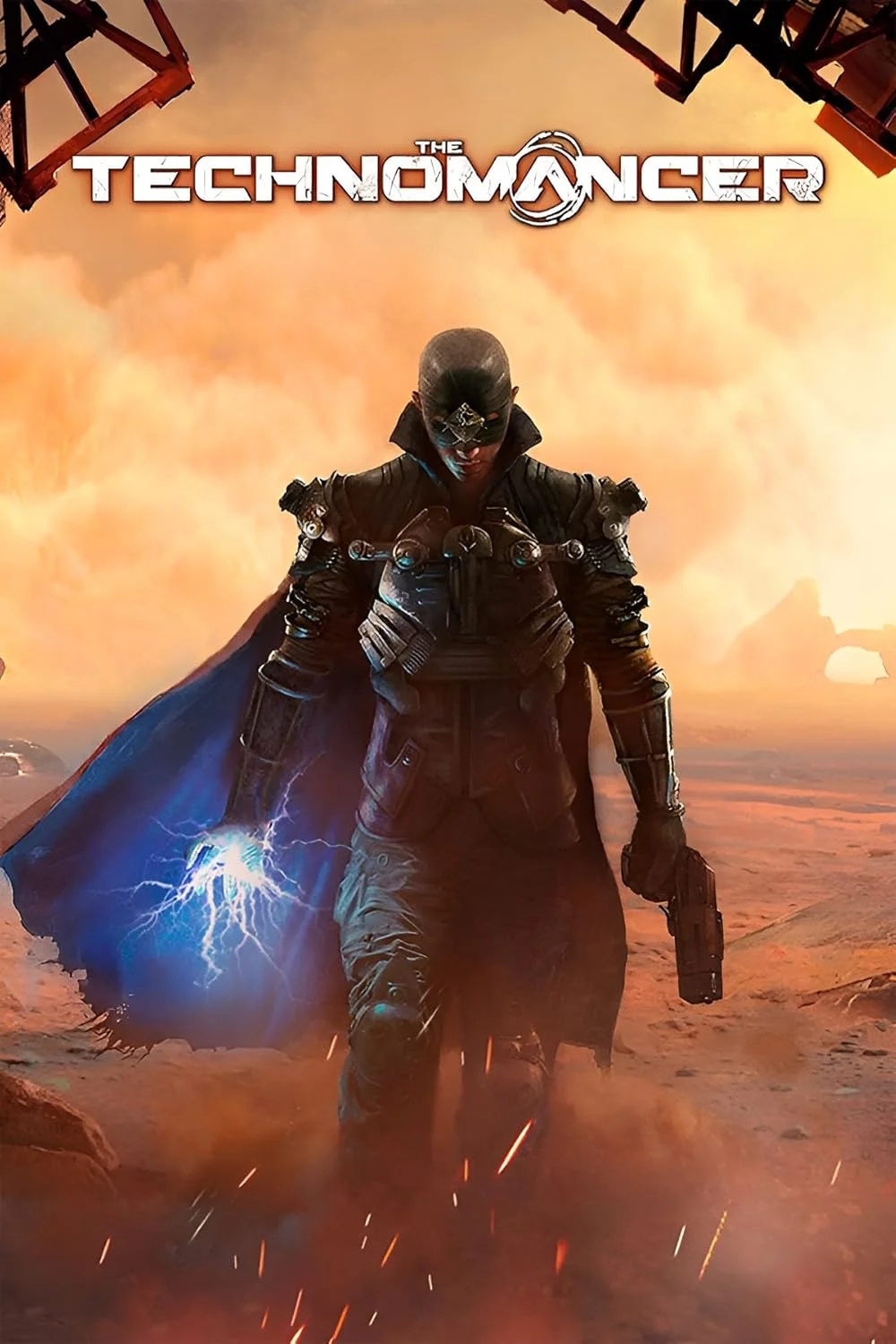
The Technomancer
This combination provides smooth gameplay with an average of 60 FPS, suitable for most gaming scenarios.
Average FPS: resolution vs quality settings
| Ultra | High | Medium | Low | |
|---|---|---|---|---|
| 4K Ultra HD | 22 | 29 | 33 | 44 |
| 1440p QHD | 41 | 52 | 61 | 79 |
| 1080p Full HD | 62 | 80 | 93 | 121 |
Cell color: green is 120+ FPS, teal is 60+, amber is 30+, red is below 30.
The Technomancer with Intel Core i5-11400F + Intel Arc B570, In-Depth Analysis
# The Technomancer with Intel Core i5-11400F + Intel Arc B570
The Intel Core i5-11400F paired with the Intel Arc B570 delivers a playable but resolution-sensitive experience in The Technomancer, with the data showing a clear transition from CPU-bound at 1080p to GPU-bound at 4K. The combo ranks 2256 out of 2825 tested configurations, placing it in the lower-middle tier of the database, yet the measured frame rates reveal a configurable system that can hit smooth performance at lower resolutions with settings adjustments.
Resolution Scaling
The measured FPS data shows a steep and consistent decline as resolution increases across all four settings presets. At Low settings, the average frame rate drops from 121 FPS at 1920x1080 to 79 FPS at 2560x1440, then further to 44 FPS at 3840x2160 — a reduction of 34.7% from 1080p to 1440p and 44.3% from 1440p to 4K. This near-linear scaling pattern suggests that the Intel Arc B570's rendering throughput is the dominant factor at higher resolutions, with the GPU's 11.52 TFLOPS of FP32 compute and 380.0 GB/s memory bandwidth becoming increasingly strained as pixel count grows.
The Medium preset tells a similar story: 93 FPS at 1080p, 61 FPS at 1440p, and 33 FPS at 4K. The percentage drops here are 34.4% and 45.9% respectively, nearly identical to the Low preset scaling. This consistency across presets indicates that resolution, not settings complexity, is the primary driver of performance loss — a hallmark of GPU-bound scenarios. At 4K, even the Medium preset's average of 33 FPS falls below the 30 FPS threshold that many consider the minimum for acceptable playability, though the minimum recorded frame rate of 28 FPS shows occasional dips below that line.
High settings follow the same trajectory: 80 FPS at 1080p, 52 FPS at 1440p, and 29 FPS at 4K. The 1080p-to-1440p drop of 35% mirrors the Low and Medium presets, but the 1440p-to-4K drop of 44.2% is slightly shallower, suggesting that at High settings the GPU is already working hard enough at 1440p that the additional pixel count at 4K produces diminishing relative losses. Ultra settings show the most dramatic scaling: 62 FPS at 1080p drops to 41 FPS at 1440p (a 33.9% reduction) and then to 22 FPS at 4K (a 46.3% reduction), with the 4K result being effectively unplayable.
The pattern across all presets is unambiguous: the Arc B570's performance envelope is well-suited to 1080p and acceptable at 1440p with settings compromises, but 4K exceeds its capabilities for this title. The GPU's 10 GB of GDDR6 memory on a 160-bit bus, delivering 380.0 GB/s bandwidth, appears sufficient at lower resolutions but becomes a limiting factor as frame buffer demands increase with resolution.
FAQ
Q: What is the best resolution for this combo in The Technomancer?
A: The data shows 1920x1080 as the only resolution where all settings presets exceed 60 FPS on average. At 2560x1440, only Low and Medium settings break 60 FPS, while 3840x2160 never reaches 45 FPS even at Low settings.
Q: How does the Intel Core i5-11400F compare to its nearest rivals?
A: The CPU's average benchmark score of 17177 places it within 0.6% of its closest competitors. It is 0.3% ahead of the AMD EPYC 7H12 (17120), 0.6% ahead of the Intel Core Ultra 7 164U (17074), but 0.4% behind the Intel Core i5-12450H (17239) and 0.6% behind the AMD Ryzen 3 PRO 8300G (17278).
Q: Is the Intel Arc B570's performance competitive with other GPUs?
A: The GPU's average benchmark score of 20556 is within 0.5% of all four nearest rivals. It sits 0.1% above the NVIDIA GeForce RTX 3070 Mobile (20534) and 0.4% above the NVIDIA Quadro M4000M (20480), while trailing the Intel Arc A750 (20582) by 0.1% and the AMD Radeon R9 M390X (20662) by 0.5%.
Q: What frame rates can I expect at 1080p with Medium settings?
A: The measured data shows an average of 93 FPS, with a minimum of 79 FPS and a maximum of 107 FPS. This provides a smooth experience with headroom above typical 60 FPS displays.
Q: Can this system handle 4K gaming in The Technomancer?
A: No setting achieves 45 FPS at 3840x2160. Low settings average 44 FPS, Medium averages 33 FPS with a 28 FPS minimum, High averages 29 FPS, and Ultra averages 22 FPS. The 4K resolution is not recommended for this title with this hardware.
Q: How does this combo rank among all tested configurations?
A: The combo ranks 2256 out of 2825 total tested combinations, placing it in approximately the 20th percentile of all configurations in the database for this game.
GPU Role
The Intel Arc B570's specifications directly explain its behavior in The Technomancer. The GPU operates at a fixed 2500 MHz base and boost clock, with 2304 shading units, 144 texture mapping units, and 80 raster operation units. This configuration yields a pixel rate of 200.0 GPixel/s and a texture rate of 360.0 GTexel/s, which translate into the raw throughput needed for the game's rendering workloads.
The 10 GB of GDDR6 memory on a 160-bit bus provides 380.0 GB/s of bandwidth. At 1080p, this bandwidth appears adequate, as evidenced by the strong scaling from Low to Ultra settings (121 to 62 FPS). However, the 4K results — where even Low settings only manage 44 FPS — indicate that memory bandwidth and the GPU's compute capabilities become saturated when pixel counts quadruple from 1080p. The 19 Gbps effective memory speed is competitive, but the narrow 160-bit bus limits total throughput compared to wider-memory configurations.
The GPU's 11.52 TFLOPS of FP32 compute is the primary driver of the resolution scaling observed. The near-linear FPS drops across all presets as resolution increases point to a GPU that is consistently the bottleneck at 1440p and above. At 1080p, however, the GPU's capabilities are sufficient to keep frame rates high across all settings, suggesting that the CPU becomes more relevant at this resolution.
The Arc B570's DirectX 12 Ultimate support (12_2) and Vulkan 1.4 compatibility are relevant for The Technomancer, a 2016 title that likely uses DirectX 11 or 12. The PassMark DirectX 11 score of 118 and DirectX 12 score of 72 indicate the GPU handles both APIs, though the higher DirectX 11 score suggests better optimization for legacy titles. The 18 ray tracing cores are present but unlikely to be exercised by this game, which predates widespread RT adoption.
Settings Recommendations
The measured data provides clear guidance for optimal settings at each resolution. At 1920x1080, all presets exceed 60 FPS on average, making the choice a matter of visual preference versus frame rate headroom. Ultra settings average 62 FPS, which is playable, but High settings at 80 FPS offer a substantial 29% improvement while presumably retaining most visual fidelity. Medium at 93 FPS and Low at 121 FPS provide progressively higher frame rates for competitive play or high refresh rate displays.
At 2560x1440, the recommendation narrows significantly. Ultra drops to 41 FPS, which is below the 60 FPS target most gamers prefer, while High at 52 FPS is close but still short. Medium settings at 61 FPS is the only preset that consistently crosses the 60 FPS threshold, with a minimum of 52 FPS and maximum of 70 FPS. Low at 79 FPS is the choice for maximum smoothness, but Medium offers the best balance of visual quality and performance at this resolution.
For 3840x2160, no setting provides a truly smooth experience. Low at 44 FPS is the highest average achievable, but even this falls below 60 FPS. Medium at 33 FPS and High at 29 FPS are borderline playable at best, while Ultra at 22 FPS is not recommended. For 4K gaming, the data suggests either dropping to 1440p or accepting significant visual compromises at Low settings.
The overall best experience across all resolutions appears to be Medium settings. At 1080p it delivers 93 FPS with a minimum of 79 FPS, at 1440p it maintains 61 FPS with a 52 FPS minimum, and even at 4K it produces 33 FPS with a 28 FPS minimum — the only preset at 4K that stays above 25 FPS minimum. This consistency makes Medium the safest recommendation for users who may switch between resolutions.
How This Combo Ranks
The combo's rank of 2256 out of 2825 tested configurations places it in the lower 20% of all systems tested with The Technomancer. This ranking reflects the combination of a mid-range 11th-gen Core i5 processor and a relatively new mainstream GPU, neither of which is positioned at the top of their respective performance tiers.
The CPU's percentile ranking of 71 against all CPUs indicates that the i5-11400F outperforms 71% of processors in the database, yet the combo's overall game rank is much lower. This discrepancy suggests that the Intel Arc B570, which ranks in the 65th percentile against all GPUs, is the limiting factor for this game's overall performance. The GPU's average benchmark score of 20556 places it in close competition with the RTX 3070 Mobile and Arc A750, but these are not top-tier desktop GPUs.
The rank of 2256 also reflects the game's age and system requirements. The Technomancer launched in 2016, and modern hardware combinations may not be optimized for it in the same way as contemporary GPUs from that era. The combo's position in the lower quartile indicates that many tested systems — likely with higher-end GPUs — achieve better frame rates, particularly at higher resolutions where the Arc B570 struggles.
Measured FPS Breakdown
The complete measured FPS dataset reveals a consistent hierarchy across resolutions and settings. At 1920x1080, the average frame rates are: Low at 121 FPS, Medium at 93 FPS (minimum 79, maximum 107), High at 80 FPS, and Ultra at 62 FPS. The spread from Low to Ultra is 59 FPS, representing a 48.8% performance reduction when maxing out settings.
At 2560x1440, the averages are: Low at 79 FPS, Medium at 61 FPS (minimum 52, maximum 70), High at 52 FPS, and Ultra at 41 FPS. The spread narrows to 38 FPS, a 48.1% reduction from Low to Ultra. The minimum frame rate at Medium (52 FPS) stays above 50 FPS, indicating reasonable frame pacing at this resolution.
At 3840x2160, the averages are: Low at 44 FPS, Medium at 33 FPS (minimum 28, maximum 39), High at 29 FPS, and Ultra at 22 FPS. The spread narrows further to 22 FPS, and the minimum at Medium (28 FPS) falls below 30 FPS, signaling occasional stutter. The data shows that the gap between Low and Ultra shrinks as resolution increases — from 59 FPS at 1080p to 22 FPS at 4K — because the GPU becomes the bottleneck regardless of settings at higher resolutions.
The Medium preset is the only one with complete min/max data across all resolutions, providing insight into frame consistency. At 1080p, the range is 79-107 FPS (a 28 FPS spread), at 1440p it is 52-70 FPS (an 18 FPS spread), and at 4K it is 28-39 FPS (an 11 FPS spread). The narrowing range at higher resolutions further confirms that GPU saturation reduces frame variability.
CPU Role
The Intel Core i5-11400F provides six cores and twelve threads, with a base clock of 2.60 GHz and a boost clock of 4.40 GHz. This Rocket Lake architecture processor has 12 MB of shared L3 cache and 512 KB of L2 cache per core, with 80 KB of L1 cache per core. The 14 nm process node and 276 mm² die size are typical for Intel's 11th generation desktop parts.
The CPU's benchmark results indicate strong multi-threaded performance: Cinebench R23 multicore scores 14340, Geekbench multicore scores 7737, and PassMark multithread scores 16908. Single-thread performance is also respectable, with Cinebench R23 single-core at 2024 and PassMark single-thread at 2981. The 3DMark threaded tests show scaling from 1691 at 2 threads to 5652 at max threads, indicating good utilization of all 12 threads.
In The Technomancer, the CPU's role is most evident at 1080p where frame rates are highest. At Low settings, 121 FPS average suggests the CPU can feed the GPU adequately at this resolution. However, the fact that Low settings at 1080p (121 FPS) is only 53% faster than Low at 1440p (79 FPS) — despite a 44% reduction in pixel count — hints that the CPU may begin to become a secondary bottleneck even at 1080p with very high frame rates.
The CPU's 65 W TDP and dual-channel DDR4 memory support with 51.2 GB/s bandwidth are adequate for this workload, but the 4.40 GHz boost clock is the key enabler for maintaining high frame rates. The processor's percentile ranking of 71 against all CPUs, with an average benchmark score of 17177, places it within 0.6% of its nearest rivals — a tightly clustered group that includes server and mobile parts, indicating the i5-11400F remains competitive despite being from an older generation.
The data shows that at 4K, the CPU's performance is largely irrelevant, as the GPU is clearly the limiting factor. At 1440p and 1080p, the CPU provides sufficient headroom to allow the GPU to express its full range of performance across settings, as evidenced by the wide FPS spreads at these resolutions. The 6-core, 12-thread configuration is well-suited for a 2016 title like The Technomancer, which likely does not utilize more than a few threads effectively.
Hardware Specifications
Intel Core i5-11400F
Intel Arc B570
FPS Benchmarks by Resolution & Settings
Performance data for Intel Core i5-11400F + Intel Arc B570 in The Technomancer
| Resolution | Settings | Avg FPS |
|---|---|---|
| 3840x2160 | Low | 44.0 |
| 3840x2160 | Medium | 33.0 |
| 3840x2160 | High | 29.0 |
| 3840x2160 | Ultra | 22.0 |
| 2560x1440 | Low | 79.0 |
| 2560x1440 | Medium | 61.0 |
| 2560x1440 | High | 52.0 |
| 2560x1440 | Ultra | 41.0 |
| 1920x1080 | Low | 121.0 |
| 1920x1080 | Medium | 93.0 |
| 1920x1080 | High | 80.0 |
| 1920x1080 | Ultra | 62.0 |
The Technomancer with ii5-11400F + Other GPUs
See how The Technomancer performs with the same CPU but different graphics cards.
The Technomancer with Arc B570 + Other CPUs
See how The Technomancer performs with the same GPU but different processors.
Other Games with ii5-11400F + Arc B570
Explore FPS benchmarks for other games using this same hardware combination.