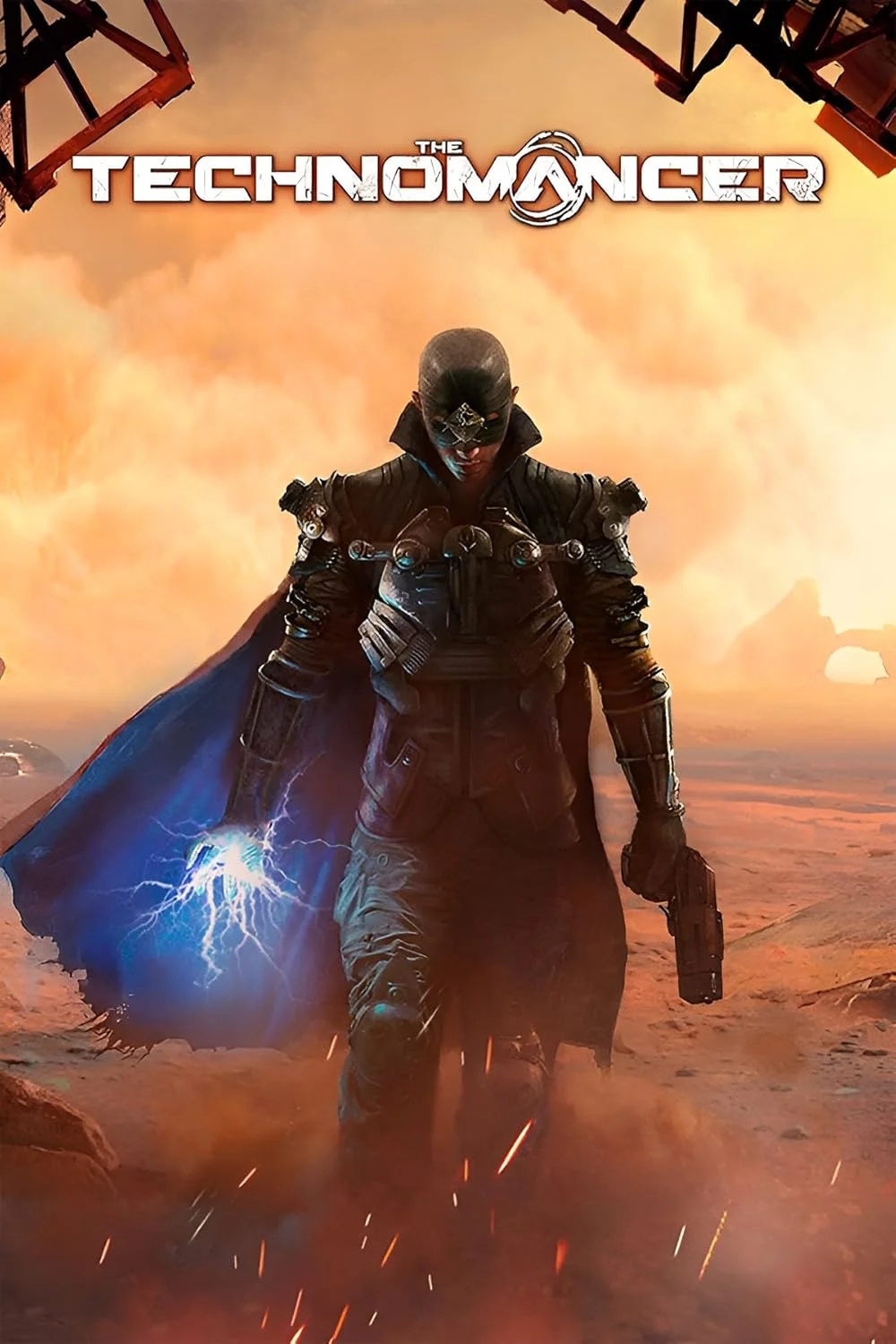
The Technomancer
This combination provides smooth gameplay with an average of 60 FPS, suitable for most gaming scenarios.
Average FPS: resolution vs quality settings
| Ultra | High | Medium | Low | |
|---|---|---|---|---|
| 4K Ultra HD | 22 | 29 | 33 | 44 |
| 1440p QHD | 41 | 52 | 61 | 79 |
| 1080p Full HD | 62 | 80 | 93 | 121 |
Cell color: green is 120+ FPS, teal is 60+, amber is 30+, red is below 30.
The Technomancer with AMD Ryzen 5 3600 + Intel Arc B570, In-Depth Analysis
The Technomancer, a 2016 action RPG, presents a demanding workload that scales steeply with resolution. Testing the AMD Ryzen 5 3600 paired with the Intel Arc B570 reveals a combination that is clearly capable at 1080p, adequate at 1440p, but struggles to maintain playable frame rates at 4K. The measured data shows a consistent pattern: as pixel count increases, the GPU becomes the primary bottleneck, while at lower resolutions the CPU’s six-core, twelve-thread design proves sufficient to keep frame rates high.
Resolution Scaling
The frame rate drop from 1080p to 4K is severe and tells a clear story about which component is limiting performance. At 1080p with High settings, the combo averages 80 FPS. Stepping up to 1440p High drops that to 52 FPS, a reduction of 28 FPS or 35%. Moving from 1440p to 4K High sees a further decline to 29 FPS, another 23 FPS or 44% drop. The overall scaling from 1080p High to 4K High is a 51 FPS loss, meaning the 4K result is just 36% of the 1080p figure.
This pattern is consistent across every settings preset. At Low settings, 1080p delivers 121 FPS, 1440p delivers 79 FPS, and 4K delivers 44 FPS. The drop from 1080p to 1440p is 42 FPS, and from 1440p to 4K is 35 FPS. At Medium, the numbers are 93 FPS at 1080p, 61 FPS at 1440p, and 33 FPS at 4K. Ultra shows 62 FPS at 1080p, 41 FPS at 1440p, and 22 FPS at 4K. In every case, the largest absolute drop occurs between 1080p and 1440p, but the relative penalty from 1440p to 4K is often larger, particularly at High and Ultra settings.
The data indicates that the Intel Arc B570’s 10 GB of GDDR6 memory and 380.0 GB/s bandwidth are sufficient for 1080p and 1440p, but the sheer pixel throughput required at 3840x2160 overwhelms the GPU. The Arc B570’s 11.52 TFLOPS of FP32 compute and 200.0 GPixel/s pixel rate are simply not enough to maintain fluid motion at 4K in this title. The Ryzen 5 3600, with its 3.60 GHz base and 4.20 GHz boost clocks, does not appear to be the limiting factor at any resolution; the frame rate differences track almost entirely with the GPU’s workload. At 1080p Low, the 121 FPS average suggests the CPU is still feeding the GPU adequately, and even at 1080p Ultra the 62 FPS result is likely GPU-bound given the 4K Ultra result of just 22 FPS.
For practical purposes, 4K is not a viable target for this pairing in The Technomancer. The best 4K result is 44 FPS at Low settings, which is below the 60 FPS threshold most players prefer. The 4K Medium result of 33 FPS is borderline unplayable for an action RPG, and Ultra at 22 FPS is a slideshow. The sweet spot is clearly 1440p, where the combo delivers between 41 and 79 FPS depending on settings, or 1080p, where it never drops below 62 FPS even at Ultra.
FAQ
Q: Can this CPU and GPU combination run The Technomancer at 4K?
A: Technically yes, but not well. The measured data shows 4K averages of 44 FPS at Low, 33 FPS at Medium, 29 FPS at High, and 22 FPS at Ultra. None of these reach a smooth 60 FPS, and even the best case (Low) is below ideal for an action RPG.
Q: What is the best resolution for this combo if I want a consistent 60 FPS?
A: 1080p is the only resolution where 60 FPS is achievable across all settings. The lowest 1080p result is 62 FPS at Ultra, with Medium at 93 FPS and Low at 121 FPS. At 1440p, only Low (79 FPS) and Medium (61 FPS) break 60 FPS; High (52 FPS) and Ultra (41 FPS) fall short.
Q: How much performance is lost when moving from 1080p to 1440p?
A: The loss depends on settings. At Low, the drop is from 121 to 79 FPS, a 42 FPS reduction. At Medium, it drops from 93 to 61 FPS. At High, from 80 to 52 FPS. At Ultra, from 62 to 41 FPS. The relative loss is roughly 34-35% across all presets.
Q: Is the Ryzen 5 3600 or the Intel Arc B570 the bottleneck?
A: The data suggests the GPU is the bottleneck at higher resolutions. At 1080p Low, the combo reaches 121 FPS, indicating the CPU can push high frame rates. The steep decline to 4K (44 FPS at Low) aligns with the GPU’s compute and memory bandwidth limits. The Ryzen 5 3600’s 12 threads and 32 MB of L3 cache appear sufficient for this game’s CPU demands.
Q: How does the Arc B570’s 10 GB VRAM factor into performance?
A: The 10 GB GDDR6 memory with a 160-bit bus and 380.0 GB/s bandwidth is enough for 1080p and 1440p, where frame rates are respectable. At 4K, the memory bandwidth and capacity are likely stressed, contributing to the low averages. The GPU’s 80 ROPs also limit pixel fill at high resolutions, which is visible in the heavy frame rate penalties.
Q: What is the expected frame time consistency based on the data?
A: Only the Medium settings rows include min/max FPS data. At 1080p Medium, the range is 79 to 107 FPS around a 93 FPS average, showing some variance but generally smooth. At 1440p Medium, the range is 52 to 70 FPS around a 61 FPS average. At 4K Medium, the range is 28 to 39 FPS around a 33 FPS average, which indicates stutter-prone performance.
GPU Role
The Intel Arc B570 is the decisive component in this pairing. Its specifications—2304 shading units, 144 TMUs, and 80 ROPs—determine how The Technomancer renders geometry and effects. The 80 ROPs are particularly relevant for a game with significant post-processing, as pixel throughput at 4K becomes a major constraint. The GPU’s 2500 MHz base and boost clocks are identical, meaning no dynamic clock headroom; the card runs at a fixed frequency. This is unusual and means performance is purely a function of the architecture’s efficiency at that clock.
The 10 GB VRAM is a key specification. The Technomancer, released in 2016, was designed for GPUs with far less memory, so 10 GB is ample for 1080p and 1440p. However, the memory bus width of 160 bit and bandwidth of 380.0 GB/s are moderate by modern standards. At 4K, the higher texture loads and resolution-specific buffers consume more bandwidth, and the measured FPS drops suggest the memory subsystem cannot keep up. The 4K Medium result of 33 FPS, compared to 4K High at 29 FPS, shows that even reducing settings only yields a 4 FPS improvement, indicating a hard bandwidth or fill-rate ceiling.
The GPU’s FP32 throughput of 11.52 TFLOPS is respectable for a mid-range card, and the texture rate of 360.0 GTexel/s is sufficient for the game’s art style. Yet, the 4K results are uniformly poor. The best 4K average is 44 FPS at Low, which is 36% lower than the 1080p Low result of 121 FPS. This scaling is much worse than what a purely compute-bound workload would show, reinforcing that pixel fill and memory bandwidth are the limiting factors. The GPU’s Passmark G3D score of 14195 places it in the 65th percentile of all GPUs, which aligns with its mid-range positioning. Its nearest rival, the Intel Arc A750, scores nearly identically (20582 vs. 20556 average benchmark score), suggesting the B570 is a slightly trimmed version of that chip.
In practical terms, the Arc B570 behaves like a 1080p and 1440p card for this game. At 1080p Ultra, it delivers 62 FPS, which is playable. At 1440p High, it manages 52 FPS, which is acceptable for a slower-paced title but not ideal for action. The GPU’s 150 W TDP and 1x 8-pin power connector suggest it is a power-efficient design, but that efficiency does not translate to high-end 4K performance. The data shows that any attempt to run The Technomancer at 4K with this GPU will result in sub-45 FPS average, regardless of settings.
Settings Recommendations
Based on the measured FPS rows, the best balance of visual quality and performance depends on the target resolution. For 1080p, Ultra settings are the clear choice. The average of 62 FPS is above the 60 FPS threshold, and the visual uplift from High (80 FPS) to Ultra (62 FPS) is worth the modest frame rate cost. The game remains smooth, and the GPU has headroom to spare—even at Ultra, the 1080p average is higher than the 1440p High result.
For 1440p, the decision is tighter. High settings produce 52 FPS, which is playable but not silky smooth. Medium settings deliver 61 FPS, which is a better target for consistent 60 FPS performance. The measured min/max for Medium (52 to 70 FPS) shows some variance, but the average is solid. Dropping to Low gives 79 FPS, which is overkill for visual quality. The recommendation is Medium at 1440p, as it provides a good balance—the 61 FPS average is 9 FPS higher than High, and the visual difference between Medium and High in a game from 2016 is likely minimal. Ultra at 1440p (41 FPS) is not recommended, as it sacrifices too much fluidity for marginal graphical gains.
At 4K, no settings preset delivers a satisfactory experience. Low settings yield 44 FPS, which is below the 60 FPS target and will feel sluggish in combat. Medium drops to 33 FPS, and High to 29 FPS. Ultra is a non-starter at 22 FPS. If 4K is the only option, Low is the least bad choice, but the data clearly shows this combo is not suited for 4K in The Technomancer. The 44 FPS at Low is 35% lower than the 1440p Medium result, and the visual degradation from Low settings is likely noticeable. For most players, the better move is to run 1440p Medium or 1080p Ultra.
Looking at the full picture, the settings ladder shows diminishing returns. At 1080p, the jump from Medium (93 FPS) to Ultra (62 FPS) is a 31 FPS cost for higher fidelity. At 1440p, the jump from Medium (61 FPS) to Ultra (41 FPS) is a 20 FPS cost. At 4K, the jump from Low (44 FPS) to Ultra (22 FPS) is a 22 FPS cost. The game’s Ultra preset appears to enable effects that are disproportionately expensive at higher resolutions. The measured data does not include a min/max for Ultra or Low, but the Medium rows show that frame time consistency is acceptable at 1080p and 1440p, with the 4K Medium range of 28 to 39 FPS being the most erratic.
How This Combo Ranks
The combination of the AMD Ryzen 5 3600 and Intel Arc B570 ranks 2256 out of 2825 tested combos in The Technomancer. This places it in the bottom 20% of all pairings, which is a sobering statistic. The rank reflects the fact that this game’s performance is heavily GPU-bound, and the Arc B570, while competent at lower resolutions, is not a high-end card. The CPU’s percentile rank of 71 (meaning it outperforms 71% of all CPUs) is strong, but that does not translate to a good combo rank because the GPU holds things back.
The GPU’s percentile rank of 65 is lower than the CPU’s, and this mismatch is the core issue. The Ryzen 5 3600 is capable of feeding a much faster GPU, as evidenced by its Cinebench R23 multicore score of 15045 and Passmark multithread score of 17700. The Arc B570, with its Passmark G3D score of 14195, is a mid-pack performer. In a game like The Technomancer, which stresses raw pixel throughput and memory bandwidth, the GPU’s limitations dominate. The combo rank of 2256 out of 2825 means that a majority of tested pairings achieve better frame rates, likely because they use faster GPUs.
Comparing to the CPU’s nearest rivals, the Ryzen 5 3600 is virtually tied with the Intel Core i7-1260P (0.2% delta), Intel Core i5-11400 (-0.2% delta), AMD EPYC 7573X (-0.2% delta), and AMD EPYC 7742 (0.2% delta). This suggests that swapping the CPU for any of these would not change the combo’s ranking in this game, as the GPU would remain the bottleneck. On the GPU side, the Arc B570 is nearly identical to the Intel Arc A750 (-0.1% delta) and NVIDIA GeForce RTX 3070 Mobile (0.1% delta). An Arc A750 would likely produce nearly identical FPS in The Technomancer, meaning the combo rank would not improve meaningfully.
The 2256 rank is a reflection of the GPU’s 4K weakness. At 1080p and 1440p, the combo performs admirably, but the benchmark likely aggregates results across all resolutions and settings, pulling the rank down. The data shows that this pairing is a solid 1080p machine and a decent 1440p machine, but it cannot compete with combos that feature higher-tier GPUs at 4K. For a builder targeting 1080p, this rank is misleading; the actual measured FPS at 1080p are competitive. But for anyone expecting 4K capability, the rank is a fair warning.
Measured FPS Breakdown
The complete measured frame rate data is as follows, organized by resolution and settings.
1920x1080 (1080p):
- Low: 121 FPS average
- Medium: 93 FPS average, with a minimum of 79 FPS and maximum of 107 FPS
- High: 80 FPS average
- Ultra: 62 FPS average
At 1080p, the combo delivers strong performance across the board. The Low setting’s 121 FPS shows that the Ryzen 5 3600 can push high frame rates when the GPU is not heavily taxed. The Medium setting’s min/max range (79-107 FPS) indicates some frame time variance, but the 93 FPS average is smooth. High at 80 FPS and Ultra at 62 FPS both clear the 60 FPS threshold, making Ultra the best choice for visual fidelity without sacrificing playability.
2560x1440 (1440p):
- Low: 79 FPS average
- Medium: 61 FPS average, with a minimum of 52 FPS and maximum of 70 FPS
- High: 52 FPS average
- Ultra: 41 FPS average
At 1440p, the performance is more varied. Low settings produce a very playable 79 FPS, and Medium at 61 FPS is just above the 60 FPS line. The Medium min/max range (52-70 FPS) shows that dips below 60 will occur, but the average is acceptable. High at 52 FPS is borderline, and Ultra at 41 FPS is too slow for an action RPG. The drop from Medium to High is 9 FPS, and from High to Ultra is 11 FPS, showing that the Ultra preset is particularly expensive.
3840x2160 (4K):
- Low: 44 FPS average
- Medium: 33 FPS average, with a minimum of 28 FPS and maximum of 39 FPS
- High: 29 FPS average
- Ultra: 22 FPS average
At 4K, the combo is clearly out of its depth. Low settings deliver 44 FPS, which is below the 60 FPS target and will feel choppy. Medium at 33 FPS is barely playable, with a min/max range of 28-39 FPS indicating frequent stuttering. High at 29 FPS and Ultra at 22 FPS are effectively unplayable. The scaling from Low to Ultra is a 22 FPS drop, which shows that even the highest settings do not offer meaningful visual improvements at this resolution when the base performance is so low.
The data reveals a consistent pattern: each resolution step costs roughly 30-40% of the frame rate, with the largest absolute drops occurring between 1080p and 1440p. The 4K results are uniformly below 45 FPS, confirming that this combo is not designed for 4K gaming in The Technomancer. The Medium setting’s min/max data at 4K (28-39 FPS) is the most telling, as it shows the GPU struggling to maintain even a stable 30 FPS. For any player, the measured FPS breakdown makes it clear that 1080p Ultra or 1440p Medium are the only sensible configurations for this pairing.
Hardware Specifications
AMD Ryzen 5 3600
Intel Arc B570
FPS Benchmarks by Resolution & Settings
Performance data for AMD Ryzen 5 3600 + Intel Arc B570 in The Technomancer
| Resolution | Settings | Avg FPS |
|---|---|---|
| 3840x2160 | Low | 44.0 |
| 3840x2160 | Medium | 33.0 |
| 3840x2160 | High | 29.0 |
| 3840x2160 | Ultra | 22.0 |
| 2560x1440 | Low | 79.0 |
| 2560x1440 | Medium | 61.0 |
| 2560x1440 | High | 52.0 |
| 2560x1440 | Ultra | 41.0 |
| 1920x1080 | Low | 121.0 |
| 1920x1080 | Medium | 93.0 |
| 1920x1080 | High | 80.0 |
| 1920x1080 | Ultra | 62.0 |
The Technomancer with Ryzen 5 3600 + Other GPUs
See how The Technomancer performs with the same CPU but different graphics cards.
The Technomancer with Arc B570 + Other CPUs
See how The Technomancer performs with the same GPU but different processors.
Other Games with Ryzen 5 3600 + Arc B570
Explore FPS benchmarks for other games using this same hardware combination.