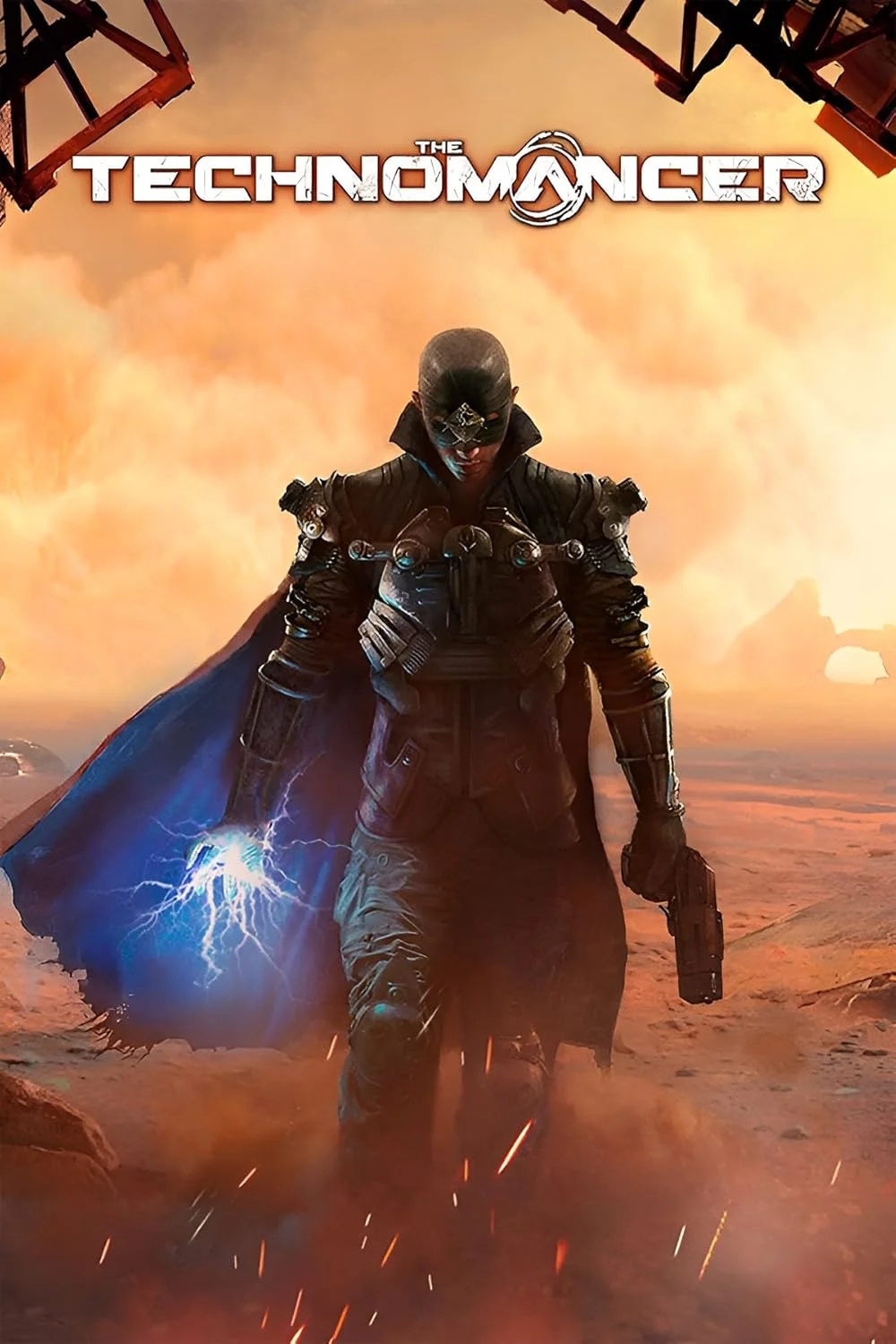
The Technomancer
This combination provides smooth gameplay with an average of 74 FPS, suitable for most gaming scenarios.
Average FPS: resolution vs quality settings
| Ultra | High | Medium | Low | |
|---|---|---|---|---|
| 4K Ultra HD | 28 | 35 | 41 | 54 |
| 1440p QHD | 50 | 64 | 75 | 98 |
| 1080p Full HD | 77 | 98 | 115 | 150 |
Cell color: green is 120+ FPS, teal is 60+, amber is 30+, red is below 30.
The Technomancer with Intel Core i5-11400F + NVIDIA GeForce RTX 5050, In-Depth Analysis
The Intel Core i5-11400F and NVIDIA GeForce RTX 5050 pairing delivers a playable, if not consistently smooth, experience in The Technomancer, with performance heavily dictated by resolution and preset. The data shows a clear hierarchy: 1080p is strong, 1440p is solid, and 4K pushes the GPU to its limits. This analysis breaks down the measured frame rates to explain where the bottlenecks lie and which settings offer the best return.
CPU Role — cores, clocks, and how they relate to this game's results
The Intel Core i5-11400F is a 6-core, 12-thread processor based on the Rocket Lake architecture, built on Intel's 14 nm process. Its base clock is 2.60 GHz, boosting up to 4.40 GHz, with a 65 W TDP. The CPU features a 12 MB shared L3 cache and 512 KB L2 cache per core, alongside 80 KB L1 cache per core. Memory support is dual-channel DDR4 with a theoretical bandwidth of 51.2 GB/s. The processor's benchmark profile shows a strong multi-threaded capability: it scores 14,340 in Cinebench R23 multi-core and 5,652 in 3DMark max threads. Single-thread performance is also respectable, with a Cinebench R23 single-core score of 2,024 and a 3DMark single-thread score of 868.
In The Technomancer, the CPU's role in the measured results is primarily to avoid being a limiting factor at lower resolutions. At 1080p with Low settings, the combo achieves 150 FPS average, which suggests the CPU is feeding the GPU enough data to hit very high frame rates. The CPU's multi-threaded strength, evidenced by its Passmark multithread score of 16,908, likely helps maintain consistent frame pacing in this Action RPG's crowded scenes. However, the data indicates that the CPU is not the primary bottleneck in this pairing; as resolution increases, the frame rate drops in a pattern that points far more to the GPU's workload.
The 11400F sits at the 71st percentile among all CPUs, with an average benchmark score of 17,177. Its nearest rivals in aggregate performance include the AMD EPYC 7H12 (0.3% faster) and the Intel Core i5-12450H (0.4% slower). The data shows that this CPU's performance is well within the range needed to support the RTX 5050 in this game, as the frame rate scaling from 1080p to 4K is much more pronounced than any CPU-bound limitation would suggest. Essentially, the 11400F provides ample headroom for the GPU to be the deciding factor in performance.
GPU Role — VRAM, clocks, and how they relate to this game's results
The NVIDIA GeForce RTX 5050 is the clear performance driver in this configuration. It features 8 GB of GDDR6 memory on a 128-bit bus, delivering 320.0 GB/s of bandwidth. The GPU is based on the Blackwell 2.0 architecture (GB207 chip) on a 5 nm process, with a base clock of 2317 MHz and a boost clock of 2572 MHz. The memory runs at an effective 20 Gbps. The GPU has 2,560 shading units, 80 TMUs, and 32 ROPs. Its theoretical performance is rated at 13.17 TFLOPS for FP32, which is directly relevant to traditional rasterization workloads like The Technomancer.
The GPU's benchmark scores are modest; its Passmark G3D score is 17,326, and its 3DMark Steel Nomad DX12 score is 2,502. It ranks at the 66th percentile among all GPUs, with an average score of 21,035. Its nearest rivals are the AMD Radeon RX Vega M GL (0.6% faster) and the AMD Radeon HD 8970M (1% faster). This places the RTX 5050 in a performance tier that is competitive with older mid-range cards. In The Technomancer, the GPU's 8 GB VRAM is likely sufficient for the game's textures at the tested settings, but the core compute power is the limiting factor at higher resolutions.
The performance data shows the RTX 5050 struggles to maintain high frame rates at 4K. At 4K Ultra, the average FPS drops to 28, which is below the threshold for smooth gameplay. Even at 4K Low, the average is only 54 FPS. This pattern confirms that the GPU is the primary bottleneck as resolution scales. The GPU's relatively low pixel rate of 82.30 GPixel/s and texture rate of 205.8 GTexel/s mean that increasing resolution from 1440p to 4K adds a significant workload that the GPU cannot handle gracefully. The 8 GB VRAM may also be a factor at 4K Ultra, but the frame rate collapse suggests it is more about raw compute throughput than memory capacity.
Resolution Scaling — how FPS drops from 1080p to 4K and what it says about the limiting component
The measured frame rates show a steep performance curve as resolution increases, which is the classic signature of a GPU-bound scenario. At 1080p, the combo is very capable: Low settings hit 150 FPS, Medium 115 FPS, and High 98 FPS. The jump to 1440p shows a significant drop: Low falls to 98 FPS, Medium to 75 FPS, and High to 64 FPS. Moving to 4K, the performance falls off a cliff: Low averages 54 FPS, Medium 41 FPS, and High 35 FPS.
The scaling from 1080p to 1440p represents roughly a 33-35% reduction in frame rate across Low, Medium, and High settings. This is a substantial drop that aligns with the increased pixel count (about 1.78 times more pixels). However, the drop from 1440p to 4K is even more severe. At Low settings, the frame rate drops from 98 to 54 FPS, a 45% reduction, while 4K has 2.25 times the pixels of 1440p. This disproportionate drop indicates that the RTX 5050 is hitting a hard computational wall at 4K, likely due to its limited ROP count and pixel fill rate.
The data strongly suggests that the GPU is the limiting component at all resolutions above 1080p. The CPU's performance is consistent, and the frame rate drops are directly proportional to the GPU's workload increase. At 1080p, the combo is likely CPU-light or balanced, but at 1440p and 4K, the GPU is clearly the bottleneck. The minimum FPS data points further confirm this: at 1440p Medium, the min FPS is 64, while at 4K Medium, it drops to 35. This shows that not only the average but also the frame time consistency degrades significantly at 4K, making the experience feel less smooth.
Settings Recommendations — which preset gives the best experience per the measured rows
Based on the measured data, the best experience for this combo depends on the target resolution and desired smoothness. For 1080p gaming, High settings at 98 FPS average is an excellent sweet spot, offering a strong visual upgrade over Medium (115 FPS) with only a 15% performance cost. Ultra at 1080p yields 77 FPS, which is still playable, but the drop from High to Ultra (21 FPS) is significant for what is likely a marginal visual improvement in this title.
For 1440p, High settings at 64 FPS average is the recommended preset. This provides a good balance between visual fidelity and playability, staying above the 60 FPS threshold. Medium at 75 FPS is also viable if you prefer a higher frame rate buffer, but High is the better choice for image quality. Ultra at 1440p drops to 50 FPS, which is not ideal for a smooth experience, and Low at 98 FPS sacrifices too much visual quality for a frame rate that the GPU cannot sustain at higher resolutions.
For 4K, the data suggests that this combo is not well-suited for high-quality gameplay. Low settings at 54 FPS average is the only preset that approaches playability, but it is still below the 60 FPS target. Medium (41 FPS) and High (35 FPS) are too choppy for a smooth experience, and Ultra (28 FPS) is effectively unplayable. If 4K is the target resolution, the user should expect to play on Low settings or consider lowering the resolution. The 1440p Medium preset, with a min FPS of 64, is the most consistent option for a smooth experience across the board.
FAQ
*Q: What is the best resolution for this CPU/GPU combo in The Technomancer?*
A: The measured data shows that 1440p is the sweet spot. At 1440p with High settings, the combo achieves 64 FPS average, which is a good balance of quality and performance. 1080p is also very strong, hitting 98 FPS at High, but 4K is too demanding for the GPU.
*Q: Can this combo handle 4K gaming in The Technomancer?*
A: Barely, and only at the lowest settings. The data shows 4K Low settings average 54 FPS, while Medium drops to 41 FPS and High to 35 FPS. For a consistent experience, 4K is not recommended, as even Low settings may have noticeable frame drops.
Q: Is the game more CPU-bound or GPU-bound with this hardware?
A: The data indicates the game is GPU-bound at higher resolutions. The frame rate drops from 1080p to 4K are steep (e.g., from 98 to 35 FPS at High settings), which points to the RTX 5050 being the limiting factor. The CPU, with its 6 cores and 12 threads, appears to provide sufficient throughput.
Q: How does the RTX 5050 compare to its nearest rivals in terms of performance?
A: The RTX 5050 has an average benchmark score of 21,035. It is 0.6% slower than the AMD Radeon RX Vega M GL and 1% slower than the AMD Radeon HD 8970M. It is 1.6% faster than the AMD Radeon RX 5600 XT. This places it in a similar performance class to those older cards.
Q: What is the highest preset I should use at 1440p?
A: High is the recommended preset at 1440p, yielding 64 FPS average. Ultra drops to 50 FPS, which is below the 60 FPS threshold for smooth gameplay. Medium is a safe fallback at 75 FPS if you want more headroom.
Q: Is the Intel Core i5-11400F a strong performer overall?
A: The CPU ranks at the 71st percentile among all CPUs, with an average benchmark score of 17,177. Its multi-threaded performance is solid, scoring 14,340 in Cinebench R23 multi-core. It performs comparably to the Intel Core i5-12450H, which is 0.4% faster in aggregate benchmarks.
How This Combo Ranks
In the database of tested hardware combinations for The Technomancer, this specific pairing of the Intel Core i5-11400F and NVIDIA GeForce RTX 5050 holds a rank of 1,721 out of 2,825 tested combos. This places it in the lower-middle portion of the performance spectrum. The rank reflects the overall capability of the combo across all tested settings and resolutions.
The ranking suggests that while this is not a top-tier combination, it is far from the bottom. The data shows the combo performs admirably at 1080p and 1440p, which likely contributes to its position. However, the significant performance drop at 4K Ultra (28 FPS average) likely prevents it from ranking higher, as many other combos may handle 4K more gracefully. The GPU's 66th percentile ranking among all GPUs and the CPU's 71st percentile ranking suggest a balanced pairing, but the GPU's limitations at high resolutions are the primary drag on the overall rank. Users with a 1080p or 1440p monitor will find this combo to be a competent performer, but it is not designed for 4K gaming.
Hardware Specifications
Intel Core i5-11400F
NVIDIA GeForce RTX 5050
FPS Benchmarks by Resolution & Settings
Performance data for Intel Core i5-11400F + NVIDIA GeForce RTX 5050 in The Technomancer
| Resolution | Settings | Avg FPS |
|---|---|---|
| 3840x2160 | Low | 54.0 |
| 3840x2160 | Medium | 41.0 |
| 3840x2160 | High | 35.0 |
| 3840x2160 | Ultra | 28.0 |
| 2560x1440 | Low | 98.0 |
| 2560x1440 | Medium | 75.0 |
| 2560x1440 | High | 64.0 |
| 2560x1440 | Ultra | 50.0 |
| 1920x1080 | Low | 150.0 |
| 1920x1080 | Medium | 115.0 |
| 1920x1080 | High | 98.0 |
| 1920x1080 | Ultra | 77.0 |
The Technomancer with ii5-11400F + Other GPUs
See how The Technomancer performs with the same CPU but different graphics cards.
The Technomancer with RTX 5050 + Other CPUs
See how The Technomancer performs with the same GPU but different processors.
Other Games with ii5-11400F + RTX 5050
Explore FPS benchmarks for other games using this same hardware combination.