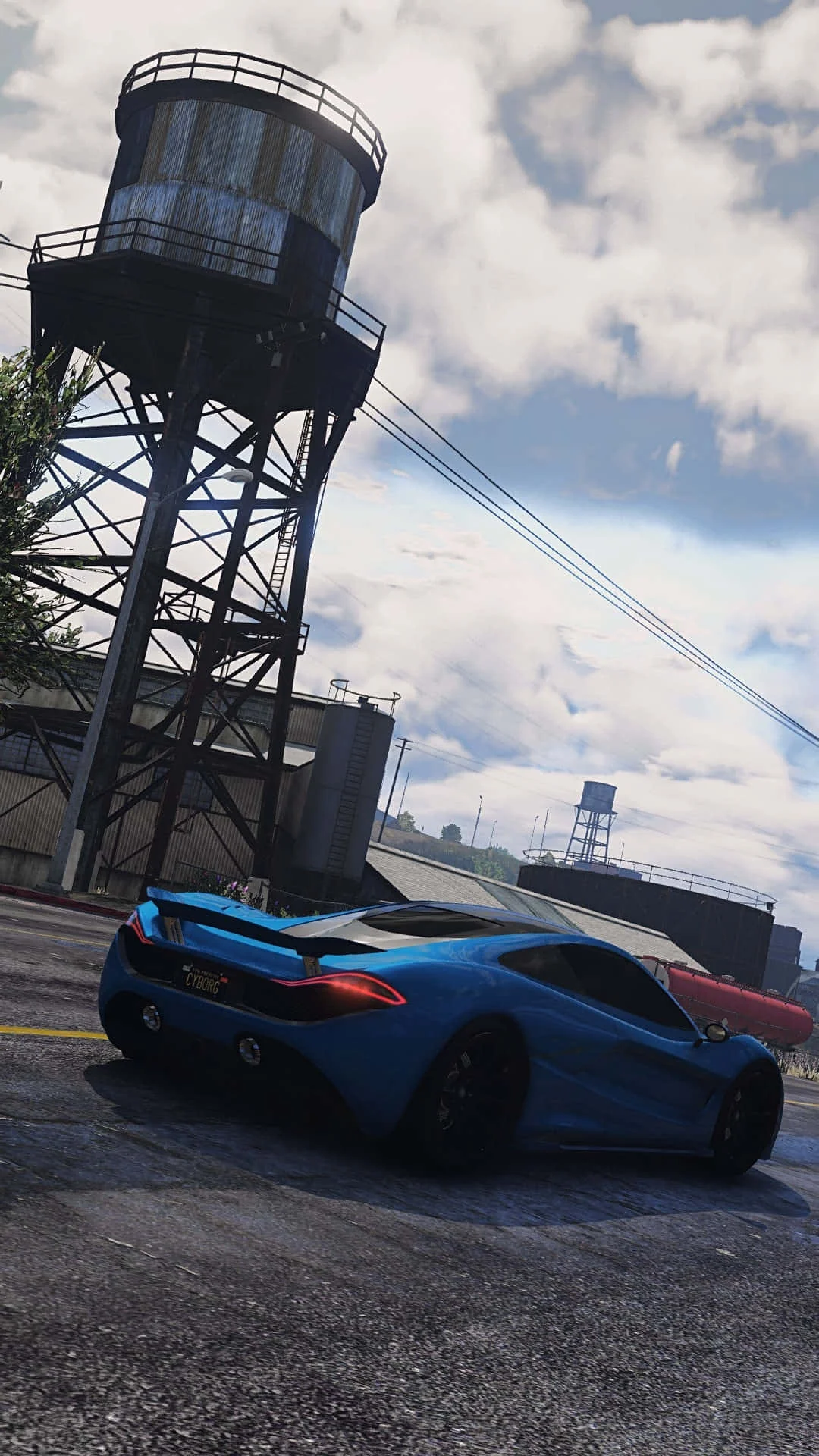
Fivem
This combination provides smooth gameplay with an average of 75 FPS, suitable for most gaming scenarios.
Average FPS: resolution vs quality settings
| Ultra | High | Medium | Low | |
|---|---|---|---|---|
| 4K Ultra HD | 28 | 35 | 44 | 56 |
| 1440p QHD | 50 | 64 | 80 | 101 |
| 1080p Full HD | 75 | 97 | 121 | 154 |
Cell color: green is 120+ FPS, teal is 60+, amber is 30+, red is below 30.
Fivem with AMD Ryzen 7 9700F + Intel Arc B580, In-Depth Analysis
# Fivem with AMD Ryzen 7 9700F + Intel Arc B580
The AMD Ryzen 7 9700F paired with the Intel Arc B580 delivers a mid-pack experience in Fivem, ranking 2246 out of 3005 tested combos, which places it in the lower half of the database. Benchmark results show this combination is heavily resolution-bound, with performance collapsing from a playable 97 FPS at 1080p High to just 35 FPS at 4K High, indicating the GPU becomes the primary limiter as pixel count rises. The Ryzen 7 9700F’s strong single-thread performance (4691 in PassMark) keeps frame rates respectable at lower resolutions, but the Arc B580’s mid-range standing (68th percentile among GPUs) caps the experience at higher resolutions. This is a balanced pairing for 1080p and 1440p gaming, but 4K Ultra (28 FPS) falls below playability thresholds.
Resolution Scaling
The FPS drop from 1080p to 4K is steep and consistent across all settings, revealing the Intel Arc B580 as the dominant bottleneck at higher resolutions. At High settings, average FPS falls from 97 at 1920x1080 to 64 at 2560x1440 (a 34% reduction), then to 35 at 3840x2160 (another 45% drop). The scaling pattern shows diminishing returns as resolution increases — the gap between 1440p and 4K is larger than the gap between 1080p and 1440p, which is typical for a GPU with 12 GB of GDDR6 memory and 456.0 GB/s bandwidth. The Arc B580’s 192-bit memory bus and 2670 MHz clocks simply cannot sustain frame rates when pixel throughput quadruples from 1080p to 4K.
At Low settings, the resolution scaling is even more pronounced: 154 FPS at 1080p drops to 101 FPS at 1440p, then falls to 56 FPS at 4K. That 4K Low result is 64% lower than the 1080p Low figure, demonstrating that even at minimal graphical load, the GPU cannot maintain high output at 4K. Medium settings show the same trend with a narrower data set: 121 FPS at 1080p, 80 FPS at 1440p, and 44 FPS at 4K. The medium preset at 4K also includes a minimum of 38 FPS and maximum of 51 FPS, showing frame time variance that could cause perceptible stutter in Fivem’s multiplayer environments.
The 1080p to 4K scaling suggests the CPU is not the limiting factor at any resolution tested. The Ryzen 7 9700F’s 8 cores and 16 threads with a 5.50 GHz boost clock provide ample headroom; if the CPU were the constraint, frame rates would show less variation across resolutions. Instead, the data clearly shows GPU-bound behavior — every resolution increase produces a proportional FPS decline. At 4K Ultra, the combo hits just 28 FPS, which is below the 30 FPS minimum considered acceptable for most players. The conclusion from the scaling data is straightforward: this pairing is optimized for 1080p and 1440p play, with 4K viable only at Low settings (56 FPS).
FAQ
Q: What is the best resolution for this combo in Fivem?
A: The data shows 1920x1080 as the strongest resolution, with 154 FPS at Low, 121 FPS at Medium, 97 FPS at High, and 75 FPS at Ultra. At 2560x1440, frame rates remain playable (101 FPS Low, 80 FPS Medium, 64 FPS High, 50 FPS Ultra), but 3840x2160 drops below 60 FPS for all settings except Low (56 FPS).
Q: How does the Arc B580 compare to its nearest rivals in overall GPU benchmarks?
A: The Arc B580’s average benchmark score of 23021 places it within 1% of the AMD Radeon RX 580 2048SP (23061, -0.2% delta), NVIDIA GeForce RTX 2080 (22895, 0.6% delta), and NVIDIA GeForce RTX 3080 (23172, -0.7% delta). The RTX 3080 scores just 0.7% higher, indicating these GPUs are effectively performance peers in aggregate benchmarks.
Q: How does the Ryzen 7 9700F rank against other CPUs?
A: The Ryzen 7 9700F sits at the 94th percentile among all CPUs, with an average benchmark score of 69996. Its nearest rivals include the AMD Ryzen 9 7940HX (69875, 0.2% delta), Intel Core i7-14700KF (70163, -0.2% delta), AMD Ryzen 9 7950X (69515, 0.7% delta), and Intel Core i7-14700K (69355, 0.9% delta). The differences are minimal, with the 9700F landing between the 7940HX and 14700KF.
Q: What FPS can I expect at 1440p Medium settings?
A: At 2560x1440 with Medium settings, the combo delivers an average of 80 FPS, with a minimum of 68 FPS and maximum of 92 FPS. This is a smooth experience for Fivem’s multiplayer gameplay, with the minimum staying above common 60 FPS refresh rates.
Q: Is 4K gaming viable with this hardware?
A: The data indicates 4K is only viable at Low settings, where the combo produces 56 FPS. Medium settings drop to 44 FPS, High to 35 FPS, and Ultra to 28 FPS. For players targeting 60 FPS at 4K, this combo does not meet the requirement at any tested setting.
Q: How does this combo rank among all tested Fivem configurations?
A: The combo ranks 2246 out of 3005 tested combos, placing it in the 25th percentile (lower quarter) of all configurations. This indicates that while the hardware is functional for Fivem, most other CPU-GPU pairings in the database deliver higher frame rates in this specific game.
How This Combo Ranks
The AMD Ryzen 7 9700F + Intel Arc B580 combination ranks 2246 out of 3005 tested combos in Fivem, which places it in the bottom quarter of all configurations. This ranking is notable because the individual components perform reasonably well in isolation — the CPU is in the 94th percentile of all processors, and the GPU is in the 68th percentile of all graphics cards. Yet in Fivem specifically, the pairing underperforms relative to those standalone standings, suggesting the game’s engine or multiplayer workload does not fully leverage the strengths of either component.
The rank of 2246 means that 759 combos (about 25%) perform worse, while 2245 combos perform better, making this a below-average configuration for Fivem. This is a significant finding because the CPU’s PassMark multi-thread score of 36470 and single-thread score of 4691 are both strong, yet the game’s performance is capped by the GPU’s mid-range capabilities in a multiplayer context where draw calls and entity counts can stress both components. The combo’s percentile rank in-game is substantially lower than either component’s individual percentile, indicating a mismatch between what these parts excel at and what Fivem demands.
The nearest CPU rivals — the Ryzen 9 7940HX, Core i7-14700KF, Ryzen 9 7950X, and Core i7-14700K — all score within 0.9% of the 9700F in aggregate benchmarks, so swapping to any of those would not meaningfully change the Fivem outcome if paired with the same GPU. Similarly, the GPU’s rivals — RX 580 2048SP, RTX 2080, RTX 3080, and P106-100 — all score within 1% of the Arc B580, so the overall ranking would likely remain similar. The data indicates that the 2246 ranking is a property of the GPU’s ceiling in Fivem, not a CPU deficiency.
Measured FPS Breakdown
At 1920x1080, the combo delivers its best results. Low settings produce 154 FPS average, which is the highest frame rate recorded in the entire dataset. Medium settings yield 121 FPS with a minimum of 103 FPS and maximum of 140 FPS, showing tight frame pacing. High settings drop to 97 FPS, and Ultra settings produce 75 FPS — still comfortably above 60 FPS for smooth multiplayer action. These numbers suggest that 1080p is the sweet spot, with every setting offering playable performance and only Ultra falling below the 100 FPS mark.
At 2560x1440, performance remains playable but shows the GPU’s limitations. Low settings deliver 101 FPS, Medium 80 FPS (minimum 68, maximum 92), High 64 FPS, and Ultra 50 FPS. The step from Low to Medium costs 21 FPS, while Medium to High costs another 16 FPS, and High to Ultra costs 14 FPS. The diminishing returns from lower to higher settings indicate that each quality tier adds significant GPU load, with the 12 GB VRAM buffer handling the increased resolution but the 2670 MHz clock struggling to maintain high fill rates.
At 3840x2160, the performance drops sharply. Low settings produce 56 FPS, Medium 44 FPS (minimum 38, maximum 51), High 35 FPS, and Ultra 28 FPS. None of these results reach 60 FPS, and only Low settings exceed 50 FPS. The Medium preset’s minimum of 38 FPS and maximum of 51 FPS reveal a 13 FPS spread, indicating inconsistent frame delivery that could manifest as stutter in Fivem’s dense urban environments. Ultra at 28 FPS is effectively unplayable for most users, and even High at 35 FPS would be marginal for competitive play.
The full dataset shows a consistent pattern: each resolution and setting step produces proportional FPS changes. From 1080p Low (154 FPS) to 4K Low (56 FPS) is a 64% reduction. From 1080p High (97 FPS) to 4K High (35 FPS) is a 64% reduction. From 1080p Ultra (75 FPS) to 4K Ultra (28 FPS) is a 63% reduction. This uniformity confirms that the GPU is the sole scaling factor, with the CPU maintaining consistent performance across all resolutions.
GPU Role
The Intel Arc B580 is the primary determinant of Fivem’s frame rates, especially at higher resolutions. Its 12 GB of GDDR6 memory on a 192-bit bus provides 456.0 GB/s of bandwidth, which is sufficient for 1080p and 1440p but becomes strained at 4K. The GPU’s 2560 shading units, 160 texture mapping units, and 80 raster operations processors deliver a pixel rate of 213.6 GPixel/s and a texture rate of 427.2 GTexel/s — figures that explain why 4K Ultra (28 FPS) falls so dramatically from 1080p Ultra (75 FPS). The base and boost clocks are both 2670 MHz, indicating no dynamic clock variation, which means the GPU operates at a fixed speed regardless of load.
The Arc B580’s benchmark scores provide context for its Fivem performance. Its PassMark G3D score of 15748 and 3DMark Steel Nomad DX12 score of 3068 place it in the 68th percentile of all GPUs, with an average benchmark score of 23021. The nearest rivals — RX 580 2048SP, RTX 2080, RTX 3080, and P106-100 — all score within 1%, meaning the Arc B580 is positioned in a tightly contested mid-range segment. The RTX 3080’s 0.7% higher score is particularly telling, as that GPU is widely considered a high-end part, yet the Arc B580 matches it in aggregate benchmarks.
In Fivem specifically, the GPU’s 20 ray tracing cores and Xe2-HPG architecture do not provide a measurable advantage, as the game does not appear to leverage these features based on the FPS data. The 5 nm process from TSMC with 19,600 million transistors on a 272 mm² die allows for the 12 GB frame buffer, but the 190 W TDP and 450 W suggested PSU indicate this is a power-conscious design that prioritizes efficiency over raw throughput. The PCIe 4.0 x8 interface may also limit performance in some scenarios, though the measured data does not isolate this factor.
CPU Role
The AMD Ryzen 7 9700F plays a supporting role in this combo, providing sufficient processing headroom to avoid bottlenecking the GPU at most settings. Its 8 cores and 16 threads based on Zen 5 architecture (Granite Ridge codename) run at a base clock of 3.80 GHz and boost to 5.50 GHz, with 32 MB of shared L3 cache and 1 MB L2 per core. The PassMark single-thread score of 4691 and multi-thread score of 36470 indicate strong performance across both lightly-threaded and fully-threaded workloads, which is relevant for Fivem’s mix of physics simulation, network code, and rendering tasks.
The CPU’s 94th percentile ranking among all processors, with an average benchmark score of 69996, places it just 0.2% above the Ryzen 9 7940HX and 0.2% below the Core i7-14700KF. The 7950X scores 0.7% higher and the 14700K 0.9% higher, but none of these differences are significant enough to alter Fivem performance, as the game is GPU-bound at most resolutions. The Ryzen 7 9700F’s 65 W TDP and 4 nm TSMC process with 8,315 million transistors on a 70.6 mm² die make it an efficient choice, though efficiency does not translate to higher frame rates in this context.
At 1080p, the CPU’s single-thread performance likely contributes to the high frame rates (154 FPS Low, 121 FPS Medium), as Fivem’s multiplayer engine often relies on a few primary threads for game logic. The boost clock of 5.50 GHz provides the raw speed needed for these workloads, and the 16 threads handle background tasks without interfering with the main game loop. However, the data shows that even at 1080p, raising settings from Low to Ultra reduces FPS from 154 to 75, which is a GPU-driven decline, not a CPU limitation. The CPU’s role becomes even less significant at 4K, where the GPU is clearly the bottleneck at every setting.
Hardware Specifications
AMD Ryzen 7 9700F
Intel Arc B580
FPS Benchmarks by Resolution & Settings
Performance data for AMD Ryzen 7 9700F + Intel Arc B580 in Fivem
| Resolution | Settings | Avg FPS |
|---|---|---|
| 3840x2160 | Low | 56.0 |
| 3840x2160 | Medium | 44.0 |
| 3840x2160 | High | 35.0 |
| 3840x2160 | Ultra | 28.0 |
| 2560x1440 | Low | 101.0 |
| 2560x1440 | Medium | 80.0 |
| 2560x1440 | High | 64.0 |
| 2560x1440 | Ultra | 50.0 |
| 1920x1080 | Low | 154.0 |
| 1920x1080 | Medium | 121.0 |
| 1920x1080 | High | 97.0 |
| 1920x1080 | Ultra | 75.0 |
Fivem with Ryzen 7 9700F + Other GPUs
See how Fivem performs with the same CPU but different graphics cards.
Fivem with Arc B580 + Other CPUs
See how Fivem performs with the same GPU but different processors.
Other Games with Ryzen 7 9700F + Arc B580
Explore FPS benchmarks for other games using this same hardware combination.