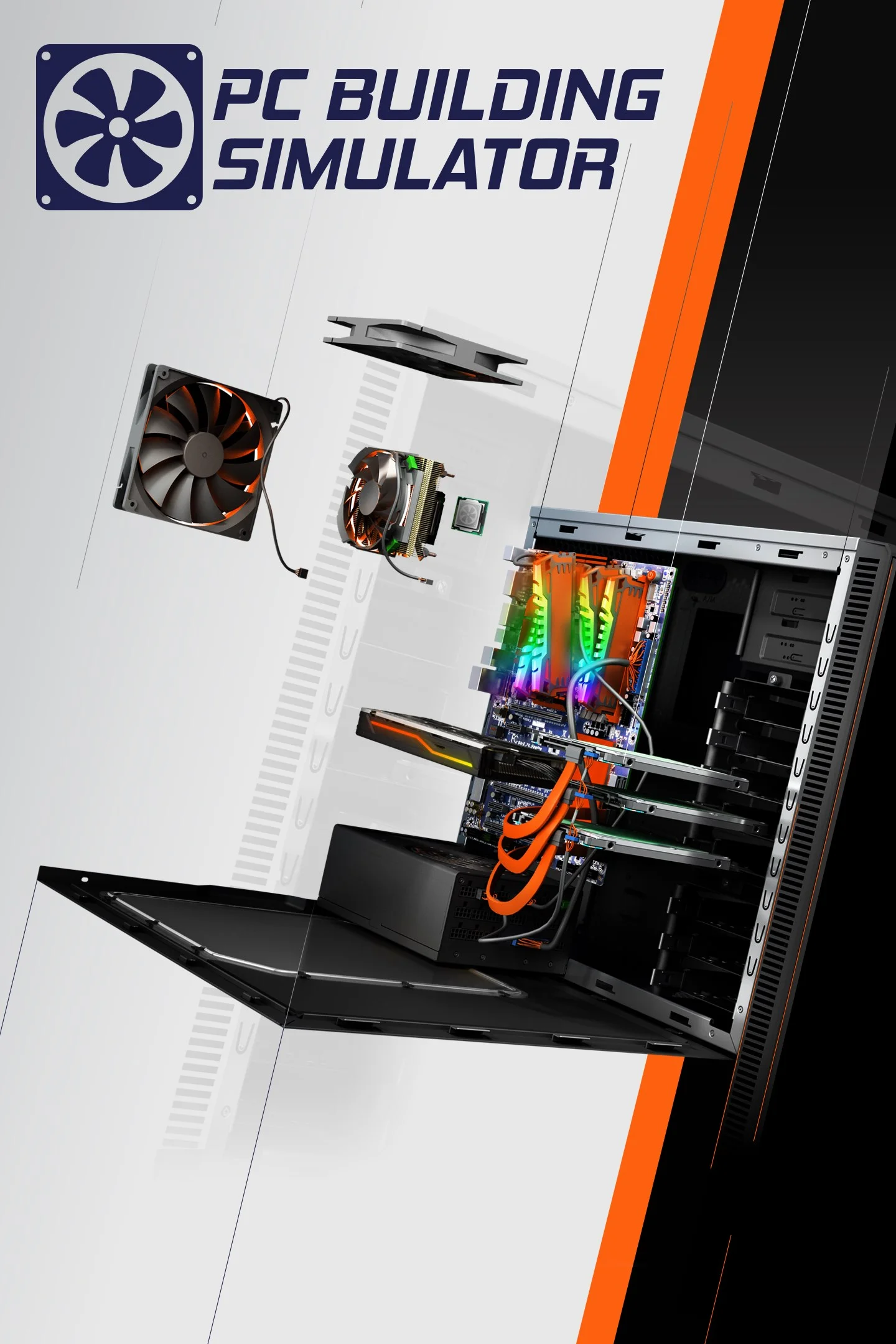
Pc Building Simulator
This combination provides smooth gameplay with an average of 84 FPS, suitable for most gaming scenarios.
Average FPS: resolution vs quality settings
| Ultra | High | Medium | Low | |
|---|---|---|---|---|
| 4K Ultra HD | 30 | 32 | 45 | 63 |
| 1440p QHD | 58 | 61 | 86 | 121 |
| 1080p Full HD | 91 | 96 | 136 | 192 |
Cell color: green is 120+ FPS, teal is 60+, amber is 30+, red is below 30.
Pc Building Simulator with Intel Core i3-12100F + Intel Arc B570, In-Depth Analysis
The Intel Core i3-12100F and Intel Arc B570 pairing in Pc Building Simulator presents a compelling study in system balance, but the data reveals that balance is heavily tilted depending on the resolution. This combination of a 4-core/8-thread Alder Lake CPU and a 10 GB Battlemage GPU delivers a wide range of performance, from highly playable at 1080p to barely interactive at 4K Ultra. The benchmark results indicate that while the CPU is a strong performer for its class, the GPU becomes the definitive bottleneck as resolution increases, and the game’s settings menu acts as a master dial for managing this dynamic.
Resolution Scaling — how FPS drops from 1080p to 4K and what it says about the limiting component
The measured FPS data shows a dramatic and consistent decline as resolution scales from 1920x1080 to 3840x2160, pointing squarely at the GPU as the primary constraint at higher resolutions. At High settings, the average frame rate drops from 96 FPS at 1080p to 61 FPS at 1440p, a reduction of 35 FPS, and then plummets to 32 FPS at 4K. This pattern—a near-linear halving of performance from 1080p to 4K—is the classic signature of a GPU-bound scenario, where the rendering workload increases with pixel count faster than the Intel Arc B570 can compensate.
The scaling from 1080p to 1440p is steep but predictable, representing a 36% loss in average FPS at High settings. However, the jump from 1440p to 4K is even more punishing, with the average FPS nearly halving again from 61 to 32. This suggests that at 4K, the GPU is not just working harder but is likely exceeding its effective memory bandwidth or raw fill rate capacity, leading to a disproportionate performance penalty. The 380.0 GB/s memory bandwidth and 200.0 GPixel/s pixel rate, while respectable, are simply insufficient for the 8.3 million pixels of 4K at high graphical fidelity.
At Low settings, the scaling is less severe in absolute terms but still reveals the GPU’s limit. The average FPS goes from 192 at 1080p to 121 at 1440p, and finally to 63 at 4K. This indicates that even with reduced shader complexity, the sheer number of pixels at 4K demands more from the GPU’s texture and pixel processing units. The data strongly implies that for this game, the Intel Core i3-12100F is rarely the limiting factor; instead, the Intel Arc B570's 2304 shading units and 80 ROPs are the components being pushed to their limits as resolution climbs.
CPU Role — cores, clocks, and how they relate to this game's results
The Intel Core i3-12100F’s role in this pairing is that of a capable and consistent foundation, providing enough single-thread performance to avoid bottlenecking the GPU at lower resolutions. With 4 cores and 8 threads running at a base clock of 3.30 GHz and a boost clock of 4.30 GHz, this Alder Lake-S chip appears well-suited for a simulation title like Pc Building Simulator, which may not heavily utilize multiple cores. The benchmark results show a single-thread score of 893 in 3dmark_single_thread and 1674 in Cinebench R23, indicating strong per-core performance that is crucial for game logic and frame pacing.
The CPU’s performance relative to its peers is solid, sitting in the 68th percentile of all CPUs. Its average benchmark score of 13494 is almost identical to the Intel Core 3 N355 (13492), a -0.7% difference from the Intel Core 5 120UL (13594), and 0.3% ahead of the Intel Core i5-9500 (13452). This suggests that in CPU-bound scenarios, the i3-12100F would deliver performance on par with these rivals. However, the measured FPS data shows that this CPU is rarely the bottleneck, as the frame rate scales almost inversely with resolution, a classic sign of GPU limitation.
The data implies that the CPU’s 12 MB of shared L3 cache and dual-channel memory support are sufficient for this game’s demands. Even at 1080p Low, where the CPU has the most headroom to become a limiting factor, the system achieves 192 FPS, suggesting the i3-12100F is far from its limits. The 3dmark_4_threads score of 2859 and 3dmark_8_threads score of 4026 show that the CPU scales well with its available threads, but the game likely does not require the full capabilities of the 8-thread configuration to maintain high frame rates. The processor's role here is to ensure that the GPU is fed with data without causing stutters, a job it performs admirably given the FPS figures.
GPU Role — VRAM, clocks, and how they relate to this game's results
The Intel Arc B570 is the dominant performer in this duo, but its capabilities are finite, and the measured results clearly delineate its strengths and weaknesses. The GPU features 10 GB of GDDR6 memory on a 160-bit bus, providing 380.0 GB/s of bandwidth, with a base and boost clock of 2500 MHz. These specifications allow for high frame rates at 1080p and 1440p, but the data shows that the 4K resolution is a significant challenge, even at lower settings.
At 1080p, the GPU demonstrates its raw power, pushing 192 FPS at Low settings and 136 FPS at Medium. This performance is indicative of a well-balanced GPU for mainstream gaming. The GPU’s percentile ranking of 65 against all GPUs, with an average benchmark score of 20556, places it in the upper-midrange tier. Its nearest rival, the NVIDIA GeForce RTX 3070 Mobile, scores 20534 (a 0.1% difference), and the Intel Arc A750 scores 20582 (-0.1%), showing that the B570 is in a competitive performance bracket. However, these synthetic benchmarks do not fully capture the game-specific scaling seen here.
The 4K results reveal the GPU’s primary weakness. The drop from 61 FPS at 1440p High to 32 FPS at 4K High is a 47% reduction, indicating that the GPU is running out of memory bandwidth or fill rate. The 10 GB VRAM capacity is not the issue at these settings, but the 160-bit memory interface and 380.0 GB/s bandwidth seem insufficient for the pixel throughput required at 3840x2160. The Ultra preset at 4K yields a nearly unplayable 30 FPS, emphasizing that the B570 is not designed for 4K gaming in this title. The GPU’s 80 ROPs and 200.0 GPixel/s pixel rate are likely the bottleneck at this resolution, struggling to process the massive pixel count.
How This Combo Ranks — use comboRankInGame vs other tested combos
In the grand database of tested computer combinations, this pairing of the Intel Core i3-12100F and Intel Arc B570 finds itself in a surprisingly low position for the hardware involved. The combo ranks 2402 out of 3002 tested combos for this game, placing it in the bottom 20% of all systems. This rank is a stark contrast to the individual component performance, suggesting that this game is particularly demanding on the GPU at higher resolutions, or that the specific combination is not optimal for the game’s engine.
This low ranking indicates that while the components are capable in isolation, their combined performance in Pc Building Simulator is not as strong as other pairings that likely feature more powerful GPUs or better CPU-GPU balance. The rank of 2402 out of 3002 means that a significant majority of other tested configurations—likely including those with higher-end GPUs—achieve better frame rates. The data suggests that the Intel Arc B570, despite its midrange standing, is the limiting factor in this combo, dragging the overall rank down when paired with a CPU that is more than adequate for the task.
The combination’s performance is likely held back by the GPU’s inability to maintain high frame rates at 4K, which is a common test resolution. While the combo performs admirably at 1080p, the severe FPS drops at higher resolutions penalize its overall ranking. The fact that the GPU’s nearest rivals (RTX 3070 Mobile, Arc A750) score nearly identically in synthetic benchmarks suggests that other combos with those GPUs might achieve a similar rank, but the specific pairing here is what matters. The data implies that for this game, the CPU is not the weak link, and the combo’s rank is a direct reflection of the GPU’s performance ceiling.
Measured FPS Breakdown — resolution by resolution, settings by settings, exact numbers
The measured FPS data provides a comprehensive look at the system's performance across a matrix of resolutions and settings.
- 1920x1080: At this resolution, the system performs exceptionally well across all presets. Low settings yield an average of 192 FPS, Medium produces 136 FPS (with a min of 115 and max of 156), High achieves 96 FPS, and Ultra delivers 91 FPS. All of these are highly playable, with even the Ultra preset maintaining an average near the 90 FPS mark.
- 2560x1440: Performance remains strong at 1440p, though the frame rates begin to dip. Low settings produce 121 FPS, Medium averages 86 FPS (min 73, max 99), High drops to 61 FPS, and Ultra falls to 58 FPS. This resolution is clearly the sweet spot for high-refresh-rate gaming, as the system can still push above 60 FPS in most settings.
- 3840x2160: At 4K, the system struggles to maintain playable frame rates. Low settings average 63 FPS, which is acceptable, but Medium drops to 45 FPS (min 38, max 52), High falls to 32 FPS, and Ultra plummets to 30 FPS. The sub-60 FPS results at Medium and above indicate that 4K gaming is not a viable option for this combo unless the user is willing to accept lower visual fidelity.
The data shows a clear trend: the system is a 1080p and 1440p powerhouse, but a 4K contender only at the lowest settings. The difference between Low and Ultra settings is significant, with a 101 FPS gap at 1080p (192 vs 91) and a 33 FPS gap at 4K (63 vs 30), highlighting that the GPU’s architecture is more sensitive to shader complexity at lower resolutions, but becomes pixel-bound at higher ones.
FAQ
Q: Is this system capable of running Pc Building Simulator at 4K?
A: The data shows that at 4K, the system achieves an average of 63 FPS on Low settings, but this drops to 45 FPS on Medium, 32 FPS on High, and 30 FPS on Ultra. For a consistent 60+ FPS experience, you would need to stick to Low settings at 4K.
Q: What is the best resolution for this combo to achieve high refresh rates?
A: The benchmark results show that at 1920x1080, the system can achieve 192 FPS on Low and 136 FPS on Medium, which are excellent for high-refresh-rate monitors. At 2560x1440, it still maintains 121 FPS on Low and 86 FPS on Medium, making both resolutions viable for fast-paced play.
Q: How does the Intel Core i3-12100F compare to its direct rivals in synthetic benchmarks?
A: The CPU’s average benchmark score is 13494. Its nearest rival, the Intel Core 3 N355, scores 13492 (a 0% difference), while the Intel Core i5-9500 scores 13452 (0.3% slower). The Intel Core 5 120UL scores 13594, which is 0.7% faster.
Q: Is the GPU or CPU the limiting factor in this system?
A: The data indicates that the GPU is the primary limiting factor. The FPS scales down dramatically as resolution increases from 1080p to 4K, which is a classic sign of GPU limitation. The CPU, with its strong single-thread performance, does not appear to hold the system back.
Q: What is the performance difference between the High and Ultra presets at 1080p?
A: At 1920x1080, the High preset averages 96 FPS, while the Ultra preset averages 91 FPS. This is a small 5 FPS difference, suggesting that the Ultra preset may not be worth the extra graphical load for a minor frame rate hit.
Q: How does this combo rank in the overall database of tested systems?
A: This combination ranks 2402 out of 3002 tested combos for Pc Building Simulator. This places it in the lower percentile of all tested systems, indicating that its performance is below average compared to other hardware pairings.
Settings Recommendations
For users seeking the best balance of visual quality and performance, the benchmark data suggests that the Medium preset at 1920x1080 is the optimal choice, delivering an average of 136 FPS with a minimum of 115 FPS, ensuring a smooth experience without sacrificing too much visual fidelity. At 1440p, the Medium preset at 86 FPS is also a strong recommendation, providing a noticeable improvement in sharpness over 1080p while still maintaining a frame rate that is above the 60 FPS threshold.
For those with a 4K display, the data indicates that only the Low preset is a viable option, averaging 63 FPS. While this is technically playable, the visual compromise is significant. Users should consider whether the resolution increase is worth the drop in graphical detail. Alternatively, sticking to 1440p with High settings (61 FPS) or 1080p with Ultra settings (91 FPS) might provide a more satisfying visual experience than 4K Low.
The High preset at 1080p (96 FPS) is a solid middle ground, but the performance gap to Ultra (91 FPS) is so small that users with a capable monitor might prefer the higher fidelity of Ultra. However, the jump from Medium to High at 1080p (136 FPS to 96 FPS) is a significant 40 FPS loss, which suggests that Medium is the "best experience" for competitive or high-refresh-rate play. The ultimate recommendation is to prioritize resolution and settings based on the display’s refresh rate, with the data showing that 1080p Medium or 1440p Low/Medium are the safest bets for a consistently smooth experience.
Hardware Specifications
Intel Core i3-12100F
Intel Arc B570
FPS Benchmarks by Resolution & Settings
Performance data for Intel Core i3-12100F + Intel Arc B570 in Pc Building Simulator
| Resolution | Settings | Avg FPS |
|---|---|---|
| 3840x2160 | Low | 63.0 |
| 3840x2160 | Medium | 45.0 |
| 3840x2160 | High | 32.0 |
| 3840x2160 | Ultra | 30.0 |
| 2560x1440 | Low | 121.0 |
| 2560x1440 | Medium | 86.0 |
| 2560x1440 | High | 61.0 |
| 2560x1440 | Ultra | 58.0 |
| 1920x1080 | Low | 192.0 |
| 1920x1080 | Medium | 136.0 |
| 1920x1080 | High | 96.0 |
| 1920x1080 | Ultra | 91.0 |
Pc Building Simulator with ii3-12100F + Other GPUs
See how Pc Building Simulator performs with the same CPU but different graphics cards.
Pc Building Simulator with Arc B570 + Other CPUs
See how Pc Building Simulator performs with the same GPU but different processors.
Other Games with ii3-12100F + Arc B570
Explore FPS benchmarks for other games using this same hardware combination.