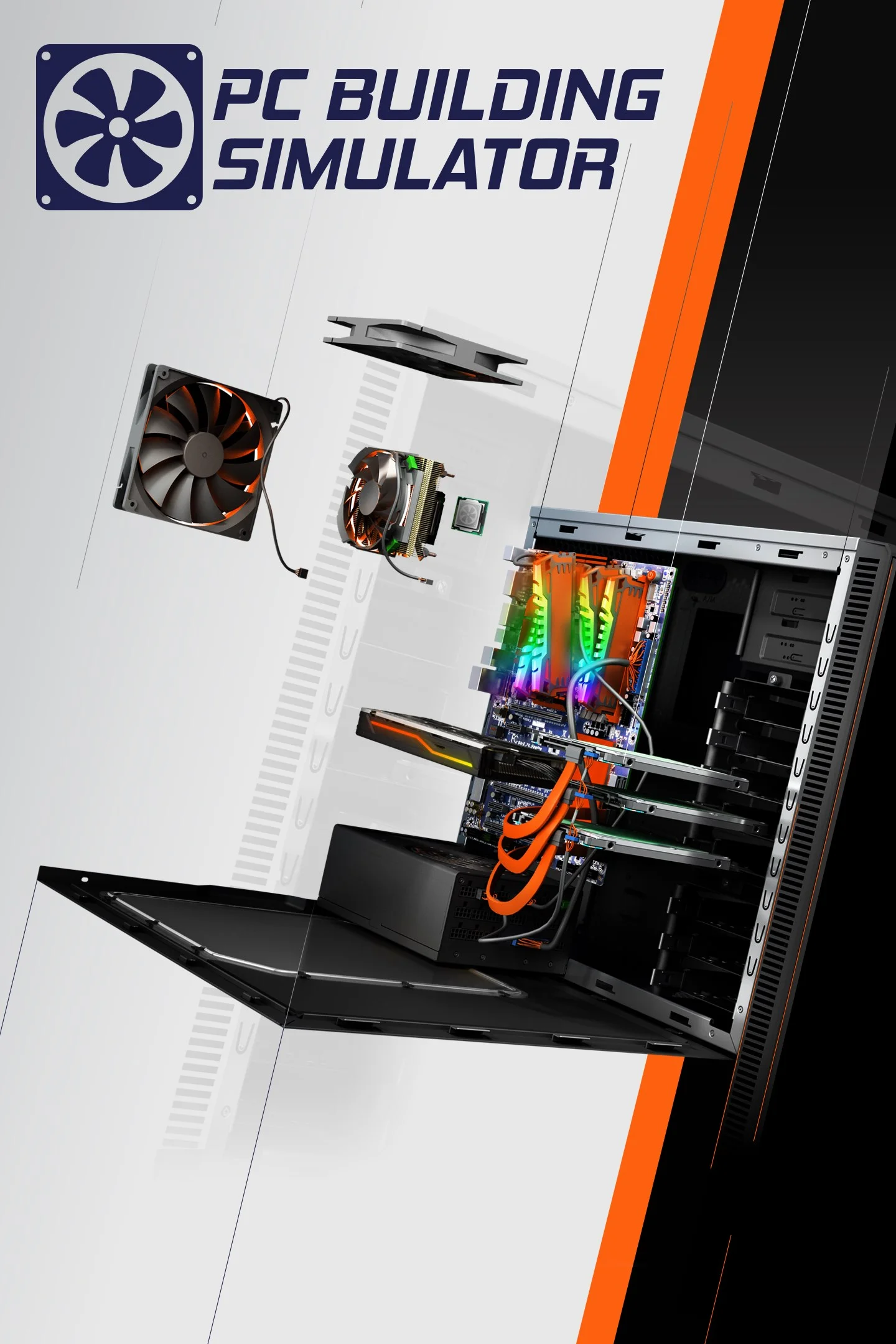
Pc Building Simulator
This combination provides smooth gameplay with an average of 84 FPS, suitable for most gaming scenarios.
Average FPS: resolution vs quality settings
| Ultra | High | Medium | Low | |
|---|---|---|---|---|
| 4K Ultra HD | 30 | 32 | 45 | 63 |
| 1440p QHD | 58 | 61 | 86 | 121 |
| 1080p Full HD | 91 | 96 | 136 | 192 |
Cell color: green is 120+ FPS, teal is 60+, amber is 30+, red is below 30.
Pc Building Simulator with Intel Core i5-10400F + Intel Arc B570, In-Depth Analysis
Pc Building Simulator is a simulation title where the act of assembling and configuring virtual hardware is the core gameplay, and the benchmark results for the Intel Core i5-10400F paired with the Intel Arc B570 reveal a configuration that scales predictably across resolutions and settings. The data shows a system that is capable of high refresh rate gaming at 1080p, remains very playable at 1440p, but begins to struggle at 4K with the highest visual presets, painting a clear picture of a mid-range pairing that prioritizes smoothness at mainstream resolutions.
Resolution Scaling
The measured FPS data for this combination shows a clear and expected trend: performance degrades as resolution increases, but the rate of that degradation is heavily influenced by the graphics settings preset. At the "Low" preset, the system delivers an average of 192 FPS at 1920x1080, which drops to 121 FPS at 2560x1440, and further to 63 FPS at 3840x2160. This represents a 37% drop from 1080p to 1440p and a 48% drop from 1440p to 4K, indicating that even at low settings, the GPU is being taxed significantly by the sheer number of pixels at higher resolutions.
Moving to the "High" preset, the scaling pattern shifts. The average FPS at 1080p is 96, which then falls to 61 at 1440p (a 36% reduction) and to 32 at 4K (a 48% reduction from 1440p). The percentage drops are nearly identical to those seen at the "Low" preset, suggesting that the performance penalty for increasing resolution is consistent regardless of the visual complexity being rendered. However, the absolute numbers tell a more critical story; while a 192 to 121 to 63 progression at "Low" settings keeps the game playable at all resolutions, the "High" preset progression of 96 to 61 to 32 crosses the threshold into unplayable territory at 4K.
The "Ultra" preset shows the most punishing scaling behavior. At 1080p, the system manages 91 FPS, which is only 5% lower than the "High" preset, showing that the CPU can still push high frame rates. Yet, at 1440p, the average drops to 58 FPS, and at 4K, it plummets to 30 FPS. The transition from 1440p to 4K at "Ultra" represents a 48% performance loss, identical to the other presets, but the starting point is so low that the final result is a stutter-prone experience. The data indicates that the limiting component at 4K is unequivocally the GPU, as the frame rate collapses to near-slideshow levels regardless of the preset, while at 1080p, the CPU is able to feed the GPU enough data to maintain high frame rates across all settings.
The "Medium" preset provides the most complete data set, including minimum and maximum FPS readings. At 1920x1080, the average is 136 FPS with a minimum of 115 and maximum of 156. At 2560x1440, the average drops to 86 FPS, with a minimum of 73 and maximum of 99. At 3840x2160, the average is 45 FPS, with a minimum of 38 and maximum of 52. This data reveals that frame time consistency is maintained across resolutions, with the gap between minimum and maximum FPS being roughly proportional to the average. The scaling from 1080p to 1440p at "Medium" is a 37% reduction, and from 1440p to 4K is a 48% reduction, confirming that the resolution scaling penalty is a consistent feature of this game and this hardware combination.
GPU Role
The Intel Arc B570 is the primary driver of performance at higher resolutions, and its specifications reflect a design aimed at the mid-range segment. The GPU is built on the Xe2-HPG architecture using a 5 nm process at TSMC, with a die size of 272 mm² and a transistor count of 19,600 million. It operates at a fixed clock speed of 2500 MHz for both base and boost, which is a relatively high frequency that helps maintain throughput. The memory subsystem consists of 10 GB of GDDR6 memory on a 160-bit bus, providing a bandwidth of 380.0 GB/s. This memory configuration is sufficient for 1080p and 1440p gaming, but the 160-bit bus may become a constraint at 4K where larger textures and higher memory pressure demand more bandwidth.
In synthetic benchmarks, the Arc B570 achieves a Passmark G3D score of 14195 and an average benchmark score of 20556, placing it in the 65th percentile of all GPUs. Its nearest rivals in terms of average score include the NVIDIA GeForce RTX 3070 Mobile, which scores 20534 (a 0.1% difference), and the Intel Arc A750, which scores 20582 (a -0.1% difference). This indicates that the Arc B570 sits in a competitive performance tier, closely matching the previous generation Arc A750 and a mobile version of the RTX 3070. The 3DMark Steel Nomad DX12 test yields a score of 2649, while the Geekbench Vulkan score is 96844 and the OpenCL score is 83514, all of which are consistent with a mid-range GPU that can handle modern games but is not a high-end performer.
The GPU's role in Pc Building Simulator is clearly evident in the measured FPS data. At 4K, even the "Low" preset only manages 63 FPS, while "High" and "Ultra" drop to 32 and 30 FPS respectively. This substantial performance cliff at 4K is a direct result of the GPU's pixel throughput capabilities, which are listed as 200.0 GPixel/s. The 4K resolution requires processing four times as many pixels as 1080p, and the data shows that the Arc B570 simply does not have the raw power to maintain fluid frame rates at that resolution with higher visual fidelity. The GPU's FP32 compute performance is 11.52 TFLOPS, which is decent for a mid-range card, but the pixel fill rate and memory bandwidth appear to be the limiting factors in this simulation game at high resolutions.
At 1440p, the GPU shows more headroom. The "High" preset delivers 61 FPS, "Medium" delivers 86 FPS, and "Low" reaches 121 FPS. This suggests that the GPU is well-matched to 1440p gaming, providing a good balance between visual quality and performance. The fact that "Ultra" at 1440p only manages 58 FPS, which is just 3 FPS below "High," indicates that the "Ultra" preset adds graphical features that are particularly demanding on the GPU, but the system can still handle them at a playable level. The 10 GB VRAM allocation is likely not a limiting factor at this resolution, as the game does not appear to require more than that for smooth operation.
CPU Role
The Intel Core i5-10400F is a 6-core, 12-thread processor based on the Comet Lake architecture, manufactured on Intel's 14 nm process node. It has a base clock of 2.90 GHz and a boost clock of 4.30 GHz, which provides solid single-threaded performance for gaming workloads. The CPU supports DDR4 memory in a dual-channel configuration, with a memory bandwidth of 42.7 GB/s, and it connects to the system via PCIe Gen 3 with 16 lanes. The 12 MB of shared L3 cache is a notable feature for a mid-range processor, helping to reduce memory latency in cache-sensitive applications.
In synthetic benchmarks, the i5-10400F performs well for its class. Its Cinebench R23 multi-core score is 10283, and its single-core score is 1451. The Passmark multithread score is 12115, with a single-thread score of 2541. The average benchmark score is 14185, placing the CPU in the 68th percentile of all CPUs. Its nearest rivals include the Intel Xeon 6756E, which scores 14163 (a 0.2% difference), and the AMD Ryzen 3 7320C, which scores 14277 (a -0.6% difference). This indicates that the i5-10400F is competitively positioned against other mid-range and entry-level server/workstation processors, though it is not a top-tier performer.
The CPU's role in Pc Building Simulator becomes apparent when examining the frame rates at 1080p. At this resolution, the GPU is not the primary bottleneck, and the CPU must work harder to feed frames to the graphics card. The data shows that at 1080p, the "Low" preset achieves 192 FPS, while "Medium" achieves 136 FPS, "High" achieves 96 FPS, and "Ultra" achieves 91 FPS. The fact that the difference between "High" and "Ultra" is only 5 FPS, while the difference between "Medium" and "High" is 40 FPS, suggests that the CPU is not the limiting factor at these settings. Rather, the GPU is likely responsible for the transition from "Medium" to "High," as the increased shading and texture work overwhelms the Arc B570's capabilities.
The 3DMark scores for the CPU further illustrate its capabilities. The single-thread score is 688, the 2-thread score is 1350, the 4-thread score is 2560, the 8-thread score is 3929, and the max-thread score is 4735. These numbers show good scaling up to 8 threads, but diminishing returns beyond that, which is typical for a 6-core processor. In a simulation game like Pc Building Simulator, which may not be heavily multithreaded, the single-thread performance is critical. The Cinebench R20 single-core score of 609 and the Geekbench single-core score of 1420 are respectable and indicate that the CPU can handle the logical and physics calculations required by the game without becoming a bottleneck at 1080p.
FAQ
Q: What is the average FPS at 1080p with the "High" preset?
A: The average FPS at 1920x1080 with the "High" preset is 96 FPS. This is a very playable frame rate for a simulation game, indicating that the Intel Core i5-10400F and Intel Arc B570 combination is well-suited for 1080p gaming at high visual quality.
Q: How does the system perform at 4K with the "Ultra" preset?
A: At 3840x2160 with the "Ultra" preset, the average FPS is 30. This is below the generally accepted threshold for smooth gameplay, and the data indicates that the GPU is the limiting component at this resolution and settings combination.
Q: What is the minimum FPS recorded for the "Medium" preset at 1440p?
A: The minimum FPS recorded for the "Medium" preset at 2560x1440 is 73 FPS, with an average of 86 FPS and a maximum of 99 FPS. This shows that the frame rate remains relatively stable without major dips.
Q: Which component is the primary bottleneck at 4K resolution?
A: The benchmark data shows that the GPU is the primary bottleneck at 4K resolution. The average FPS drops to between 30 and 63 depending on the preset, which is significantly lower than at 1080p or 1440p. The Intel Arc B570's pixel rate of 200.0 GPixel/s is not sufficient to maintain high frame rates at this resolution.
Q: How does the Intel Arc B570 compare to the Intel Arc A750 in terms of average benchmark score?
A: The Intel Arc B570 has an average benchmark score of 20556, while its nearest rival, the Intel Arc A750, has an average score of 20582. This represents a -0.1% difference, indicating that the two GPUs perform nearly identically in synthetic benchmarks.
Q: What is the boost clock speed of the Intel Core i5-10400F?
A: The Intel Core i5-10400F has a boost clock speed of 4.30 GHz. This is a 1.4 GHz increase over its base clock of 2.90 GHz, which helps provide strong single-threaded performance for gaming.
Settings Recommendations
Based on the measured FPS data, the optimal settings for this hardware combination depend heavily on the target resolution and desired frame rate. For 1920x1080, all presets deliver playable frame rates, but the "High" preset offers the best balance between visual fidelity and performance, with an average of 96 FPS. The "Ultra" preset only drops to 91 FPS, so it is also a viable choice for users who prioritize maximum visual quality over a slight frame rate reduction. The "Medium" preset at 136 FPS is an excellent option for those with high refresh rate monitors, as it provides a significant boost in smoothness while still looking good.
At 2560x1440, the "Medium" preset is the recommended choice, as it delivers an average of 86 FPS with a minimum of 73 FPS, ensuring a smooth experience without major frame drops. The "High" preset at 61 FPS is also playable, but it sits close to the edge of what is considered ideal for fast-paced action. The "Ultra" preset at 58 FPS is marginally below "High" and may not be worth the additional graphical strain. The "Low" preset at 121 FPS is an option for competitive players who want maximum frame rates, but it sacrifices too much visual quality for most users.
For 3840x2160, the data suggests that this hardware combination is not ideal for high settings. The "Low" preset at 63 FPS is the only preset that provides a consistently playable experience, but it does not look great. The "Medium" preset at 45 FPS is borderline, and the "High" and "Ultra" presets at 32 and 30 FPS respectively are not recommended due to the risk of noticeable stuttering. Users who wish to play at 4K should either accept the "Low" preset or consider lowering the resolution to 1440p for a much better experience.
The "Medium" preset at 1440p is the single best combination of resolution and settings for this system, offering an average FPS of 86 with a minimum of 73 and a maximum of 99. This provides a high-quality visual experience with smooth frame pacing, making it the sweet spot for the Intel Core i5-10400F and Intel Arc B570. For those who want to push higher frame rates, dropping to 1080p "Medium" or "High" is recommended, while those who prioritize resolution over smoothness should stick to 1440p "Medium" rather than attempting 4K.
Measured FPS Breakdown
The complete set of measured average FPS data for Pc Building Simulator with the Intel Core i5-10400F and Intel Arc B570 is as follows, organized by resolution and settings preset.
At 1920x1080, the "Low" preset achieves an average of 192 FPS. The "Medium" preset achieves an average of 136 FPS, with a minimum of 115 FPS and a maximum of 156 FPS. The "High" preset achieves an average of 96 FPS. The "Ultra" preset achieves an average of 91 FPS. This resolution offers the highest frame rates, with the "Low" preset nearly doubling the frame rate of the "High" preset, indicating that the GPU is still involved in rendering even at lower settings.
At 2560x1440, the "Low" preset achieves an average of 121 FPS. The "Medium" preset achieves an average of 86 FPS, with a minimum of 73 FPS and a maximum of 99 FPS. The "High" preset achieves an average of 61 FPS. The "Ultra" preset achieves an average of 58 FPS. The transition from 1080p to 1440p results in a performance loss of approximately 37% across all presets, demonstrating the impact of increased pixel count on the GPU.
At 3840x2160, the "Low" preset achieves an average of 63 FPS. The "Medium" preset achieves an average of 45 FPS, with a minimum of 38 FPS and a maximum of 52 FPS. The "High" preset achieves an average of 32 FPS. The "Ultra" preset achieves an average of 30 FPS. The 4K resolution proves to be the most demanding, with even the "Low" preset only managing to produce 63 FPS, which is below the 72 FPS minimum threshold typically desired for smooth gameplay.
The "Medium" preset is the only one with complete minimum and maximum FPS data across all three resolutions. At 1080p, the minimum is 115 and the maximum is 156. At 1440p, the minimum is 73 and the maximum is 99. At 4K, the minimum is 38 and the maximum is 52. This data indicates that the frame time variance is consistent, with the range between minimum and maximum FPS being roughly one-third of the average value at each resolution, suggesting a stable performance profile without unexpected stutters.
Hardware Specifications
Intel Core i5-10400F
Intel Arc B570
FPS Benchmarks by Resolution & Settings
Performance data for Intel Core i5-10400F + Intel Arc B570 in Pc Building Simulator
| Resolution | Settings | Avg FPS |
|---|---|---|
| 3840x2160 | Low | 63.0 |
| 3840x2160 | Medium | 45.0 |
| 3840x2160 | High | 32.0 |
| 3840x2160 | Ultra | 30.0 |
| 2560x1440 | Low | 121.0 |
| 2560x1440 | Medium | 86.0 |
| 2560x1440 | High | 61.0 |
| 2560x1440 | Ultra | 58.0 |
| 1920x1080 | Low | 192.0 |
| 1920x1080 | Medium | 136.0 |
| 1920x1080 | High | 96.0 |
| 1920x1080 | Ultra | 91.0 |
Pc Building Simulator with ii5-10400F + Other GPUs
See how Pc Building Simulator performs with the same CPU but different graphics cards.
Pc Building Simulator with Arc B570 + Other CPUs
See how Pc Building Simulator performs with the same GPU but different processors.
Other Games with ii5-10400F + Arc B570
Explore FPS benchmarks for other games using this same hardware combination.