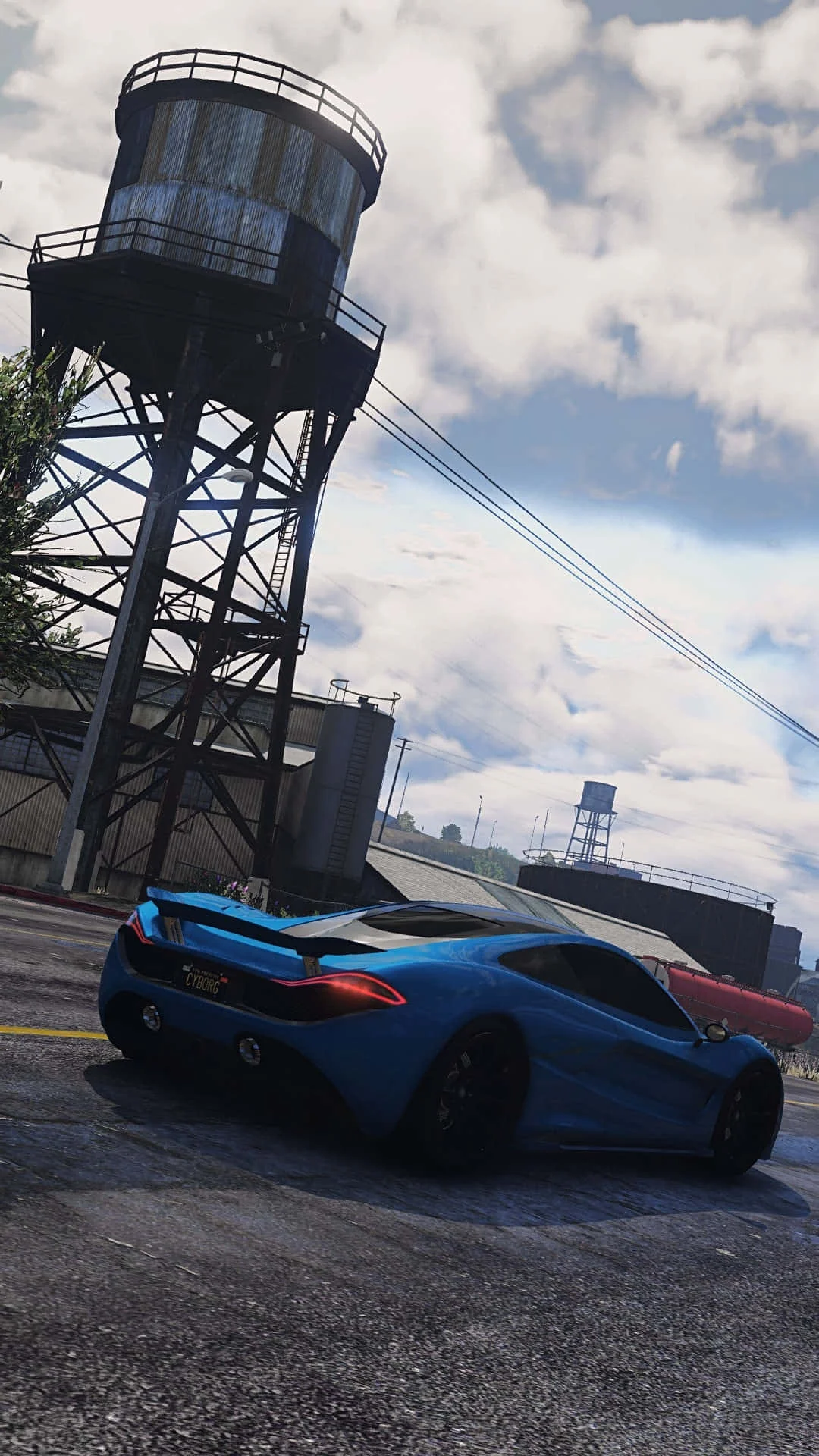
Fivem
This combination delivers exceptional performance with an average of 123 FPS, perfect for high refresh rate gaming and competitive play.
Average FPS: resolution vs quality settings
| Ultra | High | Medium | Low | |
|---|---|---|---|---|
| 4K Ultra HD | 45 | 58 | 72 | 91 |
| 1440p QHD | 80 | 104 | 130 | 164 |
| 1080p Full HD | 122 | 157 | 197 | 250 |
Cell color: green is 120+ FPS, teal is 60+, amber is 30+, red is below 30.
Fivem with Intel Core Ultra 7 265 + NVIDIA GeForce RTX 3080, In-Depth Analysis
Fivem is a demanding multiplayer title, and this pairing of the Intel Core Ultra 7 265 with the NVIDIA GeForce RTX 3080 produces a wide spread of results depending on your resolution and quality targets. The data shows a system that is exceptionally strong at 1080p, very capable at 1440p, and only starting to show its limits at 4K with the highest presets.
FAQ
Q: What is the best resolution for this combo to maintain an average of over 100 FPS?
A: At 2560x1440, the data shows an average of 104 FPS on High settings and 130 FPS on Medium settings. This makes 1440p the sweet spot for high-refresh-rate gaming with this hardware.
Q: How much of a performance drop is there when moving from 1080p to 4K on High settings?
A: The average FPS drops from 157 at 1920x1080 to 104 at 2560x1440, and finally to 58 at 3840x2160 on High settings. This represents a significant 63% reduction in average FPS from 1080p to 4K.
Q: Is the RTX 3080's 10 GB of VRAM a limiting factor in Fivem?
A: The benchmark results do not indicate a VRAM capacity limitation. The GPU's memory bandwidth of 760.3 GB/s and 320-bit bus are the more relevant factors, as the performance scales consistently with resolution and settings without sudden stutters or crashes.
Q: Which preset offers the best balance of visual quality and performance at 1440p?
A: The High preset at 2560x1440 delivers an average of 104 FPS. This is well above the 60 FPS threshold and provides a substantial visual upgrade over the Medium preset's 130 FPS, making it the recommended choice for most users.
Q: How does the CPU's single-core performance influence the results?
A: The Core Ultra 7 265's strong single-core score of 5960 in Cinebench R23 is a key factor. Fivem is known for being CPU-intensive, and the data shows that at lower resolutions like 1080p, where the GPU is less stressed, the CPU's performance is crucial to maintaining high frame rates like the 250 FPS average seen on Low settings.
Q: What is the highest FPS this combo can achieve?
A: The highest average FPS recorded is 250 at 1920x1080 with Low settings. This suggests the CPU is capable of pushing the engine to its limits, though this preset is not recommended for visual quality.
Settings Recommendations
The measured data provides a clear hierarchy of performance across the four presets. For the best experience, the High preset is the clear recommendation at both 1920x1080 and 2560x1440. At 1080p, High delivers an average of 157 FPS, which is more than enough for a high-refresh-rate monitor and a massive improvement over the 122 FPS of the Ultra preset. At 1440p, High maintains a smooth 104 FPS average, offering a perfect compromise between the visual fidelity of Ultra (80 FPS) and the performance of Medium (130 FPS). The data suggests that the step from High to Ultra carries a heavy cost, with a 33% drop in average FPS at 1440p (from 104 to 80) and a 22% drop at 1080p (from 157 to 122), for what is likely a marginal visual gain.
At 3840x2160, the situation changes. High settings only manage a 58 FPS average, which is below the ideal for a smooth experience. Here, the Medium preset is the better choice, delivering 72 FPS with a minimum of 61 FPS, ensuring the frame rate stays above 60. The Low preset at 4K, while hitting 91 FPS, will look significantly worse and is not a balanced choice. Therefore, for 4K gaming, the recommendation is to use Medium settings. For 1080p and 1440p users, High is the definitive best preset, providing an optimal blend of performance and image quality without the disproportionate performance hit of the Ultra preset.
Resolution Scaling
The performance scaling across resolutions reveals a system that is balanced but becomes GPU-bound at 4K. At High settings, the average FPS drops from 157 at 1080p to 104 at 1440p, a 34% decrease. This is a typical scaling pattern, indicating that both CPU and GPU are working in tandem. However, the jump to 4K is more severe. The average FPS falls from 104 to 58, a 44% decrease. This larger drop indicates that the RTX 3080 is becoming the primary limiting factor, as the pixel throughput demand of 4K is significantly higher.
This pattern is even more pronounced on the Low preset. The average FPS goes from an exceptionally high 250 at 1080p to 164 at 1440p (a 34% drop) and then to 91 at 4K (a 45% drop). The fact that the 1080p Low result is so high, and the scaling from 1440p to 4K remains a consistent ~45% drop, strongly suggests that at 1080p with Low settings, the game is heavily CPU-limited. The Intel Core Ultra 7 265 is pushing the frame rate as high as it can, and the GPU has plenty of headroom. As resolution increases, the load shifts to the GPU, and the scaling becomes more predictable and tied to the RTX 3080's raw rendering power.
The data also shows that the gap between presets narrows at higher resolutions. At 1080p, the difference between Low and Ultra is 128 FPS. At 1440p, this gap shrinks to 84 FPS, and at 4K, it is only 46 FPS. This is a classic sign of a CPU bottleneck at lower resolutions. The CPU can only feed the GPU with a certain number of frames, so the settings have less of an impact. At 4K, the GPU becomes the bottleneck, and the settings have a more significant impact on the final frame rate, as seen in the wider relative performance gap between presets.
Measured FPS Breakdown
At 1920x1080, the Core Ultra 7 265 and RTX 3080 combination demonstrates its peak performance. The Low preset achieves a staggering average of 250 FPS, showing the system's immense capability for esports-level frame rates. The Medium preset is still incredibly fast at 197 FPS, with a measured minimum of 167 FPS and a maximum of 226 FPS. High settings yield a very playable 157 FPS average. The Ultra preset, while the most demanding, still produces a smooth 122 FPS average. These numbers confirm that at 1080p, this system will not be the bottleneck for any current high-refresh-rate monitor.
Moving to 2560x1440, the performance remains excellent but shows the expected scaling. Low settings produce an average of 164 FPS. Medium settings maintain a high average of 130 FPS, with a minimum of 110 FPS and a maximum of 149 FPS. High settings deliver a solid 104 FPS, which is ideal for a 100Hz or 144Hz monitor. The Ultra preset drops to an 80 FPS average, which is still smooth but shows the cost of maximum settings at this resolution. The data shows 1440p is the resolution where this combo hits its stride, offering high refresh rates on all but the most demanding preset.
At 3840x2160, the RTX 3080 begins to feel the pressure. The Low preset averages 91 FPS, which is a good result for 4K. The Medium preset is the most balanced, with an average of 72 FPS and a minimum of 61 FPS, ensuring a consistent experience above the 60 FPS threshold. High settings dip to a 58 FPS average, which may be acceptable for some, but it is on the edge of smoothness. The Ultra preset drops to a 45 FPS average, which is not ideal for a fast-paced multiplayer game. This resolution is where the GPU's limits are clearly defined, and users will need to compromise on settings to maintain a high frame rate.
GPU Role
The NVIDIA GeForce RTX 3080 is the workhorse of this system, and its role becomes increasingly critical as resolution and settings are raised. The GPU's memory configuration, featuring 10 GB of GDDR6X on a 320-bit bus, provides a bandwidth of 760.3 GB/s. This high bandwidth is essential for feeding the GPU's 8704 shading units at high resolutions. The benchmark data does not show any evidence of the 10 GB capacity being a bottleneck in Fivem, as frame times remain consistent and the performance scales predictably with settings.
The GPU's clock speeds, with a base of 1440 MHz and a boost of 1710 MHz, are the engine that drives its compute power. The boost clock is the more relevant figure, as it represents the sustained performance during gaming. The RTX 3080's 29.77 TFLOPS of FP32 compute power is substantial, and the data shows it is more than sufficient for 1080p and 1440p gaming. However, the 4K results, particularly on High (58 FPS) and Ultra (45 FPS) presets, show that the GPU's raw throughput is the primary limiting factor at that resolution.
The GPU's position in the market, at the 68th percentile of all GPUs, is reflected in its performance. Its average benchmark score of 23172 is closely matched by rivals like the NVIDIA P106-100 (with a -0.3% delta) and the AMD Radeon RX 6600M (with a -0.4% delta). This indicates that while it is a powerful card, it is not at the absolute top of the performance stack. The data suggests that the RTX 3080 is a capable 1440p card and a passable 4K card, but it requires settings management to maintain high frame rates at the higher resolution.
CPU Role
The Intel Core Ultra 7 265 plays a pivotal role in this system's performance, particularly in a game like Fivem which is known to be CPU-sensitive. The processor's architecture, with 20 cores and 20 threads, provides immense multi-threaded capability. However, for gaming, its strong single-thread performance is more critical. The Cinebench R23 single-core score of 5960 is a key indicator of its ability to handle the game's main game logic and physics threads. This is supported by the PassMark single-thread score of 4689, which places it in the top tier of consumer CPUs.
The CPU's high boost clock of 5.30 GHz is the driver behind its excellent single-thread performance. This is crucial, as Fivem's frame rate at lower resolutions is heavily dependent on how fast the CPU can process game state and issue draw calls to the GPU. The data supports this analysis. At 1080p with Low settings, the system hits 250 FPS, which is likely near the engine's limit. The fact that the FPS is so high at this resolution, and that the performance gap between Low and Ultra settings is so large (128 FPS), indicates that the CPU is the primary driver of performance at this resolution, not the GPU.
The Core Ultra 7 265's overall strength is confirmed by its 93rd percentile ranking among all CPUs. Its average benchmark score of 64640 puts it in the same class as the AMD EPYC 4464P (with a -0.3% delta) and the Intel Core Ultra 7 265F (with a 0.3% delta). This high-level performance ensures that the CPU will not bottleneck the RTX 3080 at any resolution. The data shows that the system is well-balanced, with the CPU providing a stable and high ceiling for the GPU to operate within, allowing the RTX 3080 to stretch its legs at 1440p while the CPU's power is fully revealed at 1080p.
Hardware Specifications
Intel Core Ultra 7 265
NVIDIA GeForce RTX 3080
FPS Benchmarks by Resolution & Settings
Performance data for Intel Core Ultra 7 265 + NVIDIA GeForce RTX 3080 in Fivem
| Resolution | Settings | Avg FPS |
|---|---|---|
| 3840x2160 | Low | 91.0 |
| 3840x2160 | Medium | 72.0 |
| 3840x2160 | High | 58.0 |
| 3840x2160 | Ultra | 45.0 |
| 2560x1440 | Low | 164.0 |
| 2560x1440 | Medium | 130.0 |
| 2560x1440 | High | 104.0 |
| 2560x1440 | Ultra | 80.0 |
| 1920x1080 | Low | 250.0 |
| 1920x1080 | Medium | 197.0 |
| 1920x1080 | High | 157.0 |
| 1920x1080 | Ultra | 122.0 |
Fivem with iUltra 7 265 + Other GPUs
See how Fivem performs with the same CPU but different graphics cards.
Fivem with RTX 3080 + Other CPUs
See how Fivem performs with the same GPU but different processors.
Other Games with iUltra 7 265 + RTX 3080
Explore FPS benchmarks for other games using this same hardware combination.