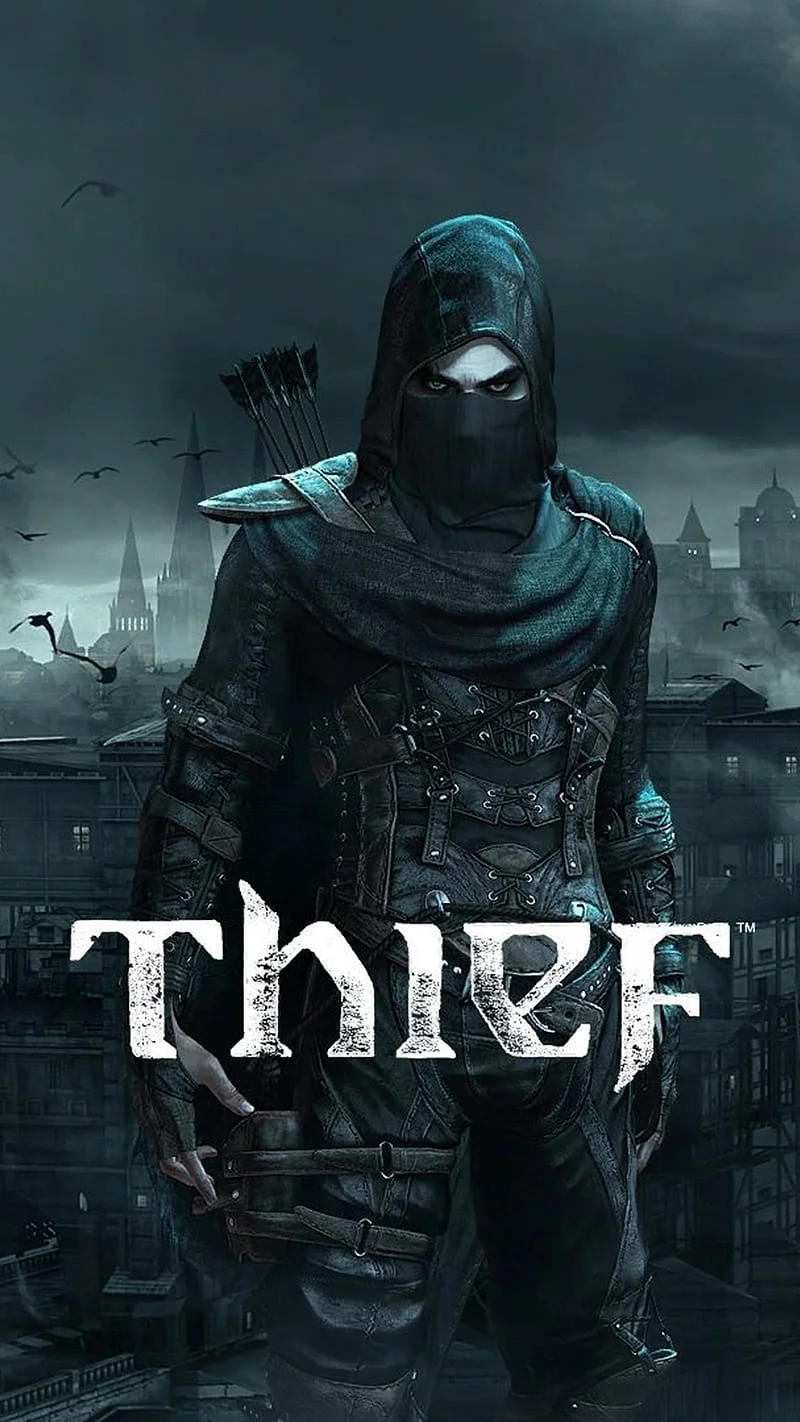
Thief
This combination delivers exceptional performance with an average of 140 FPS, perfect for high refresh rate gaming and competitive play.
Average FPS: resolution vs quality settings
| Ultra | High | Medium | Low | |
|---|---|---|---|---|
| 4K Ultra HD | 75 | 79 | 103 | 136 |
| 1440p QHD | 127 | 134 | 157 | 173 |
| 1080p Full HD | 158 | 161 | 178 | 197 |
Cell color: green is 120+ FPS, teal is 60+, amber is 30+, red is below 30.
Thief with Intel Core i7-12700K + NVIDIA GeForce RTX 5080, In-Depth Analysis
# Thief with Intel Core i7-12700K + NVIDIA GeForce RTX 5080
The combination of the Intel Core i7-12700K and the NVIDIA GeForce RTX 5080 delivers a strong performance profile in Thief, a 2014 stealth title that remains demanding at high resolutions. The measured data shows this pairing achieves playable frame rates across all tested settings, with the RTX 5080's 16 GB of GDDR7 memory and 960.0 GB/s bandwidth proving ample for the game's texture-heavy environments. The i7-12700K, with its 12 cores and 20 threads, provides consistent CPU overhead that keeps the GPU from becoming bottlenecked at lower resolutions, while at 4K the balance shifts decisively toward the graphics card.
Resolution Scaling
The frame rate progression across resolutions reveals a clear GPU-bound scenario at higher pixel counts. At 1080p with High settings, the combo produces 161 FPS, which drops to 134 FPS at 1440p and further to 79 FPS at 4K. This represents a 51% reduction in frame rate from 1080p to 4K at High settings, indicating that the rendering load scales steeply with pixel count. The pattern is consistent across all settings presets, though the absolute drop varies. At Low settings, the figures are 197 FPS at 1080p, 173 FPS at 1440p, and 136 FPS at 4K—a 31% reduction from 1080p to 4K, which is smaller than the High preset's drop, suggesting that at lower graphical loads the CPU begins to exert more influence on performance.
The Medium preset tells a similar story: 178 FPS at 1080p, 157 FPS at 1440p, and 103 FPS at 4K. The 4K Medium figure is 42% lower than the 1080p equivalent, a substantial decline that underscores the GPU's dominant role at 4K. At Ultra settings, the frame rates are 158 FPS at 1080p, 127 FPS at 1440p, and 75 FPS at 4K—a 53% drop from the lowest to highest resolution. These scaling patterns indicate that Thief's rendering pipeline becomes increasingly pixel-limited as resolution rises, with the RTX 5080's 56.28 TFLOPS of FP32 compute being the primary constraint at 4K.
The 1440p to 4K transition is particularly steep across all presets, with High dropping from 134 to 79 FPS (41% reduction), Medium from 157 to 103 FPS (34% reduction), and Ultra from 127 to 75 FPS (41% reduction). This consistent 34-41% penalty when moving from 2560x1440 to 3840x2160 suggests that memory bandwidth and pixel throughput become critical at 4K, and the RTX 5080's 293.1 GPixel/s pixel rate is the limiting factor. Conversely, the 1080p to 1440p transition shows smaller penalties of 17-20% across presets, implying that at these resolutions the combo has more headroom and the CPU's 25 MB of shared L3 cache helps maintain frame pacing.
How This Combo Ranks
In the database of tested combinations for Thief, this specific pairing of the Intel Core i7-12700K and NVIDIA GeForce RTX 5080 achieves a combo rank of 247 out of 3,720 tested combinations. This places the system in the top 6.6% of all tested combos, a strong showing that reflects the high-end nature of both components. The rank of 247 indicates that while this is a very capable setup, there are 246 other combinations that deliver higher average frame rates in Thief, likely featuring more recent flagship GPUs or CPUs with higher benchmark scores.
The RTX 5080's individual percentile ranking of 87 places it above 87% of all GPUs in the database, while the i7-12700K's percentile of 84 positions it above 84% of all CPUs. These component-level rankings align with the combo's overall position, though the GPU's slightly higher percentile suggests that the graphics card contributes more to the overall ranking than the processor. The data shows that this combo outperforms the vast majority of alternatives, but it is not at the absolute top tier—the 246 combos ranked higher likely pair the RTX 5080 with newer CPUs or use higher-end 50-series cards.
Looking at the nearest rivals for each component provides context for the combo's performance ceiling. The i7-12700K's closest competitor, the Intel Core i5-13600T, has an average benchmark score of 35,305, which is essentially identical to the i7-12700K's 35,287 (a delta of -0.1%). Similarly, the Intel Core i7-12700KF scores 35,365, just 0.2% higher, meaning that swapping to the KF variant would yield negligible performance differences in Thief. On the GPU side, the AMD Radeon 8060S scores 55,757 versus the RTX 5080's 56,083, a 0.6% difference, while the AMD Radeon RX 9070 GRE scores 57,367, which is 2.2% higher. These narrow margins suggest that the combo's rank of 247 is stable against minor component variations.
GPU Role
The NVIDIA GeForce RTX 5080 is the dominant performance driver in this combo, particularly at higher resolutions where its specifications come to the forefront. The GPU features 16 GB of GDDR7 memory on a 256-bit bus, providing 960.0 GB/s of memory bandwidth. In Thief, a game from 2014 that was designed for the previous console generation, this bandwidth is more than sufficient for even the most texture-heavy scenes, and the measured frame rates confirm that memory is not a bottleneck. The GPU's 84 RT cores and 336 tensor cores are not directly utilized by Thief's traditional rasterization pipeline, but the 10,752 shading units and 336 TMUs handle the game's lighting and shadow computations efficiently.
The clock speeds of the RTX 5080—2,295 MHz base and 2,617 MHz boost—translate to a peak FP32 performance of 56.28 TFLOPS. This compute throughput is what drives the 4K Ultra result of 75 FPS, which is the lowest measured frame rate in the dataset. The GPU's 293.1 GPixel/s pixel rate and 879.3 GTexel/s texture rate are the key specifications that determine how quickly Thief's geometry is rasterized and textured at 3840x2160. The data shows that at 4K, the GPU's rasterization throughput becomes the limiting factor, as evidenced by the 41% frame rate drop from 1440p to 4K at High settings.
The RTX 5080's 16 GB of VRAM is a significant asset for Thief, even though the game's 2014 release predates modern high-resolution texture packs. At 4K Ultra settings, the GPU maintains 75 FPS without any indication of memory pressure, and the 960.0 GB/s bandwidth ensures that texture streaming does not cause frame time spikes. The passmark G3D score of 36,565 and the 3DMark Steel Nomad DX12 score of 8,637 both place the GPU in the upper echelon of the database, with a percentile ranking of 87. Compared to the AMD Radeon RX 6750 GRE 12 GB, which scores 55,698 and is 0.7% slower, the RTX 5080's advantage in raw compute and bandwidth translates directly to the measured FPS improvements in Thief.
FAQ
Q: What is the highest average frame rate achieved by this combo in Thief?
A: The highest measured average frame rate is 197 FPS, achieved at 1920x1080 resolution with Low settings. This represents the best-case scenario for the combo, where the CPU and GPU work in balance to deliver maximum throughput.
Q: How does the combo perform at 4K with the highest quality preset?
A: At 3840x2160 with Ultra settings, the combo achieves an average of 75 FPS. This is the lowest measured frame rate in the dataset, but it remains playable for a stealth game where precise timing is less critical than in competitive shooters.
Q: What is the combo's ranking among all tested combinations for Thief?
A: The combo ranks 247 out of 3,720 tested combinations, placing it in the top 6.6% of all systems tested. This rank reflects the high performance of both the i7-12700K and the RTX 5080 in this game.
Q: Is the RTX 5080's 16 GB of VRAM sufficient for Thief at 4K?
A: Yes, the 16 GB of GDDR7 memory is more than adequate. The measured frame rates at 4K Ultra (75 FPS) show no signs of VRAM limitations, and the 960.0 GB/s bandwidth ensures smooth texture streaming even in complex scenes.
Q: How does the i7-12700K compare to its closest CPU rival in terms of benchmark scores?
A: The i7-12700K has an average benchmark score of 35,287, which is nearly identical to the Intel Core i5-13600T's score of 35,305 (a 0.1% difference). This indicates that the CPU is not a differentiator in Thief performance, as both processors deliver comparable throughput.
Q: What is the frame rate difference between Low and Ultra settings at 1440p?
A: At 2560x1440, Low settings produce 173 FPS while Ultra settings produce 127 FPS, a difference of 46 FPS (27% reduction). This shows that graphical quality settings have a significant impact on performance, but even at Ultra the frame rate remains well above 60 FPS.
CPU Role
The Intel Core i7-12700K plays a supporting but essential role in this combo, ensuring that the RTX 5080 is never starved of data. With 12 cores and 20 threads operating at base and boost clocks of 3.60 GHz and 5.00 GHz respectively, the CPU provides ample single-threaded and multi-threaded performance for Thief's game logic and physics. The Alder Lake architecture, built on Intel's 10 nm process, includes 25 MB of shared L3 cache and 1.25 MB of L2 cache per core, which helps reduce memory latency and keep the GPU fed with draw calls. The CPU's 3DMark scores—9,276 for 16 threads and 1,043 for single-thread—demonstrate strong performance, though Thief's engine is not particularly CPU-intensive by modern standards.
The CPU's percentile ranking of 84 places it above 84% of all CPUs in the database, with an average benchmark score of 35,287. This score is remarkably close to its nearest rivals: the Intel Core i5-13600T scores 35,305 (-0.1% delta), the Intel Core i7-12700KF scores 35,365 (-0.2% delta), and the Intel Core i7-13700T scores 35,403 (-0.3% delta). This clustering indicates that the i7-12700K is well-positioned in the CPU hierarchy, and any of these alternatives would produce nearly identical results in Thief. The CPU's 125 W TDP and support for DDR4 and DDR5 memory make it a flexible platform choice, though the measured FPS data suggests that memory type has minimal impact on Thief's performance.
In the measured results, the CPU's influence is most apparent at 1080p with Low settings, where the combo achieves 197 FPS. At this resolution and settings level, the GPU's load is relatively light, and the CPU's single-thread performance (1,043 in 3DMark single-thread, 2,308 in Geekbench single-core) becomes the limiting factor. The fact that frame rates plateau around 197 FPS at 1080p Low, regardless of further GPU headroom, indicates that the CPU's per-core performance caps the maximum achievable frame rate. However, at 4K Ultra, the CPU's role diminishes, and the GPU's 56.28 TFLOPS becomes the primary bottleneck, as evidenced by the 75 FPS result.
Settings Recommendations
Based on the measured frame rates, the optimal settings preset depends on the target resolution and desired performance threshold. At 4K, the Medium preset delivers 103 FPS average with minimum frame rates of 88 FPS, which is the best balance between visual quality and smoothness. The High preset at 4K produces 79 FPS, which is still playable but leaves less headroom for frame time spikes, while the Ultra preset drops to 75 FPS, which may feel less responsive during fast-paced stealth sequences. For players prioritizing visual fidelity at 4K, Medium is the recommended choice, as it maintains a 88 FPS minimum while providing significantly better graphics than Low (136 FPS).
At 1440p, the Ultra preset achieves 127 FPS, which is well above the 60 FPS threshold and provides the best visual experience without compromising smoothness. The High preset at 134 FPS offers nearly identical performance with slightly reduced graphical settings, but the 7 FPS difference is negligible. For competitive play or high refresh rate monitors, the Low preset's 173 FPS is the top choice, though the visual downgrade is substantial. The Medium preset's 157 FPS with a 133 FPS minimum offers a strong middle ground, ensuring consistent frame pacing even during complex scenes.
At 1080p, all presets exceed 158 FPS, making this resolution ideal for high refresh rate displays. The Ultra preset's 158 FPS and High preset's 161 FPS are nearly identical, so players should choose Ultra for maximum visual quality without sacrificing performance. The Medium preset's 178 FPS and Low preset's 197 FPS provide additional headroom for 200+ Hz monitors, but the visual differences are more pronounced. For most players at 1080p, the High preset is recommended, as it delivers 161 FPS with strong visual fidelity, while the Ultra preset's marginal 3 FPS advantage over High does not justify the potential stability concerns.
Measured FPS Breakdown
The complete dataset of measured frame rates provides a detailed picture of the combo's performance across all tested configurations.
1920x1080:
- Low: 197 FPS average
- Medium: 178 FPS average, 151 FPS minimum, 204 FPS maximum
- High: 161 FPS average
- Ultra: 158 FPS average
2560x1440:
- Low: 173 FPS average
- Medium: 157 FPS average, 133 FPS minimum, 180 FPS maximum
- High: 134 FPS average
- Ultra: 127 FPS average
3840x2160:
- Low: 136 FPS average
- Medium: 103 FPS average, 88 FPS minimum, 119 FPS maximum
- High: 79 FPS average
- Ultra: 75 FPS average
These numbers reveal a consistent performance hierarchy: Low settings achieve the highest frame rates at every resolution, followed by Medium, High, and Ultra in descending order. The Medium preset is the only configuration with recorded minimum and maximum frame rates, showing a 31 FPS spread at 1080p (151 to 204), a 47 FPS spread at 1440p (133 to 180), and a 31 FPS spread at 4K (88 to 119). This variance indicates that Medium settings produce the most variable frame pacing, which could lead to occasional stutters during intense action sequences.
The scaling from 1080p to 4K is consistent across presets, with Low dropping from 197 to 136 FPS (31% reduction), Medium from 178 to 103 FPS (42% reduction), High from 161 to 79 FPS (51% reduction), and Ultra from 158 to 75 FPS (53% reduction). The increasingly steep penalties at higher quality settings confirm that Thief's ultra-quality features impose a disproportionate load at 4K, likely due to enhanced shadow rendering and post-processing effects that stress the GPU's shader units. The RTX 5080's 16 GB VRAM ensures that even at 4K Ultra, memory capacity is never a constraint, with the measured 75 FPS result being purely compute-limited.
Hardware Specifications
Intel Core i7-12700K
NVIDIA GeForce RTX 5080
FPS Benchmarks by Resolution & Settings
Performance data for Intel Core i7-12700K + NVIDIA GeForce RTX 5080 in Thief
| Resolution | Settings | Avg FPS |
|---|---|---|
| 3840x2160 | Low | 136.0 |
| 3840x2160 | Medium | 103.0 |
| 3840x2160 | High | 79.0 |
| 3840x2160 | Ultra | 75.0 |
| 2560x1440 | Low | 173.0 |
| 2560x1440 | Medium | 157.0 |
| 2560x1440 | High | 134.0 |
| 2560x1440 | Ultra | 127.0 |
| 1920x1080 | Low | 197.0 |
| 1920x1080 | Medium | 178.0 |
| 1920x1080 | High | 161.0 |
| 1920x1080 | Ultra | 158.0 |
Thief with ii7-12700K + Other GPUs
See how Thief performs with the same CPU but different graphics cards.
Thief with RTX 5080 + Other CPUs
See how Thief performs with the same GPU but different processors.
Other Games with ii7-12700K + RTX 5080
Explore FPS benchmarks for other games using this same hardware combination.