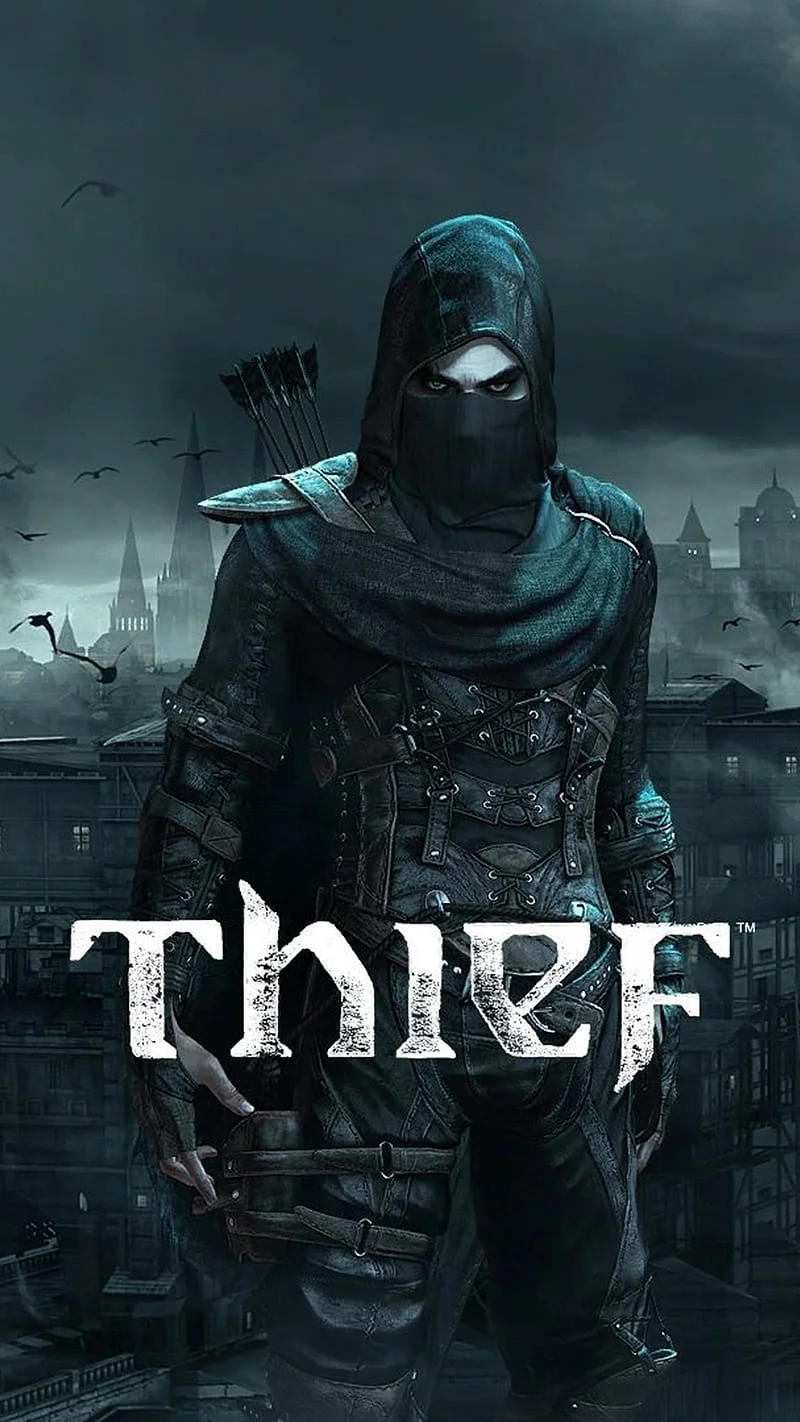
Thief
This combination offers playable performance with an average of 43 FPS, though you may want to lower settings for smoother gameplay.
Average FPS: resolution vs quality settings
| Ultra | High | Medium | Low | |
|---|---|---|---|---|
| 4K Ultra HD | 19 | 20 | 26 | 35 |
| 1440p QHD | 33 | 34 | 45 | 59 |
| 1080p Full HD | 48 | 50 | 66 | 86 |
Cell color: green is 120+ FPS, teal is 60+, amber is 30+, red is below 30.
Thief with AMD Ryzen 5 7400F + Intel Arc B390, In-Depth Analysis
# FAQ
Q: What is the launch MSRP of the AMD Ryzen 5 7400F?
A: The AMD Ryzen 5 7400F has a launch MSRP of $229. It is a desktop processor from the 7000 series, built on the Zen 4 (Raphael) architecture using a 5 nm process from TSMC.
Q: How does the Intel Arc B390 compare to its closest rival in synthetic benchmarks?
A: The Intel Arc B390 scores 1482 in 3DMark Steel Nomad DX12, placing it 1.3% ahead of the NVIDIA GeForce GT 520MX (1463), 1.5% ahead of the GeForce 800M (1460), 2.5% ahead of the GT 625 OEM (1446), and 2.7% ahead of the GT 710 (1443). Its percentile rank among all GPUs is 9.
Q: What is the best average FPS this combo achieves at 1080p?
A: The highest measured average FPS for this combo at 1920x1080 is 86, achieved at Low settings. At Medium settings the average drops to 66, at High it is 50, and at Ultra it is 48.
Q: Is the CPU or GPU the limiting factor at 4K Ultra settings?
A: The data indicates the GPU becomes the primary bottleneck at 3840x2160 Ultra, where the combo averages only 19 FPS. The Ryzen 5 7400F, with its 6 cores and 12 threads, has ample headroom compared to the GPU's low synthetic percentile rank of 9.
Q: What are the measured minimum and maximum FPS values for this combo?
A: Minimum and maximum FPS values are only provided for Medium settings at each resolution. At 1080p Medium, the range is 56 to 75 FPS. At 1440p Medium, it is 38 to 52 FPS. At 4K Medium, it is 22 to 30 FPS. No min/max data is available for Low, High, or Ultra presets.
Q: What is the combo's ranking among all tested combinations for Thief?
A: This AMD Ryzen 5 7400F + Intel Arc B390 combination ranks 2534 out of 2851 tested combos in Thief, placing it in the bottom 11% of all configurations.
---
GPU Role
The Intel Arc B390 is an integrated graphics solution based on the Xe3-LPG architecture, built on Intel's 3 nm process. It features 1536 shading units, 48 texture mapping units, and 24 ROPs, with 12 ray tracing cores. The GPU operates at a base clock of 300 MHz and boosts to 2500 MHz. Critically, the memory configuration is "System Shared" — meaning the GPU draws from system RAM rather than dedicated VRAM — with system-dependent bandwidth. The pixel rate is 60.00 GPixel/s, texture rate is 120.0 GTexel/s, and FP32 compute is 7.680 TFLOPS.
The synthetic benchmark results confirm the GPU's modest positioning. Its 3DMark Steel Nomad DX12 score of 1482 places it in the 9th percentile of all GPUs. The nearest rivals are all legacy NVIDIA parts: the GT 520MX, GeForce 800M, GT 625 OEM, and GT 710, with deltaPct values of 1.3%, 1.5%, 2.5%, and 2.7% respectively. This means the Arc B390 is only marginally faster than a decade-old entry-level mobile GPU in synthetic workloads.
In Thief, the GPU's shared memory architecture and low fillrate become apparent at higher resolutions. At 4K, even Low settings yield only 35 FPS average, which is below the 60 FPS threshold commonly associated with fluid gameplay. The combination of 24 ROPs and system-shared memory means the GPU cannot sustain high throughput when pixel count increases, as evidenced by the steep FPS drop from 86 at 1080p Low to 35 at 4K Low — a 59% reduction.
The GPU's boost clock of 2500 MHz is respectable for an integrated part, but the architectural limitations (24 ROPs, shared memory) cap its effective performance. The data shows that at 1080p Low, the combo reaches 86 FPS, suggesting the GPU can handle modest loads when pixel count is low. However, the 3DMark score of 1482, which rivals the GeForce GT 710, indicates that the Arc B390 is fundamentally a low-end part, and Thief's results reflect this.
---
Resolution Scaling
The measured FPS data for Thief shows a clear and consistent pattern of performance degradation as resolution increases, which points to the GPU as the primary limiting component. At Low settings, the average FPS drops from 86 at 1080p to 59 at 1440p, a 31% reduction, and further to 35 at 4K, a 41% reduction from 1440p. This is a total drop of 59% from 1080p to 4K at Low settings.
At Medium settings, the scaling is similarly steep: 66 FPS at 1080p, 45 FPS at 1440p (a 32% drop), and 26 FPS at 4K (a 42% drop from 1440p). The min/max ranges at Medium settings also narrow as resolution increases: from 56-75 at 1080p to 38-52 at 1440p to 22-30 at 4K, indicating tighter frame pacing but lower overall throughput.
High settings show the same trend: 50 FPS at 1080p, 34 FPS at 1440p (32% drop), and 20 FPS at 4K (41% drop). At Ultra settings, the totals are 48 FPS at 1080p, 33 FPS at 1440p (31% drop), and 19 FPS at 4K (42% drop).
The consistency of these percentage drops across all settings — roughly 31-32% from 1080p to 1440p and 41-42% from 1440p to 4K — is characteristic of a GPU-bound scenario. If the CPU were the limiting factor, the FPS would remain relatively flat across resolutions, but the data shows proportional decreases that track with pixel count increases. The 4K to 1080p pixel ratio is 4:1, yet the FPS does not drop by 75%, indicating some CPU involvement at lower resolutions, but the GPU clearly dominates the bottleneck at higher resolutions.
The fact that Ultra settings at 1080p (48 FPS) are only slightly lower than High settings at 1080p (50 FPS) suggests that the GPU is nearing its fillrate ceiling even at 1080p, and additional settings headroom is minimal.
---
Settings Recommendations
Given the measured data, the optimal experience for this combo depends heavily on the target resolution and acceptable frame rates. At 1080p, the Low preset delivers 86 FPS average, which is the only playable option for smooth 60+ FPS gameplay. Medium settings at 1080p achieve 66 FPS, which is also above 60 FPS, making it the best balance of visual quality and performance at this resolution. The min FPS of 56 at Medium ensures that most scenes stay above 60 FPS, with occasional dips.
At 1440p, Low settings average 59 FPS, which is marginally below the 60 FPS target. Medium settings at 1440p average 45 FPS with a min of 38, which may be acceptable for slower-paced stealth gameplay but will feel less fluid. High and Ultra at 1440p drop to 34 and 33 FPS respectively, which are playable but noticeably less smooth.
At 4K, all settings are below 40 FPS average. Low settings at 35 FPS is the only remotely playable option, and even that will exhibit visible stutter in fast scenes. Medium at 26 FPS, High at 20 FPS, and Ultra at 19 FPS are all borderline unplayable for a stealth game that requires precise timing.
The data suggests that Medium settings at 1080p is the sweet spot for this combo, offering 66 FPS average with a min of 56, which provides a responsive experience without sacrificing too much visual fidelity. For users prioritizing frame rate above all, Low at 1080p at 86 FPS is the clear choice. At 1440p, Low at 59 FPS is the only option near 60 FPS, while Medium and above require accepting sub-50 FPS gameplay. At 4K, Low at 35 FPS is the maximum achievable, and users should consider lowering resolution rather than settings for a better experience.
---
Measured FPS Breakdown
1920x1080 (1080p):
- Low: 86 FPS average
- Medium: 66 FPS average, with min 56 and max 75
- High: 50 FPS average
- Ultra: 48 FPS average
At 1080p, the spread from Low to Ultra is 38 FPS, representing a 44% performance loss from the lowest to highest preset. The jump from Low to Medium costs 20 FPS (23% reduction), while the jump from Medium to High costs 16 FPS (24% reduction). The difference between High and Ultra is only 2 FPS, suggesting that Ultra settings add minimal visual overhead beyond High, or that the GPU is already saturated at High.
2560x1440 (1440p):
- Low: 59 FPS average
- Medium: 45 FPS average, with min 38 and max 52
- High: 34 FPS average
- Ultra: 33 FPS average
At 1440p, the spread from Low to Ultra is 26 FPS, a 44% reduction. The step from Low to Medium costs 14 FPS (24% reduction), Medium to High costs 11 FPS (24% reduction), and High to Ultra costs only 1 FPS. The pattern mirrors 1080p, with diminishing returns beyond Medium settings.
3840x2160 (4K):
- Low: 35 FPS average
- Medium: 26 FPS average, with min 22 and max 30
- High: 20 FPS average
- Ultra: 19 FPS average
At 4K, the spread from Low to Ultra is 16 FPS, a 46% reduction. Low to Medium costs 9 FPS (26% reduction), Medium to High costs 6 FPS (23% reduction), and High to Ultra costs only 1 FPS. At every resolution, the High-to-Ultra delta is minimal (1-2 FPS), indicating that Ultra settings are not worth the negligible performance difference.
The min/max data at Medium settings shows that frame pacing degrades with resolution: the 1080p range is 19 FPS wide (56-75), the 1440p range is 14 FPS wide (38-52), and the 4K range is 8 FPS wide (22-30). This narrowing range indicates that at higher resolutions, the GPU is consistently hitting its throughput ceiling rather than experiencing variable loads.
---
CPU Role
The AMD Ryzen 5 7400F is a 6-core, 12-thread desktop processor from the 7000 series, built on the Zen 4 (Raphael) architecture at 5 nm. It has a base clock of 3.70 GHz and a boost clock of 4.70 GHz, with a TDP of 65 W. The cache hierarchy includes 64 KB L1 per core, 1 MB L2 per core, and 32 MB shared L3. Memory support is DDR5 with dual-channel configuration and 83.2 GB/s bandwidth. The processor supports PCIe Gen 5 with 24 lanes.
In synthetic benchmarks, the Ryzen 5 7400F demonstrates strong computational performance. Its Cinebench R23 multicore score is 21765, and single-core is 3072. The PassMark multithread score is 25645, with a single-thread score of 3689. Its average benchmark score is 32750, placing it in the 83rd percentile of all CPUs. The nearest rivals are the Intel Core i5-14600T (avg 32707, deltaPct 0.1%), Intel Core Ultra 7 155H (avg 32697, deltaPct 0.2%), AMD Ryzen 7 PRO 6850H (avg 32812, deltaPct -0.2%), and AMD Ryzen AI 7 PRO 360 (avg 32662, deltaPct 0.3%). These deltas are all within 0.3%, meaning the Ryzen 5 7400F is statistically tied with these competitors.
In Thief, the CPU's role is evident when comparing the FPS scaling across resolutions. At 1080p Low, the combo achieves 86 FPS, but at 4K Low it drops to 35 FPS. If the CPU were the bottleneck, the 1080p FPS would be much lower, as the CPU would limit the frame rate regardless of resolution. The fact that 1080p Low reaches 86 FPS indicates the CPU is capable of feeding frames at that rate, while the GPU is the limiting factor at higher resolutions.
The 6-core/12-thread configuration is more than sufficient for Thief, a game from 2014 that predates the multi-core era. The high single-core score (3072 in Cinebench R23) is particularly relevant for older game engines that rely heavily on single-thread performance. The data shows no evidence of CPU bottlenecking at any resolution, as the FPS scales consistently with pixel count, which is a GPU-bound characteristic.
The CPU's 65 W TDP and efficient 5 nm process mean it generates minimal heat, but this is irrelevant to gaming performance in this context. The memory bandwidth of 83.2 GB/s is shared with the GPU (since the Arc B390 uses System Shared memory), which means the CPU and GPU compete for the same memory bandwidth. This could contribute to performance degradation at higher resolutions, as the GPU's memory access becomes more demanding, but the measured data does not isolate this effect.
---
How This Combo Ranks
The AMD Ryzen 5 7400F + Intel Arc B390 combination ranks 2534 out of 2851 tested combos in Thief, placing it in the 11th percentile of all configurations. This is a low ranking that reflects the GPU's limited capabilities more than the CPU's performance.
To contextualize this ranking, consider the CPU's position: the Ryzen 5 7400F is in the 83rd percentile of all CPUs, meaning it outperforms 83% of processors. The GPU, however, is in the 9th percentile of all GPUs, meaning it outperforms only 9% of graphics cards. This massive disparity — an 83rd-percentile CPU paired with a 9th-percentile GPU — explains why the combo ranks so low in a game like Thief, which is heavily GPU-dependent at higher resolutions.
The CPU's nearest rivals (Intel Core i5-14600T, Intel Core Ultra 7 155H, AMD Ryzen 7 PRO 6850H, AMD Ryzen AI 7 PRO 360) all have nearly identical average benchmark scores, with deltaPct values within 0.3%. This means that swapping the Ryzen 5 7400F for any of these CPUs would have virtually no impact on Thief's performance, as the GPU bottleneck dominates.
Similarly, the GPU's nearest rivals (NVIDIA GeForce GT 520MX, GeForce 800M, GT 625 OEM, GT 710) are all within 2.7% of the Arc B390's 3DMark score. This suggests that the Arc B390 is effectively a low-end GPU by modern standards, and its performance in Thief is consistent with that classification.
The rank of 2534 out of 2851 means that 88% of tested combos perform better in Thief. The bottom 11% of combos likely feature similarly weak GPUs. The data indicates that this combo is only suitable for 1080p Low/Medium gaming in Thief, and even then, at 50-86 FPS depending on settings. For users with this combo, the recommendation is to stick to 1080p and prioritize frame rate over visual fidelity, as the GPU simply cannot handle higher resolutions or settings without dropping below playable thresholds.
Hardware Specifications
AMD Ryzen 5 7400F
Intel Arc B390
FPS Benchmarks by Resolution & Settings
Performance data for AMD Ryzen 5 7400F + Intel Arc B390 in Thief
| Resolution | Settings | Avg FPS |
|---|---|---|
| 3840x2160 | Low | 35.0 |
| 3840x2160 | Medium | 26.0 |
| 3840x2160 | High | 20.0 |
| 3840x2160 | Ultra | 19.0 |
| 2560x1440 | Low | 59.0 |
| 2560x1440 | Medium | 45.0 |
| 2560x1440 | High | 34.0 |
| 2560x1440 | Ultra | 33.0 |
| 1920x1080 | Low | 86.0 |
| 1920x1080 | Medium | 66.0 |
| 1920x1080 | High | 50.0 |
| 1920x1080 | Ultra | 48.0 |
Thief with Ryzen 5 7400F + Other GPUs
See how Thief performs with the same CPU but different graphics cards.
Thief with Arc B390 + Other CPUs
See how Thief performs with the same GPU but different processors.
Other Games with Ryzen 5 7400F + Arc B390
Explore FPS benchmarks for other games using this same hardware combination.