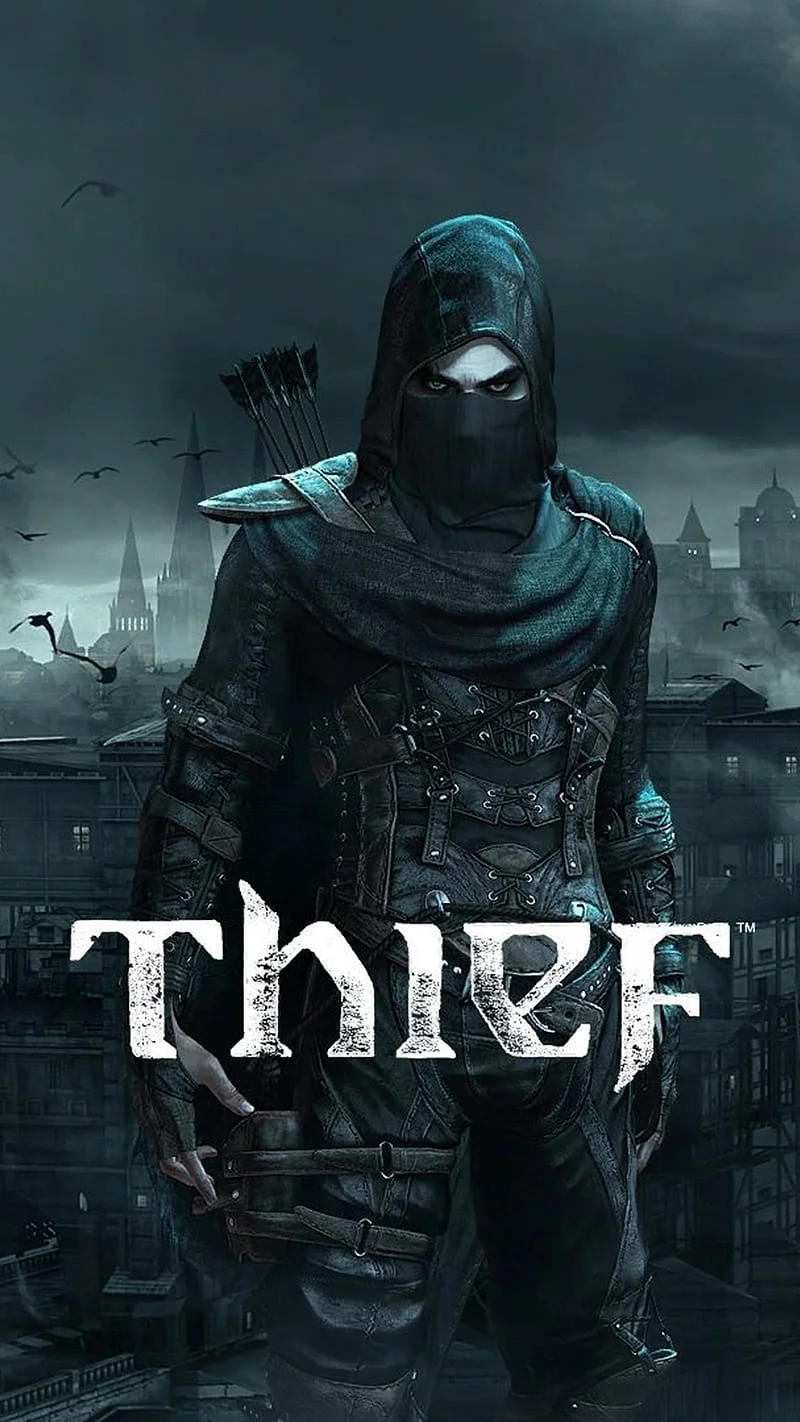
Thief
This combination offers playable performance with an average of 43 FPS, though you may want to lower settings for smoother gameplay.
Average FPS: resolution vs quality settings
| Ultra | High | Medium | Low | |
|---|---|---|---|---|
| 4K Ultra HD | 19 | 20 | 26 | 35 |
| 1440p QHD | 33 | 34 | 45 | 59 |
| 1080p Full HD | 48 | 50 | 66 | 86 |
Cell color: green is 120+ FPS, teal is 60+, amber is 30+, red is below 30.
Thief with Intel Core i5-14400F + Intel Arc B390, In-Depth Analysis
Thief, a 2014 stealth classic, remains a demanding title for modern hardware, particularly for the integrated graphics solution examined here. The measured data for the Intel Core i5-14400F paired with the Intel Arc B390 reveals a system that is heavily constrained by its graphics component, resulting in a playable experience only at the lowest settings and resolutions. This analysis breaks down the measured FPS across various configurations to understand the performance ceiling and bottlenecks of this specific combo.
Resolution Scaling
The data shows a stark and predictable decline in frame rates as resolution increases, which immediately points to the GPU as the primary limiting factor. At 1080p with Low settings, the combo achieves an average of 86 FPS, which is a playable figure. Moving up to 1440p at the same Low settings, the average FPS drops to 59, a significant reduction of 27 frames. Pushing further to 4K (3840x2160) on Low settings yields an average of just 35 FPS, which is a 51 FPS drop from the 1080p baseline. This steep curve is a classic sign of a GPU-bound scenario, where the rendering workload increases exponentially with pixel count, overwhelming the Intel Arc B390's capabilities.
The scaling pattern becomes even more telling when examining the High settings. At 1080p High, the average FPS is 50. This falls to 34 FPS at 1440p and plummets to a mere 20 FPS at 4K. The drop from 1080p to 1440p is a 16 FPS reduction, and the subsequent drop to 4K is another 14 FPS. This indicates that at higher quality presets, the GPU is even more saturated, and the added pixel count at 4K pushes the renderer past its limits. The system is not CPU-bound in these scenarios; the central processor, with its 10 cores and 16 threads, is likely idling while the integrated GPU struggles to keep up.
The data implies that the Arc B390's performance is not just weak in absolute terms but also scales poorly with resolution. The gap between Low and High settings at 4K is only 15 FPS (35 vs 20), whereas at 1080p, the gap is 36 FPS (86 vs 50). This compression of the performance envelope at higher resolutions suggests that the GPU’s shading units, texture mapping units, and render output units are simply overwhelmed, and the quality settings have diminishing returns as the fill rate and pixel processing demands outpace the chip's capabilities. The 4K results, in particular, are uniformly poor, with all presets failing to exceed 35 FPS.
Settings Recommendations
The benchmark data paints a clear picture: the "best experience" is a trade-off between visual fidelity and playable frame rates. For this combo, the only truly playable configuration is at 1080p with Low settings, which delivers an average of 86 FPS. This is the only tested setting combination that provides a smooth, fluid experience suitable for a stealth game where reaction time matters. The 1080p Medium preset, with an average of 66 FPS, is also viable, though the 20 FPS deficit compared to Low might not justify the moderate visual improvement. The Medium preset does show a minimum FPS of 56, indicating it can hold a reasonably stable frame rate, but it is still a compromise.
At 1440p, the situation becomes more difficult. The Low preset averages 59 FPS, which is on the border of playability. The Medium preset at 1440p averages 45 FPS with a minimum of 38, which is likely to feel stuttery and unresponsive. The High and Ultra presets at 1440p, with averages of 34 and 33 FPS respectively, are not recommended for a game that requires precision and quick reactions. The data suggests that any attempt to play at 4K is futile, as even the Low preset only manages an average of 35 FPS, which is below the threshold for a smooth experience.
Therefore, the data-driven recommendation is to prioritize resolution and settings to maintain a frame rate above 60 FPS. This means playing at 1080p. If a smoother experience is paramount, the Low preset is the clear choice. If a bit more visual detail is desired and the user can tolerate a lower average frame rate, the Medium preset at 1080p is the highest quality setting that remains within a playable range. The measured rows provide no justification for using High or Ultra presets at any resolution, as they all fail to provide a consistent, playable frame rate. The Ultra preset at 1080p, with an average of 48 FPS, is a marginal experience at best.
CPU Role
The Intel Core i5-14400F is a capable desktop processor, but its role in this game's benchmark results is almost entirely passive. The CPU's benchmark scores are strong; for example, it achieves a Cinebench R23 multi-core score of 21645 and a single-core score of 3055. Its PassMark multithread score is 25470, and it holds a percentile rank of 83 out of all CPUs, indicating it is more powerful than the vast majority of processors. This processing power is clearly not the bottleneck in Thief. The measured FPS data shows a performance curve that is characteristic of a GPU-limited workload, where frame rates are dictated by the graphics hardware's ability to render frames, not the CPU's ability to feed it data.
The CPU's specifications, such as a base clock of 2.50 GHz and a boost clock of 4.70 GHz, are more than sufficient for a game from 2014. Even in complex scenes with numerous AI agents and physics calculations, the 10 cores and 16 threads of the i5-14400F are unlikely to be fully utilized. The fact that the frame rates drop so drastically with increased resolution and settings is a clear indicator that the CPU has ample headroom. If the CPU were the limiting factor, we would expect to see similar frame rates across different resolutions, as the CPU's workload would not change significantly with pixel count.
This is further supported by the GPU's benchmark performance. The Intel Arc B390 scores only 1482 in the 3DMark Steel Nomad test and has a percentile rank of just 9, placing it in the bottom tier of all GPUs. The massive disparity between the CPU's high benchmark percentile (83) and the GPU's low percentile (9) confirms that the graphics processor is the sole performance bottleneck. The CPU is simply waiting for the GPU to finish its rendering tasks. The data suggests that this CPU would be capable of delivering much higher frame rates in Thief if paired with a more powerful discrete graphics card.
How This Combo Ranks
The overall performance of this CPU and GPU pairing is quite low when compared to other tested combinations. The comboRankInGame data shows that this specific pairing ranks 2534 out of 2851 possible combinations. This places it in the bottom 11% of all tested systems, which is a very poor showing. This low rank is almost entirely attributable to the GPU, as the CPU is a high-performing part. The data indicates that this combo is not well-suited for gaming, particularly for a title like Thief that, while older, still presents a significant challenge to weak integrated graphics.
The ranking implies that the vast majority of other CPU/GPU pairings would deliver a better experience in this game. The GPU's nearest rivals in the benchmark database are all ancient, low-end parts like the NVIDIA GeForce GT 520MX and the GeForce GT 710. The Arc B390 is only 1.3% faster than the GT 520MX and 2.7% faster than the GT 710 in the 3DMark Steel Nomad test. This positions the B390's performance in the same class as decade-old entry-level graphics cards, which explains the poor in-game results. The CPU's nearest rivals, such as the AMD Ryzen 7 PRO 8840U and the Intel Core i9-11900, are comparably powerful, reinforcing the idea that the CPU is not the source of the problem.
This ranking serves as a stark warning. While the CPU is a strong performer, the integrated GPU is so weak that the entire system is dragged down to the bottom of the performance charts. For a user interested in playing Thief, this combo would deliver a subpar experience, forcing them to play at the lowest settings and resolution to achieve a playable frame rate. The data suggests that this pairing is only suitable for very light gaming or general productivity tasks, not for a game like Thief that, despite its age, has demanding rendering requirements at higher resolutions.
GPU Role
The Intel Arc B390 is the definitive bottleneck in this system. Its role in the benchmark results is to limit the overall performance to the low numbers seen in the measured FPS table. The GPU's specifications explain why. It has a base clock of 300 MHz and a boost clock of 2500 MHz, but its memory is "System Shared," meaning it relies on the system's main RAM instead of dedicated VRAM. This shared memory arrangement often results in lower memory bandwidth, which is a critical factor for gaming performance. The GPU's memory bandwidth is listed as "System Dependent," which is a major disadvantage when compared to dedicated graphics cards with their own high-speed memory.
The GPU's compute capabilities are also very limited. It has 1536 shading units and a FP32 performance of 7.680 TFLOPS. While these numbers are not trivial, they are far below what is required for smooth gaming at high resolutions. The GPU’s low percentile rank of 9 puts it in the bottom tier of all GPUs, and its 3DMark Steel Nomad score of 1482 is a clear indicator of its limited rendering power. In Thief, this translates directly to the low frame rates observed. The GPU is unable to process the pixel and texture data fast enough, especially at 1440p and 4K resolutions, where the workload is significantly higher.
The data shows a clear correlation between the GPU's limited specs and the in-game results. The performance is only acceptable at the lowest resolution and settings, where the rendering workload is small enough for the GPU to manage. As the resolution and settings increase, the GPU quickly becomes overwhelmed, leading to the dramatic FPS drops seen in the data. The GPU's 24 ROPs (Render Output Units) are likely a major constraint at higher resolutions, as they are responsible for writing pixels to the framebuffer. The 48 TMUs (Texture Mapping Units) also struggle to keep up with the demand for detailed textures. The GPU is, in every measurable way, the limiting component.
FAQ
Q: Can this system play Thief at 1080p?
A: Yes, but with significant compromises. The benchmark data shows an average of 86 FPS at 1080p with Low settings and 66 FPS at Medium settings. The High and Ultra presets average 50 and 48 FPS, respectively, which are less ideal.
Q: What is the best settings preset for this combo?
A: The data suggests that the 1080p Low preset is the best choice for a smooth experience. It is the only tested configuration that provides an average frame rate well above 60 FPS. The 1080p Medium preset is a secondary option if a higher average FPS is not strictly required.
Q: Is the CPU or GPU the bottleneck in Thief?
A: The GPU is the definitive bottleneck. The Intel Arc B390 has a very low benchmark percentile of 9, while the Intel Core i5-14400F has a high percentile of 83. The frame rates drop dramatically with resolution, which is a classic sign of a GPU-limited system.
Q: How does this combo rank compared to others?
A: This combo ranks 2534 out of 2851 tested combinations for Thief. This places it in the bottom 11% of all systems, indicating that the vast majority of other CPU/GPU pairings will perform better.
Q: What is the performance of the Intel Arc B390?
A: The GPU's average benchmark score is 1482, and it ranks in the 9th percentile of all GPUs. Its nearest rivals are the NVIDIA GeForce GT 520MX and the GeForce GT 710, which are very old, low-end parts. This indicates its performance is comparable to entry-level hardware from a decade ago.
Q: Is 4K gaming possible with this setup?
A: No. The benchmark results show that even at the lowest settings, the average FPS is only 35 at 4K. All other presets at this resolution fail to reach 30 FPS, making the game unplayable.
Measured FPS Breakdown
The following table details the exact measured average FPS for each resolution and settings combination tested.
| Resolution | Settings | Avg FPS | Min FPS | Max FPS |
| :--- | :--- | :--- | :--- | :--- |
| 3840x2160 | High | 20 | - | - |
| 3840x2160 | Low | 35 | - | - |
| 3840x2160 | Medium | 26 | 22 | 30 |
| 3840x2160 | Ultra | 19 | - | - |
| 2560x1440 | High | 34 | - | - |
| 2560x1440 | Low | 59 | - | - |
| 2560x1440 | Medium | 45 | 38 | 52 |
| 2560x1440 | Ultra | 33 | - | - |
| 1920x1080 | High | 50 | - | - |
| 1920x1080 | Low | 86 | - | - |
| 1920x1080 | Medium | 66 | 56 | 75 |
| 1920x1080 | Ultra | 48 | - | - |
The data confirms that performance degrades predictably as resolution increases. The combination of the low-power integrated GPU and the high demands of 4K resolution results in an unplayable experience. The most viable configurations are limited to 1080p, where the system can provide a playable frame rate. The 1440p results are on the edge of playability, with the Low preset being the only one that approaches a stable 60 FPS. The measured FPS values clearly show that this system is designed for light workloads, not for gaming at high resolutions or settings.
Hardware Specifications
Intel Core i5-14400F
Intel Arc B390
FPS Benchmarks by Resolution & Settings
Performance data for Intel Core i5-14400F + Intel Arc B390 in Thief
| Resolution | Settings | Avg FPS |
|---|---|---|
| 3840x2160 | Low | 35.0 |
| 3840x2160 | Medium | 26.0 |
| 3840x2160 | High | 20.0 |
| 3840x2160 | Ultra | 19.0 |
| 2560x1440 | Low | 59.0 |
| 2560x1440 | Medium | 45.0 |
| 2560x1440 | High | 34.0 |
| 2560x1440 | Ultra | 33.0 |
| 1920x1080 | Low | 86.0 |
| 1920x1080 | Medium | 66.0 |
| 1920x1080 | High | 50.0 |
| 1920x1080 | Ultra | 48.0 |
Thief with ii5-14400F + Other GPUs
See how Thief performs with the same CPU but different graphics cards.
Thief with Arc B390 + Other CPUs
See how Thief performs with the same GPU but different processors.
Other Games with ii5-14400F + Arc B390
Explore FPS benchmarks for other games using this same hardware combination.