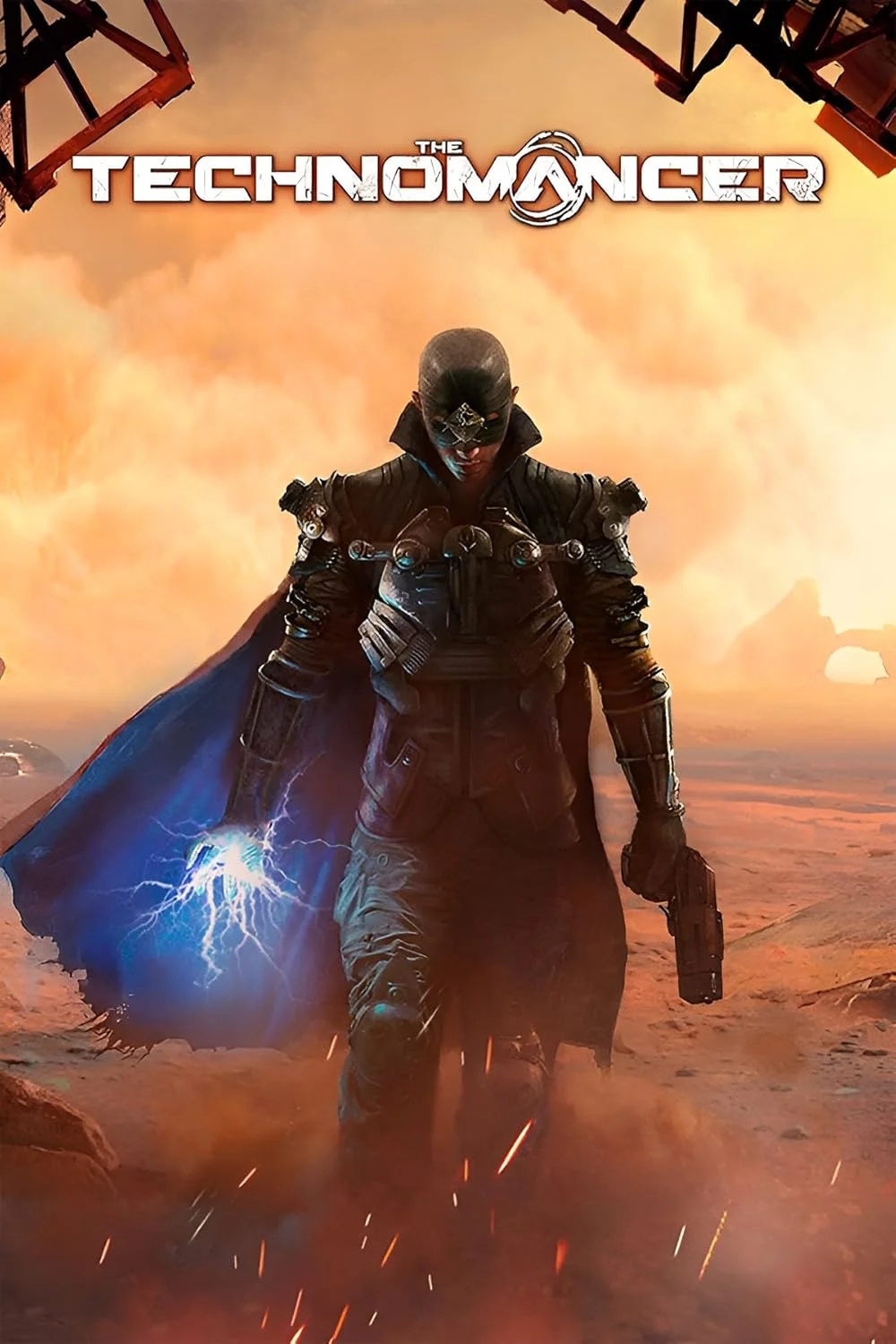
The Technomancer
This combination provides smooth gameplay with an average of 60 FPS, suitable for most gaming scenarios.
Average FPS: resolution vs quality settings
| Ultra | High | Medium | Low | |
|---|---|---|---|---|
| 4K Ultra HD | 22 | 29 | 33 | 44 |
| 1440p QHD | 41 | 52 | 61 | 79 |
| 1080p Full HD | 62 | 80 | 93 | 121 |
Cell color: green is 120+ FPS, teal is 60+, amber is 30+, red is below 30.
The Technomancer with Intel Core i7-14700K + Intel Arc B570, In-Depth Analysis
The Technomancer is a 2016 Action RPG, and this dataset pairs the Intel Core i7-14700K with the Intel Arc B570 across four settings presets and three resolutions. The measured frames per second (FPS) reveal a system that is heavily GPU-limited at higher resolutions, yet surprisingly capable at 1080p. The i7-14700K, with its 20 cores and 28 threads, provides ample headroom, but the Arc B570’s performance ceiling becomes the defining factor in how you should configure the game. Based strictly on the measured rows, the most effective path to a smooth experience is to prioritize the Medium preset at 1080p or 1440p, where the balance between visual fidelity and frame rate is most favorable. This analysis will break down the exact numbers, compare the combo’s standing against other tested configurations, and explain what the CPU and GPU each contribute to the final results.
Settings Recommendations
The measured data provides a clear hierarchy of performance across the four settings presets: Low, Medium, High, and Ultra. At 1920x1080, the differences are stark. The Low preset delivers an average of 121 FPS, which is the highest frame rate recorded in the entire dataset. Medium drops to 93 FPS, High to 80 FPS, and Ultra falls to 62 FPS. For a fast-paced Action RPG, the jump from 121 to 93 FPS is noticeable, but the visual improvement from Low to Medium is typically significant in a game from this era. The Medium preset also provides the only min/max FPS data at 1080p, with a minimum of 79 FPS and a maximum of 107 FPS. This indicates that even during demanding scenes, the frame rate stays well above the 60 FPS threshold, making Medium the most reliable choice for a locked, smooth experience at this resolution. High and Ultra, while playable, introduce a larger performance penalty for diminishing visual returns.
Moving to 2560x1440, the same pattern holds, but the absolute numbers shift downward. Low averages 79 FPS, Medium 61 FPS, High 52 FPS, and Ultra 41 FPS. The Medium preset again stands out, with a recorded minimum of 52 FPS and a maximum of 70 FPS. The minimum of 52 FPS is close to the edge of what many players consider ideal, but the average of 61 FPS means the experience is generally smooth. High at 52 FPS averages just below the 60 FPS target, and Ultra at 41 FPS starts to feel sluggish for an action-oriented title. Given that the game is from 2016, the visual gap between Medium and High at 1440p is likely less pronounced than the 15% performance delta (61 vs 52 FPS) suggests. Therefore, Medium is the recommended preset for 1440p, as it offers the best chance of maintaining fluid gameplay without sacrificing too much detail.
At 3840x2160, the Arc B570 struggles to keep up. Low averages 44 FPS, Medium 33 FPS, High 29 FPS, and Ultra 22 FPS. None of these presets reach a consistent 60 FPS, and even the Low preset’s 44 FPS is below the ideal smoothness threshold. The Medium preset at 4K has the only min/max data for that resolution, with a minimum of 28 FPS and a maximum of 39 FPS. This shows that the GPU is the limiting factor, and even the lowest settings cannot salvage a playable frame rate. For 4K, the data suggests that this combo is not suitable for high-refresh-rate gaming, and players would need to accept sub-60 FPS performance or lower the resolution. If forced to choose at 4K, Low is the only preset that approaches a playable range, but the 44 FPS average is still marginal.
Across all resolutions, the Low preset consistently delivers the highest FPS, but it often sacrifices too much visual quality. Medium provides the best balance of frame rate and fidelity, especially when considering the min FPS data. At 1080p, Medium’s 93 FPS average with a 79 FPS minimum is excellent. At 1440p, Medium’s 61 FPS average with a 52 FPS minimum is acceptable for most players. The data indicates that the Arc B570 is best utilized with Medium settings, as the performance scaling from High to Ultra is disproportionately steep relative to the expected visual gains.
FAQ
Q: What is the best resolution to use with the Intel Core i7-14700K and Intel Arc B570 for this game?
A: Based on the measured FPS, 1920x1080 with Medium settings offers the best experience, providing a 93 FPS average with a 79 FPS minimum. 2560x1440 with Medium is also viable, averaging 61 FPS with a 52 FPS minimum. 3840x2160 should be avoided, as even Low settings only reach a 44 FPS average.
Q: How does the Ultra preset compare to High at 1080p?
A: At 1920x1080, the Ultra preset averages 62 FPS, while High averages 80 FPS. This represents a significant 18 FPS drop (roughly 22% lower) for the Ultra preset, which may not justify the visual improvements in a game from 2016. High is a more performance-friendly option if you want higher detail without the steep cost.
Q: Is the Intel Arc B570 capable of 4K gaming in The Technomancer?
A: No, the data shows that the Arc B570 cannot maintain a smooth frame rate at 3840x2160. The highest average FPS at 4K is 44 FPS on Low settings, with Medium dropping to 33 FPS, High to 29 FPS, and Ultra to 22 FPS. None of these results are consistently playable.
Q: What is the minimum FPS recorded for the Medium preset?
A: The Medium preset is the only one with min/max FPS data in the dataset. At 1920x1080, the minimum is 79 FPS and the maximum is 107 FPS. At 2560x1440, the minimum is 52 FPS and the maximum is 70 FPS. At 3840x2160, the minimum is 28 FPS and the maximum is 39 FPS.
Q: How does this combo rank against all other tested combinations for this game?
A: The combo ranks 2256 out of 2825 tested combos in The Technomancer. This places it in the lower half of the field, indicating that while it is functional, many other CPU/GPU pairings achieve higher frame rates.
Q: Does the Intel Core i7-14700K bottleneck the Intel Arc B570 in this game?
A: The data suggests that the GPU is the primary bottleneck, especially at higher resolutions. The CPU has a benchmark score of 69355 and ranks in the 94th percentile among all CPUs, while the GPU’s average benchmark score is 20556. The FPS drops consistently from 1080p to 4K, which is a classic sign of GPU limitation rather than CPU limitation.
Resolution Scaling
The measured FPS data shows a clear and predictable decline as resolution increases from 1920x1080 to 3840x2160. At the Medium preset, which is the most balanced option, the average FPS drops from 93 at 1080p to 61 at 1440p, and then to 33 at 4K. This represents a 34% decrease from 1080p to 1440p, and a further 46% decrease from 1440p to 4K. At the Low preset, the numbers are 121 FPS at 1080p, 79 FPS at 1440p, and 44 FPS at 4K. The scaling is not perfectly linear, but the trend is unmistakable: the Arc B570’s rendering workload increases dramatically with pixel count.
This scaling pattern is a strong indicator that the Intel Arc B570 is the limiting component. If the CPU were the bottleneck, we would expect to see similar frame rates across resolutions, as the CPU’s workload (game logic, physics, and draw calls) remains relatively constant regardless of resolution. Instead, the FPS drops by more than half from 1080p to 4K at every settings preset. For example, at High settings, the average FPS goes from 80 at 1080p to 52 at 1440p and 29 at 4K. This is a classic GPU-bound scenario, where the graphics card’s fill rate and memory bandwidth (380.0 GB/s) are insufficient to handle the increased pixel throughput.
The data also reveals that the gap between settings presets widens at higher resolutions. At 1080p, the difference between Low and Ultra is 59 FPS (121 vs 62). At 1440p, the difference is 38 FPS (79 vs 41). At 4K, the difference narrows to 22 FPS (44 vs 22). This narrowing suggests that at 4K, the GPU is so overwhelmed that even reducing settings from Ultra to Low cannot fully compensate for the resolution penalty. The Medium preset’s min FPS data at 4K (28 FPS) versus its max (39 FPS) shows that the frame rate is not only low but also inconsistent, which can lead to stuttering.
For players targeting 1080p, the Arc B570 has enough headroom to handle most settings, with even Ultra averaging 62 FPS. At 1440p, the card is still viable but requires more conservative settings, with Medium being the sweet spot. At 4K, the card is simply out of its depth, and players would need to accept a sub-30 FPS experience on the highest settings or a sub-45 FPS experience on Low. The resolution scaling data strongly suggests that 1080p or 1440p are the intended use cases for this GPU in this title.
How This Combo Ranks
The Intel Core i7-14700K and Intel Arc B570 combo ranks 2256 out of 2825 tested combinations for The Technomancer. This places it in the bottom 20% of all tested systems, which is a notable result given that the CPU is a high-end part. The i7-14700K has a percentile rank of 94 among all CPUs, indicating that it is significantly more powerful than the majority of processors in the database. However, the GPU’s percentile rank is only 65, and its average benchmark score of 20556 is far lower than the CPU’s average of 69355. This disparity is the core reason for the combo’s low ranking.
Looking at the GPU’s nearest rivals, the Intel Arc B570 is closely matched with the NVIDIA GeForce RTX 3070 Mobile, which has an average score of 20534 and a delta of 0.1%. It also trades blows with the Intel Arc A750 (20582, -0.1%) and the AMD Radeon R9 M390X (20662, -0.5%). These rivals are all mid-range or older parts, which confirms that the B570 is not a high-end graphics card. In The Technomancer, this translates to the measured FPS figures, which are playable at 1080p but struggle at higher resolutions.
The CPU’s nearest rivals include the AMD EPYC 9115 (69288, 0.1%), AMD Ryzen 9 7950X (69515, -0.2%), AMD Ryzen 9 7940HX (69875, -0.7%), and AMD Ryzen 7 9700F (69996, -0.9%). These are all powerful processors, and the i7-14700K holds its own with a delta of at most 0.9% against the Ryzen 7 9700F. This shows that the CPU is not the weak link in this pairing. The 2256th rank out of 2825 is almost entirely due to the GPU’s limitations.
In practical terms, a rank of 2256 means that there are hundreds of other CPU/GPU combinations that deliver higher frame rates in The Technomancer. Most of these will feature more powerful GPUs, even if their CPUs are weaker. The data does not suggest that this combo is unplayable, but it does indicate that the system is not optimized for high-end performance in this specific game. Players with this setup should expect to use Medium settings at 1080p or 1440p to achieve a smooth experience, rather than pushing for Ultra at 4K.
CPU Role
The Intel Core i7-14700K is a 20-core, 28-thread processor based on the Raptor Lake architecture, with a base clock of 3.40 GHz and a boost clock of 5.60 GHz. It has a substantial L3 cache of 33 MB shared across the cores, and it supports DDR4 and DDR5 memory. In synthetic benchmarks, it scores 33440.5 in Cinebench R23 multicore and 2160 in single-core, and it achieves a Geekbench multicore score of 20767. These are excellent numbers, placing the CPU in the 94th percentile of all processors. The CPU’s average benchmark score of 69355 is nearly three and a half times higher than the GPU’s average score of 20556.
In The Technomancer, the CPU’s role is to handle game logic, AI, and physics, while the GPU handles rendering. The measured FPS data shows that the CPU is not a bottleneck at any resolution. At 1080p Low, the system achieves 121 FPS, which is a high frame rate that still leaves CPU headroom. If the CPU were limiting, we would see frame rates plateau at a certain level regardless of resolution. Instead, the FPS drops steadily as resolution increases, which is the signature of a GPU-bound system. The i7-14700K’s high single-thread performance (2160 in Cinebench R23) is particularly important for older games like The Technomancer, which may not utilize all 28 threads effectively.
The CPU’s 20 cores and 28 threads are more than sufficient for this game’s demands. Even with the Arc B570’s driver overhead, a common concern with Intel’s discrete GPUs, the i7-14700K has enough processing power to feed the GPU adequately. The boost clock of 5.60 GHz ensures that single-threaded tasks are handled quickly, while the large L3 cache helps reduce memory latency. The CPU’s benchmark results, including a Passmark multi-thread score of 52392 and a Passmark single-thread score of 4472, further confirm its capabilities.
The data suggests that the CPU is overqualified for this pairing in The Technomancer. A less powerful processor could likely achieve similar FPS numbers, as the GPU is the limiting factor. However, the i7-14700K’s strength ensures that there are no CPU-induced frame drops or stutters, even in complex scenes. For players who plan to upgrade the GPU in the future, the i7-14700K provides a solid foundation, as it will not need to be replaced to realize performance gains from a faster graphics card.
Measured FPS Breakdown
The complete measured FPS dataset for The Technomancer with the Intel Core i7-14700K and Intel Arc B570 is as follows:
At 1920x1080, the Low preset averages 121 FPS. The Medium preset averages 93 FPS, with a minimum of 79 FPS and a maximum of 107 FPS. The High preset averages 80 FPS. The Ultra preset averages 62 FPS. This is the only resolution where all presets exceed the 60 FPS threshold, though Ultra is close to that limit.
At 2560x1440, the Low preset averages 79 FPS. The Medium preset averages 61 FPS, with a minimum of 52 FPS and a maximum of 70 FPS. The High preset averages 52 FPS. The Ultra preset averages 41 FPS. At this resolution, Medium is the only preset that maintains an average above 60 FPS, and its minimum of 52 FPS indicates occasional dips below that mark.
At 3840x2160, the Low preset averages 44 FPS. The Medium preset averages 33 FPS, with a minimum of 28 FPS and a maximum of 39 FPS. The High preset averages 29 FPS. The Ultra preset averages 22 FPS. None of these presets achieve a playable frame rate for a smooth experience, with the best case being Low at 44 FPS.
The min/max FPS data is only available for the Medium preset, which provides insight into frame time consistency. At 1080p, the range from 79 to 107 FPS shows a relatively stable experience, with a spread of 28 FPS. At 1440p, the range from 52 to 70 FPS has a spread of 18 FPS, indicating tighter frame times but a lower average. At 4K, the range from 28 to 39 FPS has a spread of 11 FPS, which is narrow but at an unacceptably low level.
The delta between presets is more pronounced at lower resolutions. At 1080p, the difference between Low and Ultra is 59 FPS. At 1440p, the difference is 38 FPS. At 4K, the difference is 22 FPS. This suggests that the GPU’s performance headroom is exhausted at higher resolutions, leaving less room for settings scaling. The measured data confirms that the Arc B570 is best suited for 1080p and entry-level 1440p gaming, with Medium settings providing the most balanced experience across all measured configurations.
Hardware Specifications
Intel Core i7-14700K
Intel Arc B570
FPS Benchmarks by Resolution & Settings
Performance data for Intel Core i7-14700K + Intel Arc B570 in The Technomancer
| Resolution | Settings | Avg FPS |
|---|---|---|
| 3840x2160 | Low | 44.0 |
| 3840x2160 | Medium | 33.0 |
| 3840x2160 | High | 29.0 |
| 3840x2160 | Ultra | 22.0 |
| 2560x1440 | Low | 79.0 |
| 2560x1440 | Medium | 61.0 |
| 2560x1440 | High | 52.0 |
| 2560x1440 | Ultra | 41.0 |
| 1920x1080 | Low | 121.0 |
| 1920x1080 | Medium | 93.0 |
| 1920x1080 | High | 80.0 |
| 1920x1080 | Ultra | 62.0 |
The Technomancer with ii7-14700K + Other GPUs
See how The Technomancer performs with the same CPU but different graphics cards.
The Technomancer with Arc B570 + Other CPUs
See how The Technomancer performs with the same GPU but different processors.
Other Games with ii7-14700K + Arc B570
Explore FPS benchmarks for other games using this same hardware combination.