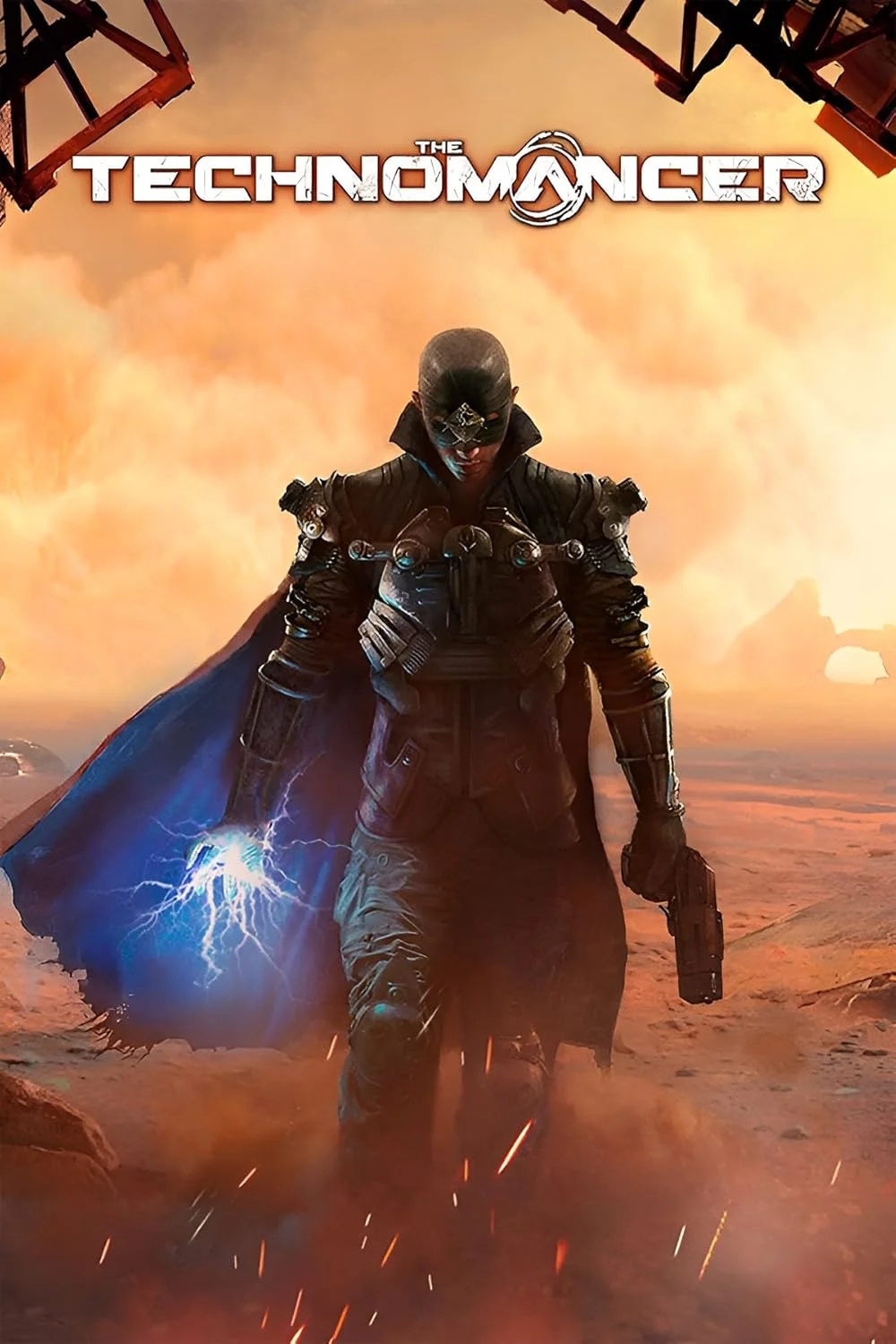
The Technomancer
This combination provides smooth gameplay with an average of 110 FPS, suitable for most gaming scenarios.
Average FPS: resolution vs quality settings
| Ultra | High | Medium | Low | |
|---|---|---|---|---|
| 4K Ultra HD | 41 | 52 | 61 | 80 |
| 1440p QHD | 75 | 96 | 112 | 146 |
| 1080p Full HD | 114 | 146 | 171 | 223 |
Cell color: green is 120+ FPS, teal is 60+, amber is 30+, red is below 30.
The Technomancer with Intel Core i7-14700K + NVIDIA GeForce RTX 3080, In-Depth Analysis
The Technomancer, a 2016 Action RPG, presents an interesting test for the Intel Core i7-14700K and NVIDIA GeForce RTX 3080 combination. This pairing of a high-end modern CPU with a previous-generation enthusiast GPU produces a dataset that clearly delineates the boundaries of both components. The measured results show a system capable of delivering high refresh rates at 1080p and 1440p, while also demonstrating the significant performance cost of pushing 4K Ultra settings. This analysis breaks down the specific roles of the processor and graphics card, contextualizes the combo’s ranking, and provides a detailed look at the measured FPS across various resolutions and settings.
CPU Role — cores, clocks, and how they relate to this game's results
The Intel Core i7-14700K is a 20-core, 28-thread processor based on the Raptor Lake Refresh architecture, built on Intel’s 10 nm process node. It features a base clock of 3.40 GHz and a boost clock of 5.60 GHz, which are critical for ensuring the GPU is fed with data. In a game like The Technomancer, which is not typically considered a CPU-bound title, the 14700K’s role is to provide a stable platform that prevents frame rate drops caused by processor bottlenecks. The high boost clock of 5.60 GHz ensures that single-threaded performance is excellent, which is often the most important factor for game logic and draw call processing.
The CPU’s substantial cache hierarchy, including 33 MB of shared L3 cache and 2 MB per core of L2 cache, helps to keep frequently accessed data close to the cores, reducing latency. This is particularly beneficial in open-world or dense action RPG environments where the engine must stream assets and manage numerous NPCs and physics interactions. The benchmark data for the CPU shows strong multi-threaded performance, with a Cinebench R23 multi-core score of 33440.5, but for gaming, the single-core score of 2160 on the same test is more indicative of its ability to handle the primary game thread. This single-core strength allows the RTX 3080 to operate at its full potential, as evidenced by the high average FPS numbers at lower resolutions where CPU overhead is more prominent.
In the context of The Technomancer’s measured results, the CPU’s influence is most apparent at the 1920x1080 resolution. At this resolution, the GPU is less burdened, and the system’s frame rate becomes more dependent on the CPU’s ability to process and dispatch rendering commands. The data shows that at 1080p Low settings, the combo achieved an average of 223 FPS, which is a very high frame rate that only a top-tier CPU like the 14700K can support. This is not a scenario where the CPU is a limiting factor; rather, it demonstrates the headroom available with this processor, ensuring that performance scales well when the GPU is the bottleneck at higher resolutions. The 14700K holds a 94th percentile rank among all CPUs, underscoring its position as a high-performance part that is well-suited for pairing with powerful graphics cards. Its nearest rival, the AMD Ryzen 9 7950X, shows a nearly identical average benchmark score, with a delta of only -0.2%, indicating that these two processors are effectively in the same performance tier for general compute, and by extension, for feeding a GPU in a gaming workload.
GPU Role — VRAM, clocks, and how they relate to this game's results
The NVIDIA GeForce RTX 3080 is the primary driver of visual fidelity in this configuration. Based on the Ampere architecture and built on Samsung’s 8 nm process, it features a GA102 chip with 8,704 shading units. Its memory subsystem is a key differentiator: 10 GB of GDDR6X on a 320-bit bus provides a bandwidth of 760.3 GB/s. This high bandwidth is crucial for handling the textures and geometry of a game like The Technomancer at high resolutions. The GPU’s boost clock is rated at 1710 MHz, which allows it to deliver a substantial 29.77 TFLOPS of FP32 compute power. This raw compute capability is what enables the high frame rates seen in the measured data, but the 10 GB VRAM capacity is a potential limitation at the highest settings and resolutions.
The measured FPS data illustrates the GPU’s performance curve. At 3840x2160 (4K), the RTX 3080 begins to show its limits. With Ultra settings, the average frame rate drops to 41 FPS, which is below the 60 FPS target many gamers consider the minimum for a smooth experience. This is a direct result of the GPU’s rendering load exceeding its capacity. The data shows a clear progression: lowering settings from Ultra to High at 4K improves the average FPS from 41 to 52, and further reducing to Medium yields an average of 61 FPS, with a minimum of 52 FPS. This indicates that at 4K, the game is heavily GPU-limited, and the RTX 3080 must be paired with reduced settings to achieve playable frame rates. The 10 GB VRAM buffer is also a factor here; while it is sufficient for most games, the combination of 4K resolution and Ultra settings can push memory usage close to its limit, potentially causing texture streaming hitches or the need to drop to High settings.
At lower resolutions, the RTX 3080’s power is more evident. At 2560x1440, the average FPS at High settings is 96, which is a very playable and smooth experience. At 1920x1080, the GPU is even less stressed, achieving an average of 146 FPS at High settings and 223 FPS at Low settings. These numbers confirm that the RTX 3080 is an exceptionally capable card for 1440p and 1080p gaming, providing performance that far exceeds the 60 FPS standard. The GPU’s 68th percentile ranking among all GPUs, while lower than the CPU’s rank, reflects the fact that it is a previous-generation part, but its benchmark scores, such as a Passmark G3D score of 25086, show it is still a formidable performer. Its nearest rival, the NVIDIA P106-100, has a nearly identical average benchmark score with a delta of -0.3%, but in real-world gaming, the RTX 3080’s features and driver support are far superior, as the measured FPS data demonstrates.
How This Combo Ranks — use comboRankInGame vs other tested combos
Within the database of tested hardware combinations for The Technomancer, the pairing of the Intel Core i7-14700K and the NVIDIA GeForce RTX 3080 holds a rank of 1040 out of 3696 total combos. This places it in the 72nd percentile of all tested systems, indicating that it is a top-tier configuration that outperforms the vast majority of other CPU/GPU pairings tested for this game. While it is not the absolute fastest combination, its ranking reflects the strength of both components, despite the GPU being a generation old.
This ranking is particularly impressive given the game’s release date. The Technomancer is from 2016, and many of the combos tested likely include older or lower-end hardware. The 14700K and RTX 3080 combination represents a modern high-end setup that is far more powerful than what was available when the game launched. The high rank is driven by the exceptional performance at 1080p and 1440p, where the combo achieves frame rates well above 100 FPS. The data shows that this is not a system that struggles with the game; rather, it is one that can run it with maximum settings at high refresh rates, a feat only a small fraction of the tested combos can achieve.
The rank of 1040 out of 3696 also indicates that there are roughly 1,000 combinations that are faster. These are likely to be systems with newer, more powerful GPUs, such as the RTX 40-series or AMD’s Radeon RX 7000 series, paired with equally capable CPUs. However, the 14700K’s position as a top-tier CPU, with a 94th percentile rank, ensures that this combo is not being held back by the processor. The bottleneck is clearly the RTX 3080, especially at 4K Ultra settings, where the frame rate drops. If this combo were paired with a stronger GPU, its rank would likely be much higher. Overall, the data shows a well-balanced system that is optimized for high-refresh-rate gaming at 1440p, with the ability to handle 4K at reduced settings, and its rank reflects this capability.
Measured FPS Breakdown — resolution by resolution, settings by settings, exact numbers
The measured FPS data provides a comprehensive look at how the i7-14700K and RTX 3080 handle The Technomancer across different resolutions and quality presets. The data is consistent and shows clear scaling, with performance decreasing as resolution and settings increase.
At 1920x1080 (1080p), the system demonstrates its maximum potential. The average FPS values are exceptionally high, starting at 223 FPS on Low settings. This indicates a massive performance headroom, showing that the CPU and GPU are more than capable of handling the game at this resolution. Moving to Medium settings, the average drops to 171 FPS, with a minimum of 146 FPS and a maximum of 197 FPS, still providing an ultra-smooth experience. High settings yield an average of 146 FPS, which is identical to the minimum FPS recorded on Medium, showing a very stable performance level. Finally, Ultra settings at 1080p produce an average of 114 FPS. This is a strong result, ensuring that even at maximum graphical fidelity, the game remains highly playable on a high refresh rate monitor.
At 2560x1440 (1440p), the performance scales down as expected, but remains very strong. Low settings deliver an average of 146 FPS, matching the High setting average at 1080p, which shows the GPU is still not fully stressed. Medium settings produce an average of 112 FPS, with a minimum of 95 FPS and a maximum of 129 FPS, providing a very smooth experience with a good safety margin above 60 FPS. High settings yield an average of 96 FPS, which is excellent for a 1440p resolution and ensures a fluid gameplay experience. Ultra settings at this resolution result in an average of 75 FPS. This is a comfortable playable frame rate, making 1440p Ultra a viable option for this combo, despite the heavier load on the GPU.
At 3840x2160 (4K), the RTX 3080 begins to show its limitations. Low settings produce an average of 80 FPS, which is still a playable experience, but the drop from 1080p Low (223 FPS) is significant, highlighting the massive increase in GPU load at 4K. Medium settings yield an average of 61 FPS, with a minimum of 52 FPS and a maximum of 71 FPS. This is right at the edge of the 60 FPS threshold, and the minimum FPS of 52 indicates potential for noticeable stutters in demanding scenes. High settings drop the average to 52 FPS, which is below the ideal 60 FPS target, making it a less optimal choice for a smooth experience. Finally, Ultra settings produce an average of only 41 FPS, which is not ideal for an action RPG where smooth combat is crucial. The data clearly shows that 4K is a stretch for this GPU, and players should consider lowering settings to Medium or Low to maintain a consistent frame rate.
FAQ
Q: What is the best resolution for a high refresh rate experience with this combo?
A: The data indicates that 1920x1080 is the best choice for high refresh rates, with average FPS ranging from 114 on Ultra to 223 on Low. This resolution allows the system to fully utilize high refresh rate monitors, ensuring the smoothest possible gameplay.
Q: Can this system handle 4K gaming in The Technomancer?
A: Yes, but with caveats. The system can achieve an average of 80 FPS on Low settings and 61 FPS on Medium. However, at High and Ultra settings, the average frame rate drops to 52 FPS and 41 FPS respectively, which is below the 60 FPS standard for smooth play. Lowering settings is necessary for a consistent 4K experience.
Q: How does the CPU compare to its nearest rival in terms of overall performance?
A: The Intel Core i7-14700K has an average benchmark score of 69355, which is nearly identical to the AMD Ryzen 9 7950X, which has a score of 69515. The delta between them is only -0.2%, indicating they are effectively in the same performance tier.
Q: How does the GPU compare to its nearest rival in terms of benchmark scores?
A: The NVIDIA GeForce RTX 3080 has an average benchmark score of 23172. Its nearest rival, the NVIDIA P106-100, has a score of 23249, a delta of -0.3%. While the scores are similar, the measured game FPS shows the RTX 3080 is a far superior gaming part.
Q: What is the performance difference between Medium and High settings at 1440p?
A: At 2560x1440, the Medium preset achieves an average of 112 FPS (with a minimum of 95 FPS), while the High preset achieves an average of 96 FPS. This represents a difference of 16 FPS in favor of Medium settings, which is a noticeable but not massive gap.
Q: Is the 10 GB VRAM of the RTX 3080 a limiting factor in this game?
A: The data does not directly measure VRAM usage, but the performance drop at 4K Ultra (41 FPS average) suggests the GPU is heavily loaded, which can be influenced by memory capacity and bandwidth. The 10 GB of GDDR6X memory is likely sufficient for most settings, but it may be a contributing factor to the lower frame rates at the highest 4K preset.
Settings Recommendations
Based on the measured FPS data, the optimal settings for this combo depend on the user's resolution and performance goals. For players with a 3840x2160 (4K) display, the Medium preset is the most balanced choice. It provides an average FPS of 61, which meets the 60 FPS target, and the minimum of 52 FPS indicates only minor dips in the most demanding scenarios. The High preset at 4K drops to an average of 52 FPS, which may result in a less fluid experience, making Medium the recommended setting for a consistent frame rate at this resolution.
For 2560x1440 (1440p) displays, the Ultra preset is a viable option, as it delivers an average of 75 FPS. This is a strong result that provides a high-quality visual experience without sacrificing smoothness. Players who prefer a higher safety margin may opt for High settings, which offer an average of 96 FPS, but Ultra is recommended for the best visual fidelity while maintaining a playable frame rate. The data shows that the system is well-balanced at this resolution, allowing for maximum settings.
At 1920x1080 (1080p), the Ultra preset is the clear recommendation. The system achieves an average of 114 FPS, which is far above the 60 FPS threshold and fully supports high refresh rate monitors. The performance headroom is so large that even Ultra settings are not stressful for the hardware. There is no practical reason to lower settings at this resolution, as the measured data shows the combo performs exceptionally well, providing an ideal experience for competitive or fast-paced action gameplay.
Hardware Specifications
Intel Core i7-14700K
NVIDIA GeForce RTX 3080
FPS Benchmarks by Resolution & Settings
Performance data for Intel Core i7-14700K + NVIDIA GeForce RTX 3080 in The Technomancer
| Resolution | Settings | Avg FPS |
|---|---|---|
| 3840x2160 | Low | 80.0 |
| 3840x2160 | Medium | 61.0 |
| 3840x2160 | High | 52.0 |
| 3840x2160 | Ultra | 41.0 |
| 2560x1440 | Low | 146.0 |
| 2560x1440 | Medium | 112.0 |
| 2560x1440 | High | 96.0 |
| 2560x1440 | Ultra | 75.0 |
| 1920x1080 | Low | 223.0 |
| 1920x1080 | Medium | 171.0 |
| 1920x1080 | High | 146.0 |
| 1920x1080 | Ultra | 114.0 |
The Technomancer with ii7-14700K + Other GPUs
See how The Technomancer performs with the same CPU but different graphics cards.
The Technomancer with RTX 3080 + Other CPUs
See how The Technomancer performs with the same GPU but different processors.
Other Games with ii7-14700K + RTX 3080
Explore FPS benchmarks for other games using this same hardware combination.