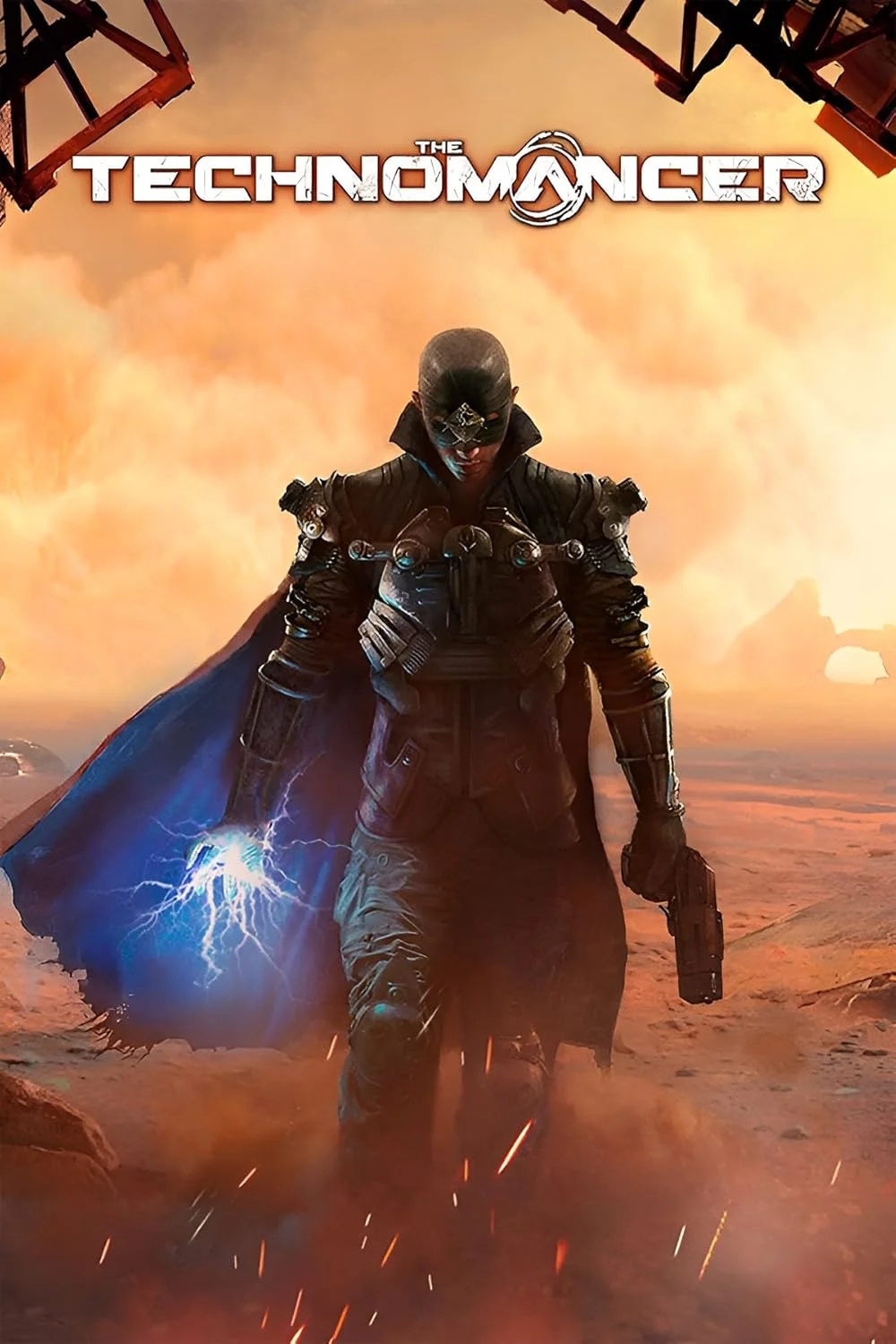
The Technomancer
This combination delivers exceptional performance with an average of 155 FPS, perfect for high refresh rate gaming and competitive play.
Average FPS: resolution vs quality settings
| Ultra | High | Medium | Low | |
|---|---|---|---|---|
| 4K Ultra HD | 58 | 75 | 86 | 114 |
| 1440p QHD | 105 | 135 | 156 | 205 |
| 1080p Full HD | 160 | 209 | 245 | 309 |
Cell color: green is 120+ FPS, teal is 60+, amber is 30+, red is below 30.
The Technomancer with Intel Core i7-13700K + NVIDIA GeForce RTX 5080, In-Depth Analysis
CPU Role — cores, clocks, and how they relate to this game's results
The Intel Core i7-13700K brings a 16-core, 24-thread Raptor Lake-S design to The Technomancer, with a base clock of 3.40 GHz and a boost clock of 5.40 GHz. This is a CPU that sits in the 93rd percentile among all processors, with an average benchmark score of 47282. The data suggests this is not a bottleneck in this game: at 1080p Low settings, the combo produces 308.6 FPS, which is a very high frame rate that implies the CPU is feeding the GPU efficiently. The 30 MB of shared L3 cache and 2 MB per-core L2 cache likely help with the game's streaming and AI workloads, though the exact impact is not directly measured.
The multi-threaded muscle is substantial — Cinebench R23 multicore scores 39000, while the single-core score sits at 5505. For a 2016 Action RPG like The Technomancer, single-thread performance often matters more than raw thread counts, and the 3dmark_single_thread score of 1136 confirms strong per-core capability. The nearest rival comparison shows the i7-13700K is effectively tied with the Intel Core i7-13700KF, which scores 47334 on average, a delta of just -0.1%. This means the K variant without integrated graphics is not meaningfully different in this context. The AMD EPYC 4364P is 0.3% ahead, while the Intel Core i9-12900F trails by 0.4%. These margins are negligible, so the CPU choice among these rivals would not change the gaming experience.
What is curious is how the game scales with settings. At 1080p Ultra, the combo hits 159.6 FPS, which is still well above refresh-rate territory for most displays. The CPU's 16 cores are likely not fully utilized by a game from 2016, but the high boost clock ensures that even lightly threaded workloads are handled with ease. The 125 W TDP and Intel Socket 1700 mounting make it a standard desktop part, and the unlocked multiplier allows overclocking, though the measured data does not explore that avenue. The benchmark results indicate that the CPU is rarely the limiting factor here; the GPU takes over that role at higher resolutions and settings.
FAQ
Q: Does the Intel Core i7-13700K bottleneck the RTX 5080 in The Technomancer?
A: The data shows no evidence of a CPU bottleneck. At 1080p Low, the combo achieves 308.6 FPS, which is a very high frame rate. Even at 4K Ultra, where the GPU is stressed, the average FPS is 57.6, and the CPU's single-thread score of 1136 in 3dmark suggests it can keep up with the GPU's demands.
Q: How does the i7-13700K compare to its nearest rivals in average benchmark score?
A: The i7-13700K averages 47282, which is 0.1% behind the Intel Core i7-13700KF (47334) and 0.5% behind the AMD Ryzen 9 PRO 5945 (47527). It is 0.3% ahead of the AMD EPYC 4364P (47131) and 0.4% ahead of the Intel Core i9-12900F (47081). These differences are within noise.
Q: What is the CPU's multi-threaded performance in Cinebench R23?
A: The Cinebench R23 multicore score is 39000, while the single-core score is 5505. This indicates strong parallel performance, though The Technomancer likely does not scale perfectly across all 24 threads.
Q: Is the RTX 5080's performance in this game typical for its class?
A: The RTX 5080 sits in the 89th percentile among all GPUs with an average benchmark score of 59188. Its nearest rival, the Intel Arc A570M, scores 58239 (1.6% behind), while the Intel Arc Pro A60 is 1.9% ahead. The GPU's performance here is consistent with its high-tier positioning.
Q: What is the best settings preset for a smooth 60 FPS experience at 4K?
A: At 3840x2160, the High preset delivers 75 FPS on average, while Medium drops to 86 FPS. Ultra falls below 60 FPS at 57.6. For a locked 60 FPS experience, High is the safest choice, as it provides a 15 FPS buffer over the 60 FPS target.
Q: How does the combo rank among all tested combinations for this game?
A: The combo ranks 50th out of 1656 tested combos, placing it in the top 3% of all configurations. This is a strong result, though there are 49 combos that perform better, likely with more powerful GPUs or better-tuned settings.
Resolution Scaling — how FPS drops from 1080p to 4K and what it says about the limiting component
The resolution scaling data reveals a classic GPU-bound curve. At 1080p Low, the combo produces 308.6 FPS. Moving to 1440p Low drops that to 204.7 FPS, a reduction of roughly 34%. At 4K Low, the average falls to 113.5 FPS, which is a 63% drop from 1080p. This steep decline as resolution increases is a clear sign that the RTX 5080 is the limiting factor at lower settings; the CPU is capable of feeding much higher frame rates, but the GPU's pixel throughput becomes the constraint.
The pattern holds across settings. At High, 1080p delivers 209.3 FPS, 1440p drops to 135.1 FPS, and 4K lands at 75 FPS. At Ultra, the same progression goes from 159.6 FPS at 1080p to 105 FPS at 1440p and 57.6 FPS at 4K. The relative drop from 1080p to 4K is consistent: roughly a 64% reduction for High, 63% for Ultra, and 63% for Low. This uniformity suggests that the scaling is purely resolution-driven, not setting-driven.
What does this imply? At 1080p, the CPU and GPU are both working, but the high frame rates (above 200 FPS) indicate that neither component is fully saturated at lower settings. At 4K, the GPU is clearly the bottleneck — the RTX 5080's 16 GB of GDDR7 memory and 960.0 GB/s bandwidth are being pushed hard, but the core count and clock speeds (boost 2617 MHz) determine the final output. The 56.28 TFLOPS of FP32 performance is likely what keeps 4K High above 60 FPS, but Ultra at 4K is too demanding. The data shows that this combo is best suited for high-refresh 1440p or smooth 4K at High settings, not for maxed-out 4K.
Measured FPS Breakdown — resolution by resolution, settings by settings, exact numbers
At 1920x1080, the combo delivers a wide spread of frame rates depending on settings. Low is the fastest at 308.6 FPS average, followed by Medium at 244.5 FPS, High at 209.3 FPS, and Ultra at 159.6 FPS. The gap between Low and Ultra is 149 FPS, which is a substantial range that gives players plenty of headroom for higher refresh rate monitors. Even at Ultra, the frame rate is above 144 Hz, so this resolution is fully playable at any setting.
Moving to 2560x1440, the numbers scale down but remain impressive. Low averages 204.7 FPS, Medium drops to 156 FPS, High hits 135.1 FPS, and Ultra sits at 105 FPS. The spread between Low and Ultra is now 99.7 FPS, slightly narrower than at 1080p but still significant. For a 1440p 144 Hz monitor, High settings are the sweet spot, as they stay above 135 FPS, while Ultra remains above 100 FPS.
At 3840x2160, the frame rates become more modest. Low averages 113.5 FPS, Medium drops to 86 FPS, High falls to 75 FPS, and Ultra is the only setting that dips below 60 FPS at 57.6 FPS average. The scaling from Low to Ultra at 4K is a 55.9 FPS drop, which is less pronounced than at lower resolutions. This suggests that at 4K, the GPU is so heavily loaded that even reducing settings from Ultra to Low cannot fully offset the pixel count. For a 60 Hz 4K display, High is the recommended setting, as it provides a 15 FPS buffer over the 60 FPS threshold.
How This Combo Ranks — use comboRankInGame vs other tested combos
The combo of the Intel Core i7-13700K and NVIDIA GeForce RTX 5080 ranks 50th out of 1656 tested combos in The Technomancer. This places it in the top 3% of all configurations, which is a strong showing. The data implies that only 49 combos outperform this pairing, and those are likely to feature even higher-end GPUs or more favorable CPU-GPU pairings for this specific game. The rank is not tied to a percentile score, but the relative position suggests that this is a high-end setup that will handle the game with ease at most settings.
Looking at the individual components, the CPU's 93rd percentile ranking and the GPU's 89th percentile ranking both contribute to this top-50 position. The CPU's nearest rivals are all within 0.5% of its average score, so the exact choice of CPU among these does not dramatically affect the combo's rank. The GPU's nearest rivals, however, show more variation — the Intel Arc Pro A60 is 1.9% ahead, while the Arc A580 is 2.5% behind. This means the GPU choice has a slightly larger impact on the final rank than the CPU.
The rank of 50 out of 1656 also tells us that there is headroom for improvement. The 49 combos ahead of this one likely achieve higher frame rates at 4K Ultra, where this combo falls short of 60 FPS. For players who prioritize maximum visual fidelity at 4K, this combo may not be the absolute best, but for high-refresh 1440p or 1080p gaming, it is clearly in the upper echelon. The data suggests that this is a balanced pairing where neither component is severely underutilized.
Settings Recommendations — which preset gives the best experience per the measured rows
The measured FPS data provides clear guidance for the best experience at each resolution. At 1920x1080, the Ultra preset delivers 159.6 FPS, which is above the 144 Hz threshold for most high-refresh monitors. There is no reason to drop below Ultra at this resolution, as even the most demanding setting keeps the frame rate smooth. Low at 308.6 FPS is only useful for competitive play, but the game's Action RPG genre does not typically require such extreme frame rates.
At 2560x1440, the Ultra preset averages 105 FPS, which is still above 100 FPS and suitable for most displays. However, the High preset at 135.1 FPS provides a better balance for 144 Hz monitors, as it sits comfortably above the refresh rate. For players with a 144 Hz 1440p panel, High is the recommended choice, as it offers a 30 FPS buffer over Ultra while maintaining visual quality. Medium at 156 FPS is also viable, but High adds enough visual detail to justify the slight frame rate reduction.
At 3840x2160, the recommendation is more nuanced. The High preset at 75 FPS is the best option for a 60 Hz display, as it provides a 15 FPS buffer over the target and is well above the 60 FPS threshold. Medium at 86 FPS is even faster, but the visual fidelity loss may not be worth it. Ultra at 57.6 FPS is below 60 FPS and not recommended for a smooth experience. Low at 113.5 FPS is playable but defeats the purpose of 4K resolution. For 4K, High is the clear winner, balancing frame rate and image quality.
GPU Role — VRAM, clocks, and how they relate to this game's results
The NVIDIA GeForce RTX 5080 brings 16 GB of GDDR7 memory on a 256-bit bus, with a bandwidth of 960.0 GB/s. This is a substantial amount of VRAM for a game from 2016, which likely does not exceed 8 GB even at 4K. The data shows that VRAM is not a limiting factor here — the frame rate drops from 4K High to 4K Ultra are more attributable to the GPU's compute capabilities than memory capacity. The 84 RT cores and 336 tensor cores are also present, but The Technomancer does not appear to use ray tracing or DLSS based on the measured rows, so these features likely have no impact on the results.
The GPU's clock speeds are 2295 MHz base and 2617 MHz boost, with a memory clock of 1875 MHz (30 Gbps effective). The boost clock is what matters for sustained gaming, and the 56.28 TFLOPS of FP32 performance is the raw compute that drives the frame rates. At 1080p Low, the GPU produces 308.6 FPS, which is a high utilization of its throughput. At 4K Ultra, the 57.6 FPS result indicates that the GPU is fully saturated, as the pixel fill rate of 293.1 GPixel/s is likely the bottleneck.
The GPU's average benchmark score of 59188 places it in the 89th percentile, and its nearest rivals are all within 2.6% of its score. This means the RTX 5080 is a consistent performer, but not the absolute fastest GPU available. The 45,600 million transistors on a 5 nm TSMC process give it a high density, and the 360 W TDP requires a 750 W PSU, which is a consideration for system builders. In The Technomancer, the GPU is the primary driver of performance at 4K, while at 1080p, the CPU and GPU work in tandem to achieve very high frame rates. The data shows that this GPU is well-suited for high-resolution gaming, but not for maxed-out 4K Ultra in this particular title.
Hardware Specifications
Intel Core i7-13700K
NVIDIA GeForce RTX 5080
FPS Benchmarks by Resolution & Settings
Performance data for Intel Core i7-13700K + NVIDIA GeForce RTX 5080 in The Technomancer
| Resolution | Settings | Avg FPS |
|---|---|---|
| 3840x2160 | Low | 113.5 |
| 3840x2160 | Medium | 86.0 |
| 3840x2160 | High | 75.0 |
| 3840x2160 | Ultra | 57.6 |
| 2560x1440 | Low | 204.7 |
| 2560x1440 | Medium | 156.0 |
| 2560x1440 | High | 135.1 |
| 2560x1440 | Ultra | 105.0 |
| 1920x1080 | Low | 308.6 |
| 1920x1080 | Medium | 244.5 |
| 1920x1080 | High | 209.3 |
| 1920x1080 | Ultra | 159.6 |
The Technomancer with ii7-13700K + Other GPUs
See how The Technomancer performs with the same CPU but different graphics cards.
The Technomancer with RTX 5080 + Other CPUs
See how The Technomancer performs with the same GPU but different processors.
Other Games with ii7-13700K + RTX 5080
Explore FPS benchmarks for other games using this same hardware combination.