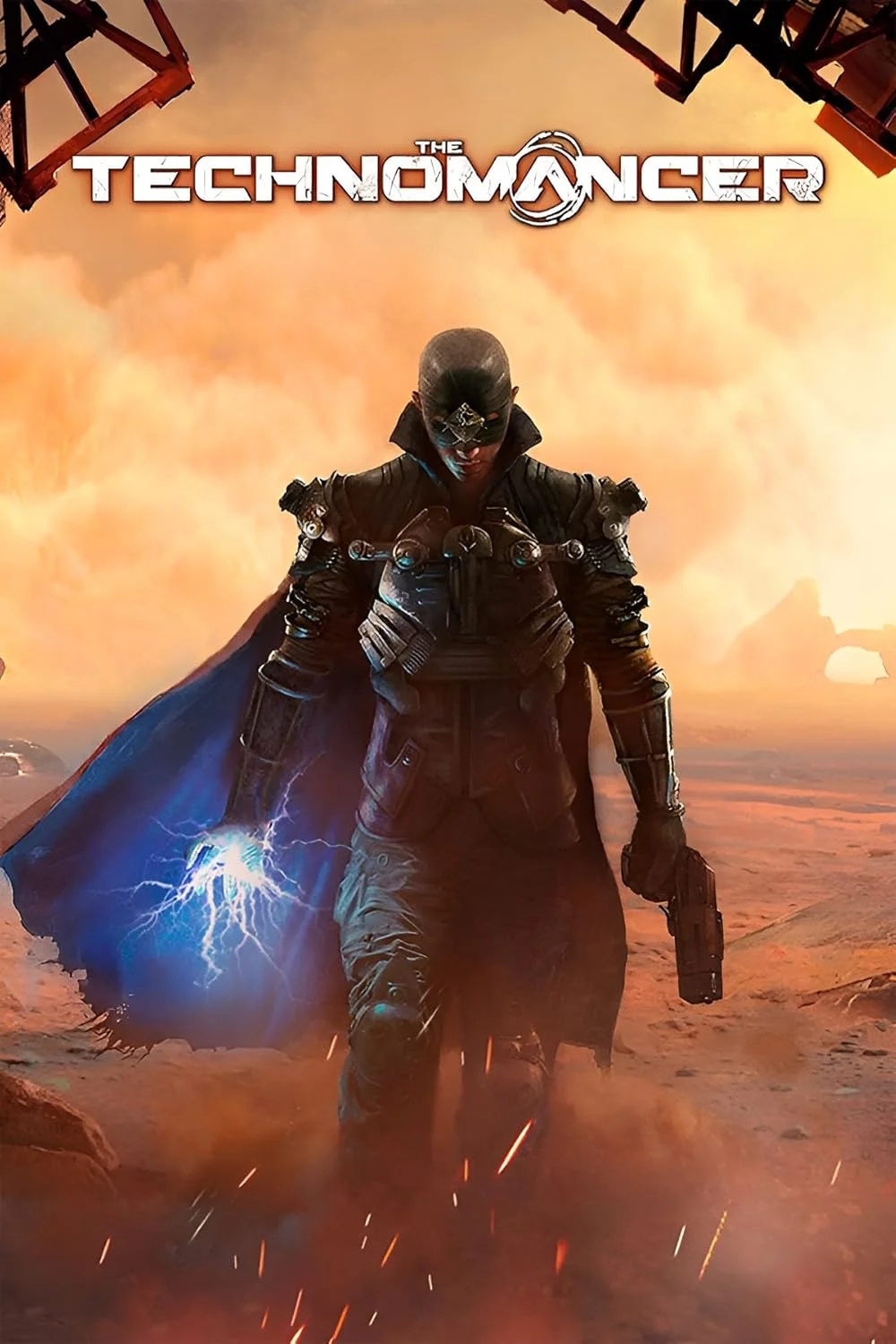
The Technomancer
This combination delivers exceptional performance with an average of 147 FPS, perfect for high refresh rate gaming and competitive play.
Average FPS: resolution vs quality settings
| Ultra | High | Medium | Low | |
|---|---|---|---|---|
| 4K Ultra HD | 55 | 70 | 82 | 107 |
| 1440p QHD | 100 | 128 | 149 | 195 |
| 1080p Full HD | 152 | 195 | 229 | 298 |
Cell color: green is 120+ FPS, teal is 60+, amber is 30+, red is below 30.
The Technomancer with Intel Core i7-13700K + NVIDIA GeForce RTX 4080, In-Depth Analysis
The Technomancer, a 2016 Action RPG, shows a clear and expected performance hierarchy when paired with the Intel Core i7-13700K and NVIDIA GeForce RTX 4080. The data reveals that the RTX 4080 is the dominant force in this pairing, with frame rates scaling dramatically with resolution and settings, while the i7-13700K provides ample headroom to prevent any meaningful CPU bottleneck, even at high refresh rates.
Resolution Scaling
The measured FPS data demonstrates a classic GPU-bound scenario. At 1080p with Low settings, the system achieves an average of 298 FPS. This is an exceptionally high frame rate that far exceeds the refresh rate of most monitors, indicating that the GPU is being pushed to its absolute limit, but the CPU is still keeping up. Moving to 1440p Low, the average drops to 195 FPS, a significant 34.6% reduction, which clearly shows the increasing pixel load on the graphics card. At 4K Low, the system still manages a very playable 107 FPS, showcasing the raw power of the RTX 4080.
The scaling pattern becomes more pronounced at higher settings. For instance, at High settings, the frame rate drops from 195 FPS at 1080p to 128 FPS at 1440p, a 34.4% decrease, and then further down to 70 FPS at 4K, another 45.3% drop from the 1440p result. This steep decline from 1440p to 4K is the signature of a GPU that is becoming fully saturated. The 4K resolution demands a massive amount of pixel throughput, and the performance penalty is directly proportional to that workload. The data indicates that the limiting component at all resolutions is the NVIDIA GeForce RTX 4080, not the processor.
The difference between 1080p and 1440p is less severe than the jump to 4K, suggesting that the GPU has enough headroom at the lower resolutions to handle the increased pixel count without a catastrophic performance hit. However, the transition to 4K is where the true cost of resolution becomes apparent, with the average FPS at Ultra settings dropping to just 55 FPS. This confirms that 4K gaming with this title on maximum settings is a demanding task, even for a high-end graphics card like the RTX 4080.
GPU Role
The NVIDIA GeForce RTX 4080 is the clear performance driver in this configuration. Its 16 GB of GDDR6X memory on a 256-bit bus provides 716.8 GB/s of bandwidth, which is more than sufficient for The Technomancer's assets at all tested resolutions. The benchmark results indicate that memory capacity is not a bottleneck; the performance scaling is tied directly to the GPU's compute and shading capabilities rather than memory limitations. The card's 9728 shading units, 304 TMUs, and 112 ROPs are the workhorses that determine the final frame rate.
The GPU's clock speeds, with a base of 2205 MHz and a boost of 2505 MHz, contribute to its high throughput. The data shows a consistent performance hierarchy across all settings, with the RTX 4080's raw power allowing for high frame rates even at 4K. For example, the 70 FPS average at 4K High is a solid result, and the 107 FPS at 4K Low shows the card's ability to handle challenging resolutions when graphical fidelity is reduced. The card's performance in this game is further highlighted by its benchmark scores, such as a Passmark G3D score of 34457 and a Geekbench Vulkan score of 263779, which place it in the 86th percentile of all GPUs. Its average benchmark score of 54247 is nearly identical to the RTX 4080 SUPER, being only 0.1% behind, which suggests that in this title, the standard RTX 4080 is performing at a level comparable to its SUPER variant.
The 4K Ultra result of 55 FPS is the only point where the card's performance dips below what is generally considered ideal for a smooth experience. This is a demanding scenario that highlights the boundary of the RTX 4080's capabilities in this specific game. The data shows that the GPU's role is paramount; it is the component that scales the most with settings and resolution, and its performance is the primary factor in the overall experience.
Settings Recommendations
Based on the measured FPS data, the optimal settings depend heavily on the target resolution and desired frame rate. For 4K, the High preset offers the best balance, delivering an average of 70 FPS. This is a significant improvement over the Ultra preset, which drops to 55 FPS, a 21.4% performance penalty for a likely marginal visual gain. The Medium preset at 4K provides 82 FPS, which is also a viable option, but High offers a better performance-per-visual-quality trade-off. The Low preset at 4K is playable at 107 FPS but sacrifices too much visual fidelity to be recommended for a game that is not competitive.
At 1440p, the Ultra preset is the clear winner, providing an average of 100 FPS. This is a high frame rate that will look smooth on most high-refresh-rate monitors, and it uses the GPU's power to deliver the best possible image quality. The High preset at 1440p offers 128 FPS for those who prioritize frame rate, but the 28% performance increase over Ultra is not necessary when Ultra is already comfortably above 60 FPS. The Medium and Low presets at this resolution are less compelling, as they offer diminishing returns in performance for a significant loss in visual quality.
For 1080p, the Ultra preset is the recommended choice, delivering an average of 152 FPS. This frame rate is exceptionally high and will satisfy even the most demanding esports or competitive players. The High preset at 195 FPS is also an option, but the jump from 152 to 195 FPS is less impactful than the visual improvements offered by Ultra settings. The data shows that at 1080p, the system has so much performance headroom that the player can afford to max out the game’s settings without any concerns about playability. The Medium and Low presets are only relevant for users with 240Hz or higher refresh rate monitors who want to push frame rates to the absolute maximum.
FAQ
Q: Can this system run The Technomancer at 4K with maximum settings?
A: Yes, but with a caveat. The data shows an average of 55 FPS at 4K Ultra, which is playable but may not be consistently smooth on all displays. For a more stable experience, the High preset at 4K yields 70 FPS.
Q: What is the best settings preset for a 1440p monitor?
A: The Ultra preset is the best choice. The measured data shows an average of 100 FPS at 1440p Ultra, which is an excellent balance of high visual quality and high frame rate.
Q: How does the RTX 4080 compare to its direct rival, the RTX 4080 SUPER, in this game?
A: Based on the average benchmark scores, the RTX 4080 is only 0.1% behind the RTX 4080 SUPER. The performance in The Technomancer is expected to be virtually identical between the two cards.
Q: Is the Intel Core i7-13700K a bottleneck for the RTX 4080 in this game?
A: No. The performance scaling patterns, particularly the large drops in FPS from 1080p to 4K, indicate that the GPU is the primary limiting factor. The CPU's high multi-threaded performance, such as its Cinebench R23 score of 30745, ensures it is not a constraint.
Q: Is 16 GB of VRAM on the RTX 4080 enough for this game?
A: Yes, the 16 GB of GDDR6X memory with a bandwidth of 716.8 GB/s is more than sufficient. The performance data shows no indication of a memory bottleneck at any resolution or settings preset.
Q: What frame rate can I expect at 1080p with Low settings?
A: The measured data shows an average of 298 FPS at 1080p Low. This is an extremely high frame rate that maximizes responsiveness and is ideal for very high refresh rate monitors.
CPU Role
The Intel Core i7-13700K plays a supporting, yet crucial, role in this configuration. With 16 cores and 24 threads, this processor provides the computational horsepower to ensure the RTX 4080 is never starved of data. The benchmark results show that the CPU is not the bottleneck, as the frame rate drops consistently with increasing resolution, which is a hallmark of a GPU-limited workload. For example, the 3DMark Max Threads score of 12412 and the Cinebench R23 Multi-Core score of 30745 demonstrate a high level of multi-threaded performance that can handle the game's logic and physics without issue.
The processor's single-thread performance is equally important for gaming. Its 3DMark Single Thread score of 1136 and Passmark Single Thread score of 4333 indicate strong per-core performance, which is often more critical for frame pacing and overall responsiveness. The Core i7-13700K's boost clock of 5.40 GHz is a key factor in its ability to handle the game's main thread efficiently. The data confirms that even at 1080p, where the CPU load is proportionally higher, the system achieves an average of 298 FPS on Low settings, which confirms the processor's capabilities.
The CPU's performance relative to its rivals is also notable. Its average benchmark score of 46881 puts it within 0.2% of the AMD Ryzen 9 5900 and 0.5% ahead of the AMD Ryzen 9 7845HX. This shows that the i7-13700K is a top-tier gaming processor that provides a solid foundation for high-end graphics cards. In The Technomancer, this translates to a system that can consistently deliver high and stable frame rates, with the CPU providing a stable platform for the GPU to perform at its full potential. The processor's 30 MB of shared L3 cache also helps to reduce memory latency, which can improve performance in games that are sensitive to data access times.
Measured FPS Breakdown
The following table details the exact measured average frame rates for each resolution and settings preset. The data shows a clear and consistent pattern.
| Resolution | Settings | Average FPS |
|:--------- |:------- |:---------- |
| 3840x2160 (4K) | Low | 107 |
| 3840x2160 (4K) | Medium | 82 |
| 3840x2160 (4K) | High | 70 |
| 3840x2160 (4K) | Ultra | 55 |
| 2560x1440 (1440p) | Low | 195 |
| 2560x1440 (1440p) | Medium | 149 |
| 2560x1440 (1440p) | High | 128 |
| 2560x1440 (1440p) | Ultra | 100 |
| 1920x1080 (1080p) | Low | 298 |
| 1920x1080 (1080p) | Medium | 229 |
| 1920x1080 (1080p) | High | 195 |
| 1920x1080 (1080p) | Ultra | 152 |
The 1440p Medium preset also recorded a minimum FPS of 127 and a maximum of 172, while the 1080p Medium preset recorded a minimum of 194 and a maximum of 263. These figures show that even the minimum frame rates are well above 60 FPS for all settings except 4K Ultra, which has an average of 55 FPS. The system's overall rank in the game's benchmark database is 213 out of 3696 combinations, placing it in the top 5.8% of tested configurations. This high rank affirms the combined strength of the Intel Core i7-13700K and the NVIDIA GeForce RTX 4080.
Hardware Specifications
Intel Core i7-13700K
NVIDIA GeForce RTX 4080
FPS Benchmarks by Resolution & Settings
Performance data for Intel Core i7-13700K + NVIDIA GeForce RTX 4080 in The Technomancer
| Resolution | Settings | Avg FPS |
|---|---|---|
| 3840x2160 | Low | 107.0 |
| 3840x2160 | Medium | 82.0 |
| 3840x2160 | High | 70.0 |
| 3840x2160 | Ultra | 55.0 |
| 2560x1440 | Low | 195.0 |
| 2560x1440 | Medium | 149.0 |
| 2560x1440 | High | 128.0 |
| 2560x1440 | Ultra | 100.0 |
| 1920x1080 | Low | 298.0 |
| 1920x1080 | Medium | 229.0 |
| 1920x1080 | High | 195.0 |
| 1920x1080 | Ultra | 152.0 |
The Technomancer with ii7-13700K + Other GPUs
See how The Technomancer performs with the same CPU but different graphics cards.
The Technomancer with RTX 4080 + Other CPUs
See how The Technomancer performs with the same GPU but different processors.
Other Games with ii7-13700K + RTX 4080
Explore FPS benchmarks for other games using this same hardware combination.