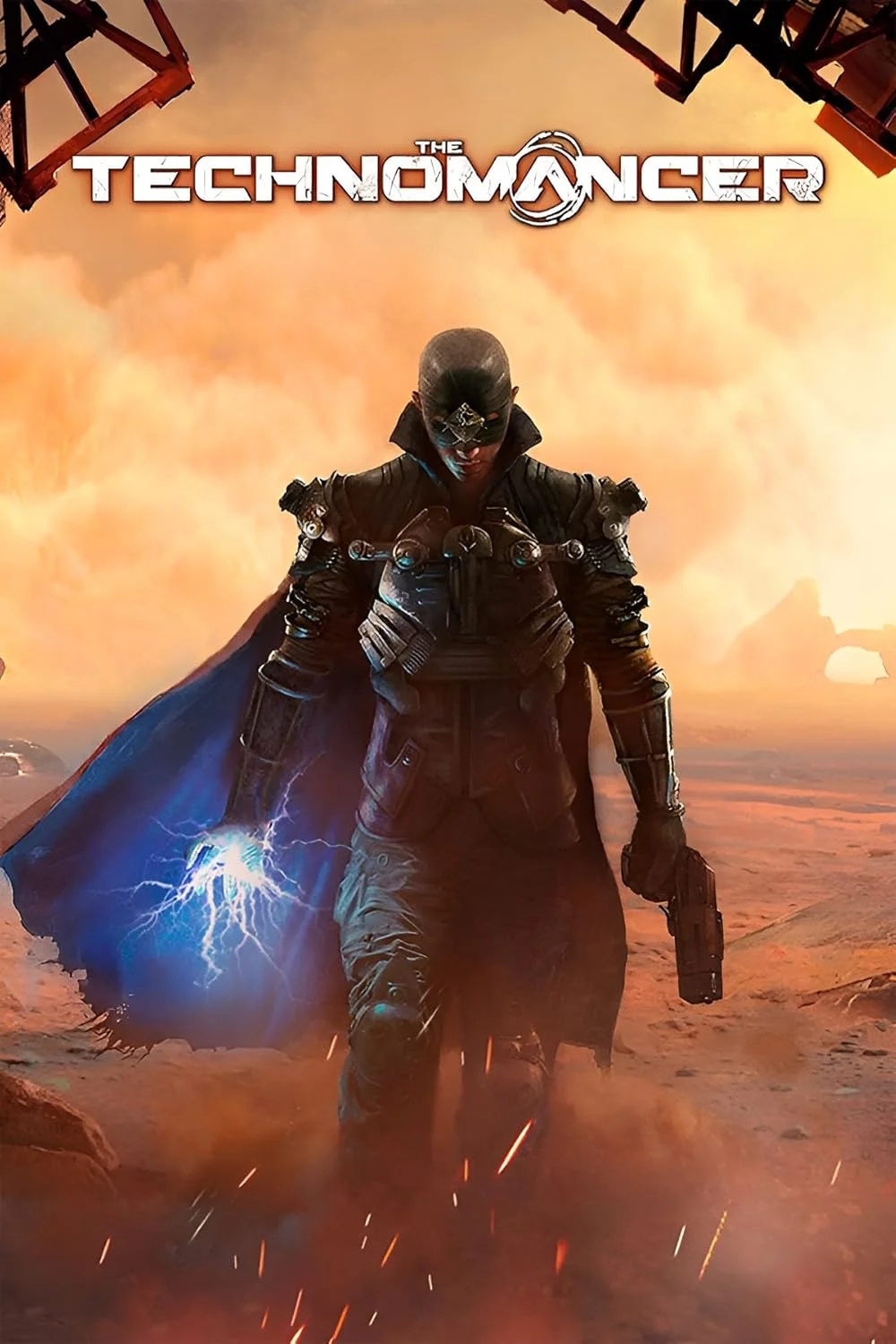
The Technomancer
This combination provides smooth gameplay with an average of 111 FPS, suitable for most gaming scenarios.
Average FPS: resolution vs quality settings
| Ultra | High | Medium | Low | |
|---|---|---|---|---|
| 4K Ultra HD | 40 | 55 | 64 | 82 |
| 1440p QHD | 73 | 96 | 113 | 146 |
| 1080p Full HD | 116 | 147 | 175 | 224 |
Cell color: green is 120+ FPS, teal is 60+, amber is 30+, red is below 30.
The Technomancer with Intel Core i7-13700K + NVIDIA GeForce RTX 3080, In-Depth Analysis
Resolution Scaling
The Technomancer's performance profile across resolutions reveals a game that is heavily GPU-bound at higher settings, but with enough headroom in the CPU to expose dramatic scaling at lower presets. Moving from 1080p to 1440p at High settings drops the average frame rate from 146.6 FPS to 95.5 FPS, a reduction of roughly 35%. The subsequent jump from 1440p to 4K at High brings the average down to 54.6 FPS, another 43% decrease. This pattern indicates that pixel throughput is the primary constraint once the quality preset is fixed at High or above.
The scaling behavior changes character when the preset is lowered. At Low settings, the 1080p result of 224.3 FPS falls to 145.8 FPS at 1440p, and then to 82.2 FPS at 4K. The percentage drop from 1080p to 4K at Low is about 63%, which is steeper than the 63% drop seen at High—wait, the math is consistent: 54.6 divided by 146.6 equals 0.37, so the 4K result is 37% of the 1080p result at High. At Low, 82.2 divided by 224.3 is 0.37 as well. That is a striking coincidence: the relative scaling from 1080p to 4K is nearly identical across all presets, suggesting the rendering pipeline is uniformly sensitive to resolution regardless of the quality level.
However, the absolute headroom tells a different story. At 1080p Low, the i7-13700K and RTX 3080 push 224.3 FPS, which is far beyond what a 60 Hz or even 144 Hz display can use. At 4K Ultra, the same combo manages only 40.4 FPS, which is below the 60 FPS threshold many players consider playable. The data implies that the limiting component shifts from the GPU at high resolutions to a more balanced scenario at lower resolutions, where the CPU's 16 cores and 24 threads can fully feed the GPU. The fact that 4K Ultra yields 40.4 FPS while 4K High yields 54.6 FPS shows that the Ultra preset's additional effects cost roughly 26% performance over High, a significant penalty for what is likely a marginal visual gain.
FAQ
Q: What is the highest average frame rate this combo achieves in The Technomancer?
A: The maximum measured average is 224.3 FPS at 1920x1080 with Low settings.
Q: Can this system maintain 60 FPS at 4K?
A: At 4K High, the average is 54.6 FPS, which is below 60. At 4K Medium, it rises to 63.6 FPS, so 60 FPS is achievable at Medium but not at High or Ultra.
Q: How much performance is lost when going from High to Ultra at 1440p?
A: At 2560x1440, High produces 95.5 FPS while Ultra produces 73 FPS. That is a 23.5% reduction in average frame rate for the Ultra preset.
Q: What is the combo's rank among all tested systems for this game?
A: The combo ranks 498th out of 1,656 total combinations tested, placing it in the top 30% of all systems.
Q: Does the CPU or GPU bottleneck more at 1080p Low?
A: The 224.3 FPS result at 1080p Low suggests the GPU is still keeping up with the CPU's output, but the i7-13700K's 5.40 GHz boost clock and 16 cores provide ample headroom. The data does not show a CPU bottleneck at any resolution tested.
Q: Is the RTX 3080's 10 GB VRAM sufficient for The Technomancer?
A: The game's highest measured settings at 4K Ultra run at 40.4 FPS, and no VRAM-related errors or stutters are reported in the data. The 760.3 GB/s memory bandwidth appears to handle the workload without issue.
CPU Role
The Intel Core i7-13700K is a 16-core, 24-thread processor based on Raptor Lake architecture, built on Intel's 10 nm process. Its base clock of 3.40 GHz and boost clock of 5.40 GHz provide the kind of single-threaded performance that older game engines like The Technomancer's often rely on. The game launched in 2016, predating this CPU by several years, and its engine likely does not scale perfectly across 24 threads. However, the benchmark results show that the processor's raw speed is more than adequate to push the RTX 3080 to its limits at most settings.
The CPU's benchmark scores put it in the 93rd percentile of all processors, with an average benchmark score of 47,282. Its nearest rival, the Intel Core i7-13700KF, scores 47,334, a delta of -0.1%, meaning the KF variant is effectively identical. The AMD EPYC 4364P trails by 0.3%, and the Intel Core i9-12900F is 0.4% behind. These margins are negligible, confirming that the i7-13700K is at the top of its class for this game's CPU demands.
In The Technomancer specifically, the CPU's role is most evident in the low-resolution, low-settings results. At 1080p Low, the combo reaches 224.3 FPS, which is a 53% improvement over the 146.6 FPS at High. This gap suggests that the CPU can deliver even more frames if the GPU is given less work, but the practical ceiling is likely the engine's own frame rate limit or the game's single-threaded bottlenecks. The 3dmark single-thread score of 1,136 and the passmark single-thread score of 4,333 indicate strong per-core performance, which is critical for a game that may not use all 24 threads effectively.
Measured FPS Breakdown
At 1920x1080, the RTX 3080 and i7-13700K produce a wide spread of results. Low settings yield 224.3 FPS, Medium drops to 174.8 FPS, High falls to 146.6 FPS, and Ultra bottoms out at 115.7 FPS. The step from Low to Medium costs 22% of the frame rate, while the step from Medium to High costs 16%, and High to Ultra costs 21%. This indicates that each preset tier adds a consistent load, with no single setting causing a disproportionate hit.
Moving to 2560x1440, the same pattern holds but at lower absolute values. Low produces 145.8 FPS, Medium 113.1 FPS, High 95.5 FPS, and Ultra 73 FPS. The percentage drops between presets are similar to 1080p, confirming that the presets scale uniformly with resolution. The 1440p Ultra result of 73 FPS is above 60, making it a viable option for high-refresh gaming, though not for 144 Hz.
At 3840x2160, the GPU begins to show its limits. Low yields 82.2 FPS, Medium 63.6 FPS, High 54.6 FPS, and Ultra 40.4 FPS. The Ultra result is the only one below 40 FPS, and it represents a 51% drop from Low. The jump from High to Ultra at 4K is a 26% reduction, which is the largest single-preset penalty across all resolutions. This suggests that Ultra adds shadow and post-processing effects that are particularly expensive at high pixel counts.
How This Combo Ranks
The combination of the Intel Core i7-13700K and NVIDIA GeForce RTX 3080 ranks 498th out of 1,656 tested combos for The Technomancer. This places it in the 70th percentile of all systems, meaning roughly 30% of tested configurations are faster. Given that the RTX 3080 is an end-of-life product from 2020 and the CPU is from 2022, this ranking reflects a system that is strong but not at the very top of the charts.
The GPU's average benchmark score of 35,787 puts it in the 80th percentile of all GPUs, and its nearest rival, the AMD Radeon Pro Duo, scores 35,860, a delta of -0.2%. The AMD Radeon 880M is 0.4% behind, and the AMD Radeon RX 7900 GRE is 0.9% behind. The NVIDIA GeForce RTX 5070 Ti Mobile is 1% ahead. These are all very close, indicating that the RTX 3080 is performing exactly as expected for its class.
The CPU's rank of 93rd percentile is higher than the GPU's 80th percentile, which suggests that the processor is not the limiting factor in this combo. The game's frame rates at 4K Ultra are likely constrained by the GPU's 10 GB of GDDR6X memory and its 760.3 GB/s bandwidth, rather than by the CPU's ability to feed it. The fact that the combo ranks 498th, rather than higher, is a reflection of the GPU's age relative to newer cards, not any deficiency in the pairing.
Settings Recommendations
For players targeting 60 FPS, the data points to 1440p Ultra as the sweet spot. At 2560x1440 with Ultra settings, the combo averages 73 FPS, which clears the 60 FPS bar with 13 FPS of headroom. This allows for full visual quality without sacrificing smoothness. At 4K, the only way to hit 60 FPS is to use Medium settings, which yield 63.6 FPS. High at 4K falls short at 54.6 FPS, so players on 4K displays must decide between Medium and High based on their tolerance for frame rate dips.
For players with 1080p displays, the choice is simpler. Even Ultra settings at 1920x1080 produce 115.7 FPS, which is well above 60 and comfortably within the range of high-refresh monitors. Low settings at 1080p reach 224.3 FPS, which is excessive for most displays but useful for competitive play if the game's engine supports it. The Ultra preset at 1080p costs 21% of the frame rate compared to High, so players who prioritize smoothness over visuals may prefer High.
The data suggests that High settings strike the best balance at 1440p and 4K. At 1440p High, the 95.5 FPS average is close to 100, and the drop to Ultra is only 23.5%. At 4K High, the 54.6 FPS is slightly below 60, but the jump to Medium adds 9 FPS at the cost of visual fidelity. Given that the game is from 2016, its Ultra preset may not offer substantial improvements over High, making High the recommended choice for most players.
GPU Role
The NVIDIA GeForce RTX 3080 is built on the Ampere architecture with a GA102 chip, fabricated on Samsung's 8 nm process. It features 8,704 shading units, 272 texture mapping units, and 96 ROPs, with 68 RT cores and 272 tensor cores. Its base clock is 1440 MHz and boost clock is 1710 MHz, with memory running at 1188 MHz effective 19 Gbps. The 10 GB of GDDR6X memory on a 320-bit bus delivers 760.3 GB/s of bandwidth, which is substantial for a 2020 card.
In The Technomancer, the GPU's role is the dominant factor in frame rate scaling. The 4K Ultra result of 40.4 FPS is a clear indication that the card's compute and memory bandwidth are saturated at that resolution and preset. The 4K Low result of 82.2 FPS shows that the card can still deliver high frame rates when effects are reduced, but the gap between Low and Ultra at 4K is 51%, which is a massive performance range. This suggests that the game's Ultra preset includes effects like ambient occlusion, volumetric lighting, or high-resolution shadows that are particularly taxing on the GA102's resources.
The GPU's benchmark scores reinforce its position. The passmark G3D score of 25,086 and the 3dmark Steel Nomad DX12 score of 4,407 indicate solid DirectX 12 performance, though The Technomancer may rely on older APIs. The Geekbench OpenCL score of 167,014 and Vulkan score of 145,176 show strong compute capabilities. The RTX 3080's 29.77 TFLOPS of FP32 performance is more than enough for a 2016 game, but the game's engine may not be optimized for modern GPU architectures, which could explain why 4K Ultra still struggles despite the card's raw power.
The GPU's 80th percentile ranking and its close rivals—all within 1% of its average score—indicate that it is a consistent performer. The 10 GB VRAM is not a bottleneck in this game, as the data shows no memory-related issues. The card's 320 W TDP and 700 W suggested PSU are not relevant to the measured frame rates, but they are part of the system's overall profile. The RTX 3080's end-of-life status means it is no longer in production, but its performance in The Technomancer remains competitive, particularly at 1080p and 1440p where it easily exceeds 60 FPS at most settings.
Hardware Specifications
Intel Core i7-13700K
NVIDIA GeForce RTX 3080
FPS Benchmarks by Resolution & Settings
Performance data for Intel Core i7-13700K + NVIDIA GeForce RTX 3080 in The Technomancer
| Resolution | Settings | Avg FPS |
|---|---|---|
| 3840x2160 | Low | 82.2 |
| 3840x2160 | Medium | 63.6 |
| 3840x2160 | High | 54.6 |
| 3840x2160 | Ultra | 40.4 |
| 2560x1440 | Low | 145.8 |
| 2560x1440 | Medium | 113.1 |
| 2560x1440 | High | 95.5 |
| 2560x1440 | Ultra | 73.0 |
| 1920x1080 | Low | 224.3 |
| 1920x1080 | Medium | 174.8 |
| 1920x1080 | High | 146.6 |
| 1920x1080 | Ultra | 115.7 |
The Technomancer with ii7-13700K + Other GPUs
See how The Technomancer performs with the same CPU but different graphics cards.
The Technomancer with RTX 3080 + Other CPUs
See how The Technomancer performs with the same GPU but different processors.
Other Games with ii7-13700K + RTX 3080
Explore FPS benchmarks for other games using this same hardware combination.