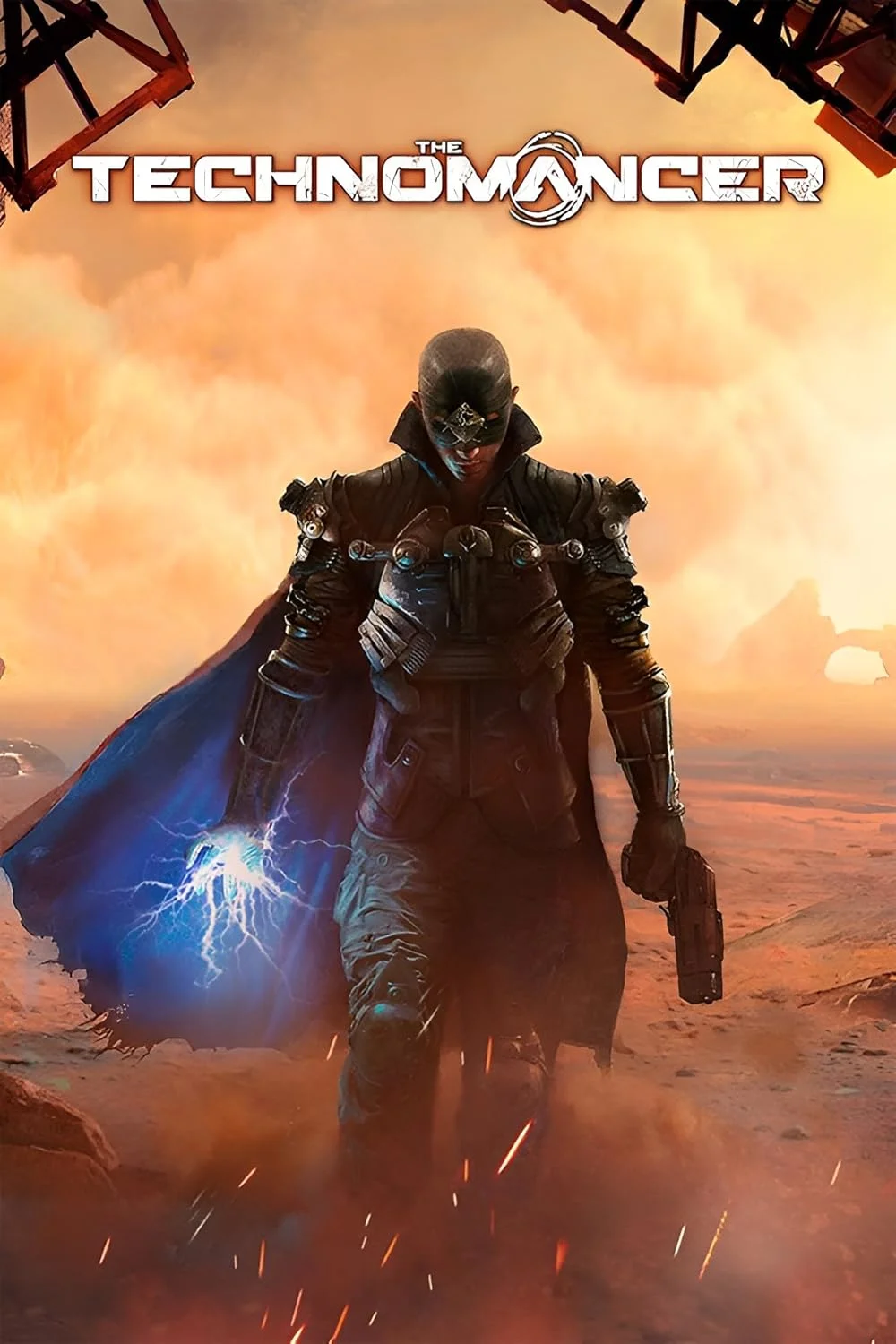
The Technomancer
This combination may struggle with this title, averaging 28 FPS. Consider upgrading hardware or significantly lowering settings.
Average FPS: resolution vs quality settings
| Ultra | High | Medium | Low | |
|---|---|---|---|---|
| 4K Ultra HD | 12 | 12 | 18 | 21 |
| 1440p QHD | 21 | 20 | 30 | 36 |
| 1080p Full HD | 30 | 38 | 43 | 57 |
Cell color: green is 120+ FPS, teal is 60+, amber is 30+, red is below 30.
The Technomancer with AMD Ryzen 5 8400F + NVIDIA GeForce GTX 1050 Ti, In-Depth Analysis
The Technomancer, a 2016 Action RPG, presents a demanding workload for the AMD Ryzen 5 8400F and NVIDIA GeForce GTX 1050 Ti pairing. The measured frame rates across resolutions and settings reveal a system that is consistently bound by its graphics processor, with the CPU’s capabilities remaining largely untapped. The data shows a clear narrative: this combination is for achieving playable frame rates at 1080p with adjusted settings, while higher resolutions push the GPU beyond its effective limits.
Resolution Scaling
The transition from 1920x1080 to 3840x2160 produces a dramatic and predictable collapse in performance, underscoring the GTX 1050 Ti as the primary limiting component. At High settings, the average frame rate falls from 38.1 FPS at 1080p to 20.4 FPS at 1440p, and then to a nearly unplayable 12.3 FPS at 4K. This represents a steep 68% drop in average FPS from 1080p to 4K, a scaling curve that points directly at the GPU’s fill rate and memory bandwidth struggling to manage the quadrupled pixel count.
The pattern holds across all quality presets, but the relative drop is most severe at the higher settings that demand more from the graphics card. For instance, at Ultra settings, the frame rate goes from 29.8 FPS at 1080p down to 11.9 FPS at 4K, a 60% reduction. Even at Low settings, where the GPU is less burdened by shader complexity, the frame rate still falls from 57 FPS at 1080p to 20.6 FPS at 4K. This indicates that the sheer resolution increase is a formidable barrier for the 4 GB GDDR5 memory buffer and the 112.1 GB/s bandwidth of the GTX 1050 Ti, regardless of the visual fidelity settings.
The data implies that 4K resolution is not a viable target for this combo; the highest average FPS recorded at 3840x2160 is only 20.6 FPS on Low settings. The scaling from 1440p to 4K is also punishing, with a 40% performance hit at High settings (from 20.4 to 12.3 FPS). The benchmark results suggest that the GPU’s 128-bit memory interface becomes a severe bottleneck as resolution increases, a classic sign of a graphics card that is outclassed by the demands of modern high-resolution gaming.
CPU Role
The AMD Ryzen 5 8400F, with its 6 cores and 12 threads, is a formidable processor that is clearly not the bottleneck in this configuration. Its benchmark scores are strong, with a Cinebench R23 multi-core score of 20851 and a single-core score of 2943, placing it in the 82nd percentile of all CPUs. In the context of this game, the CPU’s role is to feed the GPU with draw calls and game logic, a task it handles with significant headroom, as evidenced by the GPU-bound frame rate scaling.
The processor’s high boost clock of 4.70 GHz and modern Zen 4 architecture ensure that even the single-threaded tasks common in game engines are processed rapidly. The fact that frame rates drop so significantly with resolution increases, while the CPU’s performance metrics remain high, confirms that the Ryzen 5 8400F is not the limiting factor. The 65W TDP and 4 nm process node also suggest an efficient part that can maintain its clocks without thermal throttling, further supporting its ability to keep up with the GPU.
Data from the 3DMark tests shows a balanced scaling from 2 threads (1874) to 16 threads (6091), indicating that the CPU can utilize its multi-threading capabilities effectively. However, in The Technomancer, the CPU’s potential is left on the table because the GTX 1050 Ti cannot render frames fast enough to require more from the processor. The benchmark results indicate that a more powerful GPU would be needed to unlock the full performance that the Ryzen 5 8400F can offer in this title.
FAQ
Q: What is the highest average FPS this combo can achieve at 1080p?
A: The highest average FPS at 1920x1080 is 57, achieved with Low settings. This drops to 38.1 FPS on High and 29.8 FPS on Ultra settings.
Q: Is the AMD Ryzen 5 8400F or the GTX 1050 Ti the primary bottleneck in this game?
A: The data clearly shows the GTX 1050 Ti is the bottleneck. Frame rates drop by roughly 68% from 1080p to 4K at High settings, while the CPU’s benchmark scores indicate substantial performance headroom.
Q: How does the GTX 1050 Ti compare to its closest rivals in general benchmarks?
A: The GPU’s average benchmark score is 5316, placing it in the 30th percentile of all GPUs. Its nearest rival, the NVIDIA GeForce 930A, has a nearly identical average score of 5317, with a 0% delta, indicating they are statistically tied in performance.
Q: Can this system run The Technomancer at 1440p?
A: Yes, but with limitations. At 1440p, the average FPS ranges from 35.5 on Low settings to 20.6 on Ultra. Only the Low settings preset approaches a playable frame rate, while High and Medium settings yield 20.4 and 30.4 FPS, respectively.
Q: What is the combo’s overall ranking among tested systems for this game?
A: This combination ranks 1626 out of 1656 tested combos, placing it in the bottom 2% of all systems tested for The Technomancer. This confirms its position as a low-end configuration for this title.
Q: What is the difference in average FPS between Low and Ultra settings at 1080p?
A: At 1920x1080, the difference is 27.2 FPS. Low settings average 57 FPS, while Ultra settings average 29.8 FPS, showing a significant performance cost for the highest visual fidelity.
How This Combo Ranks
The AMD Ryzen 5 8400F + NVIDIA GeForce GTX 1050 Ti combination ranks 1626 out of 1656 tested combos for The Technomancer. This position, in the bottom 2% of all configurations, is a stark indicator of the system’s overall performance level. The CPU itself is a high performer, ranking in the 82nd percentile of all CPUs, but its pairing with a GPU in the 30th percentile drags the entire combo down.
This massive discrepancy between the CPU’s potential and the combo’s overall rank highlights the severe imbalance in this system. The data suggests that this is a classic case of a CPU being held back by a GPU that is too weak for the task. The GTX 1050 Ti’s average benchmark score of 5316 is nearly identical to the NVIDIA GeForce 930A (5317), a mobile-class chip, which further illustrates its low standing. The combo’s rank is a direct result of the GPU’s inability to translate the CPU’s strong processing power into high frame rates in this demanding game.
Settings Recommendations
Based on the measured FPS data, the only resolution that offers a consistently playable experience is 1920x1080. At this resolution, the Low settings preset provides the best experience with an average FPS of 57, which is likely to feel smooth and responsive. The Medium preset, with an average of 43.3 FPS, is also a viable option for users who want a balance between visual quality and performance.
For those who prefer higher visual fidelity, the High preset at 38.1 FPS is borderline acceptable, but the Ultra preset at 29.8 FPS may introduce noticeable stutter in action-heavy scenes. The data suggests that High settings at 1080p is the highest quality preset that can maintain a reasonably stable frame rate. At 2560x1440, only the Low settings preset (35.5 FPS) is close to playable, but the frame rate is still likely to dip below 30 FPS in demanding moments. The benchmark results indicate that users should prioritize 1080p resolution and adjust the settings from Low to High based on their preference for frame rate versus visual quality, avoiding Ultra and any 4K resolution entirely.
Measured FPS Breakdown
At 1920x1080, the average FPS scales from 57 on Low to 43.3 on Medium, 38.1 on High, and finally 29.8 on Ultra. This shows a logical progression where each higher setting tier costs a measurable amount of performance. The jump from Low to Medium is a 13.7 FPS drop, while the jump from High to Ultra is an 8.3 FPS drop, indicating that the Ultra preset is not efficiently implemented relative to its performance cost.
Stepping up to 2560x1440, the average FPS figures are 35.5 for Low, 30.4 for Medium, 20.4 for High, and 20.6 for Ultra. The performance difference between High and Ultra at this resolution is negligible, suggesting that the GPU is so constrained that the visual settings have little impact. At 3840x2160, the results are uniformly poor: 20.6 FPS on Low, 18 FPS on Medium, 12.3 FPS on High, and 11.9 FPS on Ultra. These numbers confirm that 4K is not a viable option, as even the lowest settings fail to reach a consistent 30 FPS.
GPU Role
The NVIDIA GeForce GTX 1050 Ti is the definitive limiting factor in this configuration. Its modest specifications—4 GB of GDDR5 memory on a 128-bit bus with 112.1 GB/s bandwidth—are insufficient for the demands of The Technomancer at higher resolutions. The GPU’s base clock of 1291 MHz and boost clock of 1392 MHz, while reasonable for its class, are not enough to overcome its limited memory subsystem and 768 shading units.
The GPU’s average benchmark score of 5316 places it in the 30th percentile of all GPUs, and its nearest rival, the NVIDIA GeForce 930A, is a mobile chip with a nearly identical score (5317). This indicates that the GTX 1050 Ti performs at a level comparable to entry-level mobile graphics. The 14 nm Pascal architecture, while efficient for its time, is now severely outdated for modern titles. The 75W TDP and lack of power connectors show it is a low-power part, but this also means it has a limited performance ceiling.
The data shows that the GPU’s role is to be the primary performance limiter. The frame rates across all resolutions and settings are consistently low, and the steep drop from 1080p to 4K is a direct consequence of the GPU’s memory bandwidth and fill rate being overwhelmed. The GPU’s compute capabilities, with a Passmark G3D score of 6340, are simply not enough to handle the rendering tasks in The Technomancer at playable frame rates beyond the lowest settings. This pairing demonstrates how a strong CPU can be completely neutralized by a weak GPU in a graphics-intensive game.
Hardware Specifications
AMD Ryzen 5 8400F
NVIDIA GeForce GTX 1050 Ti
FPS Benchmarks by Resolution & Settings
Performance data for AMD Ryzen 5 8400F + NVIDIA GeForce GTX 1050 Ti in The Technomancer
| Resolution | Settings | Avg FPS |
|---|---|---|
| 3840x2160 | Low | 20.6 |
| 3840x2160 | Medium | 18.0 |
| 3840x2160 | High | 12.3 |
| 3840x2160 | Ultra | 11.9 |
| 2560x1440 | Low | 35.5 |
| 2560x1440 | Medium | 30.4 |
| 2560x1440 | Ultra | 20.6 |
| 2560x1440 | High | 20.4 |
| 1920x1080 | Low | 57.0 |
| 1920x1080 | Medium | 43.3 |
| 1920x1080 | High | 38.1 |
| 1920x1080 | Ultra | 29.8 |
The Technomancer with Ryzen 5 8400F + Other GPUs
See how The Technomancer performs with the same CPU but different graphics cards.
The Technomancer with GTX 1050 Ti + Other CPUs
See how The Technomancer performs with the same GPU but different processors.
Other Games with Ryzen 5 8400F + GTX 1050 Ti
Explore FPS benchmarks for other games using this same hardware combination.