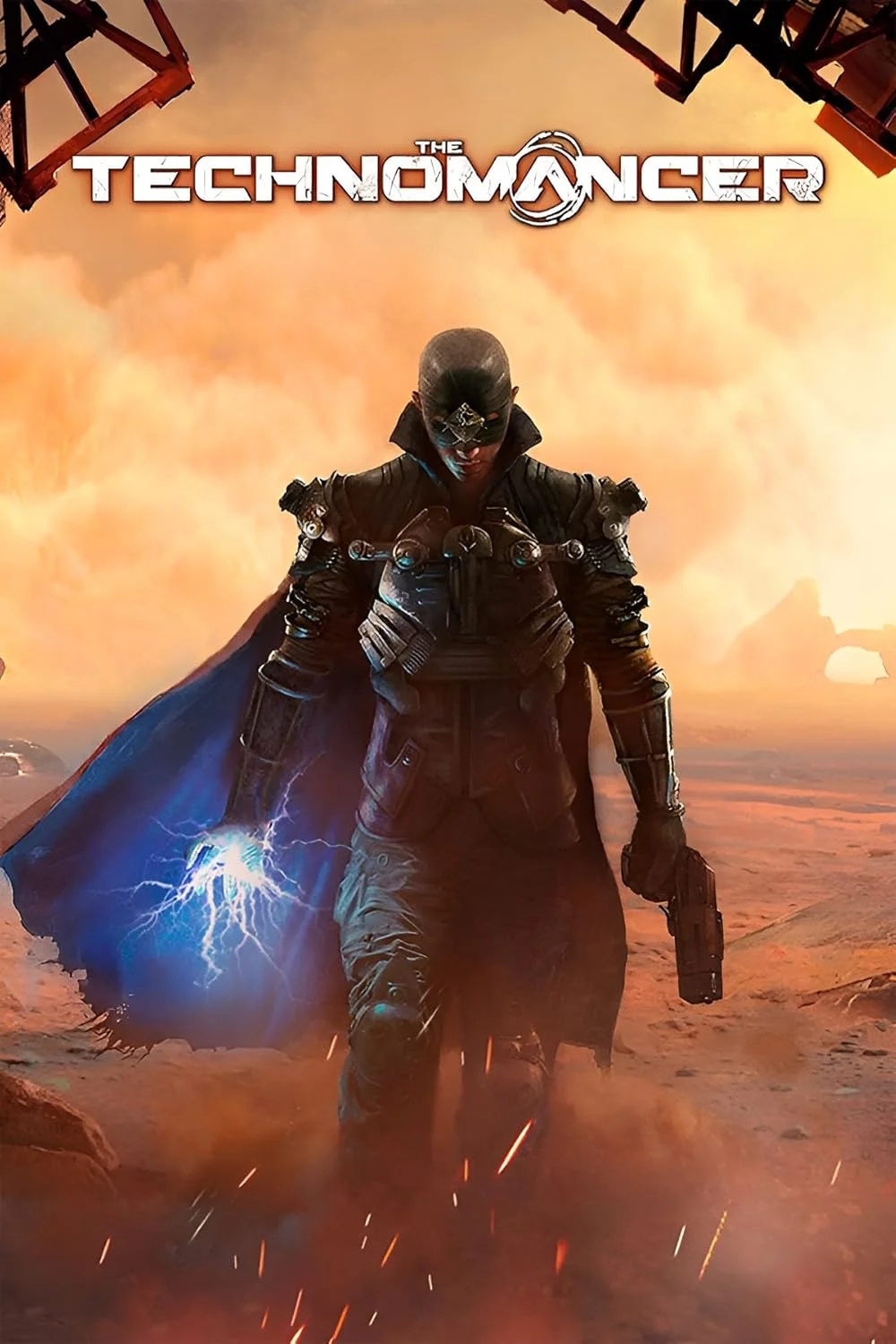
The Technomancer
This combination provides smooth gameplay with an average of 88 FPS, suitable for most gaming scenarios.
Average FPS: resolution vs quality settings
| Ultra | High | Medium | Low | |
|---|---|---|---|---|
| 4K Ultra HD | 34 | 41 | 47 | 64 |
| 1440p QHD | 63 | 75 | 89 | 115 |
| 1080p Full HD | 95 | 118 | 140 | 179 |
Cell color: green is 120+ FPS, teal is 60+, amber is 30+, red is below 30.
The Technomancer with AMD Ryzen 5 7500F + NVIDIA GeForce RTX 5060, In-Depth Analysis
# The Technomancer with AMD Ryzen 5 7500F + NVIDIA GeForce RTX 5060
The Technomancer, a 2016 Action RPG, presents an interesting test case for this modern mid-range pairing. The AMD Ryzen 5 7500F (6 cores, 12 threads, Zen 4 Raphael architecture) and NVIDIA GeForce RTX 5060 (8 GB GDDR7 on a 128-bit bus) produce a wide spread of frame rates across resolutions and settings, revealing a system that scales predictably but with distinct bottlenecks depending on where you look. The data shows a combo ranked 820 out of 1656 tested configurations, placing it squarely in the middle of the database—a position that suggests balanced, if not spectacular, performance for this title.
Resolution Scaling
The measured FPS data reveals a clear and consistent scaling pattern as resolution increases, pointing strongly toward the GPU as the primary limiter in most scenarios. At 1080p with Ultra settings, the combo delivers 94.9 FPS average; stepping down to Low at the same resolution yields 179 FPS. Moving to 1440p, the Ultra preset drops to 63.2 FPS, while Low sits at 114.9 FPS. At 4K, Ultra falls to 34.3 FPS, and Low manages 63.9 FPS.
The scaling from 1080p to 1440p at Ultra settings shows a 33.4% reduction in frame rate (94.9 to 63.2 FPS), while the jump from 1440p to 4K at Ultra represents a 45.7% drop (63.2 to 34.3 FPS). This non-linear degradation is characteristic of a GPU-bound scenario, where the pixel count increase outpaces the GPU's ability to maintain throughput. The RTX 5060's 8 GB VRAM and 448.0 GB/s memory bandwidth are likely being taxed heavily at 4K, especially with higher quality textures and effects.
Interestingly, the scaling is less severe at Low settings. From 1080p Low (179 FPS) to 1440p Low (114.9 FPS) is a 35.8% drop, but from 1440p to 4K Low (63.9 FPS) is a 44.4% reduction. This pattern suggests that even at minimal graphical load, the GPU remains the limiting factor—the CPU, with its 5.00 GHz boost clock and 32 MB L3 cache, appears to have ample headroom to feed the GPU at lower resolutions. The data implies that for this game, the RTX 5060's compute throughput (19.18 TFLOPS FP32) is the ceiling, not the Ryzen 5 7500F's processing power.
How This Combo Ranks
Within the database of 1656 tested combinations for The Technomancer, this pairing holds the 820th position. That median placement is telling: it indicates that while the hardware is modern and capable, the game itself—released in 2016—may not be optimized to fully utilize the features of Blackwell 2.0 architecture or the Zen 4 core design. The combo's rank suggests it outperforms roughly half of all tested configurations, which is expected given the mid-range positioning of both components.
The CPU's individual percentile ranking versus all CPUs is 82, and its average benchmark score of 24993 places it within 0.1% of the Intel Core i7-11850H (24974) and 0.3% behind the AMD Ryzen 7 2700X (25057). The GPU's percentile versus all GPUs is 73, with an average score of 30109, sitting virtually tied with the AMD Radeon RX 7700 XT (30097, deltaPct 0). This near-parity with the RX 7700 XT in synthetic benchmarks, combined with the mid-pack game-specific rank, suggests that The Technomancer may not be particularly demanding on modern hardware, or that the game's engine has scaling quirks that prevent higher placement.
FAQ
Q: Does the RTX 5060's 8 GB VRAM limit performance at 4K?
A: The data shows 4K Ultra produces 34.3 FPS, while 4K Low achieves 63.9 FPS. The significant gap between settings at the same resolution indicates that memory bandwidth (448.0 GB/s) and capacity are likely stressed at higher quality levels, but the card can still deliver playable frame rates at lower presets.
Q: Is the Ryzen 5 7500F a bottleneck at 1080p?
A: At 1080p Low, the combo achieves 179 FPS, while 1080p Ultra hits 94.9 FPS. The CPU's 6 cores and 12 threads, combined with a 5.00 GHz boost clock, appear sufficient to avoid bottlenecking, as frame rates scale consistently with GPU load rather than hitting a CPU-imposed ceiling.
Q: How does this combo compare to the GPU's nearest rival, the RX 7700 XT?
A: The RTX 5060's average benchmark score is 30109, while the RX 7700 XT scores 30097, a deltaPct of 0. In this game, the combo ranks 820th out of 1656, suggesting parity in synthetic tests may not translate to identical in-game performance, but the data indicates close competition.
Q: What is the best resolution for this pairing in The Technomancer?
A: At 1440p High, the combo delivers 74.8 FPS, and at 1440p Medium, 88.9 FPS. These represent a balance between visual quality and smoothness, with 1080p High (118.1 FPS) offering higher frame rates for competitive play and 4K only viable at Low (63.9 FPS).
Q: Why does the frame rate drop so sharply from 1440p to 4K?
A: The reduction at Ultra from 63.2 FPS (1440p) to 34.3 FPS (4K) is a 45.7% decline. This steep drop aligns with the GPU's pixel rate of 119.9 GPixel/s and texture rate of 299.6 GTexel/s, which are overwhelmed by the 4K pixel count, especially with higher-quality settings.
Q: Does the CPU's 3DMark performance correlate with in-game results?
A: The Ryzen 5 7500F scores 6376 in 3DMark 16-thread and 974 in single-thread tests. The game's 1080p Low result of 179 FPS suggests the CPU can handle high frame rates, but the 4K results (34.3 FPS Ultra) indicate the GPU becomes the limiting factor regardless of CPU synthetic scores.
Measured FPS Breakdown
The measured data provides a complete matrix of performance across three resolutions and four settings presets. At 1920x1080, the average frame rates are: Low 179 FPS, Medium 140.2 FPS, High 118.1 FPS, and Ultra 94.9 FPS. This represents a 47.0% reduction from Low to Ultra, showing that even at the lowest resolution, the graphical preset has a substantial impact on performance.
At 2560x1440, the results are: Low 114.9 FPS, Medium 88.9 FPS, High 74.8 FPS, and Ultra 63.2 FPS. The drop from 1080p to 1440p at each setting is consistent—approximately 35-36% lower for Low, Medium, and High, with Ultra seeing a 33.4% reduction. This consistency suggests that the GPU's fill rate and shading capacity are being scaled proportionally with pixel count.
At 3840x2160, the frame rates fall to: Low 63.9 FPS, Medium 47.3 FPS, High 40.6 FPS, and Ultra 34.3 FPS. The 4K Ultra result is the only configuration below 40 FPS, indicating that this resolution is only viable at Low settings for smooth gameplay. The difference between 4K Low and 4K Ultra is 46.3%, which is nearly identical to the percentage difference seen at 1080p, reinforcing that the settings scaling is consistent across resolutions but the absolute performance is dictated by the GPU's throughput.
CPU Role
The AMD Ryzen 5 7500F brings 6 cores and 12 threads based on Zen 4 architecture, manufactured on a 5 nm process by TSMC. With a base clock of 3.70 GHz and a boost clock of 5.00 GHz, the CPU demonstrates strong single-thread performance in synthetic tests: 3218 in Cinebench R23 single-core and 2759 in Geekbench single-core. The multi-threaded scores are equally respectable, with Cinebench R23 multicore at 22799 and Geekbench multicore at 12686.
In The Technomancer, the CPU's role appears secondary to the GPU, as evidenced by the frame rate scaling patterns. At 1080p Low, the system hits 179 FPS, which is well above typical display refresh rates and suggests the CPU is not holding back performance. The 32 MB shared L3 cache and dual-channel DDR5 memory support (83.2 GB/s bandwidth) provide ample data throughput for the game's engine. However, the game's release in 2016 means it may not leverage the CPU's full capabilities, such as the 5 nm process efficiency or the PCIe Gen 5 interface (24 lanes), which could explain why the combo ranks only 820th out of 1656 despite the CPU's 82nd percentile standing among all processors.
The CPU's nearest rivals in benchmark scores include the Intel Core i7-11850H (deltaPct 0.1) and AMD Ryzen 9 6900HX (deltaPct 0.4), indicating that the 7500F performs on par with mobile H-series chips. This suggests that for a desktop part, the 7500F is positioned at a performance tier that pairs well with mid-range GPUs like the RTX 5060, but does not push the upper bounds of what the game can utilize.
Settings Recommendations
Based on the measured FPS data, the optimal settings depend heavily on the target resolution and desired frame rate. For 1080p, the High preset at 118.1 FPS offers an excellent balance, providing smooth gameplay with only a 17.1% performance penalty compared to Medium (140.2 FPS). The Ultra preset at 94.9 FPS is still playable but represents a 19.6% drop from High, which may not justify the visual gains in a 2016 title.
At 1440p, the Medium preset at 88.9 FPS is the recommended choice, as it stays above the 60 FPS threshold with a 29.8% improvement over High (74.8 FPS). High is also viable for those prioritizing visuals, but Ultra at 63.2 FPS is marginal—it works but leaves little headroom for demanding scenes. The Low preset at 114.9 FPS is ideal for high-refresh-rate monitors, but the visual compromise may be significant.
For 4K, only the Low preset at 63.9 FPS provides a consistently smooth experience. Medium at 47.3 FPS and High at 40.6 FPS are playable but will exhibit noticeable stutter in action-heavy sequences. Ultra at 34.3 FPS is not recommended for any gameplay scenario, as it falls well below the 60 FPS target and even struggles to maintain 40 FPS. The data strongly suggests that 4K is not the intended resolution for this combo in The Technomancer, and users should either drop to 1440p or accept the visual fidelity of Low settings.
GPU Role
The NVIDIA GeForce RTX 5060, built on the Blackwell 2.0 architecture with the GB206 chip, is the clear performance driver in this pairing. With 3840 shading units, 120 TMUs, and 48 ROPs, the GPU delivers a theoretical FP32 performance of 19.18 TFLOPS and a texture rate of 299.6 GTexel/s. The 8 GB GDDR7 memory on a 128-bit bus provides 448.0 GB/s of bandwidth, which is substantial but becomes a limiting factor at higher resolutions.
The GPU's role in The Technomancer is evident from the frame rate scaling. At 1080p, the GPU is the primary bottleneck, with performance ranging from 94.9 FPS (Ultra) to 179 FPS (Low). The pixel rate of 119.9 GPixel/s and the 48 ROPs determine the fill-rate ceiling, which is why 4K Ultra (34.3 FPS) struggles—the GPU simply cannot rasterize enough pixels per frame at that resolution with high-quality settings.
The RTX 5060's 73rd percentile ranking among all GPUs and its average benchmark score of 30109 place it in a competitive position, nearly identical to the RX 7700 XT (30097). However, in this game, the 8 GB VRAM may be a concern at 4K with high textures, as the memory bus width of 128 bits requires higher effective clock speeds (28 Gbps) to achieve the 448.0 GB/s bandwidth. The GPU's 145 W TDP and dual-slot design suggest efficient power delivery, but the data shows that The Technomancer's demands are better suited to 1080p or 1440p gaming, where the RTX 5060 can fully flex its Blackwell architecture without hitting memory or bandwidth walls.
Hardware Specifications
AMD Ryzen 5 7500F
NVIDIA GeForce RTX 5060
FPS Benchmarks by Resolution & Settings
Performance data for AMD Ryzen 5 7500F + NVIDIA GeForce RTX 5060 in The Technomancer
| Resolution | Settings | Avg FPS |
|---|---|---|
| 3840x2160 | Low | 63.9 |
| 3840x2160 | Medium | 47.3 |
| 3840x2160 | High | 40.6 |
| 3840x2160 | Ultra | 34.3 |
| 2560x1440 | Low | 114.9 |
| 2560x1440 | Medium | 88.9 |
| 2560x1440 | High | 74.8 |
| 2560x1440 | Ultra | 63.2 |
| 1920x1080 | Low | 179.0 |
| 1920x1080 | Medium | 140.2 |
| 1920x1080 | High | 118.1 |
| 1920x1080 | Ultra | 94.9 |
The Technomancer with Ryzen 5 7500F + Other GPUs
See how The Technomancer performs with the same CPU but different graphics cards.
The Technomancer with RTX 5060 + Other CPUs
See how The Technomancer performs with the same GPU but different processors.
Other Games with Ryzen 5 7500F + RTX 5060
Explore FPS benchmarks for other games using this same hardware combination.