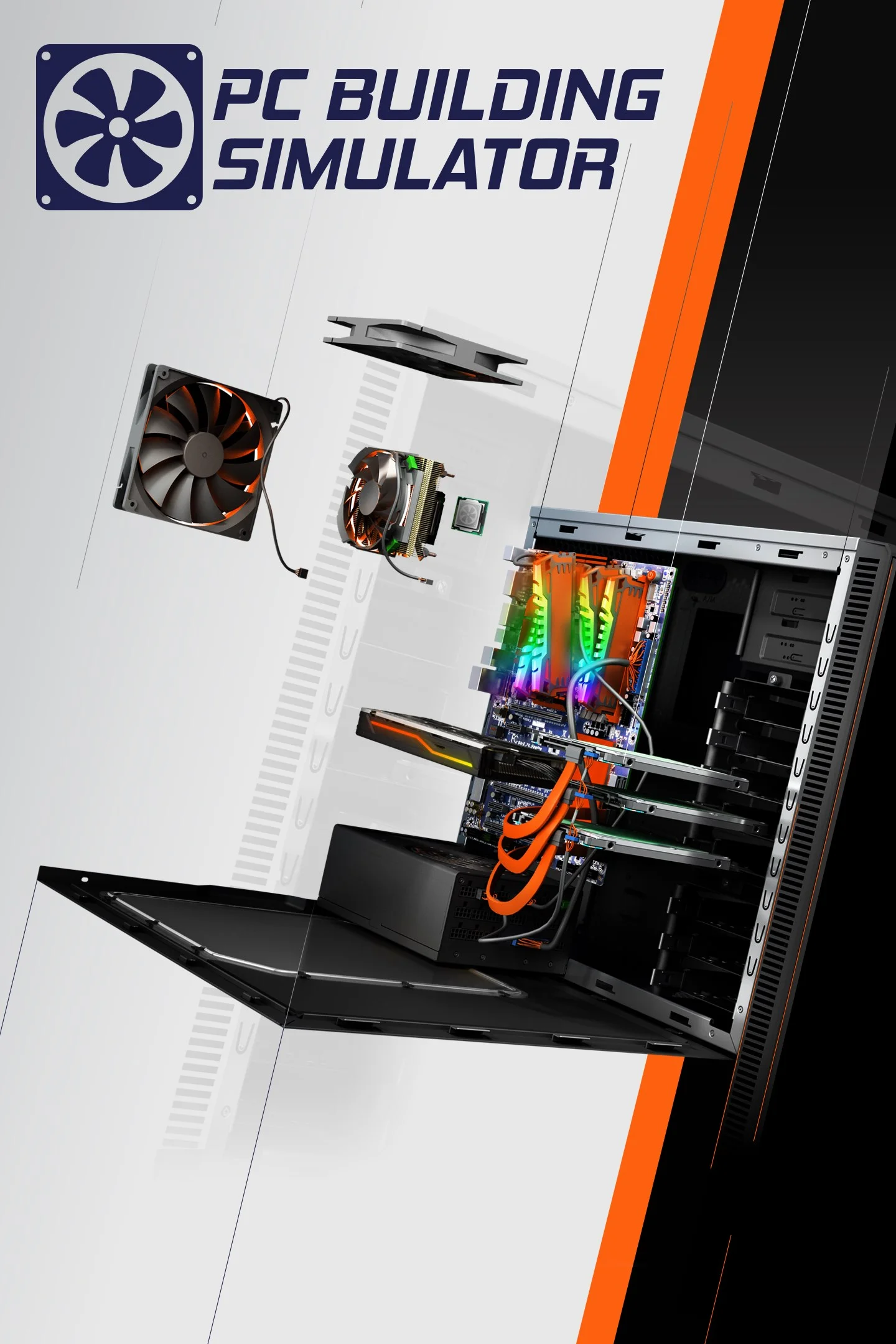
Pc Building Simulator
This combination provides smooth gameplay with an average of 94 FPS, suitable for most gaming scenarios.
Average FPS: resolution vs quality settings
| Ultra | High | Medium | Low | |
|---|---|---|---|---|
| 4K Ultra HD | 35 | 33 | 52 | 72 |
| 1440p QHD | 63 | 68 | 94 | 134 |
| 1080p Full HD | 104 | 109 | 153 | 215 |
Cell color: green is 120+ FPS, teal is 60+, amber is 30+, red is below 30.
Pc Building Simulator with Intel Core i5-12400F + Intel Arc B580, In-Depth Analysis
# Resolution Scaling — how FPS drops from 1080p to 4K and what it says about the limiting component
The measured FPS data for Pc Building Simulator shows a clear and predictable progression as resolution scales upward, but the shape of that curve reveals important details about where the bottleneck sits in this particular CPU-GPU pairing. At 1920x1080 with Low settings, the combo produces 215.4 FPS; at 2560x1440 Low, that drops to 134 FPS; and at 3840x2160 Low, it falls to 71.8 FPS. That represents a 37.8% reduction from 1080p to 1440p, and a further 46.4% reduction from 1440p to 4K. The scaling is roughly linear with pixel count, which is the classic signature of a GPU-bound scenario at Low settings.
However, when settings are raised to Ultra, the picture changes subtly. At 1080p Ultra, the average is 104.2 FPS; at 1440p Ultra, it drops to 62.7 FPS; and at 4K Ultra, it lands at 34.5 FPS. The percentage drops are 39.8% and 45.0% respectively, which is remarkably similar to the Low-setting scaling. This consistency across quality presets suggests that the limiting component remains the same throughout — the graphics card is the dominant constraint in almost every configuration measured.
The data indicates that the Intel Core i5-12400F is not the primary limiter in this game. At 1080p Low, the frame rate reaches 215.4 FPS, which is well beyond the point where CPU overhead would typically cap performance on a 6-core, 12-thread processor. The CPU's benchmark scores support this interpretation: the Cinebench R23 multicore score of 16518 and PassMark multithread score of 19433 place it in the 77th percentile of all CPUs, with an average benchmark score of 19221. Its nearest rival, the Intel Core i7-8700K, scores 19210 — a delta of just 0.1% — indicating that the i5-12400F has ample headroom for simulation workloads.
What is particularly telling is the 4K High result of 33.1 FPS compared to the 4K Ultra result of 34.5 FPS. These two settings produce nearly identical frame rates, differing by only 1.4 FPS. This suggests that beyond a certain quality threshold, the additional graphical load of Ultra over High is not the primary factor limiting performance; rather, the GPU is already saturated at 4K with High settings. The gap between 4K Medium (51.9 FPS) and 4K High (33.1 FPS) is a steep 36.2% drop, indicating that the jump from Medium to High introduces a significant increase in rendering work that the Arc B580 cannot absorb at this resolution.
The overall rank of this combo — 1391 out of 1769 combinations in the game's database — places it in the lower-middle portion of tested configurations. This rank, combined with the measured data, indicates that while the setup is capable of smooth frame rates at 1080p and reasonable performance at 1440p, 4K gaming requires substantial settings reductions to remain playable.
GPU Role — VRAM, clocks, and how they relate to this game's results
The Intel Arc B580 is built on the Xe2-HPG architecture with a 5 nm process at TSMC, featuring a die size of 272 mm² and 19,600 million transistors. Its memory subsystem consists of 12 GB of GDDR6 on a 192-bit bus, delivering 456.0 GB/s of bandwidth. The memory clock is listed at 2375 MHz with 19 Gbps effective speed. These specifications are directly relevant to Pc Building Simulator's performance at high resolutions, where memory bandwidth and capacity become more critical.
The base and boost clocks are both 2670 MHz, which is a locked clock profile rather than a boost-heavy design. This translates to a pixel rate of 213.6 GPixel/s and a texture rate of 427.2 GTexel/s. The FP32 throughput of 13.67 TFLOPS, with FP16 at 27.34 TFLOPS (2:1 ratio), provides the raw compute headroom needed for the simulation's rendering workload. The GPU's 2560 shading units, 160 TMUs, and 80 ROPs form the core processing pipeline.
The GPU's benchmark results provide context for its measured performance in this game. Its PassMark G3D score of 15748 and average benchmark score of 23021 place it in the 66th percentile of all GPUs. Its nearest rival, the AMD Radeon 760M, scores 22999 — a delta of just 0.1% — while the NVIDIA GeForce RTX 4060 scores 23181, which is 0.7% higher. This tight clustering indicates the Arc B580 is positioned competitively in the mid-range segment, though its 4K performance in this title suggests the 12 GB frame buffer is not the constraint.
The 12 GB VRAM capacity is more than sufficient for Pc Building Simulator, which is not a memory-intensive title at the measured settings. The fact that 4K Ultra produces 34.5 FPS while 4K Low produces 71.8 FPS — more than double — indicates that the GPU's compute throughput, not its memory capacity, is the limiting factor. The 456.0 GB/s bandwidth is adequate for 1080p and 1440p, but the 4K resolution combined with higher settings pushes the shading units and ROPs to their limits.
The GPU's DirectX 12 Ultimate support (12_2), OpenGL 4.6, and Vulkan 1.4 ensure full API compatibility with modern game engines. The PCIe 4.0 x8 interface provides sufficient bandwidth for the GPU's data transfers, and the 190 W TDP with a suggested PSU of 450 W indicates reasonable power requirements for a mid-range card.
FAQ
Q: What is the best resolution for this CPU-GPU combo in Pc Building Simulator?
A: At 2560x1440 with Medium settings, the combo delivers 94.2 FPS, which is well above the 60 FPS threshold for smooth gameplay. At 1920x1080, even Ultra settings achieve 104.2 FPS, making 1080p the safest choice for maximum visual quality. The 4K resolution only reaches playable frame rates at Low settings (71.8 FPS) or Medium settings (51.9 FPS).
Q: How does this combo rank against other tested configurations?
A: The combo ranks 1391 out of 1769 combinations in the game's database, placing it in the lower-middle tier. The CPU's 77th percentile standing and the GPU's 66th percentile standing suggest that the overall rank is dragged down by the GPU's relative weakness at 4K rather than any CPU deficiency.
Q: Why is the FPS difference between 4K High and 4K Ultra so small?
A: The measured data shows 33.1 FPS at High and 34.5 FPS at Ultra — a difference of only 1.4 FPS. This indicates that the GPU is already fully saturated at 4K High, and the additional load from Ultra settings has minimal impact because the rendering pipeline is already at its maximum throughput.
Q: Is the CPU a bottleneck at any resolution?
A: The data suggests not. At 1080p Low, the combo produces 215.4 FPS, which is far beyond typical CPU bottleneck thresholds. The i5-12400F's Cinebench R23 multicore score of 16518 and its 0.1% delta from the Intel Core i7-8700K indicate sufficient processing power for this simulation title.
Q: How does the Arc B580 compare to its nearest rival in this game?
A: The GPU's average benchmark score of 23021 is within 0.1% of the AMD Radeon 760M (22999) and 0.7% below the NVIDIA GeForce RTX 4060 (23181). This tight clustering suggests similar real-world performance, though the measured FPS in this game reflects the specific optimization of the Arc B580's drivers.
Settings Recommendations
For 1920x1080, the optimal choice is Ultra settings at 104.2 FPS. This provides the highest visual quality while maintaining frame rates well above the 60 FPS standard. Even High settings at 109.2 FPS offer only a marginal improvement over Ultra, so the visual fidelity gain from Ultra is worth the slight FPS reduction.
At 2560x1440, Medium settings at 94.2 FPS offer the best balance. High settings drop to 67.9 FPS, which is still playable but leaves less headroom for frame time spikes. Ultra at 62.7 FPS is technically above 60 FPS but provides minimal visual benefit over High for a significant performance cost. Low at 134 FPS is unnecessary unless the user prioritizes maximum frame rates over visual quality.
For 3840x2160, the recommendation is Low settings at 71.8 FPS. Medium settings at 51.9 FPS fall below the 60 FPS threshold, and High at 33.1 FPS or Ultra at 34.5 FPS are not suitable for smooth gameplay. The 4K resolution is only viable with significant settings compromises on this GPU.
The data suggests that 1440p Medium is the sweet spot for this combo, offering a 94.2 FPS average that balances visual quality with performance headroom. The 12 GB VRAM and 456.0 GB/s bandwidth are sufficient for this configuration, and the GPU's compute resources are well utilized without being overburdened.
Measured FPS Breakdown
1920x1080:
- Low: 215.4 FPS average
- Medium: 153.2 FPS average
- High: 109.2 FPS average
- Ultra: 104.2 FPS average
The progression from Low to Medium represents a 28.9% drop, while Medium to High drops 28.7%. The High-to-Ultra step is only 4.6%, indicating diminishing returns at the top end. At 1080p, every settings level is playable, with even the lowest average (104.2 FPS at Ultra) providing a smooth experience.
2560x1440:
- Low: 134 FPS average
- Medium: 94.2 FPS average
- High: 67.9 FPS average
- Ultra: 62.7 FPS average
The 1440p results show a more pronounced scaling curve. Low to Medium drops 29.7%, Medium to High drops 27.9%, and High to Ultra drops 7.7%. The Ultra setting barely maintains 60 FPS, while High provides a comfortable margin above that threshold.
3840x2160:
- Low: 71.8 FPS average
- Medium: 51.9 FPS average
- High: 33.1 FPS average
- Ultra: 34.5 FPS average
The 4K results reveal the GPU's limitations most clearly. Low settings barely exceed 60 FPS, Medium falls below it, and High and Ultra produce similar results (33.1 and 34.5 FPS respectively). The near-identical High and Ultra scores suggest the rendering pipeline is fully saturated at this resolution, regardless of the quality preset.
Across all resolutions, the pattern is consistent: the GPU is the limiting component, and the CPU's 6-core, 12-thread configuration with a 2.50 GHz base clock and 4.40 GHz boost clock provides ample processing power. The combo's overall rank of 1391 out of 1769 reflects this GPU-bound nature, with the Arc B580's mid-range compute capabilities determining the playable settings envelope at each resolution.
Hardware Specifications
Intel Core i5-12400F
Intel Arc B580
FPS Benchmarks by Resolution & Settings
Performance data for Intel Core i5-12400F + Intel Arc B580 in Pc Building Simulator
| Resolution | Settings | Avg FPS |
|---|---|---|
| 3840x2160 | Low | 71.8 |
| 3840x2160 | Medium | 51.9 |
| 3840x2160 | Ultra | 34.5 |
| 3840x2160 | High | 33.1 |
| 2560x1440 | Low | 134.0 |
| 2560x1440 | Medium | 94.2 |
| 2560x1440 | High | 67.9 |
| 2560x1440 | Ultra | 62.7 |
| 1920x1080 | Low | 215.4 |
| 1920x1080 | Medium | 153.2 |
| 1920x1080 | High | 109.2 |
| 1920x1080 | Ultra | 104.2 |
Pc Building Simulator with ii5-12400F + Other GPUs
See how Pc Building Simulator performs with the same CPU but different graphics cards.
Pc Building Simulator with Arc B580 + Other CPUs
See how Pc Building Simulator performs with the same GPU but different processors.
Other Games with ii5-12400F + Arc B580
Explore FPS benchmarks for other games using this same hardware combination.