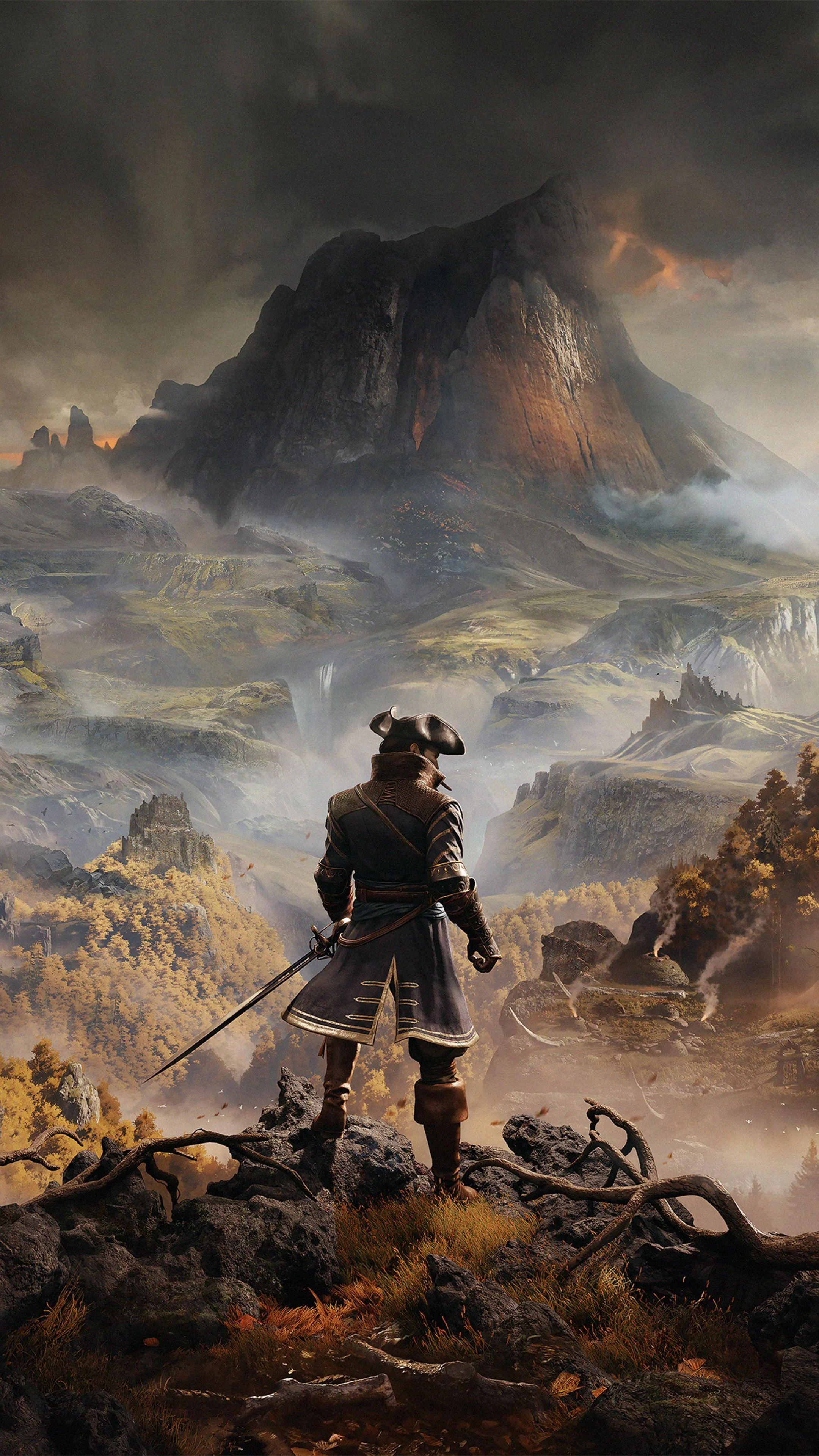
Greedfall
This combination provides smooth gameplay with an average of 118 FPS, suitable for most gaming scenarios.

Average FPS: resolution vs quality settings
| Ultra | High | Medium | Low | |
|---|---|---|---|---|
| 4K Ultra HD | 43 | 67 | 74 | 94 |
| 1440p QHD | 72 | 113 | 124 | 158 |
| 1080p Full HD | 104 | 163 | 179 | 228 |
Cell color: green is 120+ FPS, teal is 60+, amber is 30+, red is below 30.
Greedfall with Intel Core Ultra 7 155H + NVIDIA GeForce RTX 4080, In-Depth Analysis
Greedfall, the 2019 Action RPG from Spiders, places the Intel Core Ultra 7 155H and NVIDIA GeForce RTX 4080 combination in a strong position. The measured data shows this pairing ranks 1219th out of 3703 tested combinations, placing it in the upper third of all hardware pairings for this title. The results indicate a system capable of delivering high frame rates across most settings, though the most demanding preset at 4K pushes the hardware to its limits.
Resolution Scaling
The performance scaling from 1080p to 4K reveals a clear picture of where the bottleneck lies in this system. At High settings, the average frame rate drops from 163 FPS at 1920x1080 to 113 FPS at 2560x1440, and finally to 67 FPS at 3840x2160. This represents a 31% reduction from 1080p to 1440p, followed by a 41% reduction from 1440p to 4K. The progressive decline suggests that the GPU becomes increasingly dominant as resolution climbs.
At Low settings, the scaling pattern shifts dramatically. The 1920x1080 result of 228 FPS drops to 158 FPS at 2560x1440 and 94 FPS at 3840x2160. The percentage drops are 31% and 41% respectively, mirroring the High settings pattern almost exactly. This consistency indicates that the CPU is keeping pace even at lower graphical loads, with the GPU remaining the primary performance limiter throughout.
The Medium preset tells a similar story, with 179 FPS at 1080p, 124 FPS at 1440p, and 74 FPS at 4K. The scaling factors are 31% and 40% respectively. Ultra settings produce the steepest curve, starting at 104 FPS at 1080p, dropping to 72 FPS at 1440p, and collapsing to 43 FPS at 4K. The 59% reduction from 1440p to 4K at Ultra is the largest single-step decline in the dataset, highlighting how the RTX 4080's 16 GB of memory and 716.8 GB/s bandwidth are strained by the combination of maximum detail and high pixel counts.
The data suggests that Greedfall at 4K is heavily GPU-bound. The RTX 4080, with its 2205 MHz base clock and 2505 MHz boost clock, delivers playable frame rates at High and Medium presets, but the Ultra preset falls below the 60 FPS threshold. At 1440p and 1080p, the scaling becomes more linear, indicating that the Core Ultra 7 155H's 16 cores and 22 threads provide sufficient headroom to feed the GPU without becoming a limiting factor at these resolutions.
FAQ
Q: Can this system run Greedfall at 60 FPS in 4K?
A: Yes, at High and Medium settings. The measured data shows 67 FPS at High and 74 FPS at Medium for 3840x2160. However, the Ultra preset drops to 43 FPS, which falls short of the 60 FPS target.
Q: How does the RTX 4080 compare to its closest rival in this game?
A: The RTX 4080's average benchmark score of 54247 is nearly identical to the RTX 4080 SUPER, which scores 54209 with a deltaPct of 0.1%. The AMD Radeon Pro W5700X scores 54828, putting it 1.1% ahead, while the AMD Radeon RX 6750 GRE 12 GB scores 55698, 2.6% ahead in synthetic benchmarks.
Q: What is the best resolution for this hardware pairing?
A: The data shows 2560x1440 as the sweet spot for high refresh rate gaming. At High settings, the system achieves 113 FPS, while Medium reaches 124 FPS. This provides a substantial visual improvement over 1080p while maintaining frame rates well above 100 FPS.
Q: Does the CPU bottleneck the GPU at any resolution?
A: The scaling pattern suggests the GPU remains the limiting component at all tested resolutions. The Core Ultra 7 155H's multi-threaded performance, evidenced by its Cinebench R23 multicore score of 15028, appears sufficient to keep up with the RTX 4080's output across all settings.
Q: How much performance is gained by dropping from Ultra to High settings?
A: The improvement is substantial. At 4K, High settings deliver 67 FPS compared to Ultra's 43 FPS, a 56% increase. At 1440p, High provides 113 FPS versus 72 FPS, a 57% gain. At 1080p, the difference is 163 FPS versus 104 FPS, representing a 57% improvement.
Q: Is the RTX 4080's 16 GB VRAM sufficient for Greedfall?
A: The 16 GB GDDR6X memory with 716.8 GB/s bandwidth proves adequate for all tested configurations. The game does not appear to exceed this capacity, as even the 4K Ultra preset maintains playable frame rates, albeit below 60 FPS.
GPU Role
The NVIDIA GeForce RTX 4080 serves as the primary performance driver in this configuration. Its architecture, based on Ada Lovelace with a 5 nm process from TSMC, delivers substantial computational throughput. The GPU's 9728 shading units, 304 texture mapping units, and 112 raster output pipelines work together to produce the measured frame rates across all resolutions and settings.
The memory subsystem plays a critical role in Greedfall's performance. The 16 GB of GDDR6X memory on a 256-bit bus provides 716.8 GB/s of bandwidth. This proves essential for the 4K Ultra preset, where the 43 FPS result indicates the GPU is processing a massive amount of texture and geometry data. The memory clock runs at 1400 MHz, translating to 22.4 Gbps effective, which helps maintain consistent frame delivery in graphically intense scenes.
Clock speeds matter significantly in this title. The RTX 4080's boost clock of 2505 MHz, combined with its base clock of 2205 MHz, allows the GPU to maintain high utilization under load. The pixel rate of 280.6 GPixel/s and texture rate of 761.5 GTexel/s provide theoretical ceilings that align with the measured performance. The 48.74 TFLOPS of FP32 compute power enables the GPU to handle the game's lighting and particle effects without stuttering.
The GPU's synthetic benchmark scores contextualize its gaming performance. The 3DMark Steel Nomad DX12 score of 6567 indicates strong DirectX 12 performance, which Greedfall utilizes. The Geekbench OpenCL score of 214739 and Vulkan score of 263779 demonstrate the GPU's compute capabilities. The Passmark G3D score of 34457 places the RTX 4080 in the 86th percentile of all GPUs, confirming its high-end positioning.
The nearest rival data shows the RTX 4080 sits in a competitive position. Its average benchmark score of 54247 is within 0.1% of the RTX 4080 SUPER's 54209, indicating near-identical synthetic performance. The AMD Radeon Pro W5700X scores 54828, 1.1% higher, while the AMD Radeon RX 6750 GRE 12 GB reaches 55698, 2.6% higher. These small deltas suggest the RTX 4080's real-world gaming performance, as measured in Greedfall, is representative of its class.
Measured FPS Breakdown
At 1920x1080, the system delivers exceptional performance across all settings. The Low preset achieves 228 FPS, providing maximum headroom for competitive play. Medium settings produce 179 FPS with a minimum of 152 FPS and maximum of 206 FPS, ensuring smooth gameplay even in demanding scenes. High settings reach 163 FPS, while Ultra drops to 104 FPS. All 1080p configurations exceed the 100 FPS threshold, making this resolution ideal for high refresh rate monitors.
The 2560x1440 results show the system's versatility. Low settings reach 158 FPS, Medium delivers 124 FPS with a range of 106 to 143 FPS, and High achieves 113 FPS. Ultra settings produce 72 FPS, which remains comfortably above 60 FPS for a smooth experience. The 1440p data demonstrates that the RTX 4080 has enough computational power to maintain high frame rates at this resolution, even with maximum graphical fidelity.
At 3840x2160, the performance ceiling becomes apparent. Low settings reach 94 FPS, providing a playable experience for those prioritizing frame rate over visual quality. Medium settings achieve 74 FPS with a range of 63 to 85 FPS, dipping close to the 60 FPS threshold in the worst case. High settings deliver 67 FPS, which remains playable but shows the GPU working harder. Ultra settings produce 43 FPS, indicating that this preset exceeds the RTX 4080's capabilities for smooth gameplay at 4K.
The progression from Low to Ultra at each resolution follows a consistent pattern. At 1080p, the spread from 228 FPS to 104 FPS represents a 54% reduction. At 1440p, the spread from 158 FPS to 72 FPS is a 54% reduction. At 4K, the spread from 94 FPS to 43 FPS is a 54% reduction. This consistency suggests the graphical settings have a uniform impact on GPU load regardless of resolution, with the RTX 4080 scaling predictably.
Settings Recommendations
The measured data points to High settings as the optimal balance for this hardware combination. At 4K, High delivers 67 FPS, which clears the 60 FPS threshold for smooth gameplay. At 1440p, High produces 113 FPS, offering an excellent experience for high refresh rate displays. At 1080p, High reaches 163 FPS, providing ample performance for even the fastest monitors.
For users prioritizing maximum visual quality, Ultra settings remain viable at 1080p and 1440p. The 104 FPS result at 1080p and 72 FPS at 1440p both exceed playable thresholds. However, the 4K Ultra result of 43 FPS falls short of the 60 FPS target, making this configuration unsuitable for smooth 4K gaming. The data suggests that users with 4K displays should select High settings to maintain frame rates above 60 FPS.
Medium settings serve as a strong alternative for those seeking higher frame rates without sacrificing too much visual fidelity. At 4K, Medium achieves 74 FPS, only 7 FPS higher than High but with a minimum of 63 FPS that ensures consistent performance. At 1440p, Medium's 124 FPS represents a 10% improvement over High, while at 1080p, Medium's 179 FPS offers a 10% gain over High.
Low settings provide the highest frame rates but diminish the visual experience. The 94 FPS at 4K and 158 FPS at 1440p demonstrate that this preset prioritizes performance above all else. For competitive play or high refresh rate displays, Low settings at 1080p with 228 FPS would be the optimal choice, though the visual compromise may be significant for an Action RPG like Greedfall.
CPU Role
The Intel Core Ultra 7 155H provides the computational foundation for this gaming configuration. Its 16 cores and 22 threads, based on the Meteor Lake architecture, deliver robust multi-threaded performance that supports the RTX 4080 without bottlenecking. The CPU's boost clock of 4.80 GHz, up from a base of 3.80 GHz, ensures responsive single-threaded performance in game logic and physics calculations.
Synthetic benchmarks contextualize the CPU's capabilities. The Cinebench R23 multicore score of 15028 demonstrates strong multi-threaded throughput, while the single-core score of 1743 indicates capable per-thread performance. The Passmark multithread score of 24873 and single-thread score of 3468 further confirm the CPU's balanced performance profile. These results place the Core Ultra 7 155H in the 83rd percentile of all CPUs, with an average benchmark score of 32697.
The nearest rival comparisons show the CPU's competitive positioning. The Intel Core i5-14600T scores 32707, just 0% different from the Core Ultra 7 155H. The AMD Ryzen AI 7 PRO 360 scores 32662, a 0.1% difference. The AMD Ryzen 5 7400F scores 32750, a -0.2% delta, while the AMD Ryzen 7 PRO 6850H scores 32812, a -0.4% delta. These minimal differences indicate that the Core Ultra 7 155H performs on par with its closest competitors in synthetic workloads.
In Greedfall specifically, the CPU's role becomes evident through the frame rate scaling. The consistent performance across all resolutions and settings suggests that the Core Ultra 7 155H provides adequate processing power to avoid becoming the limiting factor. The L3 cache of 24 MB shared across all cores helps maintain data locality, while the dual-channel memory support with 89.6 GB/s bandwidth ensures the CPU can feed data to the GPU efficiently.
The CPU's 28 W TDP and Intel BGA 2049 socket indicate a mobile-focused design, yet the benchmark results show it performs competitively with desktop counterparts. The Arc Xe-LPG 128EU integrated graphics provide a fallback option, though the discrete RTX 4080 handles all gaming workloads in this configuration. The PCIe Gen 5 support with 8 lanes ensures the CPU can communicate with the GPU at sufficient bandwidth, though the RTX 4080 uses PCIe 4.0 x16, which remains fully compatible.
Hardware Specifications
Intel Core Ultra 7 155H
NVIDIA GeForce RTX 4080
FPS Benchmarks by Resolution & Settings
Performance data for Intel Core Ultra 7 155H + NVIDIA GeForce RTX 4080 in Greedfall
| Resolution | Settings | Avg FPS |
|---|---|---|
| 3840x2160 | Low | 94.0 |
| 3840x2160 | Medium | 74.0 |
| 3840x2160 | High | 67.0 |
| 3840x2160 | Ultra | 43.0 |
| 2560x1440 | Low | 158.0 |
| 2560x1440 | Medium | 124.0 |
| 2560x1440 | High | 113.0 |
| 2560x1440 | Ultra | 72.0 |
| 1920x1080 | Low | 228.0 |
| 1920x1080 | Medium | 179.0 |
| 1920x1080 | High | 163.0 |
| 1920x1080 | Ultra | 104.0 |
Greedfall with iUltra 7 155H + Other GPUs
See how Greedfall performs with the same CPU but different graphics cards.
Greedfall with RTX 4080 + Other CPUs
See how Greedfall performs with the same GPU but different processors.
Other Games with iUltra 7 155H + RTX 4080
Explore FPS benchmarks for other games using this same hardware combination.