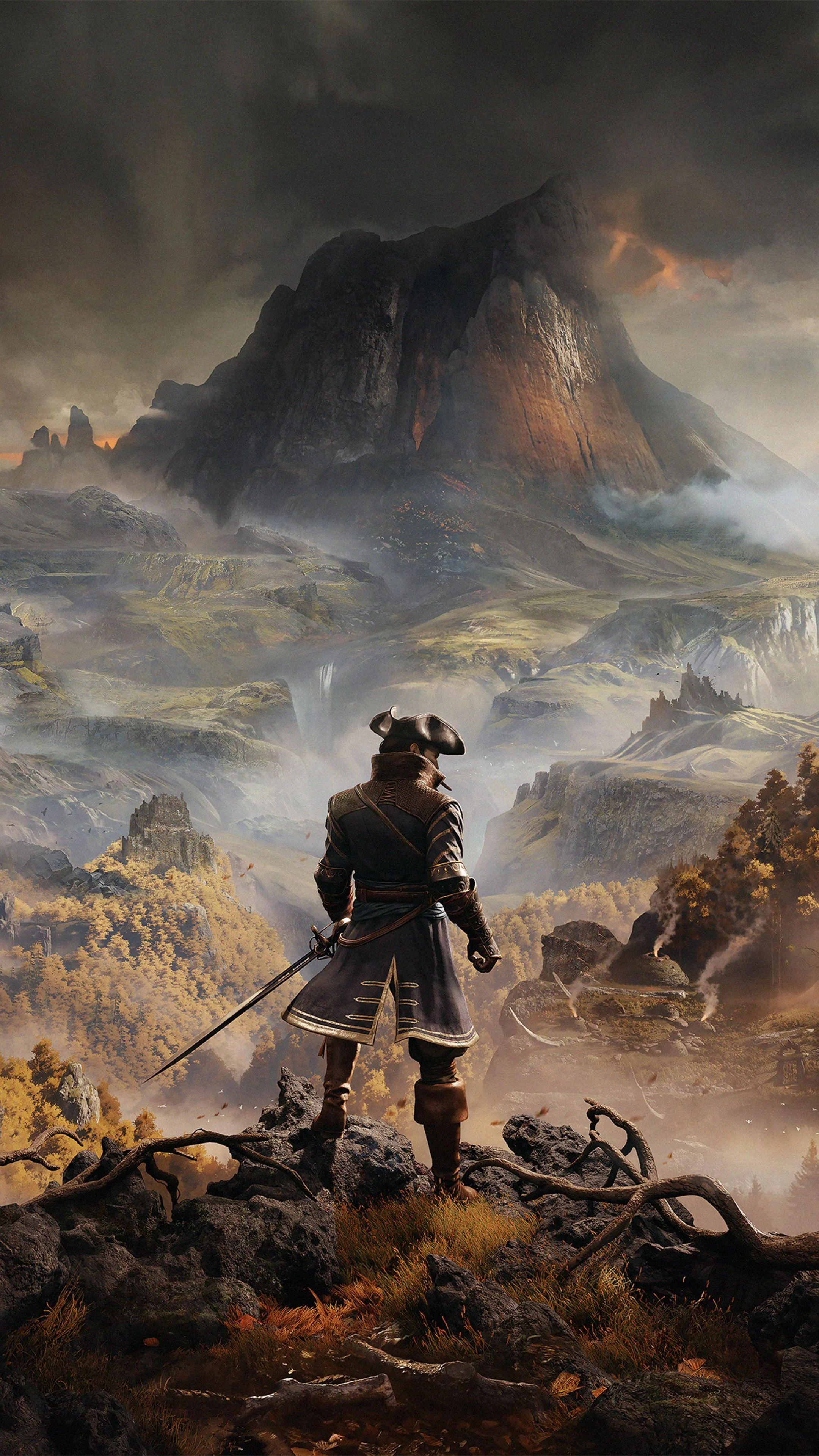
Greedfall
This combination provides smooth gameplay with an average of 82 FPS, suitable for most gaming scenarios.
Average FPS: resolution vs quality settings
| Ultra | High | Medium | Low | |
|---|---|---|---|---|
| 4K Ultra HD | 30 | 47 | 51 | 65 |
| 1440p QHD | 50 | 78 | 86 | 109 |
| 1080p Full HD | 72 | 113 | 124 | 158 |
Cell color: green is 120+ FPS, teal is 60+, amber is 30+, red is below 30.
Greedfall with AMD Ryzen 7 5700G + AMD Radeon RX 6650 XT, In-Depth Analysis
The AMD Ryzen 7 5700G paired with the AMD Radeon RX 6650 XT presents a compelling mid-range configuration for Greedfall, an Action RPG from 2019. The measured data reveals a system that is clearly capable of delivering smooth gameplay, but the performance curve across resolutions and settings tells a nuanced story about where the bottlenecks lie and how to best optimize the experience. This analysis breaks down the FPS data to understand the roles of the CPU and GPU and provides clear guidance on the best settings for this specific combination.
Resolution Scaling
The transition from 1080p to 4K produces a dramatic and predictable drop in frame rates, but the magnitude of the drop reveals a shift in system dynamics. At High settings, the average FPS falls from 113 at 1920x1080 to 78 at 2560x1440, a reduction of 35 FPS, and then plummets further to 47 at 3840x2160. This represents a total loss of 66 FPS, or roughly 58% of the 1080p performance, when moving to 4K. This steep decline is a classic indicator that the GPU is becoming the primary limiting factor as pixel count increases, demanding more raw fill rate and memory bandwidth.
The pattern is consistent across other settings. On Low settings, the average FPS goes from 158 at 1080p to 109 at 1440p, and finally to 65 at 4K. The scaling here is less severe in absolute terms but still significant, showing a 93 FPS difference between the lowest and highest resolutions. Interestingly, the gap between 1080p and 1440p performance is proportionally larger than the gap between 1440p and 4K on Low settings, suggesting that at lower graphical loads, the CPU might be able to feed the GPU more effectively at 1440p than at 1080p, where the GPU is already less stressed.
The data strongly implies that at 1080p, the system is not fully GPU-bound, even at Ultra settings. The difference between Low and Ultra at 1080p is 86 FPS (158 vs 72), showing that the GPU still has headroom to scale with settings. However, as resolution increases to 4K, the GPU's workload becomes so heavy that the frame rate becomes almost entirely dependent on its capabilities. The drop from 1440p to 4K on High settings (78 to 47 FPS) is a 40% reduction, which is more substantial than the 31% reduction from 1080p to 1440p (113 to 78 FPS), highlighting the exponential cost of 4K rendering. This indicates that for a consistently high refresh rate experience, 1080p or 1440p are the target resolutions, while 4K will require significant compromises in graphical fidelity to remain playable.
GPU Role
The AMD Radeon RX 6650 XT, powered by the Navi 23 chip on the RDNA 2.0 architecture, is clearly the dominant component in this pairing for Greedfall. Its 8 GB of GDDR6 memory on a 128-bit bus delivers a bandwidth of 280.3 GB/s, and its performance is directly reflected in the measured FPS. The GPU's boost clock of 2635 MHz and game clock of 2410 MHz are the engines driving these numbers, and the data shows that they are sufficient for excellent 1080p performance but are stretched thin at 4K.
The GPU's role is most evident in the 4K results. At 3840x2160, the average FPS across all settings is relatively low, with Ultra settings hitting a 30 FPS average. This is a clear sign that the RX 6650 XT's compute power, rated at 10.79 TFLOPS FP32, is not enough to maintain high frame rates at this demanding resolution. The 47 FPS at High and 51 FPS at Medium settings are playable but not ideal for a fast-paced action RPG, and they underscore that the card is operating at its limits. The 8 GB VRAM buffer is also a likely point of pressure at 4K with higher texture qualities, potentially causing the pronounced performance drops.
Conversely, the GPU shows its strength at 1080p and 1440p. The ability to achieve 113 FPS at High settings in 1080p and 78 FPS in 1440p shows a well-balanced performance profile for these mainstream resolutions. The GPU's 128 ROPs and 2048 shading units are sufficient to handle the game's geometry and effects at these resolutions. When compared to its nearest rivals via average benchmark scores, the RX 6650 XT is remarkably close to cards like the NVIDIA Tesla K40m and AMD FirePro D300, with deltas of only -0.6% and +0.7% respectively. This suggests its raw compute potential is consistent with those cards, though its modern architecture and driver support likely contribute to its specific in-game performance. The data confirms that the GPU is the scaling bottleneck, as its performance dictates the FPS more than the CPU as resolution increases.
CPU Role
The AMD Ryzen 7 5700G, with its 8 cores and 16 threads based on the Zen 3 architecture, is a powerful processor that is more than capable of keeping up with the RX 6650 XT in Greedfall. Its base clock of 3.80 GHz and boost clock of 4.60 GHz provide ample single-threaded performance, which is crucial for game logic and physics. The CPU's role in this pairing is to ensure a steady stream of frames, and the data suggests it does so effectively at lower resolutions.
At 1080p, where the GPU has more headroom, the CPU's performance is likely the reason the frame rates are so high. For instance, the 158 FPS average on Low settings shows that the CPU can process the game's simulation quickly enough to allow the GPU to push a very high number of frames. The 5700G's strong multi-threaded performance, as evidenced by a Cinebench R23 multi-core score of 12830.5, ensures that even with background tasks, the game remains smooth. Its 16 MB of L3 cache is also beneficial for holding game assets, reducing the need to fetch data from system memory.
However, as resolution increases, the CPU's role diminishes. The 4K results show that even with a powerful CPU, the frame rate is capped by the GPU's rendering capabilities. The CPU is not the bottleneck in this scenario; it is waiting for the GPU to finish its work. This is confirmed by the fact that the frame rate drops consistently across all settings at 4K, regardless of the CPU's ability to process the game logic. The 5700G's 3DMark single-thread score of 899 and multi-thread score of 6629 indicate a robust processor that would not hold back the RX 6650 XT at any resolution tested. In fact, the data suggests that the CPU is the "enabler" for high FPS at 1080p, while the GPU is the "limiter" at 4K, making this a well-matched pair where the bottleneck shifts based on the workload.
How This Combo Ranks
In the grand scheme of tested hardware combinations for Greedfall, this pairing of the Ryzen 7 5700G and RX 6650 XT holds a specific position. The combo is ranked 2408 out of a total of 3703 tested combos, placing it in the upper half of all systems. This percentile ranking indicates that it is a more capable setup than the majority of configurations tested, but it is not at the top tier of performance. The rank suggests a system that is tailored for high-refresh-rate 1080p gaming and comfortable 1440p gaming, rather than an extreme enthusiast setup.
The ranking is a direct result of the measured FPS data. Since the system's performance is so heavily influenced by the GPU at higher resolutions, its overall rank is likely determined by its strong 1080p and 1440p results. The 113 FPS average at 1080p High settings is a strong performance that would outclass many older or lower-end GPUs. However, the 30 FPS average at 4K Ultra is a weak point that prevents the combo from ranking higher, as it is not a playable experience for most users. The combination's position in the database reflects a balanced system that excels in its intended resolution range but falls short in the most demanding scenarios.
The CPU's individual ranking of 79th percentile versus all CPUs, with an average benchmark score of 27051, confirms it is a high-performing processor. The GPU's 65th percentile and average score of 19765 are also respectable. When combined, these components create a system that is greater than the sum of its parts at lower resolutions, as the CPU's strength allows the GPU to show its full potential. The combo rank of 2408/3703 reflects the fact that this is a sensible, high-performing mid-range pairing that is well-suited for the game's demands at mainstream resolutions.
Measured FPS Breakdown
The measured FPS data provides a complete picture of the system's capabilities across all settings and resolutions. At 1920x1080, the system is exceptionally fast. Low settings deliver an average of 158 FPS, Medium settings achieve 124 FPS (with a minimum of 105 and maximum of 143), High settings hit 113 FPS, and even Ultra settings maintain a solid 72 FPS. These numbers indicate that 1080p gaming is a non-issue, with all settings providing a smooth experience on high refresh rate monitors.
Stepping up to 2560x1440, the performance remains very good but with a noticeable drop. Low settings average 109 FPS, Medium settings 86 FPS (min 73, max 99), and High settings 78 FPS. Ultra settings drop to a 50 FPS average, which is still playable but starts to compromise the fluidity expected from a modern action game. The transition to 4K is where the system struggles. At 3840x2160, Low settings average 65 FPS, Medium settings 51 FPS (min 44, max 59), and High settings 47 FPS. Ultra settings are the most demanding, with an average of just 30 FPS, making it unsuitable for smooth gameplay.
The data reveals a clear pattern: the system is ideal for 1080p and 1440p, offering high to ultra settings at playable frame rates. For 4K, users must lower expectations to Low or Medium settings to achieve a playable 60 FPS, and even then, the minimum FPS can dip into the 40s, which may cause noticeable stutters in intense scenes. The specific numbers, such as the 124 FPS average at 1080p Medium and the 78 FPS average at 1440p High, are the key figures that define this combo's performance envelope. The 30 FPS at 4K Ultra is a clear outlier and a definitive indicator of the hardware's limits.
Settings Recommendations
Based on the measured FPS data, the optimal settings for this combination depend heavily on the user's resolution and refresh rate goals. For a 1080p gamer with a high refresh rate display (144Hz or higher), the High preset is the best balance of visual quality and performance, yielding an average of 113 FPS. This provides a responsive and visually pleasing experience. For those who prioritize maximum frame rates, the Low preset at 158 FPS is the clear choice, though it sacrifices visual fidelity. The Medium preset at 124 FPS is also a strong contender, offering a good middle ground.
For 1440p gaming, which is the sweet spot for this hardware, the High preset is again the recommended choice, with an average of 78 FPS. This provides a great balance for a 60Hz to 75Hz monitor. The Medium preset at 86 FPS is also excellent for those who want a bit more headroom. Using Ultra at 1440p is not recommended, as the 50 FPS average is below ideal, but it is playable for those who prefer maximum detail over frame rate. The Low preset at 109 FPS is suitable for competitive play or if the user wants to ensure a buttery-smooth experience.
At 4K, the situation is more constrained. To achieve a playable frame rate, the Low preset at 65 FPS is the most viable option, though it will look noticeably less detailed. The Medium preset at 51 FPS is acceptable for slower-paced exploration but may feel choppy during combat. The High preset at 47 FPS is borderline, and Ultra at 30 FPS is not recommended for a good experience. The data suggests that for 4K, the user should prioritize frame rate over visual quality and stick to the Low or Medium presets. For the best overall experience, this system is best used at 1440p with High settings, as it provides a strong mix of visual fidelity and performance without pushing the hardware to its limits.
FAQ
Q: What is the best resolution for this CPU and GPU combo in Greedfall?
A: The data indicates that 2560x1440 is the sweet spot. It provides high frame rates (78 FPS average on High settings) while offering a significant visual upgrade over 1080p, without the severe performance penalty seen at 4K.
Q: Can this system handle 4K gaming in Greedfall?
A: Yes, but with significant compromises. The measured data shows that at 3840x2160, only the Low preset (65 FPS average) provides a consistently smooth experience. The Medium and High presets are playable (51 and 47 FPS respectively), but the Ultra preset is not, with a 30 FPS average.
Q: How much of a performance drop is there from 1080p to 4K?
A: The drop is substantial. On High settings, the average FPS falls from 113 at 1920x1080 to 47 at 3840x2160, a reduction of 66 FPS. This demonstrates that the GPU is the primary bottleneck at higher resolutions.
Q: Is the CPU or GPU the limiting factor at higher resolutions?
A: The GPU is the limiting factor. As resolution increases, the frame rate drops consistently, while the CPU's performance is sufficient to keep up. The 4K results are entirely dependent on the RX 6650 XT's rendering capabilities.
Q: What settings provide the highest frame rates at 1080p?
A: The Low preset provides the highest average frame rate at 158 FPS. The Medium preset is also very fast at 124 FPS, while the High preset offers a balanced 113 FPS average.
Q: How does this combo's performance rank compared to other tested systems?
A: This combination is ranked 2408 out of 3703 tested combos for Greedfall. This places it in the upper half of all tested systems, indicating it is a capable mid-range setup, but not a top-tier performer for the most demanding 4K scenarios.
Hardware Specifications
AMD Ryzen 7 5700G
AMD Radeon RX 6650 XT
FPS Benchmarks by Resolution & Settings
Performance data for AMD Ryzen 7 5700G + AMD Radeon RX 6650 XT in Greedfall
| Resolution | Settings | Avg FPS |
|---|---|---|
| 3840x2160 | Low | 65.0 |
| 3840x2160 | Medium | 51.0 |
| 3840x2160 | High | 47.0 |
| 3840x2160 | Ultra | 30.0 |
| 2560x1440 | Low | 109.0 |
| 2560x1440 | Medium | 86.0 |
| 2560x1440 | High | 78.0 |
| 2560x1440 | Ultra | 50.0 |
| 1920x1080 | Low | 158.0 |
| 1920x1080 | Medium | 124.0 |
| 1920x1080 | High | 113.0 |
| 1920x1080 | Ultra | 72.0 |
Greedfall with Ryzen 7 5700G + Other GPUs
See how Greedfall performs with the same CPU but different graphics cards.
Greedfall with RX 6650 XT + Other CPUs
See how Greedfall performs with the same GPU but different processors.
Other Games with Ryzen 7 5700G + RX 6650 XT
Explore FPS benchmarks for other games using this same hardware combination.