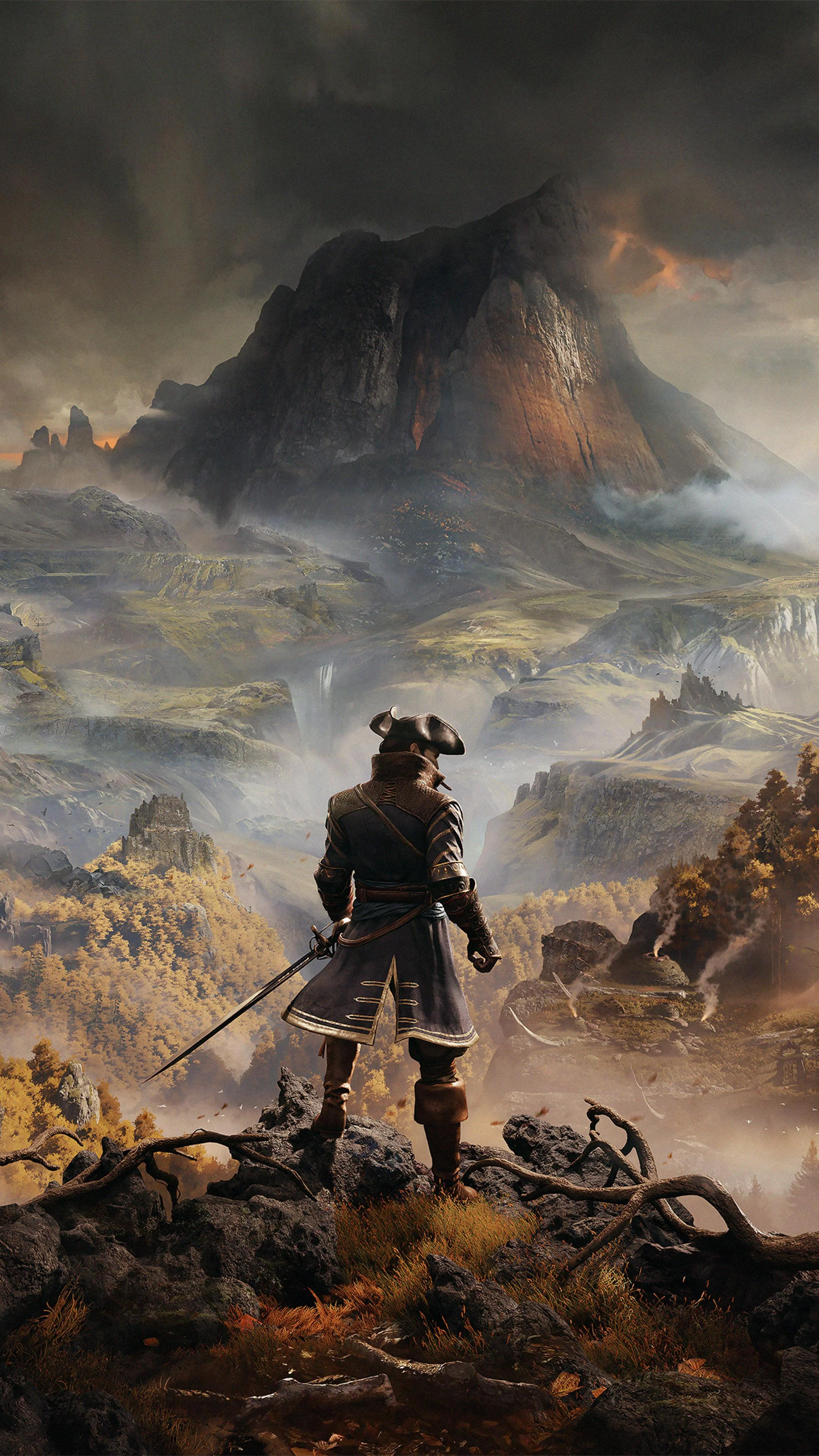
Greedfall
This combination offers playable performance with an average of 39 FPS, though you may want to lower settings for smoother gameplay.
Average FPS: resolution vs quality settings
| Ultra | High | Medium | Low | |
|---|---|---|---|---|
| 4K Ultra HD | 14 | 22 | 25 | 31 |
| 1440p QHD | 24 | 38 | 41 | 53 |
| 1080p Full HD | 35 | 54 | 60 | 76 |
Cell color: green is 120+ FPS, teal is 60+, amber is 30+, red is below 30.
Greedfall with AMD Ryzen 5 4600G + Intel Arc B370, In-Depth Analysis
The AMD Ryzen 5 4600G and Intel Arc B370 pairing represents a peculiar combination in the Greedfall benchmark database, landing at rank 2699 out of 2938 tested combos. This places the setup in the lower 9th percentile of all tested configurations, a position that invites investigation into which component is the bottleneck across various resolutions and settings.
CPU Role — cores, clocks, and how they relate to this game's results
The AMD Ryzen 5 4600G is a 6-core, 12-thread processor built on the Zen 2 architecture with a base clock of 3.70 GHz and a boost clock of 4.20 GHz. Its 8 MB of shared L3 cache and 512 KB of L2 per core provide the data path for Greedfall's AI-driven NPC behavior and quest logic. The processor's integrated Radeon Vega 7 graphics are irrelevant here since a discrete GPU is present, but the CPU's compute capability remains central to frame pacing.
Benchmark results show the 4600G achieves a Cinebench R23 multicore score of 13593 and a single-core score of 1919. In Geekbench, it delivers 6637 multicore and 1460 single-core. The Passmark multithread score of 15992 with a single-thread score of 2653 indicates balanced throughput. What matters for Greedfall specifically is that this Action RPG relies heavily on draw calls and NPC pathfinding, which stress single-thread performance. The 4600G's single-thread scores are modest, suggesting it could hold back frame delivery in crowded areas even when the GPU has headroom.
The 3DMark thread scaling data is revealing: the processor scores 1430 with 2 threads, 2732 with 4 threads, and 4138 with 8 threads, but only reaches 4863 with 16 threads and 4889 with max threads. This indicates the CPU gains little beyond 8 threads, meaning Greedfall's engine likely does not saturate all 12 available threads. The near-flat scaling from 8 to 16 threads (4138 to 4863, a delta of about 17.5%) suggests the game's workload is not heavily parallelized across all cores.
Comparing to nearest rivals, the 4600G's average benchmark score of 17507 sits 0.1% above the AMD Ryzen 3 PRO 5355GE (17482) and 0.6% above the Intel Core 7 150U (17395). It trails the AMD Ryzen 3 8300GE by 0.6% (17614) and the Intel Core i3-14100T by 0.8% (17648). These tight deltas mean the 4600G is not a performance outlier compared to its closest alternatives — it is squarely in the middle of a cluster of similarly capable processors.
Given that the GPU in this combo ranks at the 5th percentile of all GPUs while the CPU sits at the 71st percentile of all CPUs, the data strongly suggests the Intel Arc B370 is the primary limiting factor. The CPU has enough compute headroom to feed a more powerful GPU, but the current pairing constrains the system to the low FPS figures observed.
GPU Role — VRAM, clocks, and how they relate to this game's results
The Intel Arc B370 is an integrated graphics solution based on the Xe3-LPG architecture, built on Intel's 3 nm process. It operates with a base clock of 300 MHz and boosts to 2400 MHz, containing 1280 shading units, 40 texture mapping units, and 20 raster output pipelines. The memory configuration is system shared, meaning it draws from the same DDR4 pool as the CPU, with bandwidth listed as system dependent.
The GPU's 3DMark Steel Nomad DX12 score of 1184 places it at the 5th percentile of all GPUs, which is remarkably low. Its average benchmark score of 1184 is nearly identical to its nearest rivals: the ATI Mobility Radeon HD 5570 (1186, 0.2% ahead), the ATI Radeon HD 5770 (1190, 0.5% ahead), and the AMD Radeon HD 7650M (1192, 0.7% ahead). The AMD FirePro M2000 trails at 1168, which is 1.4% behind. These rival comparisons illustrate that the Arc B370 is competing with hardware from over a decade ago in raw compute terms.
The GPU's pixel rate of 48.00 GPixel/s and texture rate of 96.00 GTexel/s, alongside 6.144 TFLOPS of FP32 performance, provide the theoretical foundation for rendering Greedfall's environments. However, the system-shared memory creates a significant constraint — the GPU must compete with the CPU for memory bandwidth, and the CPU's dual-channel DDR4 at 51.2 GB/s is the ceiling. This shared memory architecture likely explains why performance degrades so sharply at higher resolutions and settings, as the GPU must move more data through the same limited bus.
The graphics card supports DirectX 12 Ultimate (12_2), OpenGL 4.6, and Vulkan 1.4, meaning it can run Greedfall's rendering paths with modern API features. The 10 ray tracing cores are present but unlikely to provide meaningful performance given the overall compute limitations. The 25 W TDP indicates this is a power-constrained part, further explaining its low ranking.
FAQ
Q: Why does the combo rank so low at 2699 out of 2938 tested?
A: The Intel Arc B370 sits at the 5th percentile of all GPUs with a Steel Nomad score of 1184, while the CPU is at the 71st percentile. The GPU's compute and memory constraints dominate the system's performance, dragging the overall combo ranking down despite the CPU's relative strength.
Q: What is the best FPS this combo can achieve in Greedfall?
A: The highest measured average is 76 FPS at 1920x1080 with Low settings. At 2560x1440 Low, it drops to 53 FPS, and at 3840x2160 Low, it falls to 31 FPS. These are the only settings where the combo exceeds 30 FPS at 1080p.
Q: Is the CPU or GPU the bottleneck in this configuration?
A: The GPU is the clear bottleneck. The GPU's percentile rank (5th) versus the CPU's (71st), combined with the fact that FPS scales predictably with resolution and settings changes (indicating GPU-bound behavior), points to the Arc B370 as the limiting factor.
Q: How does the CPU compare to its nearest rivals in synthetic benchmarks?
A: The 4600G's average score of 17507 is within 0.8% of all four nearest rivals: the Ryzen 3 PRO 5355GE (17482), Ryzen 3 8300GE (17614), Core 7 150U (17395), and Core i3-14100T (17648). This indicates the CPU is not an outlier and performs consistently with similar processors.
Q: What happens to frame rates when going from Low to Ultra at 1440p?
A: At 2560x1440, the average FPS drops from 53 at Low, to 41 at Medium, 38 at High, and 24 at Ultra. This represents a 54.7% reduction from Low to Ultra, showing the GPU struggles as settings increase.
Q: Does the combo maintain playable frame rates at any 4K setting?
A: No. At 3840x2160, the highest average is 31 FPS at Low settings, dropping to 25 FPS at Medium, 22 FPS at High, and 14 FPS at Ultra. None of these reach the 30 FPS threshold commonly considered minimum for playability.
How This Combo Ranks
The combo ranks 2699 out of 2938 tested combinations, placing it in the bottom 8.1% of all configurations. This is a remarkably low position, driven almost entirely by the GPU's 5th percentile ranking. The CPU's 71st percentile ranking provides some context — the processor is far more capable than the graphics solution it is paired with.
The data shows a significant mismatch: the CPU's average benchmark score of 17507 places it in the upper tier of its rivals, while the GPU's score of 1184 places it in the absolute bottom tier. This imbalance means the system's gaming performance is almost entirely dictated by the GPU, and any CPU-side improvements would yield negligible gains in Greedfall.
Comparing to other combos, the 2699th rank suggests there are only 239 tested configurations that perform worse. Given that the GPU rivals are legacy parts like the Radeon HD 5770 and HD 7650M, the Arc B370 is effectively competing with hardware from two GPU generations ago. The CPU-side rivals (Ryzen 3 PRO 5355GE, Core i3-14100T) are modern parts, confirming that the bottleneck is squarely on the graphics side.
Measured FPS Breakdown
At 1920x1080, the combo delivers its most playable results. The Low preset achieves an average of 76 FPS, which is the highest figure recorded for this configuration. Medium settings produce 60 FPS average with a minimum of 51 and maximum of 69, providing a consistent experience. High settings drop to 54 FPS average, while Ultra falls to 35 FPS. The gap between Medium and High (60 to 54) is 10%, while High to Ultra (54 to 35) represents a 35.2% drop, indicating a steep performance cliff at the highest preset.
At 2560x1440, the frame rates become more constrained. Low settings yield 53 FPS average, Medium produces 41 FPS (minimum 35, maximum 48), High gives 38 FPS, and Ultra drops to 24 FPS. The transition from Low to Medium is an 22.6% reduction, while Medium to High is only 7.3%, and High to Ultra is 36.8%. The Ultra setting at 1440p is the first point where the combo dips below the 30 FPS playability threshold.
At 3840x2160, the results are uniformly poor. Low settings achieve 31 FPS average, which is marginally above the 30 FPS threshold. Medium produces 25 FPS (minimum 21, maximum 28), High gives 22 FPS, and Ultra falls to 14 FPS. The scaling from Low to Ultra represents a 54.8% reduction in frame rate, showing that the GPU's memory bandwidth and compute limits are severely taxed at 4K.
The measured FPS data reveals a consistent pattern: each resolution increase from 1080p to 1440p reduces frame rates by roughly 30-35% across all settings, and from 1440p to 4K reduces them by another 40-45%. This scaling behavior is characteristic of a GPU-bound system where the renderer must process more pixels with limited resources.
Settings Recommendations
Given the measured data, the most balanced experience is achieved at 1920x1080 with Medium settings. This preset delivers a 60 FPS average with a minimum of 51 FPS, keeping frame times consistent and avoiding the occasional drops seen at higher settings. The minimum of 51 FPS is important because it indicates the system rarely stutters below playable thresholds.
For users who prioritize smoothness over visual fidelity, 1920x1080 Low at 76 FPS is the best choice. This setting provides a 26.7% frame rate increase over Medium while sacrificing some graphical detail. Given that Greedfall is an Action RPG with dialogue-heavy sequences, the higher frame rate at Low settings may actually improve the experience by reducing input latency during combat.
At 2560x1440, the Low preset at 53 FPS is the only setting that maintains consistent playability. Medium at 41 FPS is borderline, with a minimum of 35 FPS that could cause perceptible stuttering during intense scenes. High at 38 FPS and Ultra at 24 FPS are not recommended, as they fall below the smoothness threshold.
The 3840x2160 resolution is not recommended for this combo under any settings. Even the Low preset at 31 FPS is marginal, and the minimum frame rates for Medium (21 FPS) indicate significant drops that would disrupt gameplay. Users seeking 4K performance would need a substantially more powerful GPU.
The data suggests that Medium at 1080p offers the best compromise between visual quality and performance, as it maintains a 60 FPS average while providing higher detail than Low. If the user prefers higher resolutions, 1440p Low is the only viable option, but the visual downgrade may not justify the resolution increase.
Resolution Scaling
The frame rate scaling from 1080p to 4K reveals clear insights about the limiting component. At Low settings, the combo delivers 76 FPS at 1080p, 53 FPS at 1440p, and 31 FPS at 4K. This represents a 30.3% drop from 1080p to 1440p and a 41.5% drop from 1440p to 4K. The total reduction from 1080p to 4K is 59.2%.
At Medium settings, the pattern is similar: 60 FPS at 1080p, 41 FPS at 1440p (a 31.7% drop), and 25 FPS at 4K (a 39.0% drop from 1440p). The High preset shows 54 FPS at 1080p, 38 FPS at 1440p (29.6% drop), and 22 FPS at 4K (42.1% drop). Ultra settings produce 35 FPS at 1080p, 24 FPS at 1440p (31.4% drop), and 14 FPS at 4K (41.7% drop).
These consistent percentage drops across all settings indicate that the GPU is the primary bottleneck. If the CPU were limiting, the frame rate differences between resolutions would be smaller, as the CPU workload does not scale with resolution. The fact that each resolution step reduces performance by roughly 30-40% regardless of settings confirms that the Arc B370's pixel throughput — its 48.00 GPixel/s pixel rate — is the determining factor.
The scaling also suggests that the system-shared memory is a contributing factor. As resolution increases, the GPU must access more texture and frame buffer data through the same DDR4 bus that serves the CPU. This memory contention likely exacerbates the performance drop, as the GPU cannot fetch data quickly enough to sustain higher pixel counts. The 51.2 GB/s memory bandwidth available to the CPU is shared, meaning the GPU's effective bandwidth is even lower, directly impacting the resolution scaling observed.
Hardware Specifications
AMD Ryzen 5 4600G
Intel Arc B370
FPS Benchmarks by Resolution & Settings
Performance data for AMD Ryzen 5 4600G + Intel Arc B370 in Greedfall
| Resolution | Settings | Avg FPS |
|---|---|---|
| 3840x2160 | Low | 31.0 |
| 3840x2160 | Medium | 25.0 |
| 3840x2160 | High | 22.0 |
| 3840x2160 | Ultra | 14.0 |
| 2560x1440 | Low | 53.0 |
| 2560x1440 | Medium | 41.0 |
| 2560x1440 | High | 38.0 |
| 2560x1440 | Ultra | 24.0 |
| 1920x1080 | Low | 76.0 |
| 1920x1080 | Medium | 60.0 |
| 1920x1080 | High | 54.0 |
| 1920x1080 | Ultra | 35.0 |
Greedfall with Ryzen 5 4600G + Other GPUs
See how Greedfall performs with the same CPU but different graphics cards.
Greedfall with Arc B370 + Other CPUs
See how Greedfall performs with the same GPU but different processors.
Other Games with Ryzen 5 4600G + Arc B370
Explore FPS benchmarks for other games using this same hardware combination.