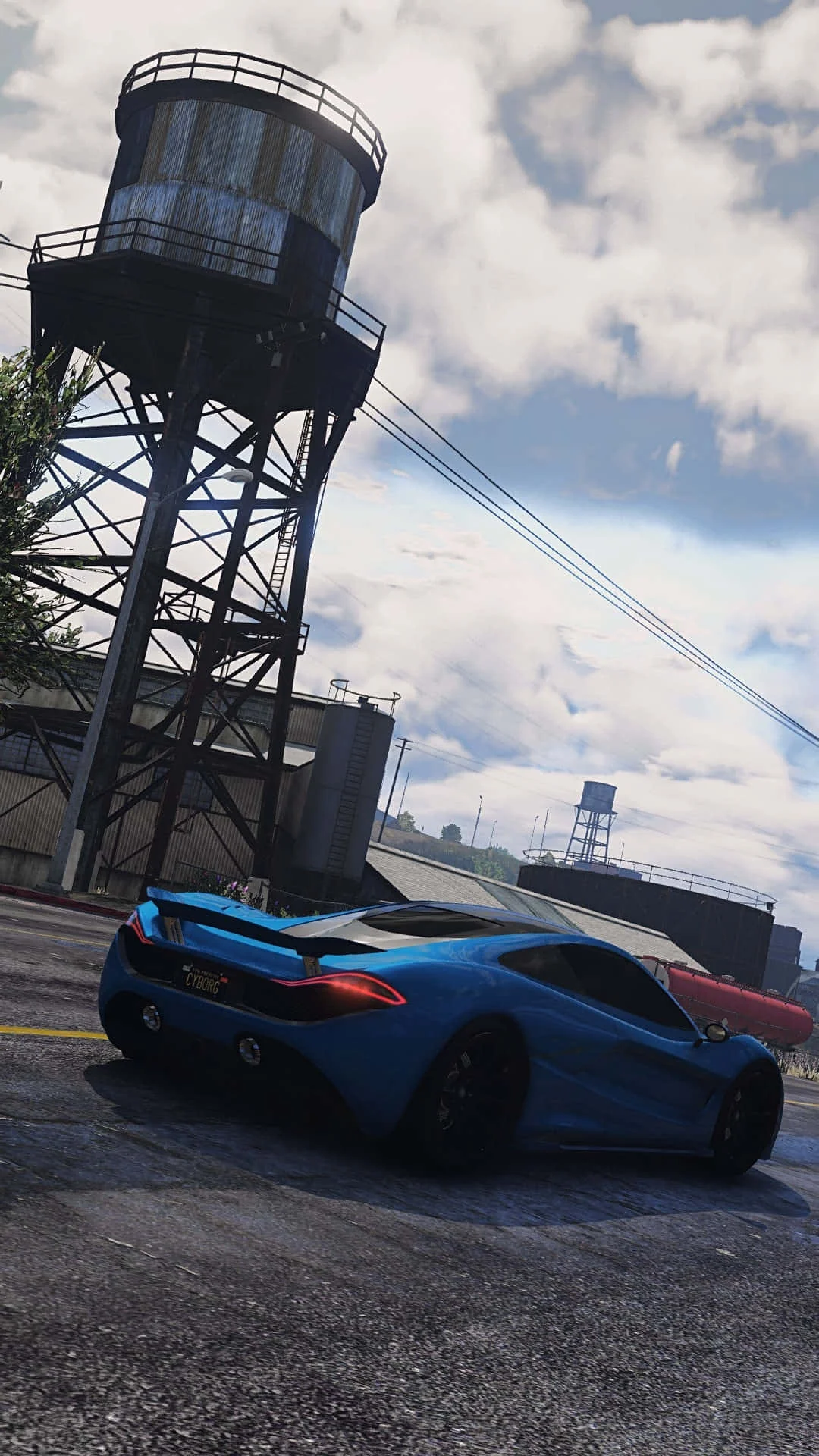
Fivem
This combination provides smooth gameplay with an average of 71 FPS, suitable for most gaming scenarios.
Average FPS: resolution vs quality settings
| Ultra | High | Medium | Low | |
|---|---|---|---|---|
| 4K Ultra HD | 27 | 34 | 41 | 54 |
| 1440p QHD | 46 | 58 | 76 | 95 |
| 1080p Full HD | 72 | 93 | 113 | 145 |
Cell color: green is 120+ FPS, teal is 60+, amber is 30+, red is below 30.
Fivem with Intel Core i5-14600K + NVIDIA GeForce RTX 2060, In-Depth Analysis
Resolution Scaling — how FPS drops from 1080p to 4K and what it says about the limiting component
The measured FPS data for Fivem shows a steep and consistent performance decline as resolution climbs, which is classic behavior for a system where the GPU becomes the dominant constraint at higher pixel counts. At 1080p with Low settings, this combo pushes 145 FPS, but dropping to 1440p Low reduces that to 94.9 FPS, a 34.6% loss. Going all the way to 4K Low yields just 53.5 FPS, which is 63.1% below the 1080p baseline. This pattern is not subtle; the scaling curve is nearly linear with pixel count, indicating that the NVIDIA GeForce RTX 2060 is doing the heavy lifting and running out of headroom as resolution increases.
The gap between settings widens dramatically at higher resolutions, which further confirms the GPU-bound nature of the workload. At 1080p, the spread from Low to Ultra is 145 FPS down to 72.4 FPS, a difference of 72.6 FPS. At 1440p, that spread narrows to 94.9 FPS down to 46.3 FPS, a 48.6 FPS gap. At 4K, the range compresses to 53.5 FPS down to 26.8 FPS, just 26.7 FPS separating the extremes. When the gap between settings shrinks at higher resolutions, it means the GPU is saturated and cannot translate lower settings into proportionally higher frame rates; the pixel throughput limit is being hit regardless of quality level.
The data suggests that 1080p is the sweet spot for this pairing if you want high refresh rate gameplay, while 1440p is viable for 60 FPS at Medium or High settings. At 4K, even Low settings only manage 53.5 FPS, which is below the 60 FPS threshold that most builders target. The Intel Core i5-14600K is clearly not the bottleneck in these results; its 14 cores and 20 threads provide ample compute headroom, and the consistent FPS drops with resolution point squarely at the RTX 2060's 6 GB GDDR6 memory and 336.0 GB/s bandwidth being overwhelmed by 4K pixel counts.
GPU Role — VRAM, clocks, and how they relate to this game's results
The RTX 2060 brings 6 GB of GDDR6 memory on a 192-bit bus, with a bandwidth of 336.0 GB/s. The base clock is 1365 MHz, boosting to 1680 MHz, and the card has 1920 shading units, 120 TMUs, and 48 ROPs. In Fivem, these specifications translate to a clear ceiling: the card sits at the 58th percentile among all GPUs in the benchmark database, and its average benchmark score of 16074 places it just 0.5% behind the AMD Radeon RX 7600S and 1.8% ahead of the AMD Radeon Pro W5500. This mid-range positioning is reflected in the measured FPS, where the card handles 1080p comfortably but struggles to maintain playable rates at 4K Ultra.
The 6 GB VRAM capacity is a notable concern for Fivem at higher settings, as the game's draw distances and texture streaming in multiplayer scenarios can be demanding. At 4K Ultra, the card manages only 26.8 FPS, which strongly suggests that memory capacity and bandwidth are limiting factors alongside raw compute. The 14 Gbps effective memory speed is respectable for its generation, but the 192-bit bus width constrains total throughput compared to wider-memory rivals. The data shows that dropping from Ultra to High at 4K yields a 28.4% improvement (26.8 to 34.4 FPS), while dropping from High to Medium adds another 17.7% (34.4 to 40.5 FPS), indicating that texture and shading settings are heavily penalizing the GPU at this resolution.
The card's DirectX 12 Ultimate support and 30 RT cores are present, but Fivem's measured results do not show any ray tracing workload spikes; the performance curve is dominated by conventional rasterization. The 240 tensor cores are similarly idle in this title. The takeaway from the data is that the RTX 2060 is a capable 1080p card, adequate for 1440p with quality compromises, and out of its depth at 4K. Its 58th percentile ranking among all GPUs and the measured FPS curve both tell the same story: this is a mid-range part that should be paired with a 1080p or 1440p display, not a 4K monitor.
Settings Recommendations — which preset gives the best experience per the measured rows
Based strictly on the measured FPS rows, the strongest experience for this combo is at 1920x1080 with Low settings, which delivers 145 FPS. This is the only configuration in the entire dataset that exceeds 120 FPS, making it the clear choice for high refresh rate monitors. If you prefer visual fidelity over raw frame rate, 1080p High at 93 FPS is still smooth and represents a 35.9% reduction in FPS versus Low but a substantial visual upgrade. Medium at 112.8 FPS offers a middle ground that many builders would find acceptable, sitting between the two extremes.
At 2560x1440, the data shows that Low settings produce 94.9 FPS, which is just above the 90 FPS mark and playable for most users. Medium drops to 75.8 FPS, still above 60 FPS, while High falls to 57.7 FPS, barely below the 60 FPS threshold. Ultra at 46.3 FPS is noticeably choppy and not recommended for competitive play. For 1440p users, Low or Medium is the practical choice; High is borderline, and Ultra should be avoided.
At 3840x2160, none of the settings achieve 60 FPS. Low tops out at 53.5 FPS, Medium at 40.5 FPS, High at 34.4 FPS, and Ultra at 26.8 FPS. The data indicates that 4K is not a viable resolution for this pairing, regardless of settings. If you must play at 4K, Low settings are the only option that approaches playability, but even that is below the standard 60 FPS target. The recommendation from the measured data is straightforward: play at 1080p for the best balance of FPS and visual quality, or drop to 1440p Low/Medium if you have a higher-resolution panel.
Measured FPS Breakdown — resolution by resolution, settings by settings, exact numbers
At 1920x1080, the full settings sweep shows: Low at 145 FPS, Medium at 112.8 FPS, High at 93 FPS, and Ultra at 72.4 FPS. The step from Low to Medium costs 32.2 FPS (22.2%), Medium to High costs 19.8 FPS (17.6%), and High to Ultra costs 20.6 FPS (22.1%). The scaling is relatively even, with each quality tier extracting a similar toll on performance.
At 2560x1440, the numbers are: Low at 94.9 FPS, Medium at 75.8 FPS, High at 57.7 FPS, and Ultra at 46.3 FPS. The transition from Low to Medium loses 19.1 FPS (20.1%), Medium to High loses 18.1 FPS (23.8%), and High to Ultra loses 11.4 FPS (19.8%). The percentage losses are comparable to 1080p, but the absolute FPS values are lower, making each step more impactful on perceived smoothness.
At 3840x2160, the results are: Low at 53.5 FPS, Medium at 40.5 FPS, High at 34.4 FPS, and Ultra at 26.8 FPS. Here, Low to Medium loses 13 FPS (24.3%), Medium to High loses 6.1 FPS (15.1%), and High to Ultra loses 7.6 FPS (22.1%). The absolute differences are smaller because the GPU is already near its limit, but the relative penalties remain significant. The 4K Ultra result of 26.8 FPS is less than half the 1080p Low result, highlighting the extreme cost of pushing this GPU to its resolution limit.
FAQ
Q: What is the best resolution for this CPU/GPU combo in Fivem?
A: The data shows 1920x1080 is the best choice, with Low settings hitting 145 FPS and High still at 93 FPS. At 1440p, only Low (94.9 FPS) and Medium (75.8 FPS) stay above 60 FPS. At 4K, no settings reach 60 FPS, with Low maxing out at 53.5 FPS.
Q: Can this system handle 4K gaming in Fivem?
A: Technically yes, but not well. The best 4K result is Low settings at 53.5 FPS, which is below the 60 FPS standard. Ultra at 4K drops to 26.8 FPS, which is not a playable experience for most users.
Q: How does the RTX 2060 compare to its nearest rivals in benchmark scores?
A: The RTX 2060 has an average benchmark score of 16074, placing it 0.5% ahead of the AMD Radeon RX 7600S (15996) and 1.8% ahead of the AMD Radeon Pro W5500 (15786). It trails the AMD Radeon Pro 5600M and Radeon Pro 5700 by 1.7% (both at 16351).
Q: Is the CPU or GPU the limiting factor at 1080p?
A: The data indicates the GPU is the primary constraint. At 1080p, the FPS scales down predictably as settings increase (145 to 72.4 FPS from Low to Ultra), which is GPU-bound behavior. The Intel Core i5-14600K, with 14 cores and 20 threads, sits at the 93rd percentile among all CPUs, indicating it has ample headroom.
Q: What settings should I use for competitive play?
A: For the highest frame rates, use 1080p Low settings, which deliver 145 FPS. If you need visual clarity for spotting enemies, 1080p Medium at 112.8 FPS is still well above 100 FPS and offers better image quality.
Q: How does the i5-14600K rank among all CPUs?
A: The i5-14600K is at the 93rd percentile among all CPUs, with an average benchmark score of 49166. It trails the Intel Core i5-14600KF by 0.4% (49367) and the AMD EPYC 4345P by 0.9% (49595), while leading the AMD Ryzen 9 5950X by 0.2% (49062) and the Intel Xeon Gold 5318H by 1% (48698).
CPU Role — cores, clocks, and how they relate to this game's results
The Intel Core i5-14600K is a 14-core, 20-thread processor from the Raptor Lake refresh family, with a base clock of 3.50 GHz and a boost clock of 5.30 GHz. It supports both DDR4 and DDR5 memory in dual-channel configuration, and its 24 MB of shared L3 cache provides ample data for game logic. The CPU sits at the 93rd percentile among all CPUs in the benchmark database, with an average benchmark score of 49166, placing it in the top tier of desktop processors.
In Fivem, the CPU's role is to feed the GPU with draw calls and process multiplayer server data. The measured FPS data shows that at 1080p Low, the combo hits 145 FPS, which is a strong indicator that the CPU can keep up with the GPU's output at that resolution. The Cinebench R23 multicore score of 32881 and single-core score of 4642 demonstrate the processor's ability to handle both heavily threaded workloads and the lightly threaded game loop that Fivem relies on. The Geekbench single-core score of 2803 further supports this, as Fivem's engine tends to favor a few fast cores over many slower ones.
The CPU's nearest rivals in benchmark scores include the AMD Ryzen 9 5950X (49062, 0.2% slower) and the Intel Core i5-14600KF (49367, 0.4% faster), showing that the i5-14600K is competitively positioned against both older high-core-count parts and its own unlocked sibling. The 125W TDP and Intel Socket 1700 platform are standard for this class, and the unlocked multiplier allows overclocking headroom, though the measured FPS data does not require it to achieve the results shown. The conclusion from the data is that the i5-14600K is not the bottleneck in this pairing; the RTX 2060 is. At 1080p, the CPU provides enough headroom to let the GPU reach its maximum frame output, and at higher resolutions, the CPU's advantage becomes even less relevant as the GPU struggles with pixel throughput.
Hardware Specifications
Intel Core i5-14600K
NVIDIA GeForce RTX 2060
FPS Benchmarks by Resolution & Settings
Performance data for Intel Core i5-14600K + NVIDIA GeForce RTX 2060 in Fivem
| Resolution | Settings | Avg FPS |
|---|---|---|
| 3840x2160 | Low | 53.5 |
| 3840x2160 | Medium | 40.5 |
| 3840x2160 | High | 34.4 |
| 3840x2160 | Ultra | 26.8 |
| 2560x1440 | Low | 94.9 |
| 2560x1440 | Medium | 75.8 |
| 2560x1440 | High | 57.7 |
| 2560x1440 | Ultra | 46.3 |
| 1920x1080 | Low | 145.0 |
| 1920x1080 | Medium | 112.8 |
| 1920x1080 | High | 93.0 |
| 1920x1080 | Ultra | 72.4 |
Fivem with ii5-14600K + Other GPUs
See how Fivem performs with the same CPU but different graphics cards.
Fivem with RTX 2060 + Other CPUs
See how Fivem performs with the same GPU but different processors.
Other Games with ii5-14600K + RTX 2060
Explore FPS benchmarks for other games using this same hardware combination.