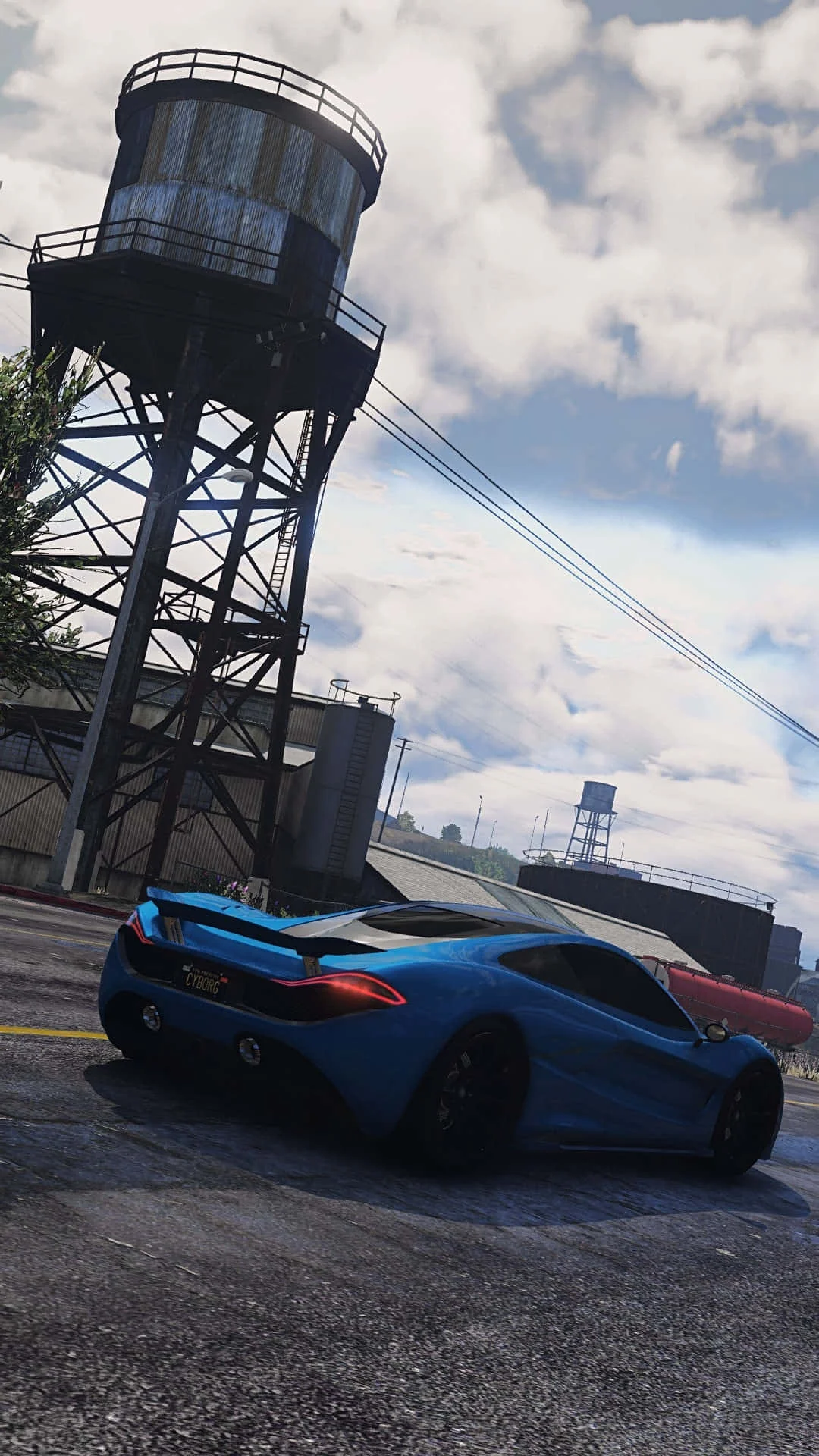
Fivem
This combination provides smooth gameplay with an average of 96 FPS, suitable for most gaming scenarios.
Average FPS: resolution vs quality settings
| Ultra | High | Medium | Low | |
|---|---|---|---|---|
| 4K Ultra HD | 37 | 45 | 57 | 69 |
| 1440p QHD | 62 | 81 | 103 | 128 |
| 1080p Full HD | 93 | 122 | 155 | 199 |
Cell color: green is 120+ FPS, teal is 60+, amber is 30+, red is below 30.
Fivem with Intel Core i5-13400F + NVIDIA GeForce RTX 3060 Ti, In-Depth Analysis
The data for Fivem with the Intel Core i5-13400F and NVIDIA GeForce RTX 3060 Ti reveals a system that is clearly capable of high refresh rate play, but the margin between settings and resolutions narrows dramatically as the pixel count climbs. This combination, ranking 931st out of 1792 tested combos, sits near the middle of the pack, a position that becomes more understandable when examining how the workload shifts between the CPU and GPU at different graphical loads.
Resolution Scaling
The measured FPS data shows a steep and consistent drop as resolution increases from 1920x1080 to 3840x2160. At the "High" preset, the average frame rate falls from 122.4 FPS at 1080p to 81.3 FPS at 1440p, a substantial reduction, and then plummets further to 44.7 FPS at 4K. This pattern indicates that the graphics card is becoming the primary limiting factor at higher resolutions, as the number of pixels the RTX 3060 Ti must fill increases exponentially.
The scaling is even more revealing at the "Low" preset. Here, the system achieves 198.9 FPS at 1080p, which is an exceptionally high number that suggests the CPU is doing the heavy lifting to feed the GPU with frames. However, at 4K with "Low" settings, the average drops to 68.7 FPS. While this is still playable, the massive 130 FPS difference between 1080p and 4K at this preset underscores how the GPU's rendering workload, not the CPU's frame generation, dominates the performance curve in Fivem at higher resolutions.
The data implies that for players targeting 1080p, this system is heavily CPU-bound, with the i5-13400F's performance being the key to unlocking those triple-digit frame rates. At 1440p, the balance shifts, and at 4K, the RTX 3060 Ti is unequivocally the bottleneck, as even dropping from "High" to "Medium" at 4K only yields a 12.2 FPS improvement. The GPU's 8 GB of GDDR6 memory and 448.0 GB/s of bandwidth are likely being saturated, making resolution the single most important factor in determining performance.
Settings Recommendations
Analyzing the measured rows, the "High" preset at 1440p appears to be the sweet spot for this combination, delivering an average of 81.3 FPS. This provides a fluid experience that is well above the 60 FPS threshold for most displays while maintaining a significant visual quality improvement over "Low" and "Medium" settings. Moving up to "Ultra" at the same resolution drops the average to 62.4 FPS, a 23% reduction that may not justify the marginal visual gains in a fast-paced multiplayer environment.
At 1080p, the "High" preset achieves 122.4 FPS, which is excellent for high-refresh-rate monitors. The "Ultra" preset at 1080p, however, still manages a respectable 93.3 FPS, indicating that players with 144Hz displays could potentially enable "Ultra" and remain within the usable range. For 4K gaming, the data suggests that "Low" settings are the only viable option for a smooth experience, as the 68.7 FPS average is significantly better than the 44.7 FPS seen on "High" and the 36.9 FPS on "Ultra". The "Medium" preset at 4K, yielding 56.9 FPS, is a compromise that might be acceptable for slower-paced gameplay, but the performance cliff from 1440p to 4K is stark.
The best experience per the measured data is likely the "High" preset at 1440p, which balances visual fidelity with a frame rate high enough to benefit from adaptive sync technologies. For competitive play at 1080p, the "Low" preset's 198.9 FPS is the clear winner, offering the lowest latency and maximum responsiveness. The data cautions against "Ultra" at 4K, where the 36.9 FPS average is likely to feel choppy and unresponsive.
How This Combo Ranks
The combo's rank of 931 out of 1792 tested combos places it in the 48th percentile of all tested configurations for Fivem. This is a middling result that reflects the balance of its components; the CPU is strong, but the GPU, while capable, is not a top-tier performer in the current landscape. The rank suggests that while this system is far from weak, many other combinations offer higher average frame rates in this specific game.
The CPU itself, the Core i5-13400F, has an average benchmark score of 25236, placing it in the 82nd percentile of all CPUs. Its nearest rival, the Intel Core i7-13620H, scores nearly identically with a deltaPct of just 0.1%, showing that the desktop i5 performs on par with a mobile i7 in synthetic tests. This strong CPU showing is crucial, as Fivem's multiplayer nature can be demanding on processor resources.
On the GPU side, the RTX 3060 Ti has an average benchmark score of 25120, placing it in the 69th percentile of all GPUs. Its nearest rival, the AMD Radeon RX 6700M, is a mere 0.2% ahead. This suggests the GPU is a solid mid-range performer, but the combo's rank in Fivem is lower than the CPU's percentile might imply. This indicates that in this particular game, the GPU's capabilities are being stretched, especially at higher resolutions, preventing the system from climbing higher in the rankings.
FAQ
Q: What is the highest average FPS achievable with this combo?
A: The highest measured average FPS is 198.9, which is achieved at 1920x1080 resolution with "Low" settings.
Q: How does the system perform at 4K resolution with "Ultra" settings?
A: The data shows an average FPS of 36.9 at 3840x2160 resolution with "Ultra" settings, which is likely too low for smooth, responsive gameplay.
Q: Is this system better suited for 1080p or 1440p gaming?
A: The data indicates it is excellent for 1080p, with "High" settings yielding 122.4 FPS. For 1440p, it is still very capable, with "High" settings producing an average of 81.3 FPS.
Q: How does the Core i5-13400F compare to its closest rival, the Core i7-13620H?
A: The two processors have nearly identical average benchmark scores, with the i5-13400F being just 0.1% ahead of the i7-13620H.
Q: What is the average FPS difference between "Low" and "Ultra" settings at 1440p?
A: The difference is significant; the system achieves 128.4 FPS on "Low" but drops to 62.4 FPS on "Ultra" at 2560x1440 resolution.
Q: Does the data suggest the CPU or GPU is the main performance limiter at 1080p?
A: Given the very high frame rates at 1080p, especially 198.9 FPS on "Low", the data implies the CPU is the primary limiter at this resolution, as the GPU has enough headroom to render frames quickly.
GPU Role
The NVIDIA GeForce RTX 3060 Ti is a mid-range Ampere architecture card with 8 GB of GDDR6 memory on a 256-bit bus, providing a bandwidth of 448.0 GB/s. Its memory clock runs at 1750 MHz, with an effective data rate of 14 Gbps. The GPU's boost clock is rated at 1665 MHz, and it houses 4864 shading units, 152 TMUs, and 80 ROPs. These specifications, combined with its 16.20 TFLOPS of FP32 performance, make it a capable card for 1080p and 1440p gaming.
In Fivem, the GPU's role becomes more pronounced as resolution increases. The measured FPS data shows that at 4K, the card struggles to maintain high frame rates, with the "High" preset averaging only 44.7 FPS. The 8 GB VRAM buffer is likely being filled at this resolution with higher texture quality, and the 448.0 GB/s bandwidth becomes a limiting factor for the large data transfers required. The card's performance relative to its rivals, such as the AMD Radeon RX 6600 which is only 0.5% faster on average, indicates it is a solid, but not exceptional, performer. The data suggests that the GPU is the definitive bottleneck at 4K, and even at 1440p, its limits are being approached, as seen in the large FPS drops when going from "Low" to "Ultra" settings.
CPU Role
The Intel Core i5-13400F is a 10-core, 16-thread processor based on the Raptor Lake architecture, built on Intel's 10 nm process. It has a base clock of 2.50 GHz and a boost clock of 4.60 GHz, with a 20 MB shared L3 cache and 1.25 MB of L2 cache per core. The processor supports both DDR4 and DDR5 memory and has a TDP of 65 W. Its benchmark scores are strong, with a Cinebench R23 multicore score of 21279 and a single-core score of 3004, placing it in the 82nd percentile of all CPUs.
In Fivem, the CPU's high single-thread performance is crucial for maintaining high frame rates, especially at lower resolutions. The data shows that at 1080p with "Low" settings, the system achieves 198.9 FPS, a number that is only possible if the CPU can process game logic and draw calls quickly enough. The processor's nearest rival, the AMD Ryzen 5 5600X3D, has a slightly lower average score, being 0.5% behind, which reinforces that the i5-13400F is a top-tier mid-range CPU. However, as resolution increases, the CPU's influence wanes, and the GPU takes over as the primary performance driver. The fact that the FPS drops significantly from 1080p to 1440p at the same settings shows that even a strong CPU like this one cannot overcome the GPU's rendering workload limits.
Measured FPS Breakdown
At 1920x1080, the system demonstrates its peak performance. The "Low" preset averages 198.9 FPS, while "Medium" drops to 154.6 FPS. "High" settings yield 122.4 FPS, and "Ultra" produces 93.3 FPS. This shows a clear progression, with each step up in quality costing roughly 30 FPS.
Moving to 2560x1440, the averages are 128.4 FPS on "Low", 103 FPS on "Medium", 81.3 FPS on "High", and 62.4 FPS on "Ultra". The pattern here is similar to 1080p, but the absolute numbers are lower, and the gap between "Low" and "Ultra" is a substantial 66 FPS.
At 3840x2160, the performance drops significantly. The "Low" preset is the only one to break the 60 FPS barrier, averaging 68.7 FPS. "Medium" follows at 56.9 FPS, "High" at 44.7 FPS, and "Ultra" at just 36.9 FPS. This resolution shows the GPU's limitations most clearly, as even a 48.6% reduction in settings from "High" to "Low" only results in a 24 FPS increase. The data from all resolutions confirms that the Core i5-13400F provides ample processing power for the RTX 3060 Ti, but the GPU's rendering capabilities are the ultimate ceiling for this combo in Fivem.
Hardware Specifications
Intel Core i5-13400F
NVIDIA GeForce RTX 3060 Ti
FPS Benchmarks by Resolution & Settings
Performance data for Intel Core i5-13400F + NVIDIA GeForce RTX 3060 Ti in Fivem
| Resolution | Settings | Avg FPS |
|---|---|---|
| 3840x2160 | Low | 68.7 |
| 3840x2160 | Medium | 56.9 |
| 3840x2160 | High | 44.7 |
| 3840x2160 | Ultra | 36.9 |
| 2560x1440 | Low | 128.4 |
| 2560x1440 | Medium | 103.0 |
| 2560x1440 | High | 81.3 |
| 2560x1440 | Ultra | 62.4 |
| 1920x1080 | Low | 198.9 |
| 1920x1080 | Medium | 154.6 |
| 1920x1080 | High | 122.4 |
| 1920x1080 | Ultra | 93.3 |
Fivem with ii5-13400F + Other GPUs
See how Fivem performs with the same CPU but different graphics cards.
Fivem with RTX 3060 Ti + Other CPUs
See how Fivem performs with the same GPU but different processors.
Other Games with ii5-13400F + RTX 3060 Ti
Explore FPS benchmarks for other games using this same hardware combination.