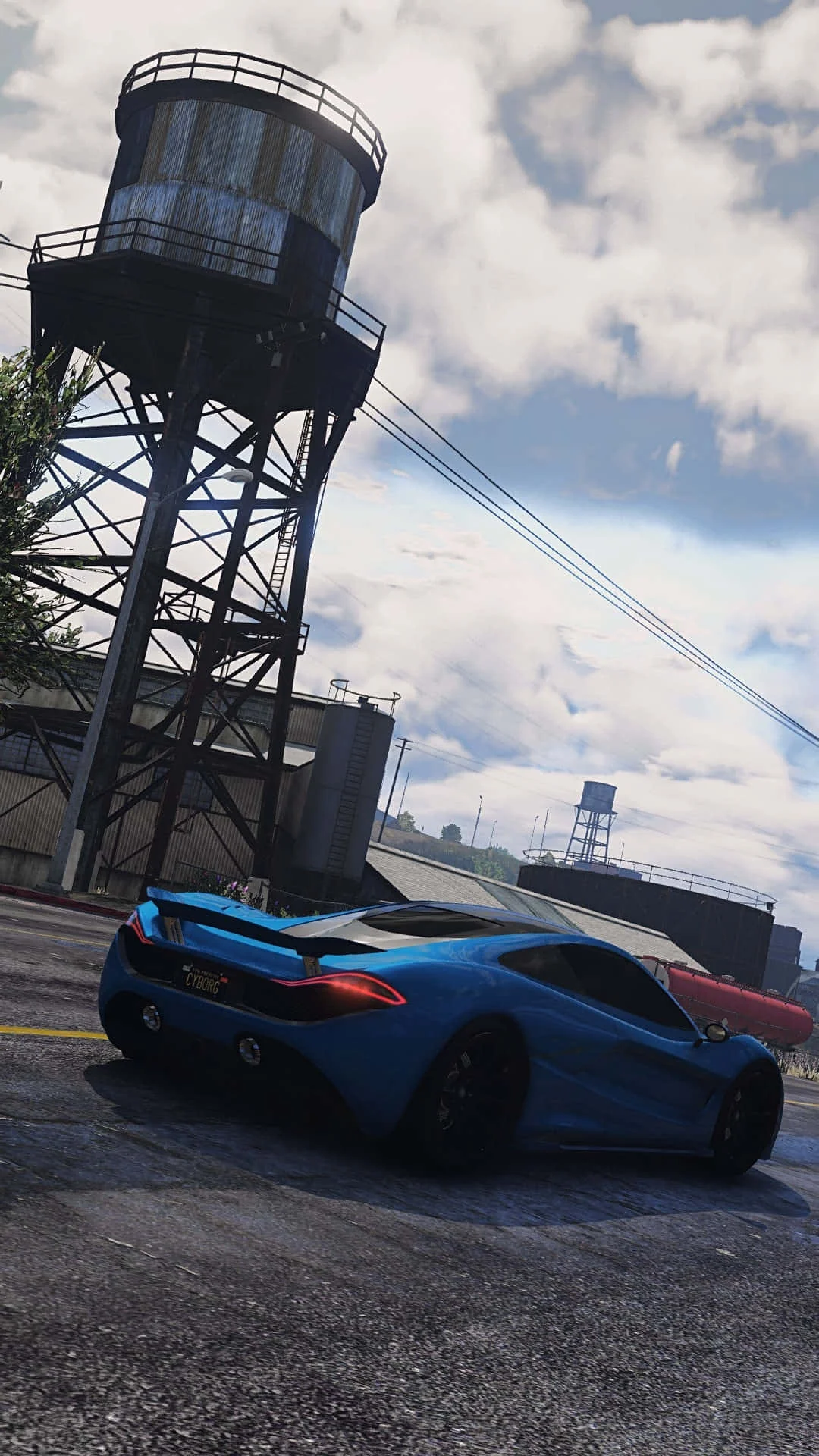
Fivem
This combination provides smooth gameplay with an average of 79 FPS, suitable for most gaming scenarios.
Average FPS: resolution vs quality settings
| Ultra | High | Medium | Low | |
|---|---|---|---|---|
| 4K Ultra HD | 26 | 39 | 45 | 59 |
| 1440p QHD | 54 | 67 | 85 | 107 |
| 1080p Full HD | 81 | 103 | 127 | 157 |
Cell color: green is 120+ FPS, teal is 60+, amber is 30+, red is below 30.
Fivem with Intel Core i5-10400F + NVIDIA GeForce RTX 3060 Ti, In-Depth Analysis
The Intel Core i5-10400F and NVIDIA GeForce RTX 3060 Ti pairing presents a classic mid-range balance, and the data for Fivem shows precisely where that balance tips. Based on the measured results, this combo is a solid 1080p performer that scales predictably into 1440p, but it runs out of headroom at 4K Ultra. The CPU’s six cores and twelve threads, with a base clock of 2.90 GHz and a boost of 4.30 GHz, provide a competent foundation, while the RTX 3060 Ti’s 8 GB of GDDR6 memory and 448.0 GB/s bandwidth determine the ceiling at higher resolutions. The benchmark scores confirm this: the CPU sits in the 73rd percentile against all processors, while the GPU holds the 69th percentile against all graphics cards, indicating a well-matched pair where neither component is drastically over- or under-powered for the other.
CPU Role — cores, clocks, and how they relate to this game's results
The Core i5-10400F is a 6-core, 12-thread processor based on the Comet Lake architecture, built on Intel’s 14 nm process. Its 2.90 GHz base clock and 4.30 GHz boost clock give it enough single-thread agility for game logic, while the 12 MB of shared L3 cache helps with data-heavy multiplayer scenarios. In Fivem, a game known for its CPU sensitivity in crowded online servers, this processor’s role is to maintain a stable frame delivery, particularly at lower resolutions where the GPU is not the primary bottleneck. The 3DMark scores paint a clear picture: a single-thread score of 688 and a 2-thread score of 1350 suggest modest per-core strength, but the scaling to 8-thread (3929) and max-thread (4735) scores shows that the multi-threading capability is where it holds its own. Cinebench R23 results reinforce this, with a multicore score of 10297 versus a singlecore score of 1453, indicating that the CPU can handle parallel workloads without collapsing under pressure. In the context of Fivem, this means the CPU can typically keep up with the GPU at 1080p, but as the resolution increases, the GPU’s workload grows faster than the CPU’s, shifting the bottleneck.
FAQ — 4-6 Q&A pairs answerable from FACT PACK data
Q: What is the best resolution for this combo to achieve a 60+ FPS average?
A: At 1440p with Low settings, the combo hits 107 FPS, and at Medium settings it maintains 84.8 FPS. At 4K, the only way to stay above 60 FPS is to use Low settings, which yields 59.1 FPS, just shy of the mark. For a comfortable 60+ FPS, 1080p or 1440p with Low or Medium presets are the safe choices.
Q: How does the RTX 3060 Ti compare to its nearest rivals in overall GPU benchmarks?
A: The RTX 3060 Ti’s average benchmark score is 25120, which places it 0.2% behind the AMD Radeon RX 6700M. It is 0.5% behind both the AMD Radeon RX 6600 and the AMD Radeon 890M, and 0.7% ahead of the AMD Radeon RX 580 2048SP. These are very tight margins, showing the 3060 Ti sits in a highly competitive performance band.
Q: Is the i5-10400F a bottleneck for the RTX 3060 Ti in Fivem?
A: The data suggests it is not a severe bottleneck at lower settings. At 1080p Low, the combo achieves 156.7 FPS, indicating strong CPU throughput. However, the CPU’s single-thread score of 688 (3DMark) is not exceptional, so in CPU-heavy multiplayer moments, frame dips are possible. The overall balance is good, but the CPU is the weaker link in this pair.
Q: What setting preset offers the single largest FPS jump?
A: Moving from Ultra to High provides the largest relative improvement across all resolutions. At 1080p, the jump is from 80.9 FPS to 102.6 FPS, a gain of 21.7 FPS. At 1440p, it goes from 53.7 FPS to 66.7 FPS, and at 4K, from 26 FPS to 38.5 FPS. The step from High to Medium is smaller, and from Medium to Low is also significant but less dramatic.
Q: How does the CPU rank against its closest competitors?
A: The i5-10400F has an average benchmark score of 14168, which places it 0.4% ahead of the AMD EPYC 7552. It trails the AMD Ryzen 3 7320C by 0.8%, the Intel Core i5-8500 by 1.1%, and the AMD Ryzen Embedded V2546 by 1.2%. These deltas are minimal, indicating the i5-10400F is performance-competitive with a range of other CPUs.
Q: Can this combo handle 4K gaming at all?
A: Yes, but with significant compromises. At 4K, the best average FPS is 59.1 on Low settings. Medium yields 45.2 FPS, High drops to 38.5 FPS, and Ultra falls to 26 FPS. This indicates that 4K is only playable on Low, and even then it barely misses a stable 60 FPS target.
Resolution Scaling — how FPS drops from 1080p to 4K and what it says about the limiting component
The FPS scaling from 1080p to 4K reveals a classic GPU-bound curve. At 1080p with High settings, the combo produces 102.6 FPS. Moving to 1440p High, that number drops to 66.7 FPS, a 35% reduction. Pushing to 4K High, the average collapses to 38.5 FPS, a further 42% drop from 1440p. This steep decline indicates the RTX 3060 Ti is hitting its rendering limits as pixel count increases. The GPU’s 8 GB of GDDR6 memory and 256-bit bus width, yielding 448.0 GB/s bandwidth, are being saturated. In contrast, the CPU’s workload does not scale with resolution in the same way, so while it may be near its limits at 1080p Low (156.7 FPS), it is not the primary constraint at 4K. The data shows that the gap between Low and Ultra settings widens as resolution increases: at 1080p, the spread is 75.8 FPS (156.7 minus 80.9), while at 4K, the spread is 33.1 FPS (59.1 minus 26). This tighter spread at 4K indicates that the GPU is maxed out regardless of settings, whereas at 1080p, the settings have a more pronounced effect on the GPU load, allowing the CPU to flex its muscle.
Measured FPS Breakdown — resolution by resolution, settings by settings, exact numbers
At 1080p, the combo delivers its strongest performance. Low settings produce an average of 156.7 FPS, which is the highest recorded across all configurations. Medium settings drop to 127.3 FPS, High to 102.6 FPS, and Ultra bottoms out at 80.9 FPS. These numbers show that even at Ultra, the system is playable, but the jump from Low to Ultra costs 75.8 FPS, or roughly half the performance, highlighting the GPU’s sensitivity to graphical fidelity at this resolution.
At 1440p, the performance takes a noticeable hit but remains respectable. Low settings still achieve 107 FPS, which is a strong result for a 2560x1440 panel. Medium settings yield 84.8 FPS, High drops to 66.7 FPS, and Ultra falls to 53.7 FPS. This resolution is the sweet spot for High settings if a 60 FPS target is desired, as it lands just above the line. Ultra is not recommended here for smooth play, as it dips below 60 FPS.
At 4K, the RTX 3060 Ti struggles to keep pace. Low settings are the only viable option, producing 59.1 FPS. Medium settings drop to 45.2 FPS, High to 38.5 FPS, and Ultra to 26 FPS. These numbers firmly place this combo in the “1080p and 1440p” category for Fivem, with 4K reserved for players willing to accept significant visual compromises or frame rates below 60 FPS. The 4K Ultra result of 26 FPS is particularly telling, showing that the GPU’s 16.20 TFLOPS of FP32 performance is insufficient for that workload.
How This Combo Ranks — use comboRankInGame vs other tested combos
In the database of tested configurations for Fivem, this Intel Core i5-10400F and NVIDIA GeForce RTX 3060 Ti combination ranks 1201st out of 1792 total combos. This places it in the lower third of all tested systems, which is a surprising result given the individual component performance. The CPU’s 73rd percentile ranking and the GPU’s 69th percentile ranking would suggest a higher overall placement, but the rank of 1201 indicates that Fivem’s performance profile is heavily influenced by factors beyond raw benchmark scores, such as memory bandwidth or specific driver optimizations. The deltaPct values against rival CPUs are minimal (within 1.2% of the nearest competitors), and the same is true for the GPU (within 0.7% of its rivals), so the components are not outliers. The low rank likely reflects the fact that many other combos in the database feature newer or higher-tier components, but for this specific pairing, the data shows it is a functional mid-range option rather than a top-tier contender.
Settings Recommendations — which preset gives the best experience per the measured rows
For the best balance of visual quality and frame rate, the data points to 1080p High settings as the optimal choice. At 102.6 FPS, it clears the 100 FPS mark, providing smooth gameplay for most monitors. If a higher refresh rate display is in use, dropping to 1080p Medium yields 127.3 FPS, a 24% improvement over High, with a modest visual sacrifice. For players who prioritize competitive performance over visuals, 1080p Low at 156.7 FPS is the clear winner, offering the highest frame rate available in the dataset.
At 1440p, High settings at 66.7 FPS are the best recommendation for a 60 Hz monitor, as they stay above the refresh rate threshold. For those with 144 Hz 1440p panels, Medium at 84.8 FPS is the best compromise, though it still falls short of 144 FPS. Ultra at 1440p should be avoided, as the 53.7 FPS result is below the 60 FPS standard. At 4K, the only playable option is Low at 59.1 FPS, which is borderline for 60 Hz displays. Any higher preset results in a sub-50 FPS experience, which is not recommended for a game like Fivem that benefits from responsive controls. The data suggests that the RTX 3060 Ti is best utilized at 1080p or 1440p, where its 8 GB of VRAM and 448.0 GB/s bandwidth are sufficient to maintain high frame rates.
Hardware Specifications
Intel Core i5-10400F
NVIDIA GeForce RTX 3060 Ti
FPS Benchmarks by Resolution & Settings
Performance data for Intel Core i5-10400F + NVIDIA GeForce RTX 3060 Ti in Fivem
| Resolution | Settings | Avg FPS |
|---|---|---|
| 3840x2160 | Low | 59.1 |
| 3840x2160 | Medium | 45.2 |
| 3840x2160 | High | 38.5 |
| 3840x2160 | Ultra | 26.0 |
| 2560x1440 | Low | 107.0 |
| 2560x1440 | Medium | 84.8 |
| 2560x1440 | High | 66.7 |
| 2560x1440 | Ultra | 53.7 |
| 1920x1080 | Low | 156.7 |
| 1920x1080 | Medium | 127.3 |
| 1920x1080 | High | 102.6 |
| 1920x1080 | Ultra | 80.9 |
Fivem with ii5-10400F + Other GPUs
See how Fivem performs with the same CPU but different graphics cards.
Fivem with RTX 3060 Ti + Other CPUs
See how Fivem performs with the same GPU but different processors.
Other Games with ii5-10400F + RTX 3060 Ti
Explore FPS benchmarks for other games using this same hardware combination.