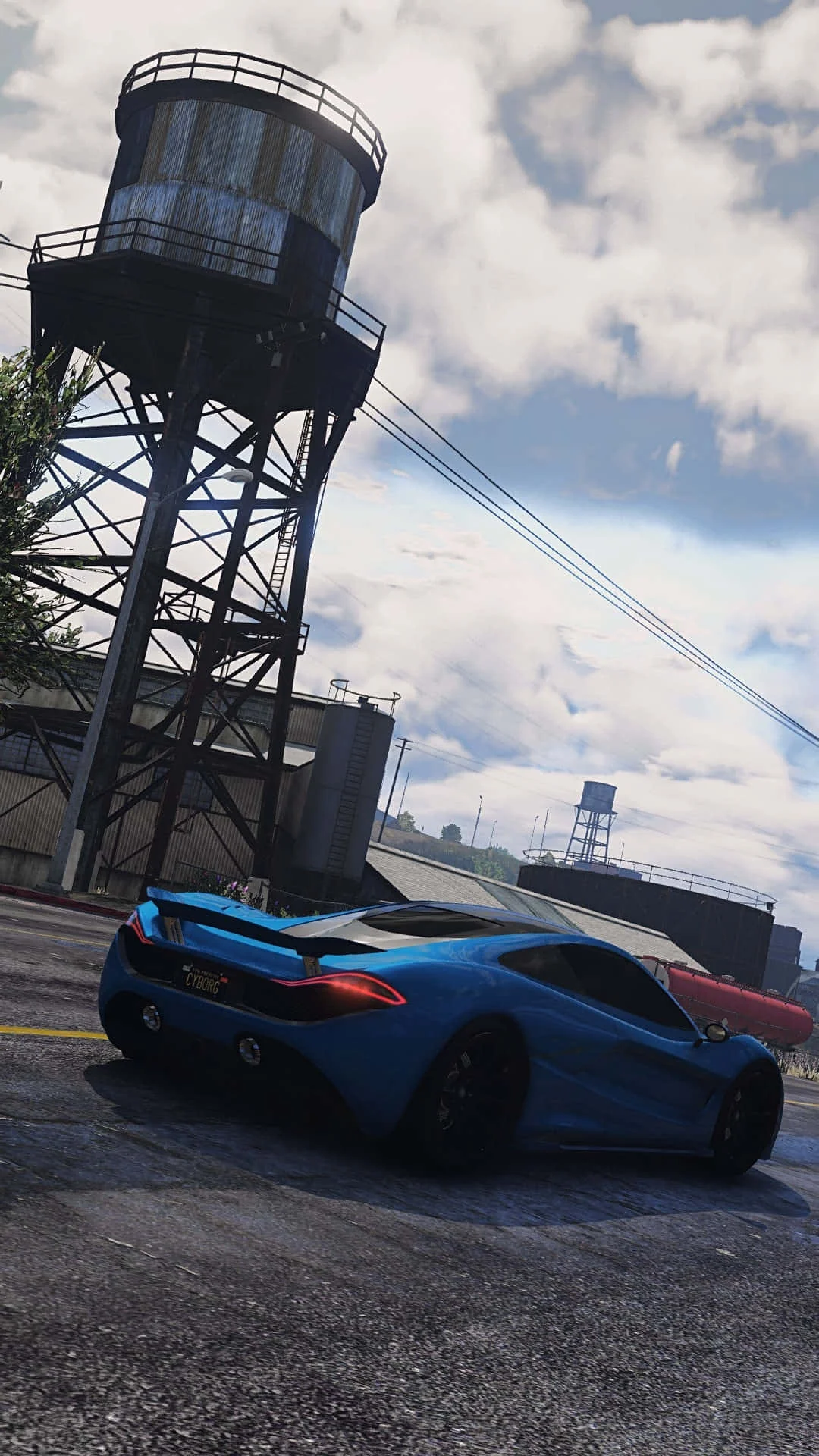
Fivem
This combination provides smooth gameplay with an average of 79 FPS, suitable for most gaming scenarios.
Average FPS: resolution vs quality settings
| Ultra | High | Medium | Low | |
|---|---|---|---|---|
| 4K Ultra HD | 28 | 38 | 46 | 56 |
| 1440p QHD | 52 | 64 | 86 | 108 |
| 1080p Full HD | 78 | 104 | 129 | 162 |
Cell color: green is 120+ FPS, teal is 60+, amber is 30+, red is below 30.
Fivem with AMD Ryzen 7 5800XT + AMD Radeon RX 7600, In-Depth Analysis
Fivem is a demanding multiplayer title, and the measured data for the AMD Ryzen 7 5800XT paired with the AMD Radeon RX 7600 shows a configuration that is heavily influenced by both resolution and preset selection. The benchmark results, which are measured rather than estimated, reveal a system capable of high refresh rates at 1080p but one that struggles to maintain playable frame rates at 4K. The following analysis breaks down the performance characteristics of this specific CPU and GPU combination across the tested settings.
Resolution Scaling
The data shows a clear and predictable pattern: as resolution increases, average frame rates decline significantly. At 1920x1080 with High settings, the combo delivers 103.5 FPS. Moving to 2560x1440 at the same High preset drops performance to 64 FPS, a reduction of 39.5 FPS. The most dramatic decline occurs when stepping up to 3840x2160, where the average FPS falls to 38.1. This represents a 62.8% decrease from the 1080p High result, indicating that the graphics card is being pushed to its limits at 4K.
The scaling behavior across the resolution spectrum suggests that the GPU is the primary limiting factor at higher resolutions. At 1080p, the gap between Low (161.8 FPS) and Ultra (78.4 FPS) is substantial, but the system remains highly playable. However, at 4K, even the Low preset (56.3 FPS) falls below the 60 FPS threshold that many users consider the minimum for smooth gameplay. The Ultra preset at 4K produces just 27.9 FPS, which is barely a third of the 1080p Low result. This steep drop-off points to the RX 7600's 8 GB memory and 128-bit bus being insufficient for the pixel throughput required at 3840x2160, especially under the strain of Fivem's multiplayer environments.
The pattern also reveals that the CPU is less of a bottleneck at lower resolutions. At 1080p, the difference between Low and Medium is 32.5 FPS, while the difference between Medium and High is 25.8 FPS. These are relatively consistent gaps, suggesting the processor can feed the GPU adequately at these settings. At 4K, the differences compress: Low to Medium is 10 FPS, and Medium to High is 8.2 FPS. This compression indicates that the GPU is saturated and cannot translate additional CPU headroom into higher frame rates.
Settings Recommendations
The measured data provides clear guidance on the optimal settings for different priorities. For players targeting the highest possible frame rates at 1920x1080, the Low preset delivers 161.8 FPS, which is 32.5 FPS higher than Medium (129.3 FPS) and 58.3 FPS higher than High (103.5 FPS). This makes Low the best choice for competitive play or high-refresh-rate monitors, though it sacrifices visual fidelity.
For a balanced experience at 1080p, Medium at 129.3 FPS offers a strong compromise, staying well above 120 FPS while providing better visual quality than Low. The High preset at 103.5 FPS is still playable and is likely the sweet spot for most users on standard 60 Hz displays, as it maintains a comfortable margin above the 60 FPS baseline. Ultra at 78.4 FPS is the most demanding option at this resolution and remains viable, though it introduces a noticeable frame rate penalty (25.1 FPS less than High) for the additional visual effects.
At 2560x1440, the recommendation shifts. Low at 108.1 FPS is the only preset that comfortably exceeds 100 FPS, making it the best option for high-refresh 1440p panels. Medium at 85.5 FPS is still smooth, while High at 64 FPS is acceptable for 60 Hz displays. Ultra at 52.4 FPS dips below the 60 FPS threshold and is not recommended for sustained play. At 3840x2160, no preset achieves 60 FPS. Low at 56.3 FPS is the closest and the only viable option for 4K gaming, but even this requires a tolerance for sub-60 FPS performance. Medium at 46.3 FPS and High at 38.1 FPS become increasingly choppy, and Ultra at 27.9 FPS is effectively unplayable for most users.
How This Combo Ranks
In the benchmark database, this specific CPU-GPU combination ranks 1192 out of 1792 tested combos for Fivem. This places it in the lower third of all configurations, which is a notable finding given the individual components' specifications. The rank suggests that while the Ryzen 7 5800XT and RX 7600 are capable parts on their own, their pairing does not produce exceptional results in this particular game title.
The CPU's individual benchmark scores are strong, with the Ryzen 7 5800XT achieving an average benchmark score of 29774 and ranking in the 86th percentile against all CPUs. Its nearest rivals include the AMD Ryzen 7 PRO 5755GE (deltaPct 0.1), AMD Ryzen 7 6800HS (deltaPct -0.3), AMD Ryzen AI 7 PRO 360 (deltaPct 0.3), and AMD Ryzen 7 7840H (deltaPct -0.3). This indicates the processor is competitive with other high-end parts from its generation.
The RX 7600, however, ranks lower, sitting in the 63rd percentile against all GPUs with an average benchmark score of 20258. Its nearest rivals show a tight grouping: AMD Radeon RX 7600 XT (deltaPct 0.6), AMD Radeon RX 460 (deltaPct 0.8), NVIDIA GeForce RTX 3070 Mobile (deltaPct -1.3), and Intel Arc B570 (deltaPct -1.5). The GPU's percentile ranking is significantly lower than the CPU's, which explains why the combo rank (1192/1792) is dragged down by the graphics card's relative weakness in Fivem's GPU-intensive scenarios.
Measured FPS Breakdown
The complete set of measured frame rates provides a detailed view of performance across all tested configurations. At 1920x1080, the results are as follows: Low delivers 161.8 FPS, Medium delivers 129.3 FPS, High delivers 103.5 FPS, and Ultra delivers 78.4 FPS. The range from Low to Ultra is 83.4 FPS, showing a wide performance spread that gives users significant flexibility.
At 2560x1440, the numbers are: Low at 108.1 FPS, Medium at 85.5 FPS, High at 64 FPS, and Ultra at 52.4 FPS. The range here is 55.7 FPS, narrower than at 1080p, which reflects the GPU becoming more of a limiting factor. The drop from 1080p to 1440p at each setting is consistent: Low loses 53.7 FPS, Medium loses 43.8 FPS, High loses 39.5 FPS, and Ultra loses 26 FPS. The smaller absolute loss at Ultra suggests the GPU is already struggling at 1080p Ultra, so the incremental load from higher resolution has a proportionally smaller impact.
At 3840x2160, the results are: Low at 56.3 FPS, Medium at 46.3 FPS, High at 38.1 FPS, and Ultra at 27.9 FPS. The range is 28.4 FPS, the narrowest of all resolutions. This compression indicates that the GPU is fully saturated at 4K, and changing settings has a reduced effect on frame rates. The transition from 1440p to 4K costs: Low loses 51.8 FPS, Medium loses 39.2 FPS, High loses 25.9 FPS, and Ultra loses 24.5 FPS. These losses are significant but show that the higher presets lose relatively less because they were already near the GPU's performance ceiling.
GPU Role
The AMD Radeon RX 7600 is built on the RDNA 3.0 architecture with a Navi 33 chip, manufactured on a 6 nm process at TSMC. It features 2048 shading units, 128 texture mapping units, and 64 render output units, with 32 ray tracing cores. The GPU operates at a base clock of 1720 MHz and a boost clock of 2655 MHz, with a game clock rated at 2250 MHz. These specifications are modest for a modern graphics card, and the benchmark data reflects this.
The memory subsystem is a notable potential bottleneck. The RX 7600 has 8 GB of GDDR6 memory on a 128-bit bus, providing 288.0 GB/s of bandwidth. In Fivem, a game known for heavy texture streaming in multiplayer scenarios, this 8 GB capacity can become a limiting factor at higher resolutions and settings. The 4K results, which all fall below 60 FPS, suggest the GPU is running out of memory bandwidth or capacity, as the frame rate drops are disproportionate to the resolution increase.
The GPU's benchmark scores are moderate, with a Passmark G3D score of 16634 and a 3DMark Steel Nomad DX12 score of 2310. Its average benchmark score is 20258, placing it in the 63rd percentile. In the measured Fivem data, the GPU's influence is most apparent at 4K, where even the Low preset cannot maintain 60 FPS, and at 1440p Ultra, where the 52.4 FPS result indicates the card is overextended. The 1080p results, particularly Low and Medium, show the GPU can perform well when not constrained by resolution, but the overall pattern points to a card that is best suited for 1080p gaming with medium to high settings.
CPU Role
The AMD Ryzen 7 5800XT is a Zen 3 architecture processor based on the Vermeer codename, manufactured on a 7 nm process at TSMC. It has 8 cores and 16 threads, with a base clock of 3.80 GHz and a boost clock of 4.80 GHz. The CPU features a 32 MB L3 cache and supports DDR4 memory with a dual-channel interface, providing 51.2 GB/s of bandwidth. These specifications are strong for a desktop processor, and the benchmark scores confirm this.
In synthetic tests, the Ryzen 7 5800XT achieves a Cinebench R23 multi-core score of 23794 and a single-core score of 3359. The Passmark multi-thread score is 27988, with a single-thread score of 3538. The CPU ranks in the 86th percentile against all CPUs, with an average benchmark score of 29774. Its nearest rivals are tightly matched, with deltaPct values within 0.3% of each other, showing that the 5800XT is in a very competitive performance tier.
The CPU's role in Fivem is evident from the resolution scaling data. At 1080p, the CPU has enough headroom to push frame rates to 161.8 FPS on Low settings, which is a high result that indicates the processor is not a bottleneck at this resolution. However, as resolution increases, the GPU becomes the limiting factor, and the CPU's performance advantage becomes less relevant. The fact that the combo ranks 1192/1792 suggests that Fivem is more GPU-bound than CPU-bound, and the 5800XT's strong multi-threading capabilities are underutilized in this title. The CPU's 8 cores and 16 threads are sufficient for the game's multiplayer logic, but they do not compensate for the GPU's limitations at higher resolutions.
Hardware Specifications
AMD Ryzen 7 5800XT
AMD Radeon RX 7600
FPS Benchmarks by Resolution & Settings
Performance data for AMD Ryzen 7 5800XT + AMD Radeon RX 7600 in Fivem
| Resolution | Settings | Avg FPS |
|---|---|---|
| 3840x2160 | Low | 56.3 |
| 3840x2160 | Medium | 46.3 |
| 3840x2160 | High | 38.1 |
| 3840x2160 | Ultra | 27.9 |
| 2560x1440 | Low | 108.1 |
| 2560x1440 | Medium | 85.5 |
| 2560x1440 | High | 64.0 |
| 2560x1440 | Ultra | 52.4 |
| 1920x1080 | Low | 161.8 |
| 1920x1080 | Medium | 129.3 |
| 1920x1080 | High | 103.5 |
| 1920x1080 | Ultra | 78.4 |
Fivem with Ryzen 7 5800XT + Other GPUs
See how Fivem performs with the same CPU but different graphics cards.
Fivem with RX 7600 + Other CPUs
See how Fivem performs with the same GPU but different processors.
Other Games with Ryzen 7 5800XT + RX 7600
Explore FPS benchmarks for other games using this same hardware combination.